Moon to glide over Saturn on November 29, revealing Plato, Copernicus and Tycho
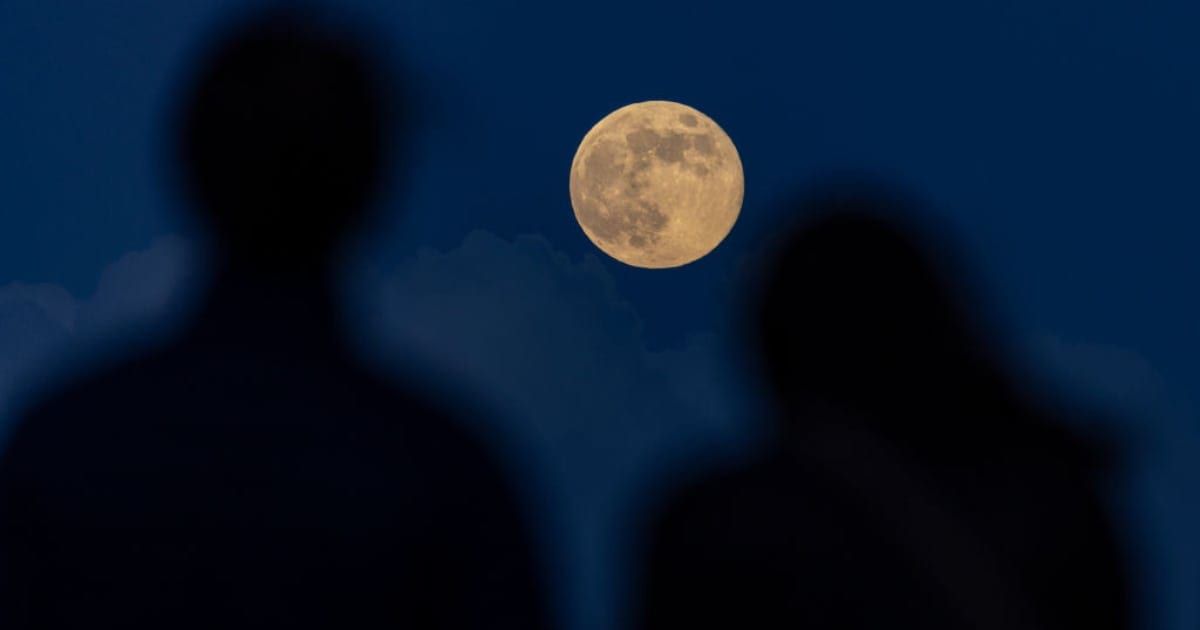
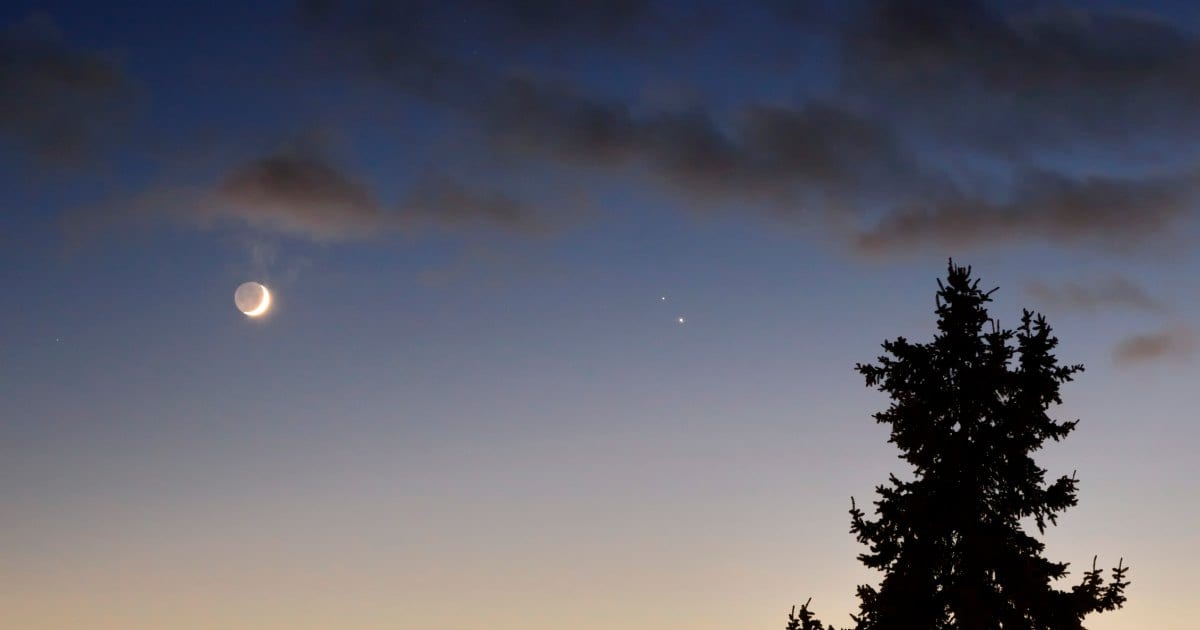
This Saturday, November 29, at 16:12 UTC, a notable celestial alignment will take place when the Moon approaches the ringed planet Saturn, according to In-The-Sky.org. This cosmic event will find the bright, nearly two-day-old gibbous Moon positioned near Saturn immediately following dusk and eventually appearing well above the planet later in the evening.
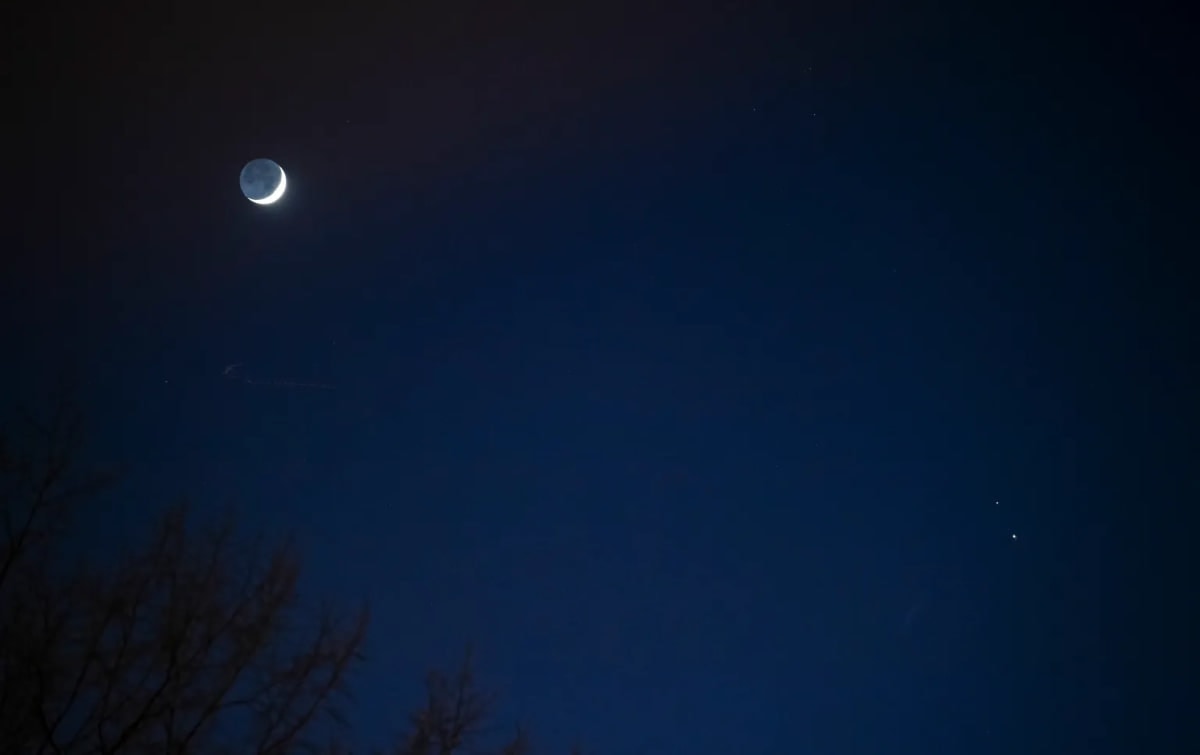
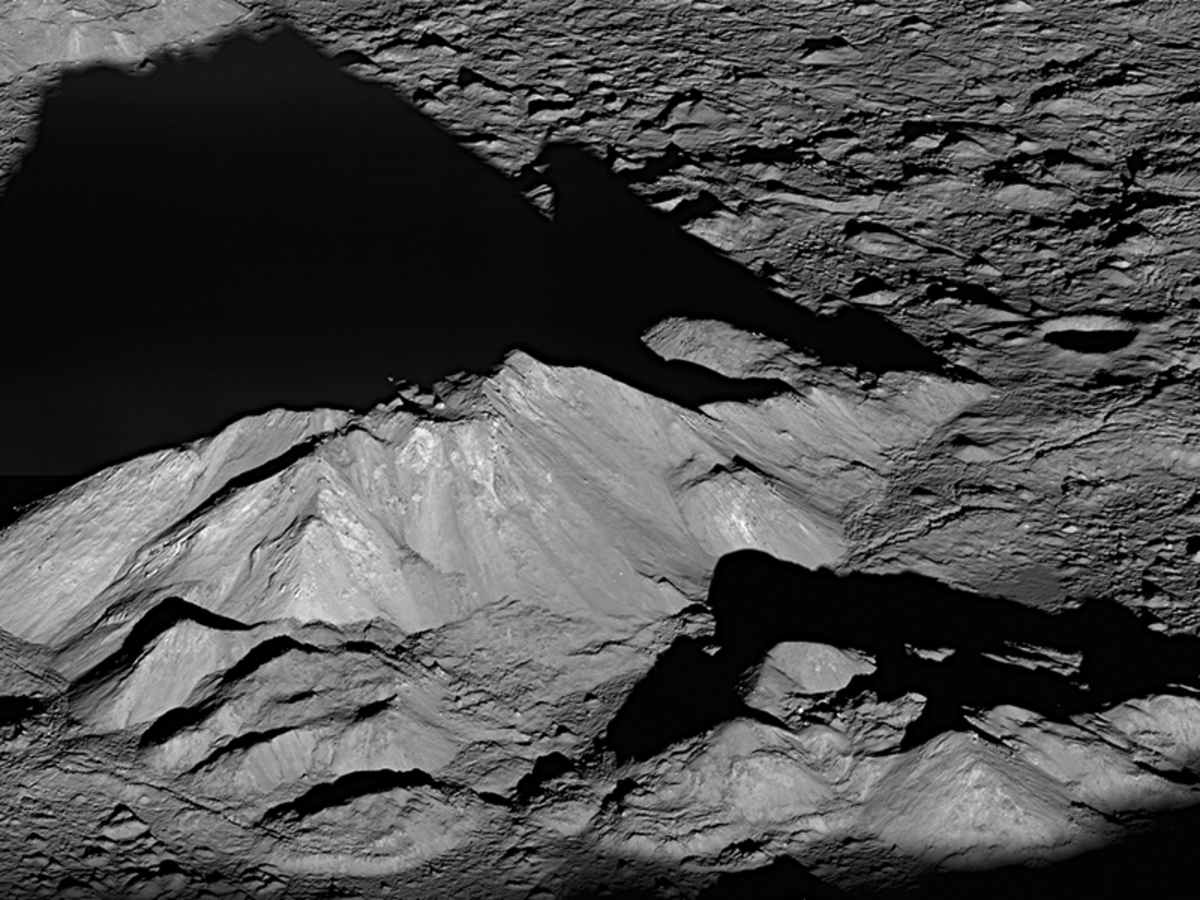
The Moon itself will be well worth observing, as sunlight highlights prominent impact sites. Major features, such as the northern crater Plato, the central feature Copernicus, and the southern crater Tycho, will all stand out dramatically as the shadow line, or terminator, passes over them, per Sky & Telescope.
According to In-The-Sky.org, the gap between the two subjects, the Moon, shining at magnitude -12.3 in Pisces, and Saturn, shining at magnitude 0.8 in Aquarius, is too large to fit within the field of view of a telescope, but the sight is perfect for the naked eye or binoculars. The event's climax is a conjunction, or the instant when the Moon and Saturn align along the same right ascension line in the sky.
While we are on the topic of November’s celestial activities, the New Moon reached the farthest point from Earth in 18 years just days ago, on November 20, 2025. This remarkable distance stands out clearly as a testament to the dynamism of the Earth-Moon system. This is referred to as its maximum orbital separation, which technically is called apogee. This record-setting event won't be repeated anytime soon. Astronomers note that the Moon will not be this far from our planet again until December 1, 2043.
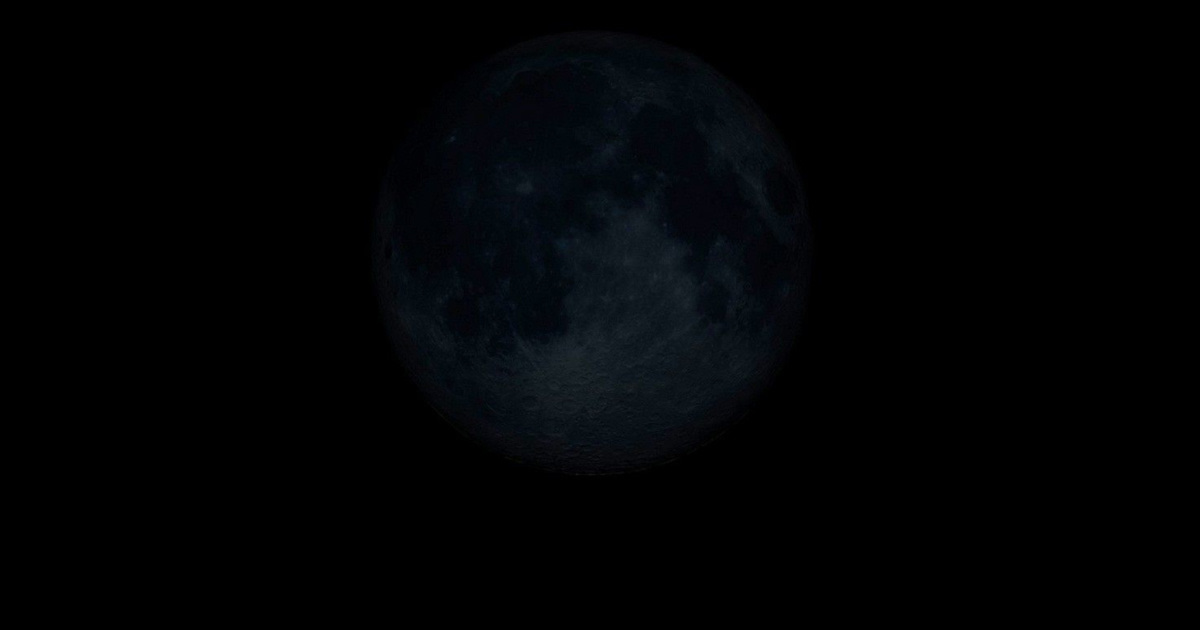
That future event is predicted to have the Moon situated approximately 252,714 miles (406,704 kilometers) away. Normally, the most extreme orbital distances (farthest apogees and closest perigees) occur near the time of the New or Full Moon. This is because during these phases, the Sun's gravitational pull aligns with the Earth and Moon, slightly extending the Moon's elliptical orbit. Interestingly, the November 20 apogee occurred just four hours before the Moon reached its official New Moon phase.
Looking ahead, skywatchers can also look forward to the last full moon of the year, known commonly as the 'Cold Moon,' in early December. According to experts, this popular name signifies the arrival of winter's intense cold. It has also been referred to by other names, including the Long Night Moon and the Oak Moon. The 2025 Cold Moon is technically set for Thursday, December 4, when it will be at its peak illumination. The spectacular sight of a full moon, a perfectly circular, bright disk, occurs because the entire side of the Moon facing Earth is fully lit by the Sun. The Moon is not a source of light; its brightness is due solely to reflected sunlight. A very small amount of light comes from distant stars and "Earthshine" (light bounced off our planet), but the Sun is the main reason behind lunar visibility.
More on Starlust
November 2025 skywatching guide: This year's biggest supermoon, Leonids fireballs and more
Here's when the final Supermoon of 2025 will light up December's night sky