Moon phases October 2025: Is there a full moon tonight?
Tonight's skywatching is significantly enhanced by a key astronomical phenomenon: the moon's arrival as a Supermoon.
UPDATED OCT 6, 2025
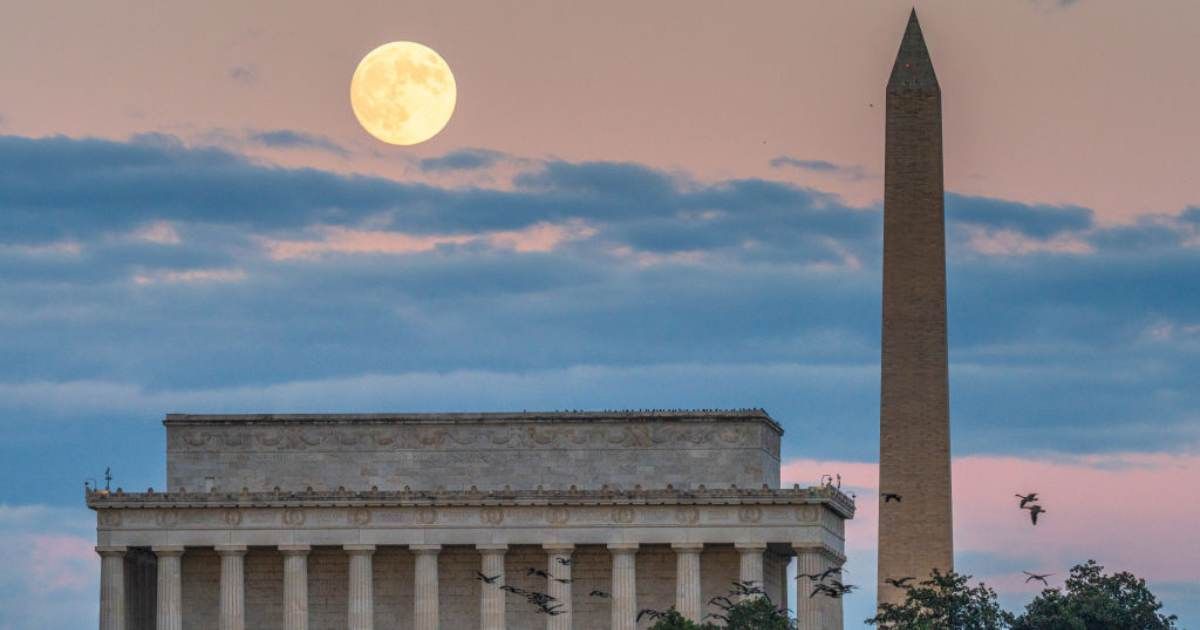
The 99.5 percent waxing Hunters Supermoon rises behind the Lincoln Memorial and the Washington Monument as a flock of geese passes by on October 16, 2024 (Cover Image Source: Getty | J. David Ake)

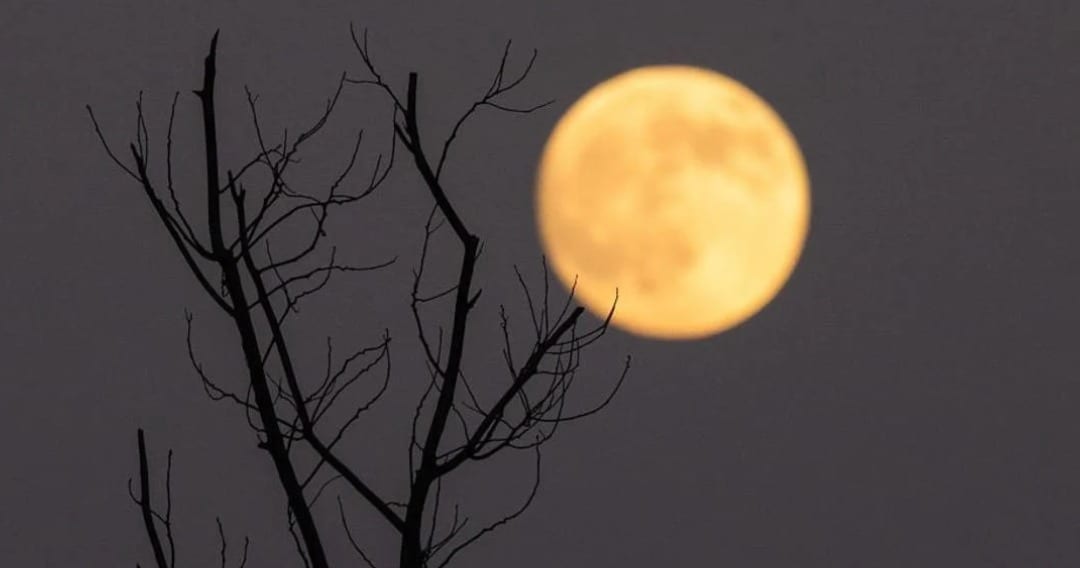
For stargazers, tonight's sky viewing will be significantly enhanced by a rare astronomical phenomenon: the moon's arrival as a Supermoon, according to NASA. This exceptional alignment occurs because the moon is currently at perigee, its closest orbital point to Earth for the month. As a result, the lunar body will appear dramatically larger and brighter in the sky this evening, up to 14% larger and 30% brighter than an average full moon, making tonight a full moon night. 
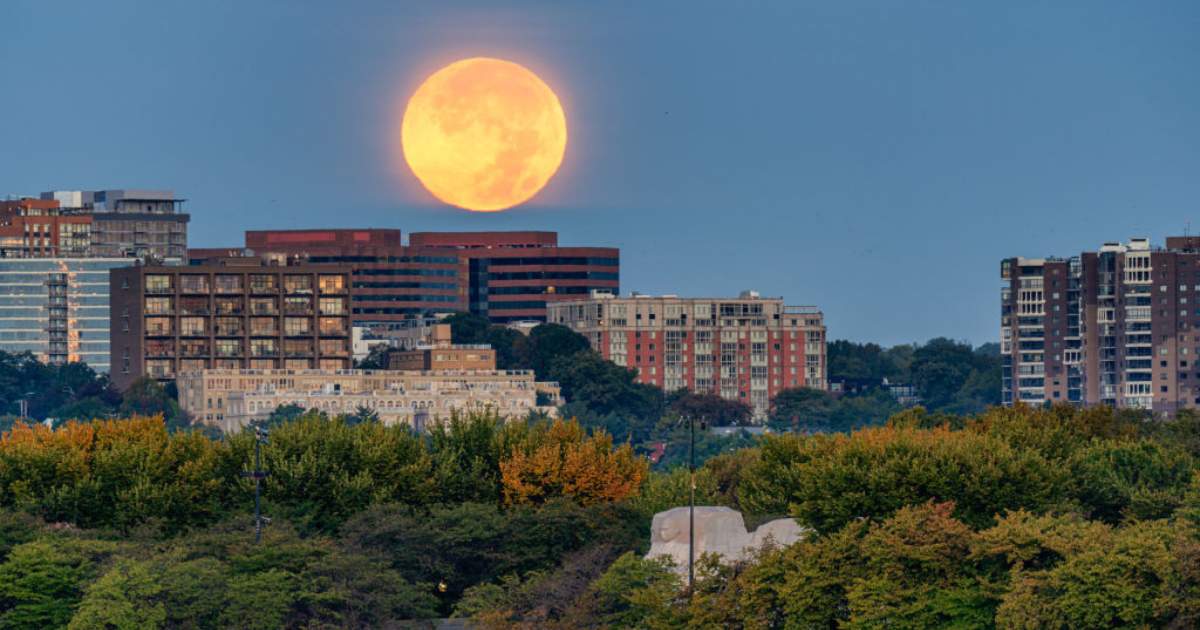
 The Martin Lurther King, Jr. Memorial is seen in the trees turning fall colors as the Hunter's Supermoon sets behind the Arlington, Va. skyline early in the morning on October 17, 2024 (Cover Image Source: Getty | J. David Ake)
The Martin Lurther King, Jr. Memorial is seen in the trees turning fall colors as the Hunter's Supermoon sets behind the Arlington, Va. skyline early in the morning on October 17, 2024 (Representative Image Source: Getty | J. David Ake)

Full Moon tonight also carries the seasonal designation of the Harvest Moon, named for the full moon nearest the autumnal equinox. The moon will officially reach its maximum point of 100% illumination, the moment it sits precisely opposite the Sun, by midnight. The exact moment of fullness is set for October 7 at 3:48 a.m. UTC. For observers in North America, this translates to the late evening hours of Monday — 11:48 p.m. EDT or 8:48 p.m. PDT on October 6.

The Full Moon tonight will dominate the night sky, rising in the east exactly at sunset and remaining visible until it sets in the west at sunrise the following morning. This event marks the culmination of the cycle, with the Moon being precisely 14.9 days old since the previous New Moon, according to Moon Giant. The time elapsed between one Full Moon and the next, known as a Synodic month, is measured with extreme precision at 29.530587981 days.
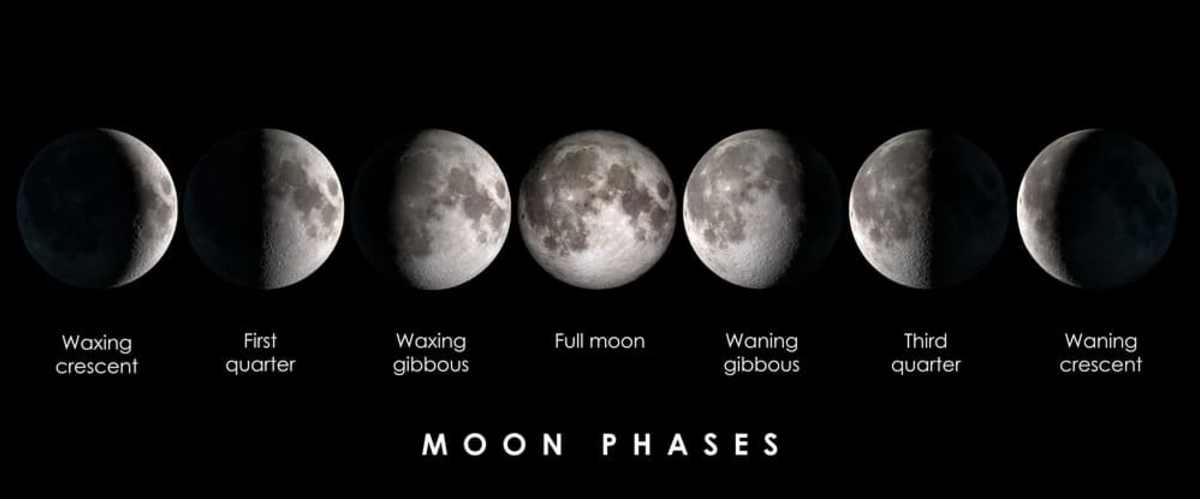
All phases of Moon (Image Source: NASA)

The natural satellite of Earth that has completed 13.76 days since the last New Moon, is currently visibly bulging, a shape historically denoted by the term "Gibbous." The full disk will be easily observable across much of the night.
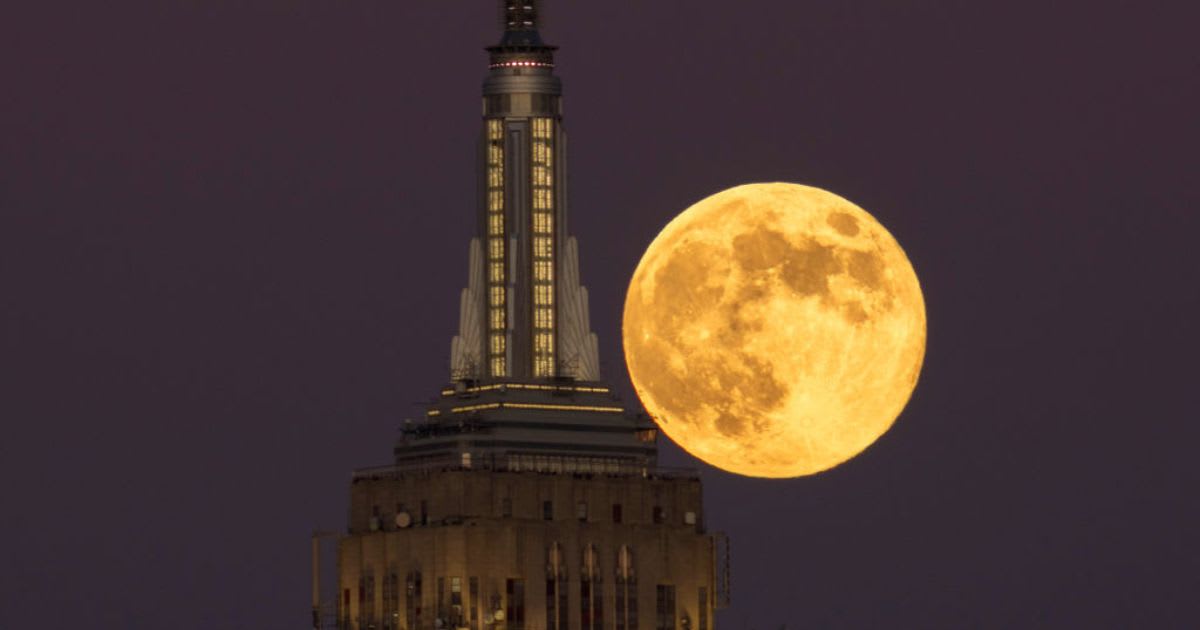
The full Beaver Supermoon rises behind the Empire State Building in New York City as the sun sets on November 15, 2024 (Representative Image Source: Getty | Gary Hershorn)

During the October Supermoon, observers can pinpoint numerous significant geographical features on the lunar surface across both hemispheres, as per NASA Moon. Even the unaided eye can distinguish several prominent landmarks, Mare Imbrium and Mare Tranquillitatis, alongside Tycho Crater. These features are readily visible from both the Northern and Southern Hemispheres. For those using binoculars, the level of detail increases significantly, particularly allowing for closer views of the Mare Frigoris, the striking views of the Apennine Mountains, and the Grimaldi Basin. These regions are accessible to binocular users across the globe.
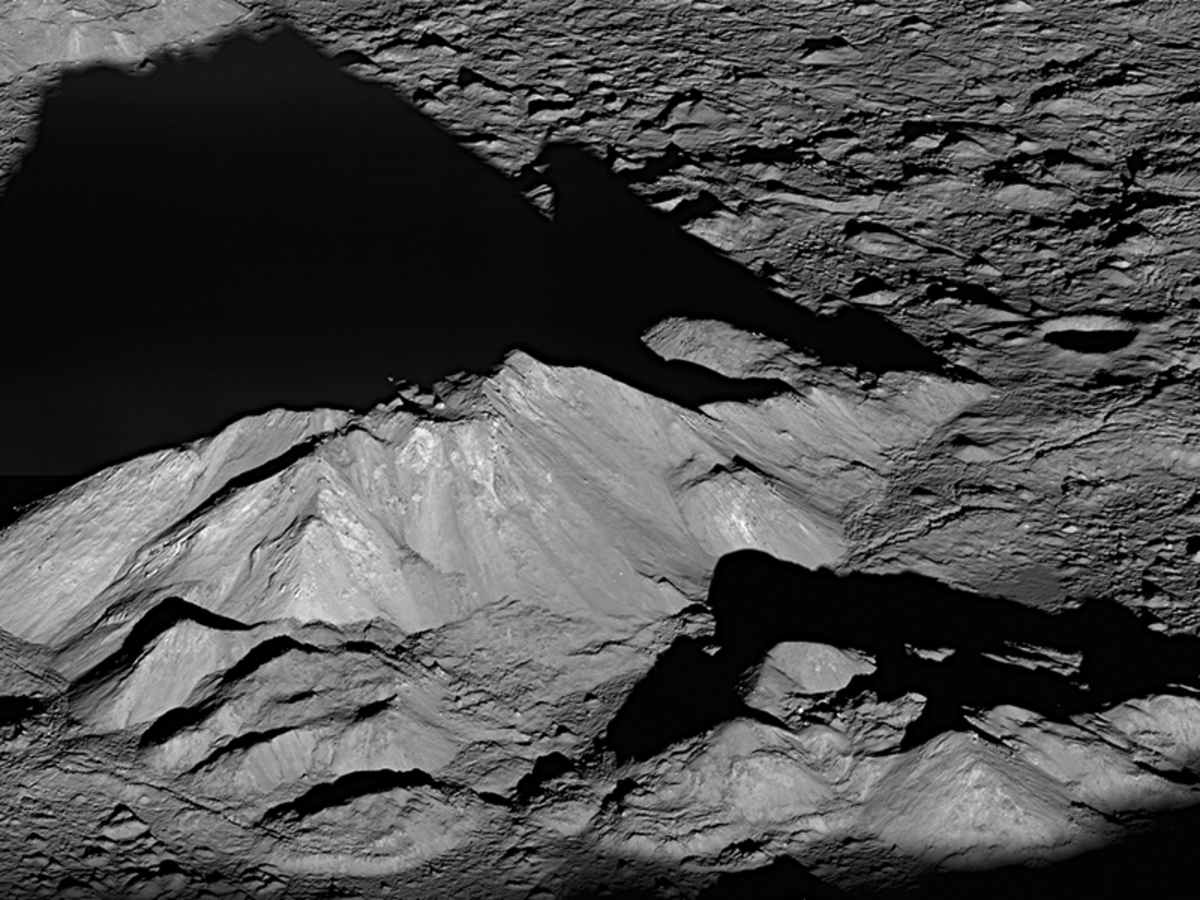
This is a sunrise view of Tycho crater's central peak taken by NASA's Lunar Reconnaissance Orbiter (Image Source: NASA)

Finally, individuals with a telescope can examine even more subtle terrain. Recommended targets for tonight include the impressive Rupes Altai (the Altai Scarp), the historic landing site of Apollo 12, and the Schiller Crater. These high-magnification targets are observable from both the Northern and Southern Hemispheres.  
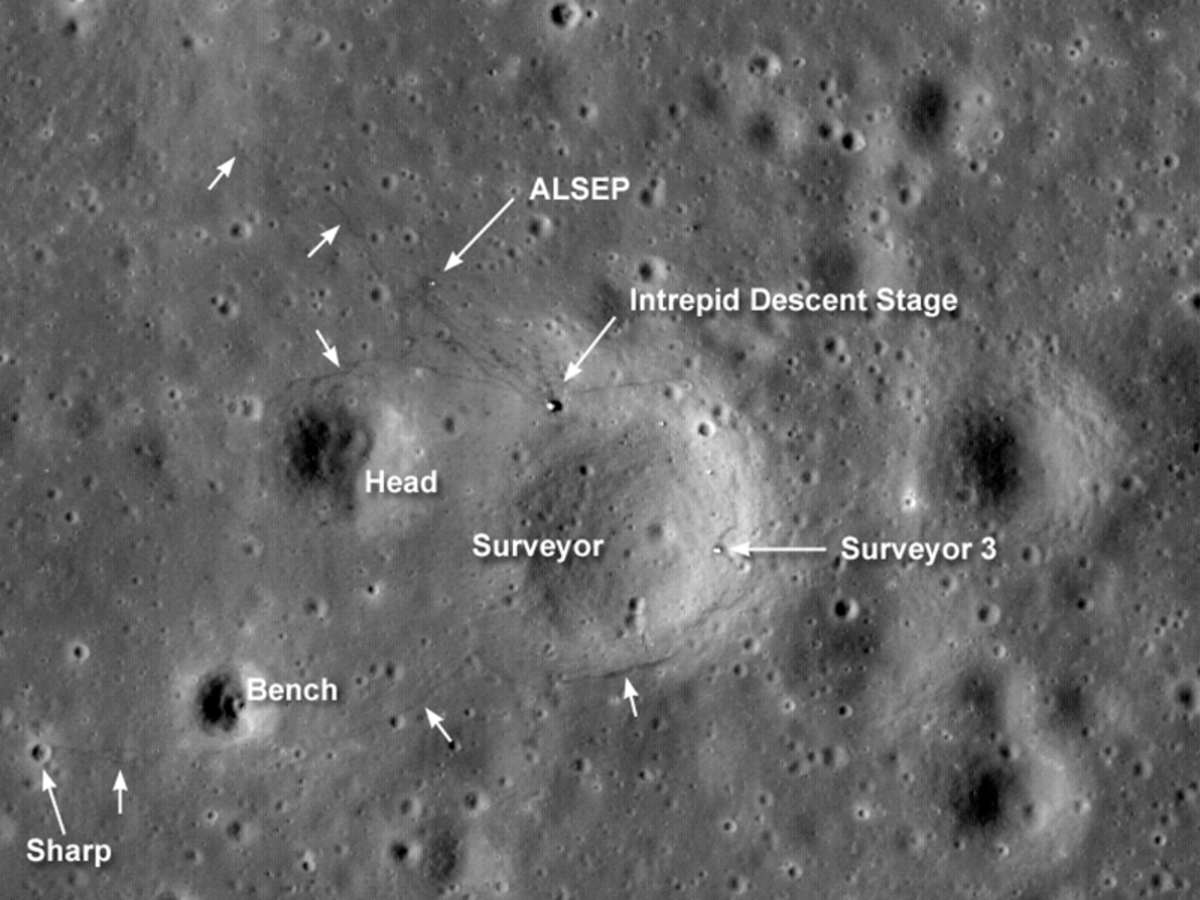
This labeled image of the Apollo 12 landing site was taken by NASA's Lunar Reconnaissance Orbiter in 2011
This labeled image of the Apollo 12 landing site was taken by NASA's Lunar Reconnaissance Orbiter in 2011 (Image Source: NASA)

More on Starlust

2025 Harvest Moon will make a rare October appearance—when and where to watch the spectacle

Earth's 'wind' is causing the Moon to rust—but how is this possible?
MORE STORIES

The X5-class solar flare on Wednesday bombarded energetic protons toward Earth and they are penetrating the atmosphere all the way to the ground.
7 hours ago
The Moon will be approximately 221,965 miles from Earth during the final supermoon appearance of the year.
17 hours ago
The Northern Taurids meteor shower, active from late October to early December, typically generates a low maximum rate of just five meteors per hour.
1 day ago
Situated approximately 202 million miles away, interstellar comet 3I/ATLAS is currently traversing the constellation Virgo.
2 days ago
The comet currently resides in the constellation Ophiuchus (The Serpent-bearer), positioned about 147 million kilometers from our planet.
5 days ago
This significant, Supermoon-proximate lunar event offered breathtaking photographic subjects, spanning from urban skylines to major sporting events.
6 days ago
Earth faces an imminent solar impact, with a Coronal Mass Ejection (CME) predicted to arrive as soon as Thursday evening, November 6 (EST).
6 days ago
For the most dramatic visual effect, experts recommend watching for the Moon just as it ascends above the eastern horizon at sunset.
7 days ago
The closest approach of comet 3I/ATLAS to Earth will happen on Friday, 19 December 2025, at a distance of 1.797478 Astronomical Units.
7 days ago
Observers should plan to observe the spectacle throughout the evenings of Tuesday, November 4, and Wednesday, November 5, 2025.
Nov 4, 2025