NASA’s TESS mission finds two rare exoplanets with density like that of cotton candy
![This artist’s concept shows what an exoplanet could look like based on indirect transit observations. [Representative Cover Image Source: NASA, ESA, CSA, R. Crawford (STScI)]](https://d3hedi16gruj5j.cloudfront.net/808233/uploads/9863d590-70e4-11f1-a7e6-61da0b6b0ec9_1200_630.jpeg)
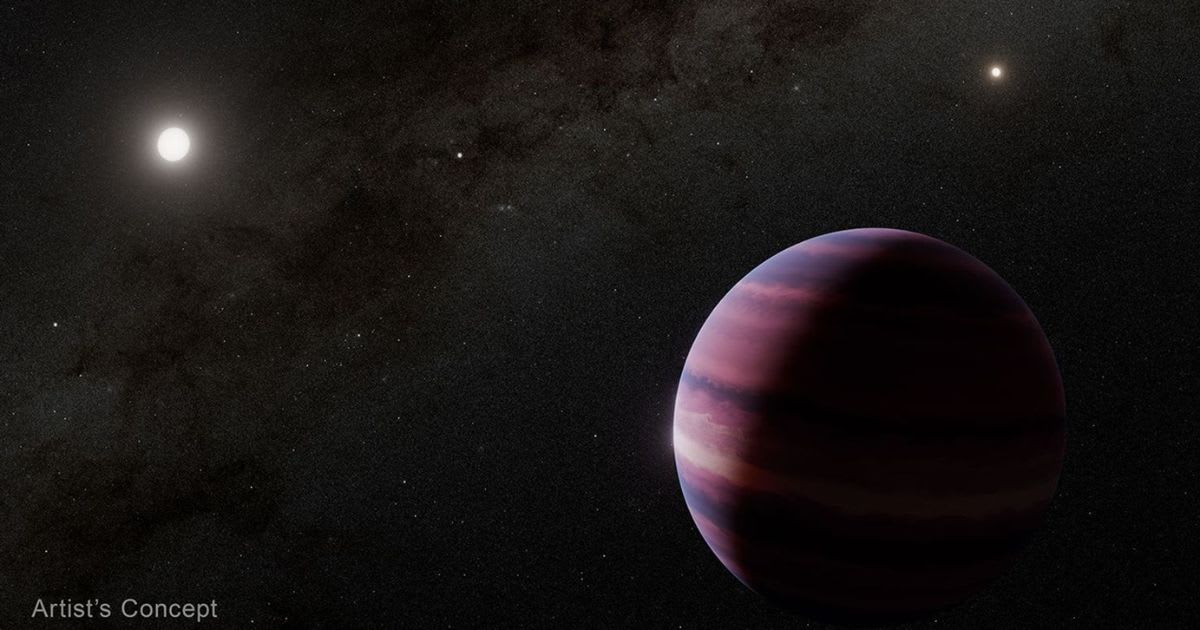
NASA's Transiting Exoplanet Survey Satellite (TESS) mission has discovered two new exoplanets, which have been likened by astronomers to cotton candy, owing to their extraordinarily low density. These results were published on June 25, 2026, in a study led by the University of Oxford, in conjunction with Université Côte d’Azur and the University of Birmingham. These planets, named TOI-791 b and TOI-791 c, are roughly the size of Jupiter but contain only a tiny fraction of its mass. Scientists have calculated that these two newly found planets are the least dense of all those discovered so far.
Our TESS telescope helped find two new “super-puff” planets that are about the size of Jupiter but have the density of cotton candy. TOI-791 b and c might even be the puffiest planets ever found! Further study can help us learn about planetary evolution. https://t.co/KvecR1vKJM pic.twitter.com/0GDuBjctBE
— NASA Universe (@NASAUniverse) June 25, 2026
This pair of exoplanets is located approximately 1,113 light-years away from Earth and orbits a Sun-like star named TOI-791. George Dransfield, who is the lead author of the research paper and is part of Oxford University’s Department of Physics in England, spoke to the exoplanet pair’s uniqueness. “Only a handful of these super-puffy planets are known, and it is even rarer to find two in the same system,” he said in a statement. TESS discovered the two planets while looking for periodic dips in the brightness of TOI-791, which happens when planets pass in front of a star. This led to further study, which unveiled the various features of the two planets, including their respective sizes. While TOI-791 b is nearly the size of Jupiter, it holds just 3 percent of Jupiter's mass. TOI-791 c, which is even larger than Jupiter, carries only 5.9 percent of the gas giant.
NASA's TESS telescope uncovers the puffiest planets ever found.
— NASA Ames (@NASAAmes) June 25, 2026
The Jupiter-sized worlds are as light as cotton candy. Further study can help us learn about planetary evolution. https://t.co/77y7BNNdfD
“Large planet formation is believed to drive the evolution of a planetary system, so further study of these Jupiter-size, but far less than Jupiter-mass, planets is of high value,” explained Steve Howell, a NASA Ames research scientist who was also part of the study. Researchers were able to calculate the masses of these worlds because the planets are locked in an orbital pattern in which they constantly affect each other, altering the timing of their transits. These variations were used by the scientists to pin down the masses of the two planets and confirm them as low-density super-puffs.
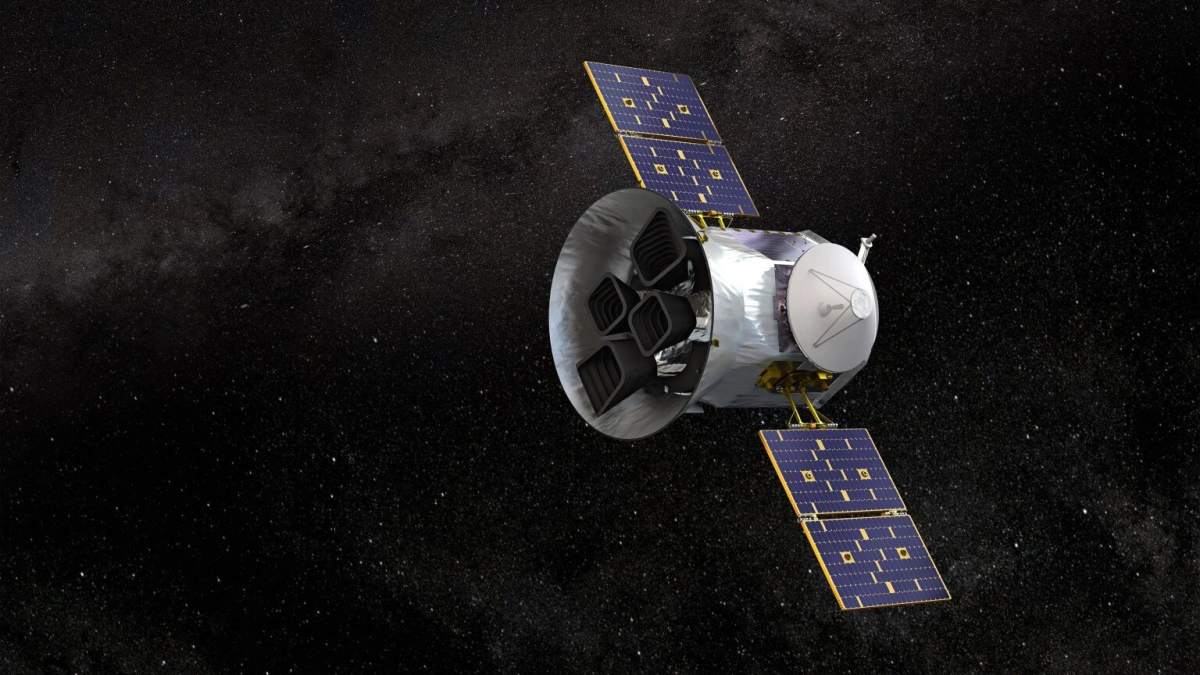
The feat of finding these planets itself was laudable, as these two exoplanets appear to orbit TOI-791 at a large distance. This meant the satellite needed to look at the system for a very long duration to capture meaningful data. TOI-791 b takes 139 days to circle the host star, while TOI-791 c takes 232 days to complete a single orbit. TESS managed to gather data over 1,122 days on this planetary system over a period of seven years from its position in high Earth orbit.
Further study could provide insights into how the two planets developed and whether their orbits were influenced by interactions with other planets. Going forward, scientists hope to acquire more data on the planets, including the composition of their atmospheres, the influence of their spin on their shape, and how the tilt of TOI-791 compares to their orbits.
More on Starlust
Our solar system may have looked very different had it not been for a third ice giant, study finds
Interstellar comet 3I/ATLAS tracked again by NASA’s exoplanet hunter TESS