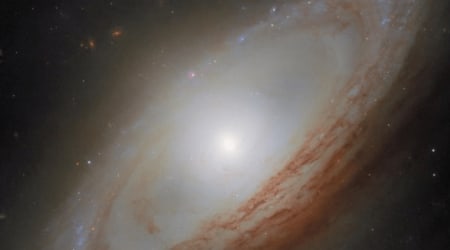
Hubble Space Telescope captures powerful stellar explosion lighting up nearby clouds
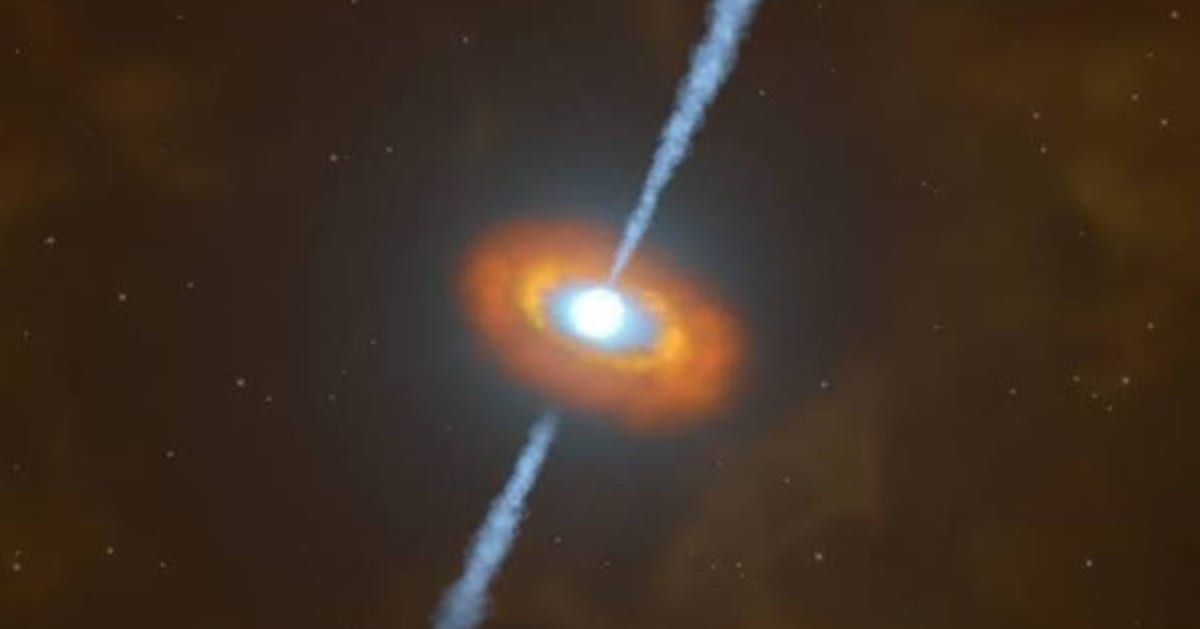
![Image showing jets of ionized gas streak originating from a newly forming star. [Image Source: NASA, ESA, and B. Reipurth (Planetary Science Institute); Processing: Gladys Kober (NASA/Catholic University of America)]](https://d3hedi16gruj5j.cloudfront.net/787221/uploads/ab890d50-f52b-11f0-81de-3bf77b58cf1f_1200_630.jpeg)
Some stars begin the journey of their lives with a violent outburst, spewing ionised gas that lights up dark, deep recesses of the universe. NASA’s Hubble Space Telescope has just captured images of one such star in its birth throes. The expelled colourful gaseous materials formed weird objects that span across 32 light-years of space. The objects, named HH 80/81, drift in space and sit 5,500 light-years away from Earth. Located in Sagittarius, astronomers classify them as Herbig-Haro (HH) objects. When jets from a newborn star collide with slow-moving gas ejected from the star earlier, the HH objects are born.
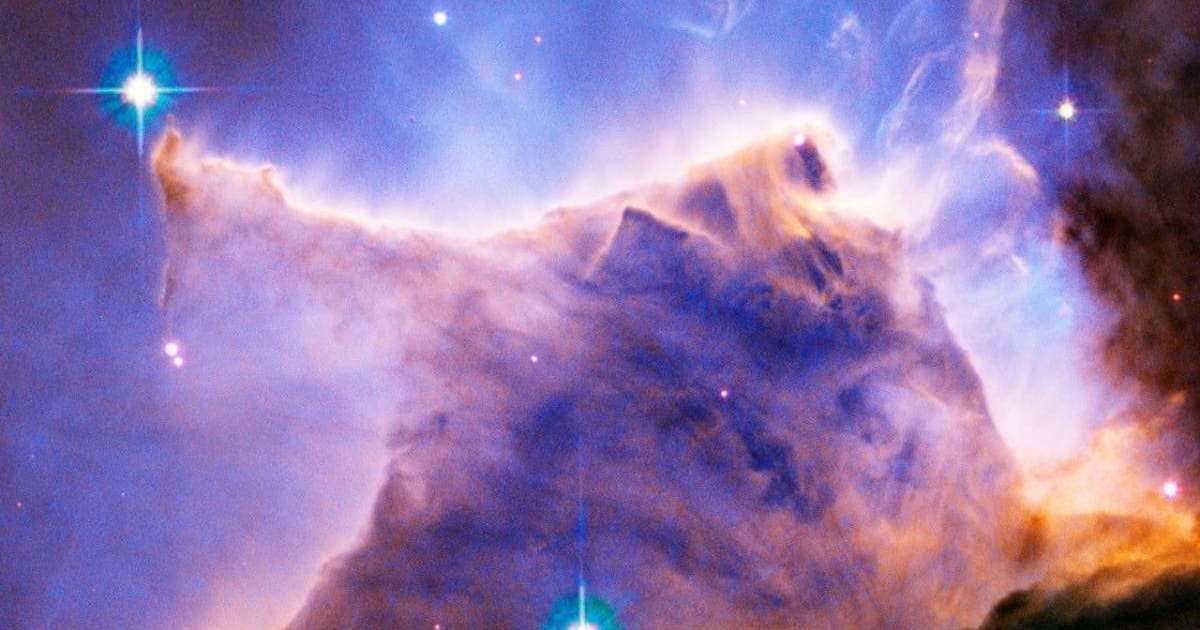
Hubble’s electronic gaze first zoomed in on such objects in 1995. Since the discovery of Herbig–Haro (HH) objects by astronomers George Howard Herbig and Guillermo Haro, more than 1,000 objects have been detected, according to a 2024 study published in the Monthly Notices of the Royal Astronomical Society. The newborn star that powers the HH 80/81 is twenty times heavier than the Sun. It is an outsize star compared to low-mass ones that usually produce HH objects.
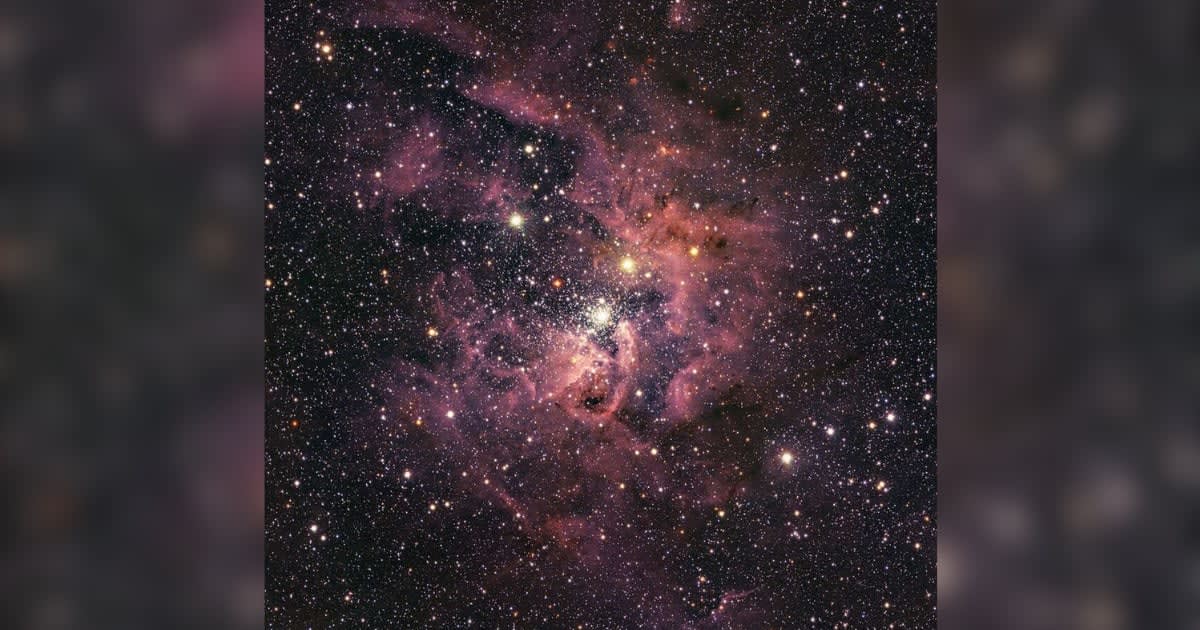
The spectacular displays of gas ejection originate from the newborn star’s accretion disk, the twisted flow of gas and dust that feeds the budding star. The disk materials don’t fall onto the star, but interact with its powerful magnetic fields. This makes the star send some particles toward the magnetic poles and throw them out at high velocities. The outflows, as measured by Hubble, exceeded 1,000 kilometers per second - the fastest jet speed ever recorded from a baby star at visible as well as radio wavelengths. The jets, packed with energetic particles, collide with previously discharged gas and create powerful shock waves.
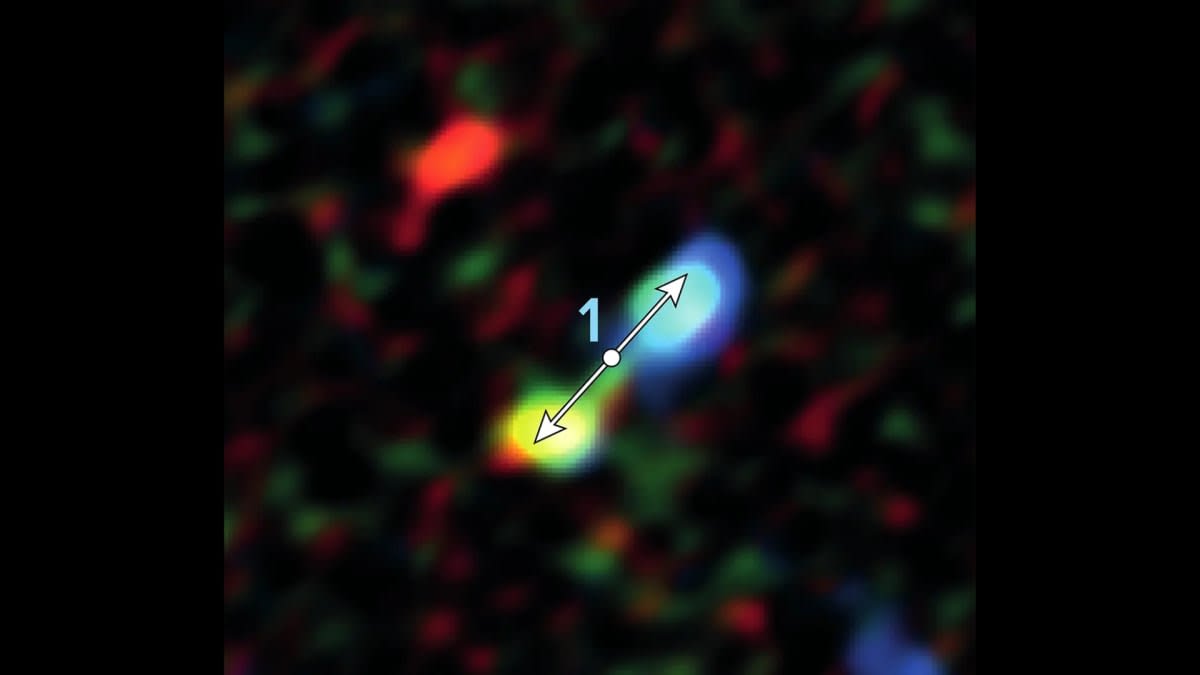
The shock waves sweep through the surrounding clouds, heating them up to thousands of degrees. Such high temperatures excite the atoms, which absorb and then emit energy, glowing in pink and green, which are captured by Hubble’s Wide Field Camera 3 (WFC3). WFC3 takes images at optical and infrared wavelengths. HH objects release a lot of light at optical or visible wavelengths that human eyes can see. But, at optical wavelengths, these objects are difficult to observe because their surrounding dust and gas absorb much of the visible light.
With an infrared camera, Hubble overcomes that obstacle and captures HH 80/81, the most energetic HH objects known to exist, according to a study published in the February 26, 2025 issue of Astronomy & Astrophysics. The power of WFC3 has been useful for astronomers because it allows them to study fine details, movements, and structural changes of these objects, and through them, we can glean insights into the chemistry of star-forming regions. The light they shine also tells us the chemical ingredients that make up such objects. They mostly consist of hydrogen and helium, with traces of oxygen, nitrogen, and sulphur. They hover in space, flagging the locations of star formation, contributing significantly to the understanding of star birth.
More on Starlust
A look at 5 extraordinary images taken by Hubble Space Telescope in 2025
Astrophotographer captures rare footage of Hubble Space Telescope crossing the Sun