Harvard's Avi Loeb says 3I/ATLAS may be more than a typical 'icy rock' after surviving perihelion as a single body
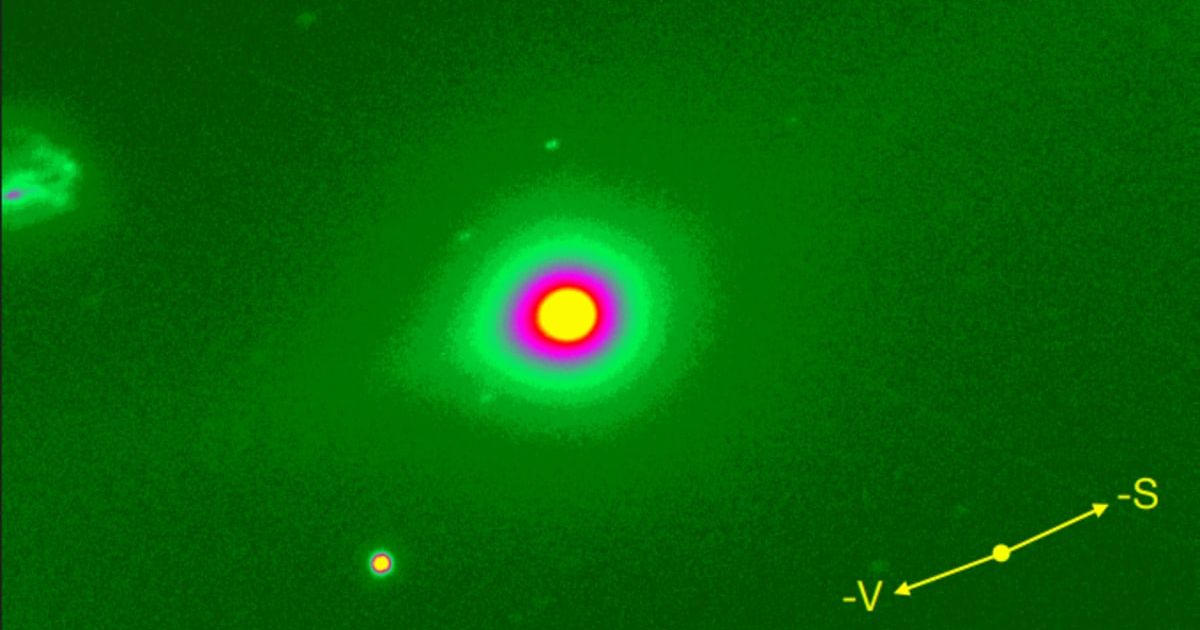
New observations of interstellar object 3I/ATLAS show it has made it through its closest approach to the Sun, known as perihelion, without breaking up. The latest images taken by the Nordic Optical Telescope on November 11 confirm that the object is still a single, active body, as mentioned in Astronomer's Telegram.
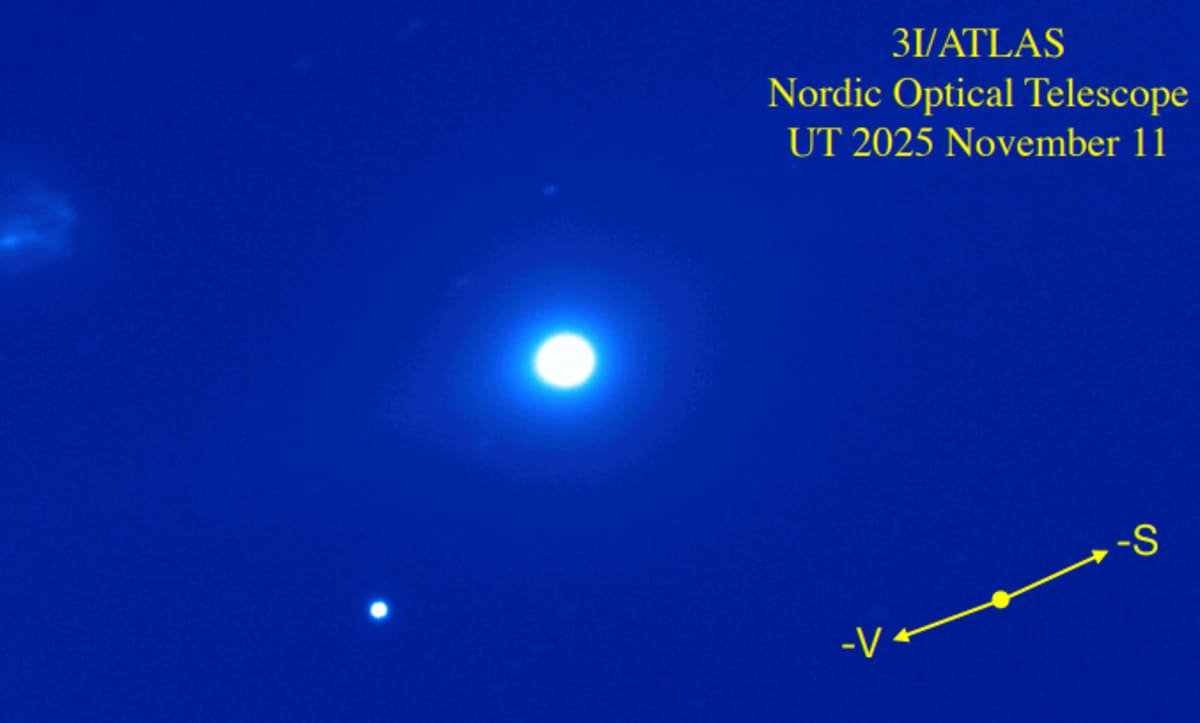
We now have a clearer picture of the object's characteristics after perihelion. It has some notable asymmetries in its coma. One of the features looks like a "sunward fan" made up of large, slow particles being pushed toward the Sun due to dayside sublimation. There's also the object's usual dust tail, which extends away from the Sun.
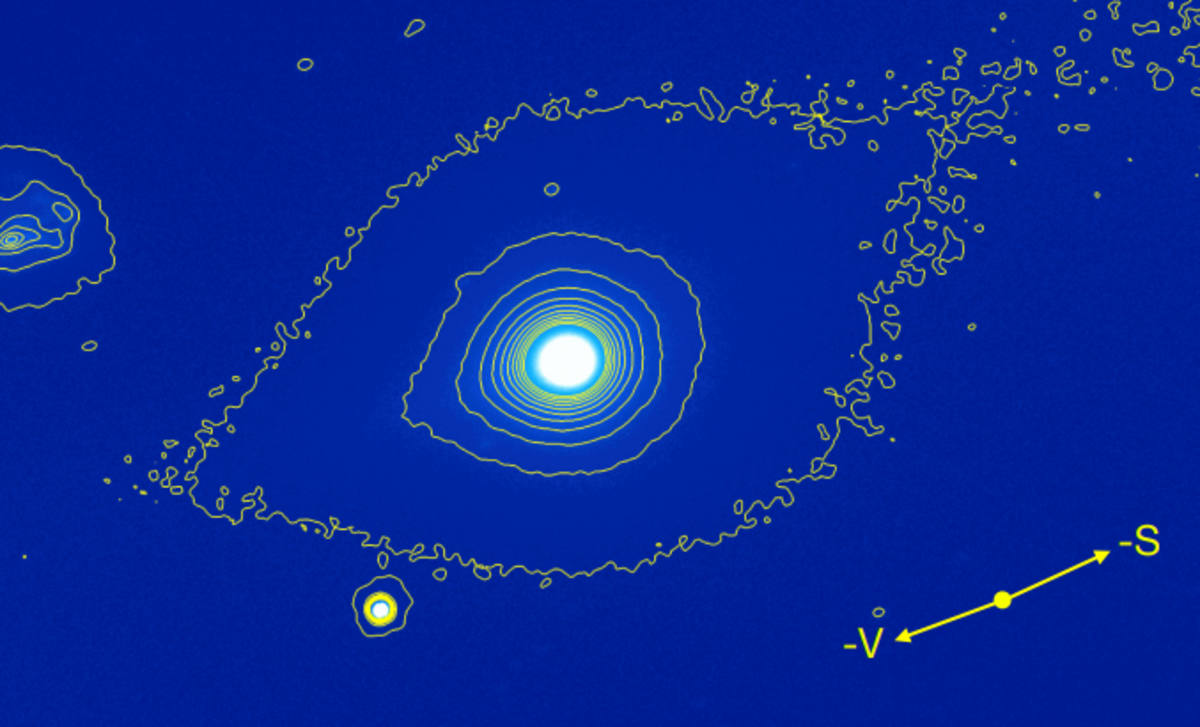
In addition, data from The Virtual Telescope Project has revealed a more prominent ion tail that spans at least 0.7 degrees in the northeast direction, along with a clearly defined anti-tail pointing to the east-southeast. The object's ability to maintain its structural integrity despite the intense solar radiation has led Harvard astronomer Avi Loeb to challenge its classification, claiming that 3I/ATLAS is fundamentally different from a regular comet.
⚠️ Interstellar comet #3IATLAS shows a nice ion tail! We spotted it a few hours ago!https://t.co/zmKMxgJFkO
— Virtual Telescope (@VirtualTelescop) November 11, 2025
Loeb shared his doubts about 3I/ATLAS being a typical comet in a blog post just two days ago. He initially based his skepticism on whether the object could remain intact after perihelion, which, given the mass it had possibly lost, would go against the usual expectations of comet integrity.
![Hubble captured this image of the interstellar comet 3I/ATLAS on July 21, 2025, when the comet was 277 million miles from Earth. [Image Source: NASA, ESA, David Jewitt (UCLA); Image Processing: Joseph DePasquale (STScI)]](https://de40cj7fpezr7.cloudfront.net/c49eeb4e-e60a-46c0-b39f-68fbb2ee9297.jpeg)
Now that the new images confirm the object is still one piece, Loeb has doubled down on his alternative theory. He argues that the large-scale outgassing, seen in massive jets extending millions of kilometers in images taken before November 11, doesn't fit with a stable, single-body comet. He estimated that 3I/ATLAS released around 16% of its total mass. To explain this huge output through the typical process of water ice sublimation, the nucleus would need to be 51 kilometers wide, which is implausible, according to Avi Loeb's recent Medium blog.
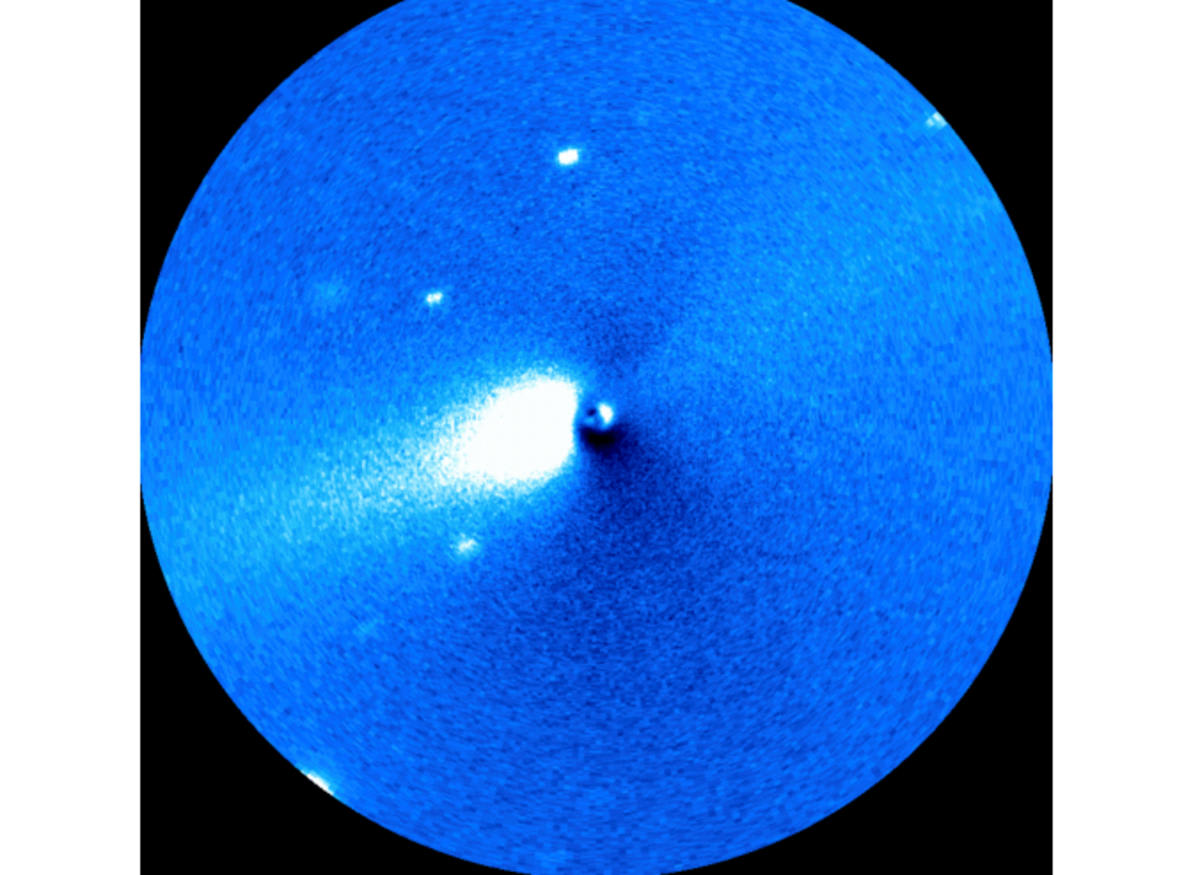
Loeb believes that this stability, combined with the extreme outgassing, is an "anomaly" that raises questions for traditional cometary science. He had, after all, insisted that if "3I/ATLAS was not decimated by the Sun and maintained its integrity as a single body, then we would have to consider that it is something other than a natural comet." "This raises a new anomaly of 3I/ATLAS that must be explained by those who wish to shove the anomalies of 3I/ATLAS under the carpet of traditional knowledge on solar system comets rather than consider alternatives," he wrote in his recent blog.
Avi Loeb had also called publicly for NASA to immediately declassify high-resolution observational data of 3I/ATLAS, making the debate on the object's true nature even more intense. The data in question was captured by the HiRISE camera aboard the Mars Reconnaissance Orbiter on October 2-3, 2025, but remains unavailable to the wider scientific community, a delay of over a month. In a recent podcast interview, Loeb framed the hold-up as a major impediment to time-sensitive research. "We should not hold science hostage to the shutdown politics of the day," he stated, urging NASA to make the 30-kilometers-per-pixel resolution images available for study.