Stardust trapped in Antarctic ice reveal our solar system's journey through a cosmic cloud
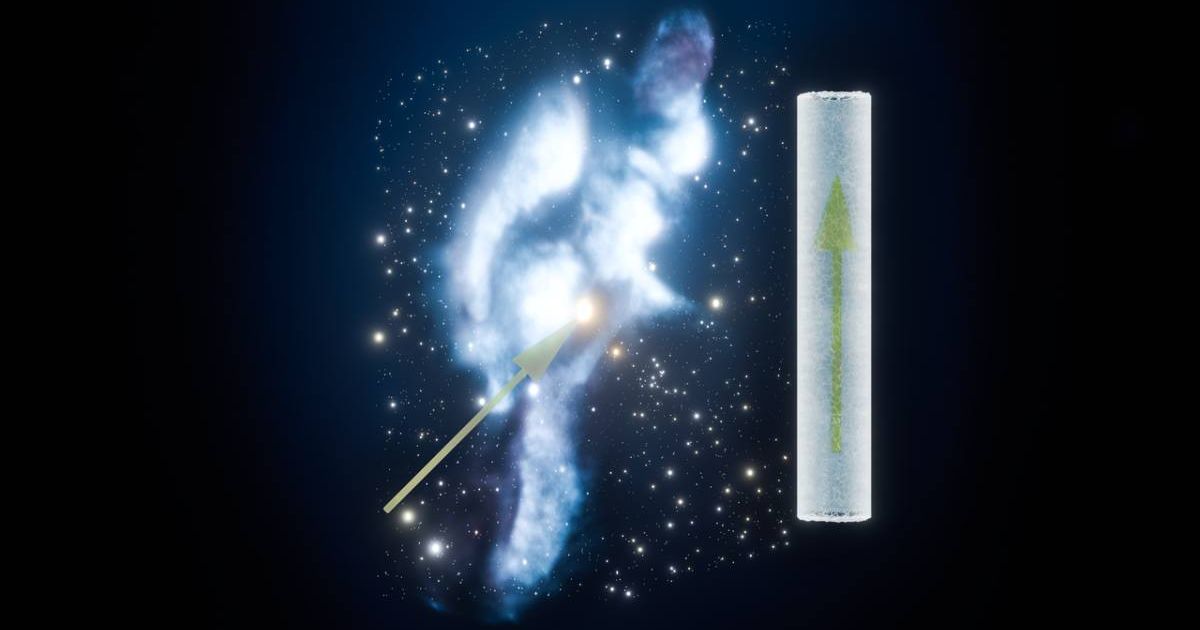
As our solar system drifts through space, it brushes past clouds of gas, plasma, and microscopic dust. These dust clouds are the debris of ancient stars and also the birthplace of future stars. Right now, our solar system is passing through one of these clouds. Traces of that journey may have been buried deep inside Antarctic ice, according to a study published in Physical Review Letters. The study, led by Dominik Koll at the Helmholtz-Zentrum Dresden-Rossendorf in Germany, discovered traces of radioactive atoms of iron trapped in Antarctic snow and ice.
The atoms, after being forged in the exploding stars millions of years ago, settled into dust clouds and then reached Earth as the solar system was passing through one of the clouds. The discovery transforms Antarctic ice into a cosmic archive. Astronomers study stars and galaxies by peering through telescopes. From such observations, they figure out how stars live and die and how they form elements, contributing to the evolution of the universe. But Koll and his colleagues turned that idea on its head. Instead of analyzing light signals via telescopes, they looked for debris of exploding stars on Earth.
After death, massive stars eject various elements into space. This includes rare isotopes (variants of chemical elements) such as radioactive iron-60, a fingerprint of stellar explosions. The ejected elements, including the radioactive iron-60, contribute to interstellar dust. When the solar system passes through such dust, tiny dust grains find their way to Earth. Those grains then deposit in remote, less-frequented land like Antarctica, forming a layered record that stretches tens of thousands of years. Each layer provides a snapshot of the material, including its origin and voyage through space. Against this backdrop, the team previously collected 500 kg of recent snow in Antarctica. They were stunned to find radioactive iron-60. But they couldn’t trace back its origin, since there was no recent near-Earth supernova.

At least 15 clouds fill the neighborhood of our solar system, and it is traversing through one of them. Were the iron atoms in the clouds waiting to be picked up by Earth? If the answer is ‘yes’, then the amount of stardust Earth collects is related to the structure of the clouds. Denser clouds contain more iron-60. This is what they guessed in 2019 before embarking on the present study. Millions of years ago, Earth received large amounts of iron-60 from massive supernovae. Does the find in Antarctica show the last remnant or an echo of this signal? The researchers note that a cosmic rain became a drizzle. Intrigued, the team analyzed a 295 kg section of an Antarctic ice core that was deposited between 40,000 and 81,000 years ago.
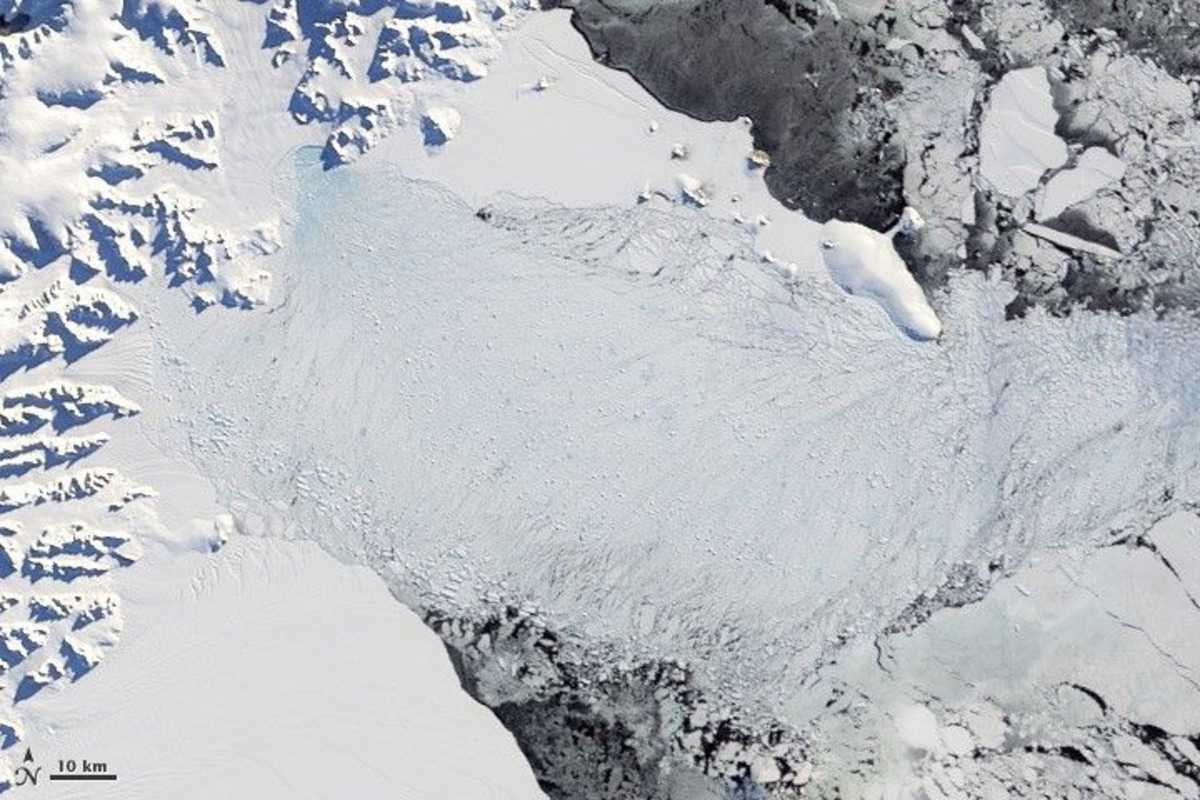
The team compared this older ice to the relatively steady levels of iron-60 found in recent Antarctic surface snow and ocean sediments from the last 40,000 years. They found significantly less iron-60 in the older ice. This finding suggests that less dust was reaching Earth during that earlier period. It doesn’t fit into the picture of the massive iron-60 deposits that took place millions of years ago. The recent iron-60 atoms may have come from a local source like the very cloud through which the solar system is moving. Astronomical estimates indicate that the solar system entered the Local Interstellar Cloud somewhere between 40,000 and 124,000 years ago, and is still inside it today. If that's right, the amount of iron-60 Koll and his teammates detected on Earth should have changed sometime in that same time period as we crossed the cloud's boundary. This is exactly what the team showed in Antarctica. For decades, we have scanned the sky to understand our place in the cosmos, unmindful of the fact that some answers may be waiting beneath our feet, frozen in the silence of Antarctic ice.
More on Starlust
A new solar system may have been caught in the act of formation, study suggests