NASA's Chandra finds the 'most relaxed' galaxy cluster in the universe had a rather turbulent past
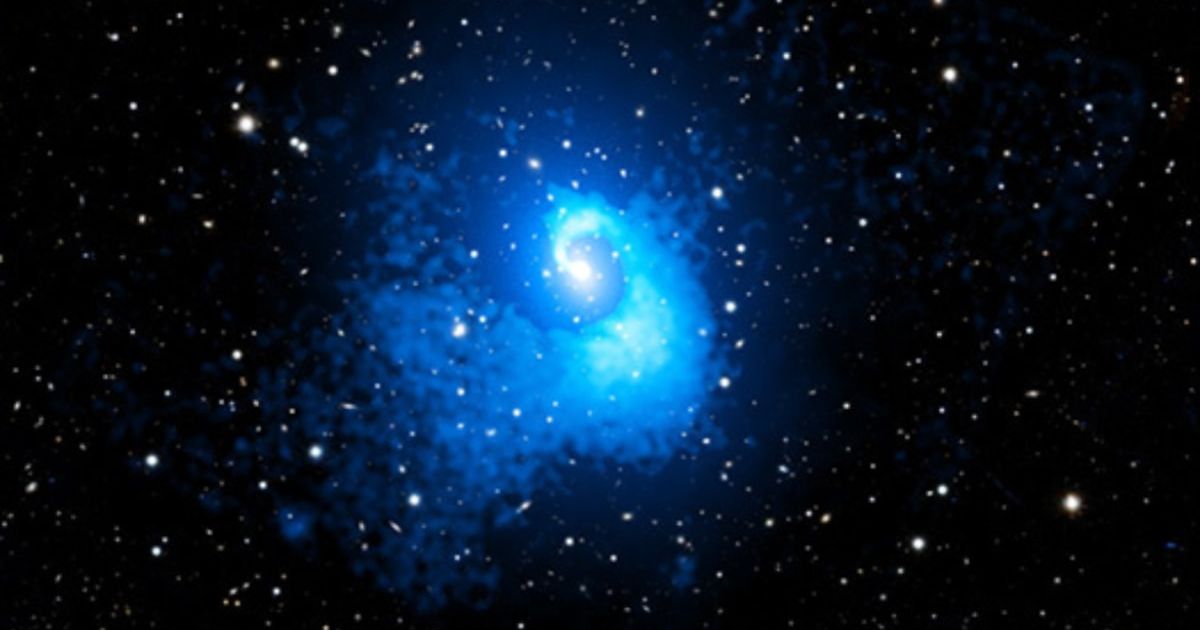
Abell 2029 is often called "the most relaxed cluster in the universe" because of how undisturbed its superheated gas appears to be. However, recent observations from NASA's Chandra X-ray Observatory indicate that it wasn't always this calm and had endured a huge collision with a smaller galaxy cluster whose scars are still apparent four billion years later. The findings were made by a team led by astronomers from Boston University (BU) and the Center for Astrophysics | Harvard & Smithsonian and have been published in The Astrophysical Journal.
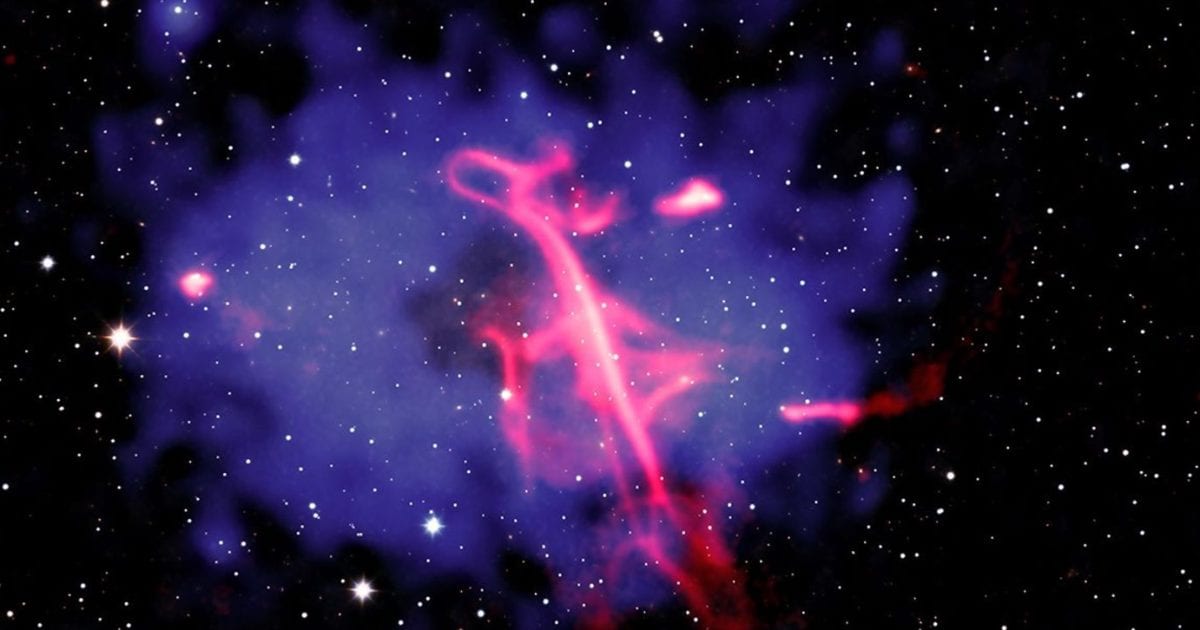
Galaxy clusters are gigantic structures in the cosmos. Bound together by gravity, they contain hundreds or even thousands of galaxies that remain embedded in invisible dark matter. A huge amount of gas fills the space between the galaxies. This gas, when heated to millions of degrees, glows in X-ray light. From Chandra X-ray data, the team found a gigantic spiral structure curling through the hot gas like the shell of a nautilus. The spiral spans roughly two million light-years from the cluster’s center. "The team think the spiral shape in the hot gas formed when gas in the cluster sloshed to the side because of the gravitational effects of the cluster collision—similar to how wine moves in a wine glass," the Chandra press release notes. "The sloshing spiral in Abell 2029 is one of the longest ever seen, extending about two million light-years from the center of the cluster."
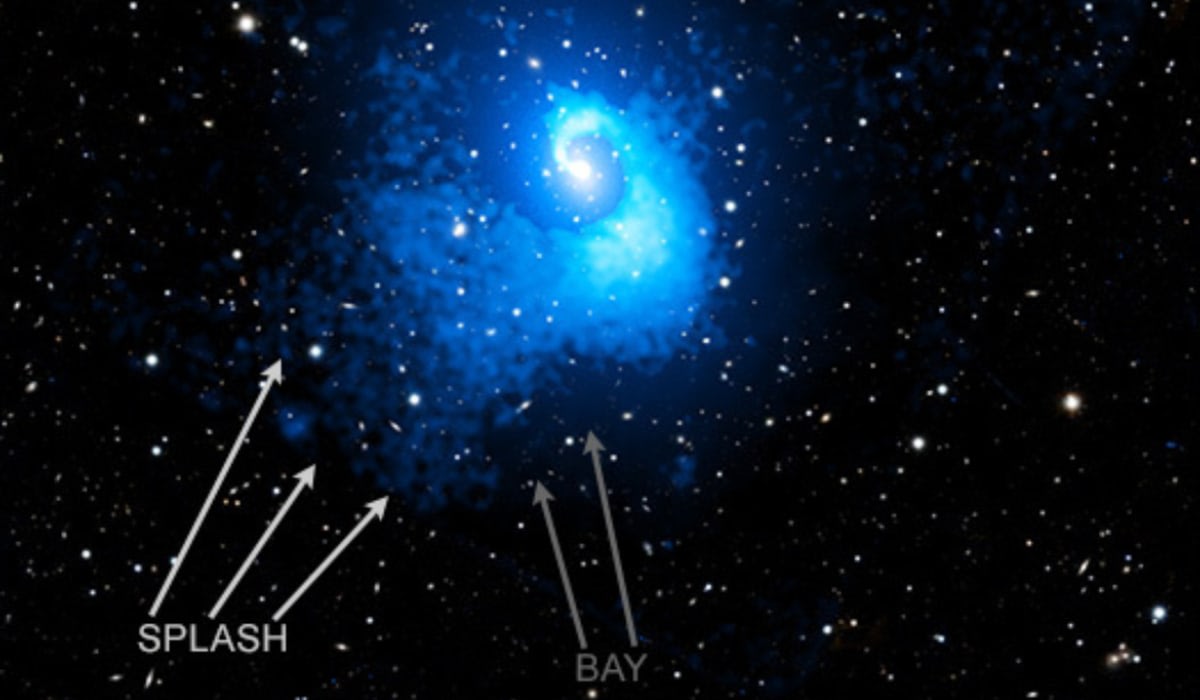
The Chandra observations also revealed several additional features pointing to the cluster’s turbulent past. One is a broad “splash” of cooler gas—material likely displaced during the collision itself. Another possible feature resembles a shock wave, akin to the sonic boom produced by a supersonic jet. The strangest structure of all, perhaps, is a "bay" carved into the hot gas. The bay might have formed through an overlap between the outer parts of the spiral and the gas stripped away from the smaller cluster as it passed through the larger one.
To shed light on the nature of the collision, the researchers resorted to computer simulations. The simulations reveal that the intruding cluster was roughly one-tenth the size of Abell 2029. The first brush with the smaller cluster tugged Abell’s gas sideways. But gravity eventually slowed the smaller cluster and dragged it back for another encounter, intensifying the disturbance and leaving behind a massive spiral pattern that scientists now observe. All these features actually remained hidden until a sophisticated image-processing technique was used. The researchers first found out the degree of deviation of the hot gas from a symmetrical shape. They then digitally subtracted that model from the original X-ray image. The subtraction exposed the dramatic underlying structures: the big spiral, the splash region, and the bay.
More on Starlust
Scientists simulate how collision of two galaxies will proceed over 200 million years from now