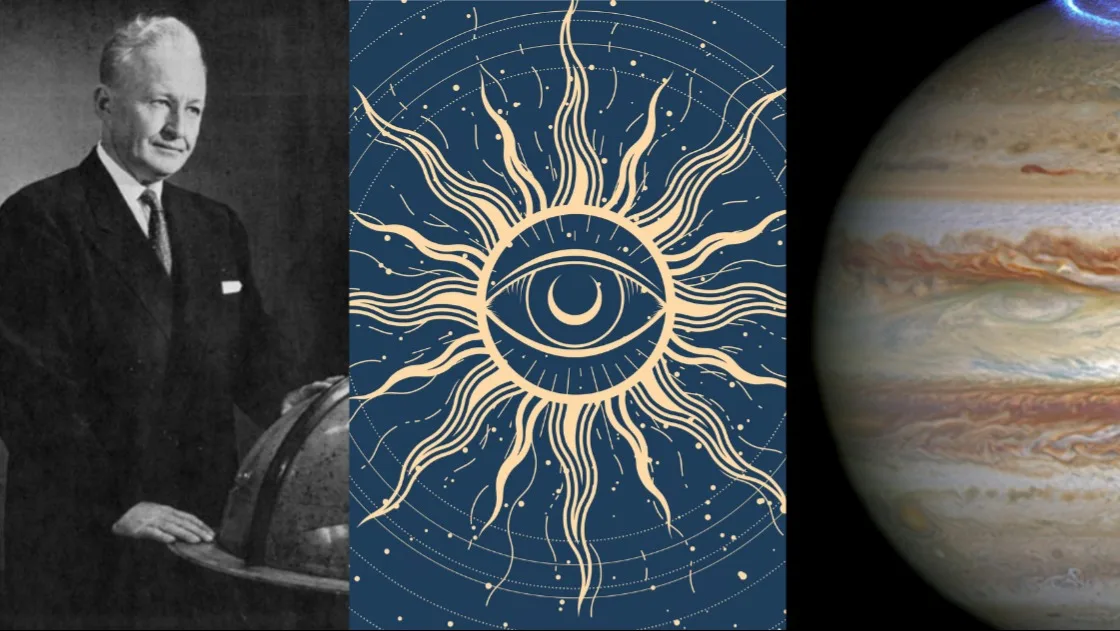
Two men 'psychically probed' Jupiter before any spacecraft got there, and the CIA has proof
It started with a strange test
In the early 1970s, researchers at the Stanford Research Institute (SRI) tested whether a person could actually describe a place they had never been to before. They called this experiment remote viewing. And in April 1973, two men began their probe of the largest planet in the solar system.
They described its surface in far more detail. This test took place when NASA’s Pioneer 10 space probe was on its way to Jupiter and would soon relay data back to us. Here’s a look at how accurate their information actually was and what we know so far.
What exactly is remote viewing?
Remote viewing is a psychic ability through which people can acquire information about a distant or non-local place without using their physical senses. It is often known as “anomalous cognition” or “second sight.”
"At times, these individuals can apparently describe events, places, people, objects and feelings with very high quality," notes the CIA. Interestingly, the term was first coined by physicists Russell Targ and Harold Puthoff at the Stanford Research Institute.
The CIA experiment begins
As per a document made public by the Central Intelligence Agency (CIA), on the evening of April 27, 1973, psychical researcher Harold Sherman started his probe at 8:00 p.m. Central Time, while American psychic Ingo Swann, then on the West Coast, started at 6:00 p.m. Pacific Time.
They both started the process simultaneously. Half an hour later, they got on the phone and compared notes with Dr. Hal Puthoff and Russell Targ, documenting the results. At that point, verification from NASA’s Pioneer 10 was still awaited.
What did they actually predict?
According to the transcript shared by the CIA, Sherman described that there are "gases, giving off a golden glow and crystal-like diamond sparkles” in the atmosphere, while Swann also shared the same, saying that "there are crystals; they glitter."
They also added that the atmosphere of Jupiter is very thick, with enormous clouds that go miles deep. Sherman said, "It is a gaseous mass of myriad colors - yellow, red, ultraviolet, some green - like a fireworks display."
They began describing the strange surface
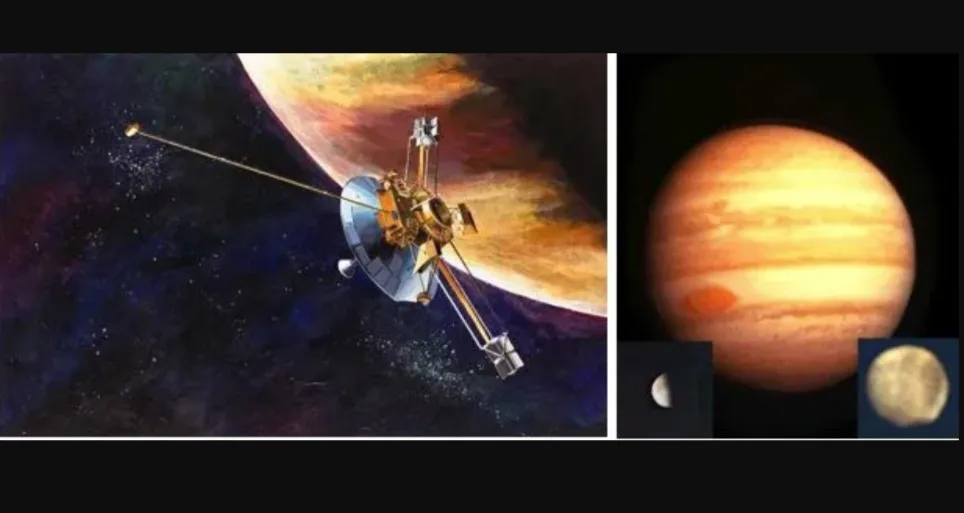
While talking about the surface, Sherman shared that it has “reddish-brown formations” that end in a curved line, and Swann noted that the horizon appears to be “orangish or rose-colored.”
On top of that, they mentioned the appearance of huge volcanic peaks, ranges that are about 31,000 feet high, ice crystals, powerful magnetic forces, as well as tremendous winds and even a tornado. The details became more precise, as Swann said, "I feel that there is liquid somewhere, liquid, like water."
And they also warned that Pioneer 10 was about to crash
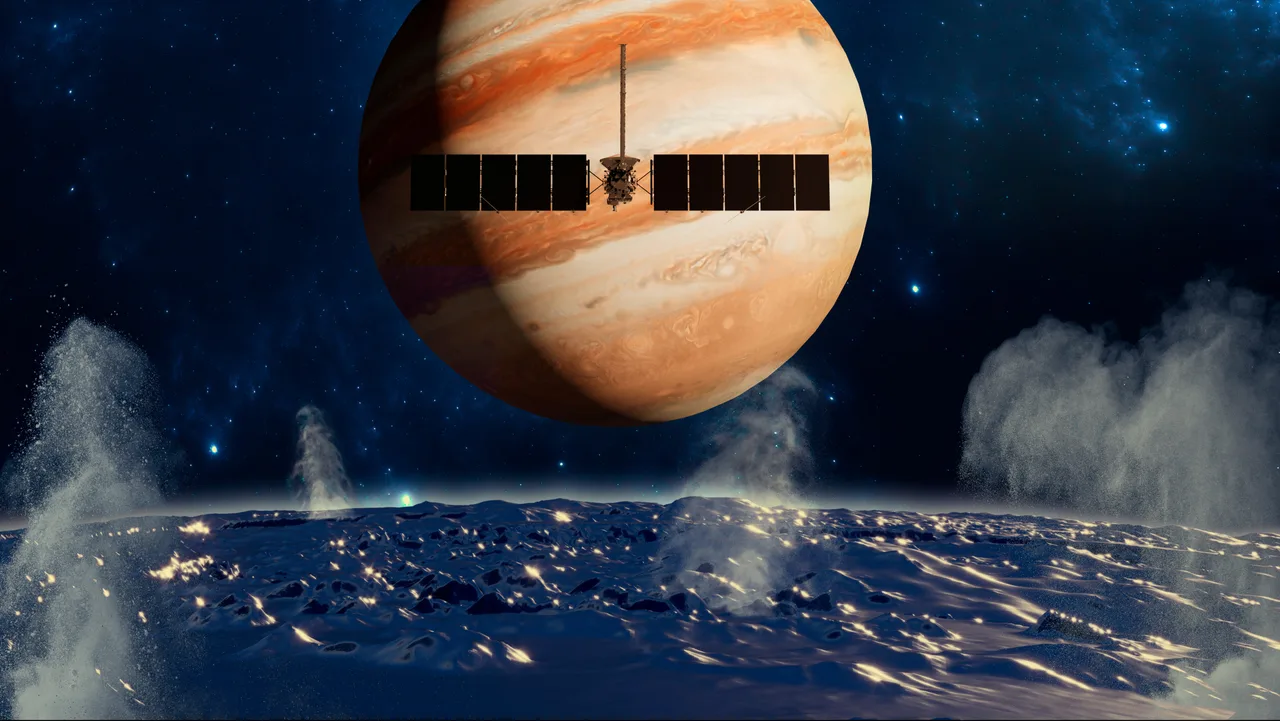
The same document also mentions a prediction that didn't age well at all. One of the numbered points notes that Pioneer 10 will collide with the largest of Jupiter's moons, unless the spacecraft's course was changed.
Other than that, the document mentions the presence of 17 moons, and some are undiscovered. Separately, Swann predicted that there are several very dark planets sitting between Mars and Jupiter, and said the life there was "lesser or equivalent to ours."
But how much of this is actually true?
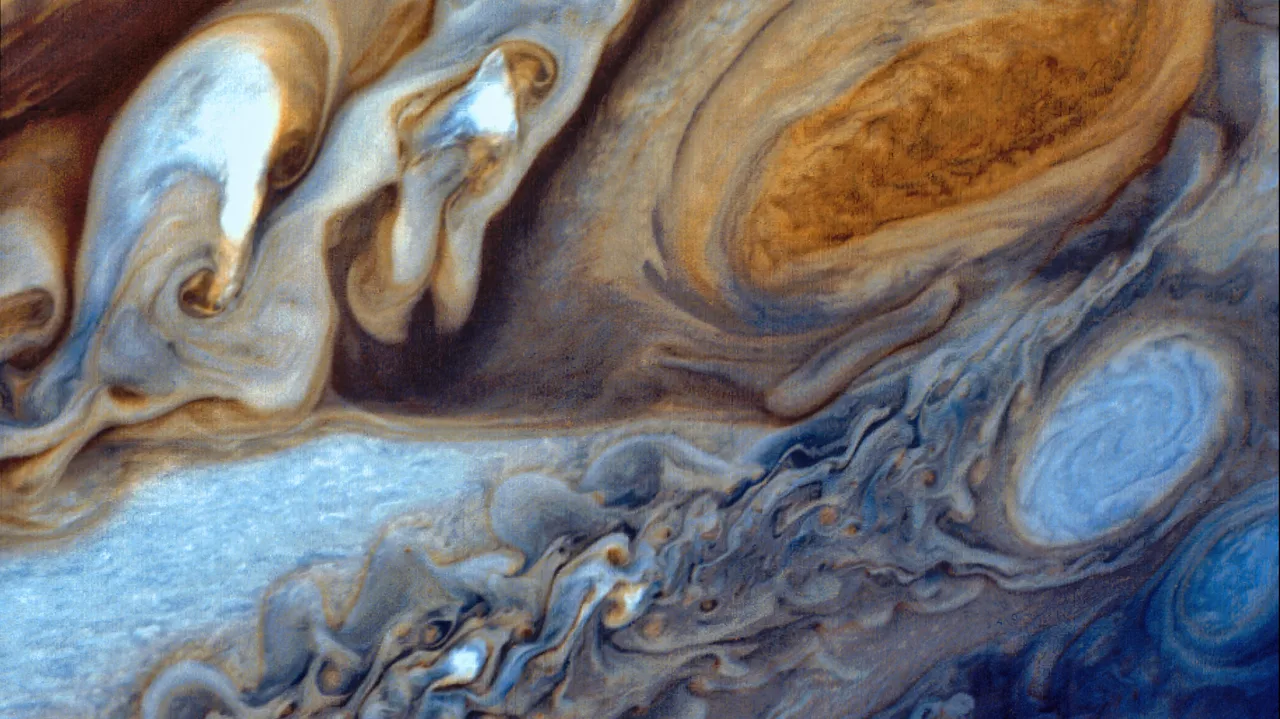
While the experiment revealed far more details about the surface, NASA’s probe gave us a clearer picture of what’s really out there. NASA's Pioneer 10 came into close contact with Jupiter on December 3, 1973. It was the first-ever spacecraft to give us close-up images of Jupiter, as well as three of its largest moons: Ganymede, Callisto, and Europa.
There was no collision, and it successfully completed its flyby of the planet. Also, as of August 2026, the International Astronomical Union has officially recognised 115 moons of Jupiter, which is far more than what the psychics claimed.
Jupiter has no ground, no dunes, and no mountains
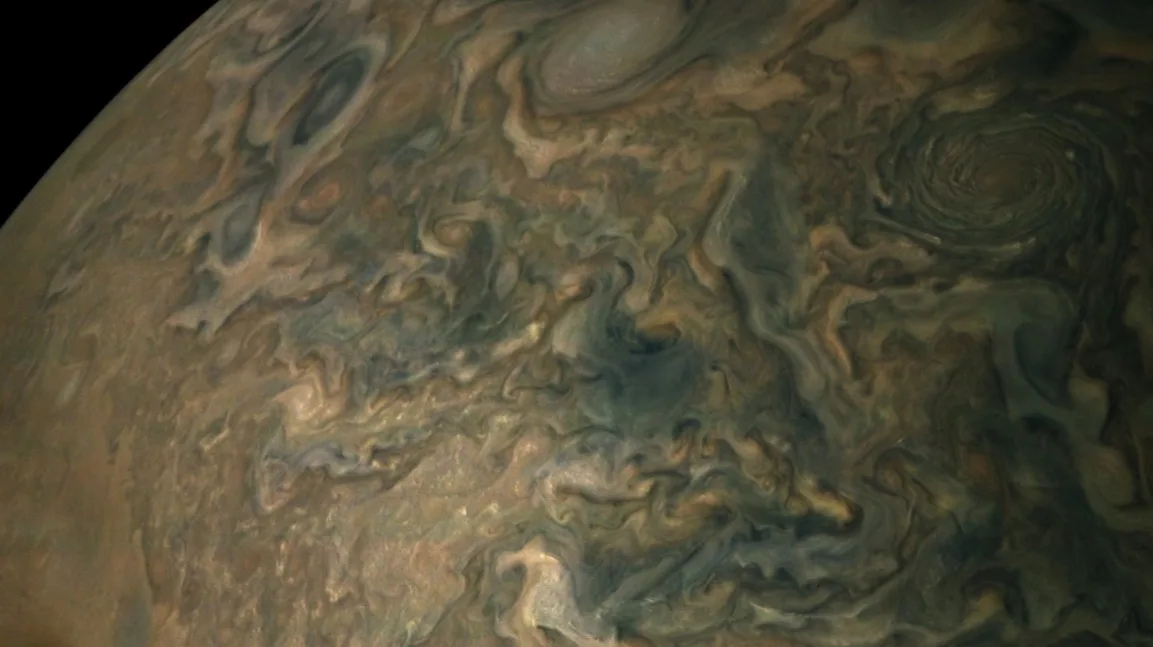
According to NASA, Jupiter's environment is not supportive of life as we know it. Also, it has no solid surface. In fact, the innermost layer of the planet is expected to include water and vapor.
"As a gas giant, Jupiter doesn’t have a true surface. The planet is mostly swirling gases and liquids," notes the official NASA website.
But Jupiter really does have cyclones
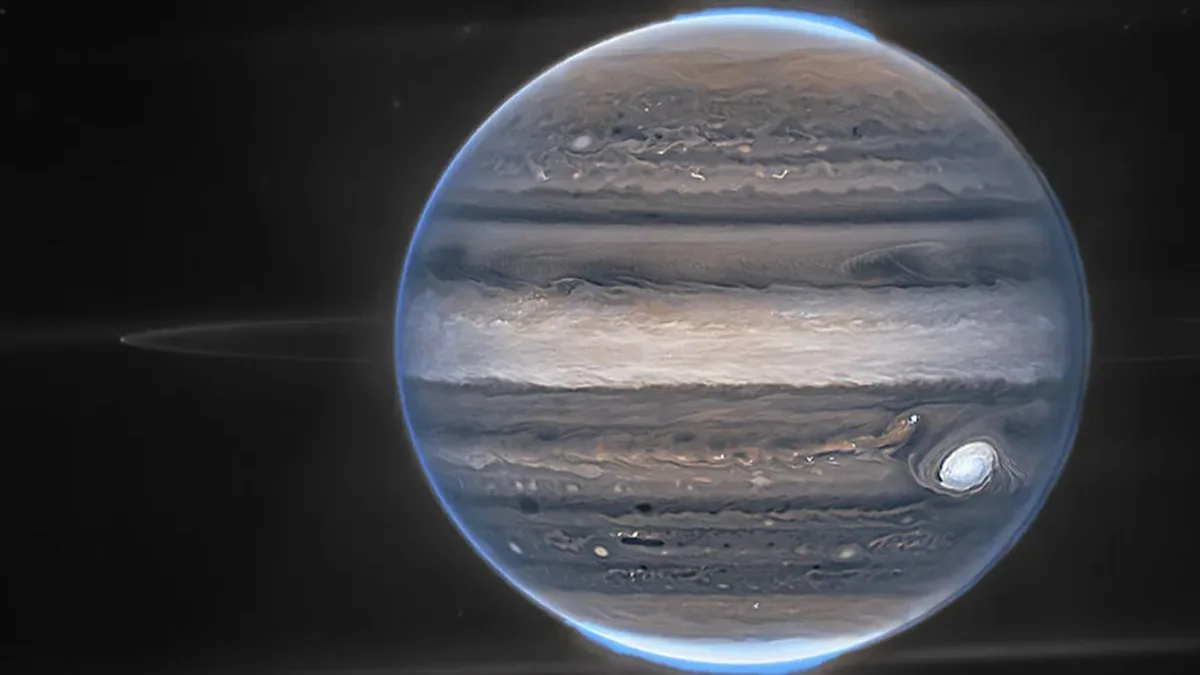
In 2021, data from NASA's Juno probe showed that Jupiter has cyclones. “The findings also indicate these storms are far taller than expected, with some extending 60 miles (100 kilometers) below the cloud tops and others, including the Great Red Spot, extending over 200 miles (350 kilometers),” as per NASA.
So, were the predictions true?
Six years after the experiment, NASA's Voyager 1 probe confirmed that the planet has rings, which were discovered during its historic flyby of the planet in March 1979. Some link this discovery to Swann's mention of “crystal bands,” but the CIA document's own list of predictions, written at the time, doesn't include a ring.
Also, a declassified CIA summary report on the wider remote-viewing project, called Stargate, concluded that “the value and utility to the Intelligence Community of the information provided by the process cannot be readily discerned.” The document also notes that "the entire process, from beginning to end, is highly subjective.” Eventually, the project was terminated in 1995.