International Moon Day: A look at NASA's most iconic Moon images
The most iconic images of the Moon
A U.S. spacecraft took the first-ever close-up image of the Moon on July 31, 1964, in black and white. It showed the lunar surface in remarkable detail and gave humanity the first look at our closest neighbor up close. Since then, we have taken countless images of the Moon from space as well as from Earth’s surface.
Every Moon photo tells its own story. But a handful stand out because of just how beautiful and iconic they are. Here's a look at a few such images that continue to make us marvel at the Moon's beauty.
Humanity's first steps on the Moon (Apollo 11)
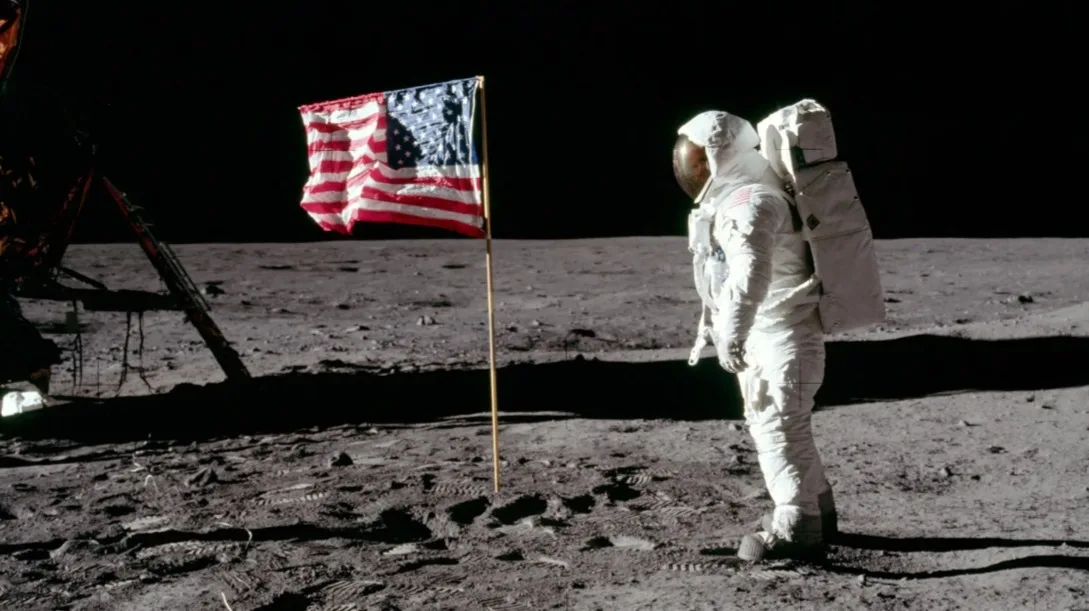
Taking a giant leap for mankind, Apollo 11 marked the first time humans set foot on another world. On July 20, Neil Armstrong, commander of Apollo 11, climbed down the ladder and said, "That's one small step for a man, one giant leap for mankind."
Right behind him was Buzz Aldrin, and the two astronauts then spent over two and a half hours collecting samples and taking photographs. The image above shows astronaut Buzz Aldrin on the lunar surface, captured in July 1969.
One of the Moon's most detailed portraits
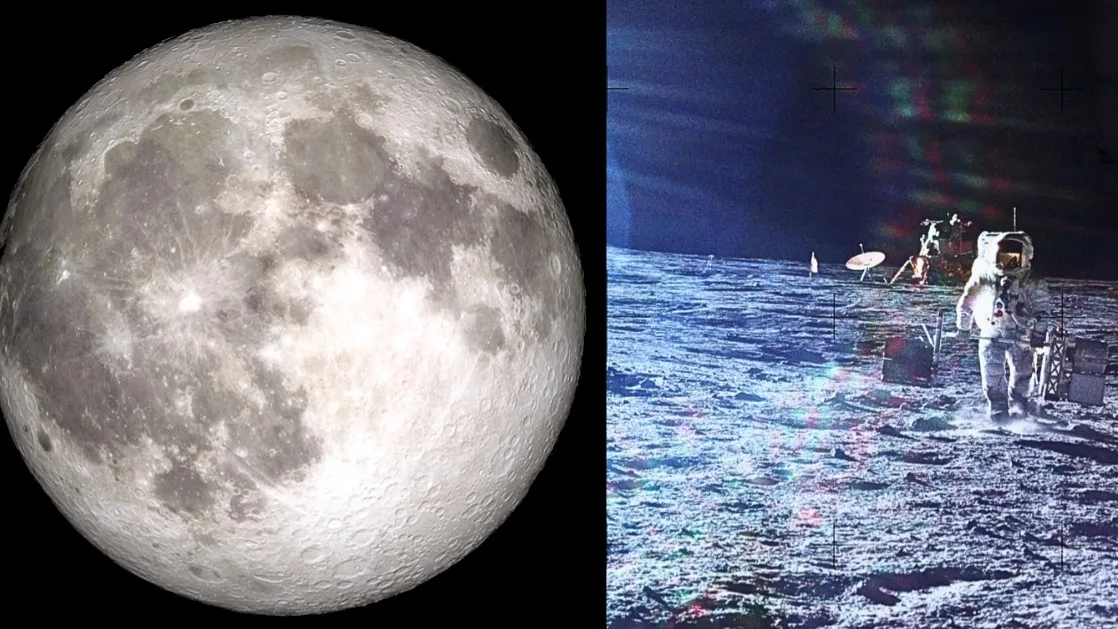
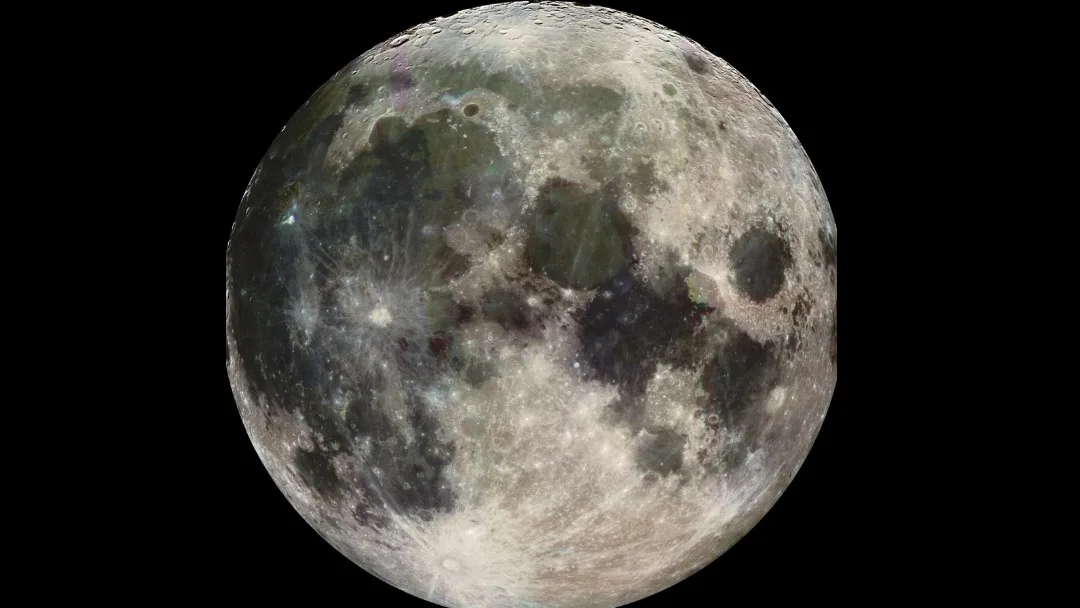
NASA's Galileo spacecraft captured this beautifully detailed image of the Moon on December 7, 1992, on its way toward Jupiter. In this image, you can see the distinct bright-ray crater near the bottom, which is called Tycho, and the dark areas are basins filled with lava rock.
These basins are called Oceanus Procellarum (visible on the left), Mare Imbrium (in the center left), Mare Serenitatis and Mare Tranquillitatis (in the center), and Mare Crisium (near the right edge).
A historic view of the Moon from Apollo 15
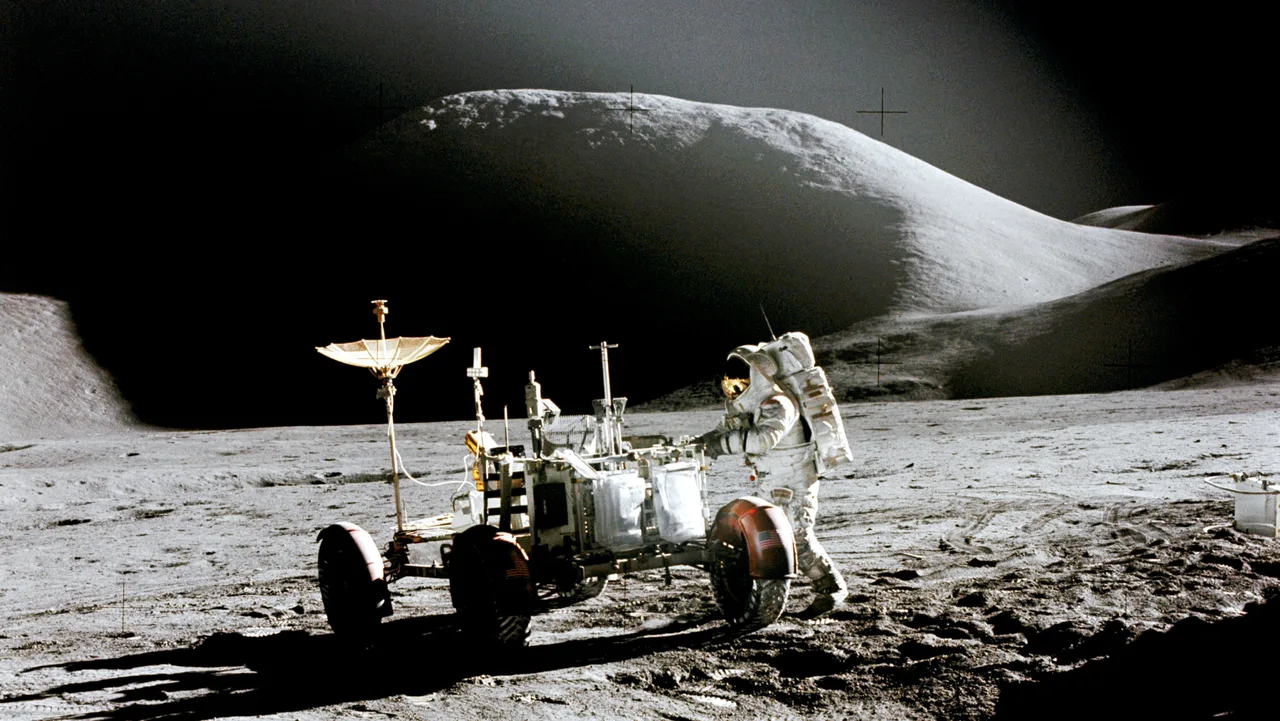
Mission commander David R. Scott took this photo during the first Apollo 15 lunar surface extravehicular activity (EVA), at the Hadley-Apennine landing site.
Here, you can even see the shadow of the Lunar Module Falcon stretching across the surface in the foreground, with Mount Hadley rising behind it. The astronaut pictured is lunar module pilot James B. Irwin, who was working at the Lunar Roving Vehicle at that moment.
The iconic "Earthrise" photograph
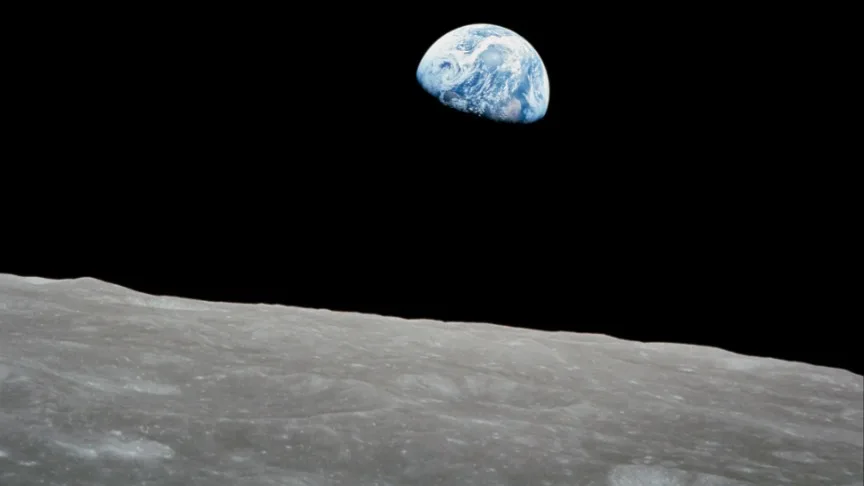
During the Apollo 8 mission, on December 24, 1968, NASA astronaut Bill Anders captured the photograph that would come to be known as "Earthrise". It shows Earth rising above the Moon's horizon. The mission made history, as Anders, Frank Borman, and Jim Lovell became the first humans to orbit the Moon and the first to see this sight with their own eyes.
When they first saw the view, Bill Anders said to his fellow astronaut Jim Lovell in excitement, "Oh my God, look at that picture over there! There's the Earth coming up. Wow, is that pretty!" He then added, "You got a colour film, Jim? Hand me a roll of colour, quick, would you?" "That's a beautiful shot," Lovell replied, as Anders clicked the shutter and captured what would become one of the world's most famous Moon photographs.
Moonset on the 50th Anniversary of the Apollo 11 Launch
This image shows the Moon setting behind the Jefferson Memorial in Washington on July 16, 2019. The photograph was captured exactly 50 years after Neil Armstrong, Michael Collins, and Buzz Aldrin launched aboard Apollo 11.
Apollo 11 became the first mission to land astronauts on the Moon, and this day is celebrated as a significant milestone in the history of space exploration. The image marks this occasion by aligning the Moon with one of Washington's most recognizable landmarks.
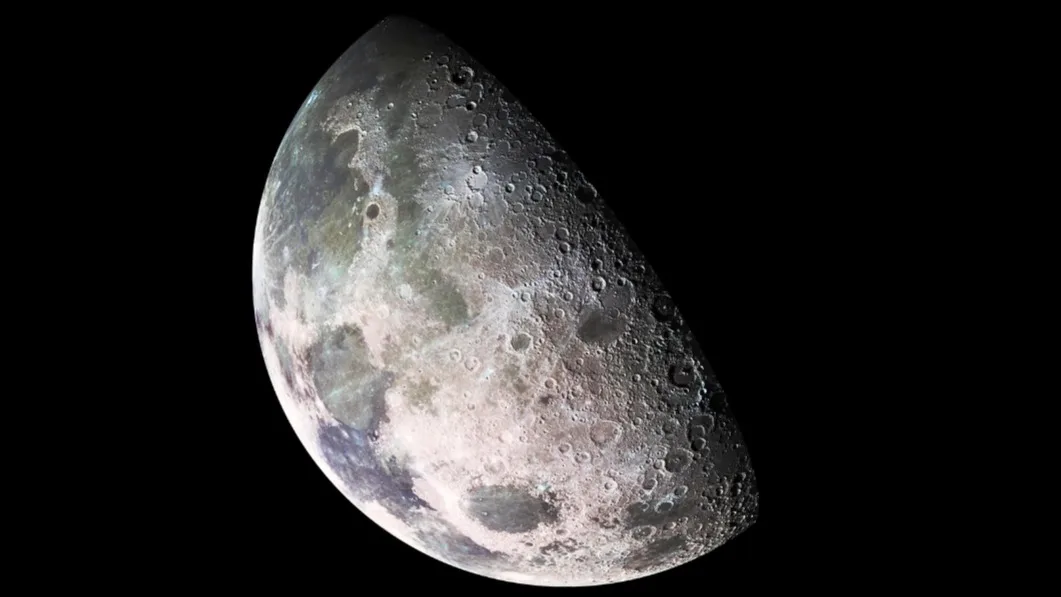
The Moon's north pole in stunning detail
The Moon's north pole looks as beautiful as ever in this image. NASA's Galileo spacecraft captured it during its 1992 survey of the Moon. On the left, there are dark, lava-filled Mare Imbrium up top, Mare Serenitatis in the middle, and Mare Tranquillitatis below it. Toward the bottom of the mosaic, Mare Crisium shows up as a dark circular feature.
At the lower right, you can see the dark lava plains of the Marginis and Smythii basins. At the center is the Humboldtianum Basin, a 650-kilometer (400-mile) impact structure partly filled with dark volcanic deposits. This color mosaic was created using 18 images taken by Galileo's imaging system through a green filter.
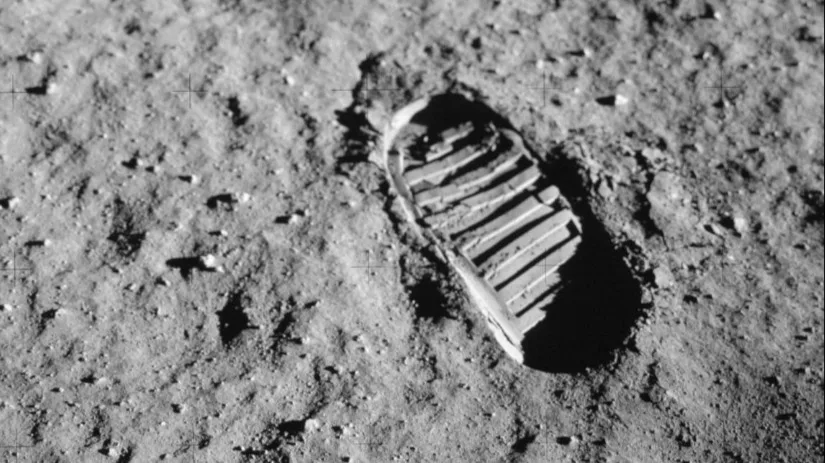
Humanity's first footprints
Representing one of humanity's first footprints on the Moon, this image perfectly captures a defining moment from the Apollo 11 mission. Buzz Aldrin made the bootprint in the lunar dust at the Sea of Tranquility on July 20, 1969, and photographed it as part of a soil mechanics experiment.
Since then, the photograph, officially cataloged by NASA as AS11-40-5878, has become one of the most recognizable images from Apollo 11. Meanwhile, the bootprint itself remains largely preserved on the Moon even today.
Earth rises beyond the Moon's horizon
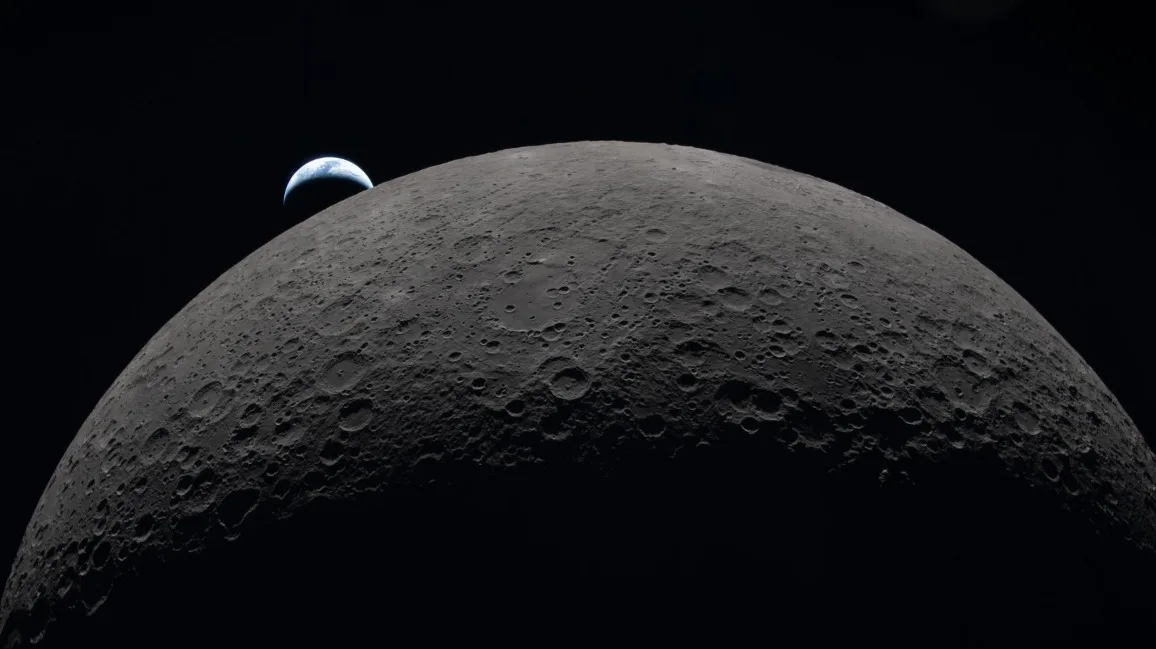
Among the images captured by the Artemis II crew, this one stands out for showing the Moon's curved limb with our home planet glowing in the background. It was taken as the crew made its way to the Moon's far side.
In this image, you can see many fascinating lunar features.
Along the edge is the Orientale Basin, while the Hertzsprung Basin appears as two subtle concentric ridges. Cutting across the Hertzsprung Basin is Vavilov, a younger crater superimposed on the older basin.
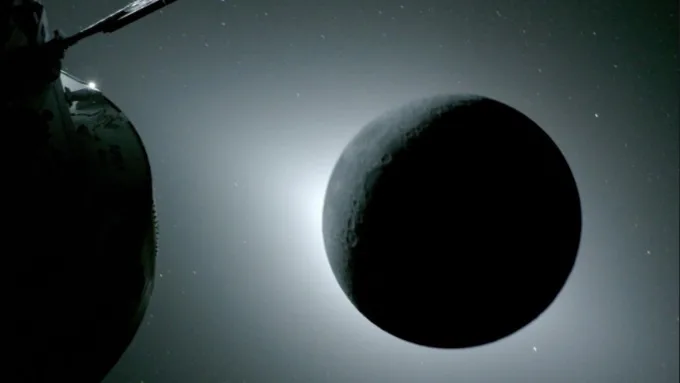
Solar Eclipse of the heart
Few views of a solar eclipse look quite like this. Here, the Moon is backlit by the Sun during a solar eclipse on April 6, 2026. The photograph was taken by one of the cameras mounted on Orion's solar array wings, with part of the spacecraft visible in the foreground on the left.
The image also captures several celestial objects in a single frame. Earth reflects sunlight along the Moon's left edge, and this makes it appear slightly brighter than the rest of the lunar disk.
The Moon from the International Space Station
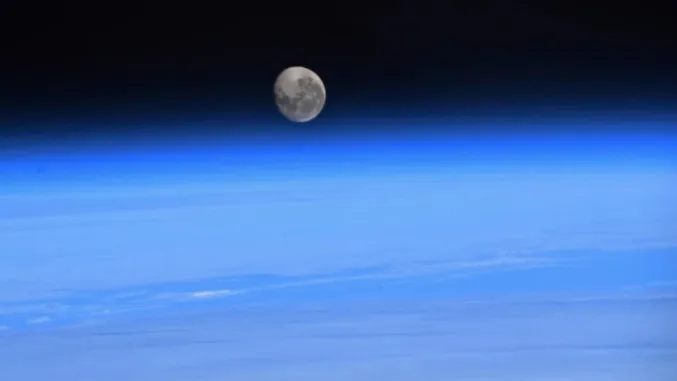
"As beautiful as the Earth is, I can't seem to take my eyes off of the Moon." That's how NASA astronaut Jessica Watkins described this picture of the Moon, which she shared while she was aboard the International Space Station as part of NASA's SpaceX Crew-4 mission.
Her post continued: "Every moonset on @Space_Station brings us one step closer to earthrise on the Moon as we conduct scientific research and develop new technologies that will help pave the way to the lunar surface."