What would happen if you traveled at the speed of light? Scientist explains
Could we ever outrun the speed of light?

We know that light travels about 186,000 miles per second (300,000 kilometers per second). In 1905, Albert Einstein published his theory of special relativity, which treats the speed of light as a constant. According to his theory, the speed of light looks the same to every observer, no matter how fast the observer is moving or what produced the light.
But his idea also has some strange consequences. Could anything ever reach the speed of light, or even beat it? Here’s what researchers say.
What happens if you actually reach the speed of light?

As per Einstein’s equation (E = mc²), energy (E) and mass (m) are interchangeable, and c here stands for the speed of light. Motion carries energy, so a fast object gains mass. At 10 percent of light speed, the gain is about 0.5 percent on the object’s mass. But at 90 percent, mass doubles.
And as you get close to the speed of light, your mass will reach up to infinity. This also means that it would take an infinite amount of energy to reach it.
What would that trip actually look like?
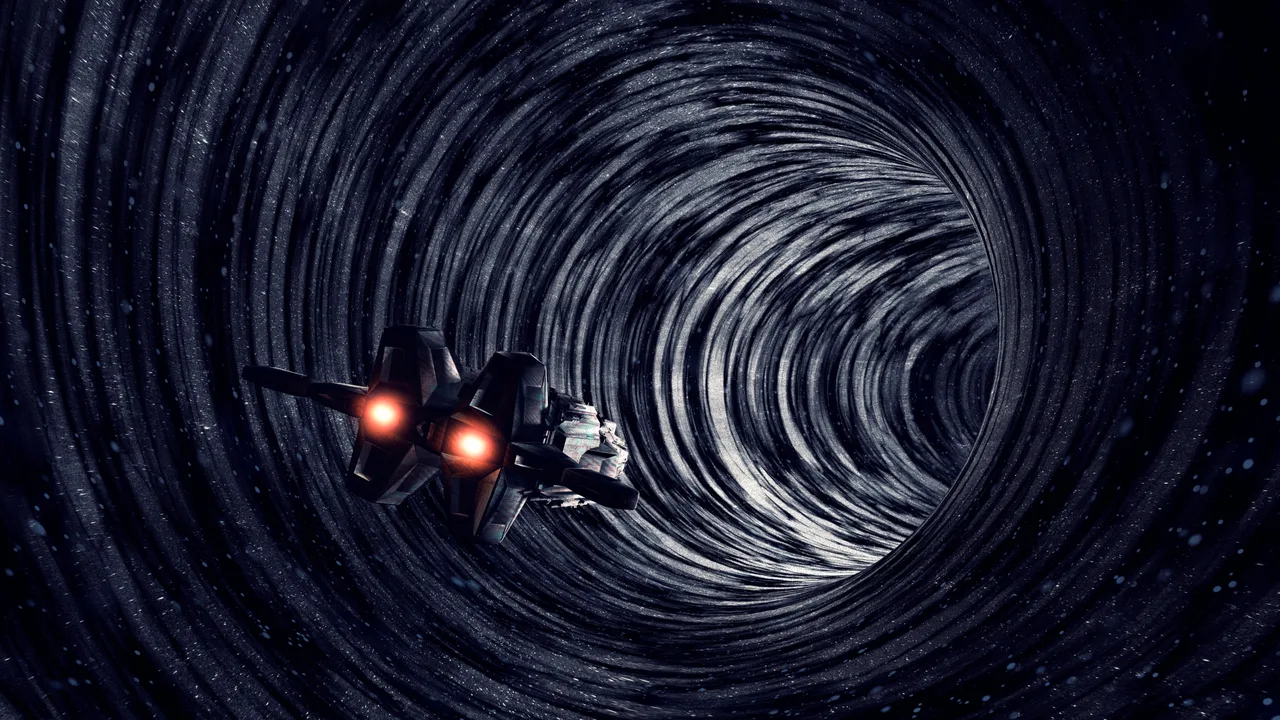
Let's imagine you somehow managed to reach that mind-boggling speed. What would the experience be like? At 90 percent of light speed, time would slow for you. Your watch would only advance 10 minutes while more than 20 passed on Earth. Light from every direction, even behind you, would seem to come from the front, and this would squeeze your view into a small tunnel.
On top of that, stars ahead of you would look blue, and those behind would look red. And if you go even faster than that, they would then shift beyond the colors humans can see.
And then, things get strange
Donald Schneider, who’s a professor of astronomy and astrophysics at Penn State, says that, in theory, strange things happen when you exceed the speed of light. And this includes time travel and a breakdown of cause and effect.
Let’s imagine a gun that fires bullets faster than the speed of light. He explained, “Some observers would see the bullet hit the target before they saw the shooter fire the gun.” He added, "Since one of the guiding principles of relativity is that all physical laws are the same to all observers, this violation of causality would be a big problem!"
Can we really ever travel at the speed of light?
For now, Albert Einstein’s theory says no. “There is no experiment that has contradicted special relativity,” Professor Schneider added. Even in particle accelerators, scientists have only managed to push subatomic particles beyond 99% of light speed. Reaching or exceeding the speed of light remains out of reach.
Schneider leaves room for the possibility that future discoveries could change our understanding of relativity. Until then, he regards Einstein’s theory as the final word on the subject.