Artemis II: Here's a visual guide to the historic NASA mission that will take humans back to the Moon
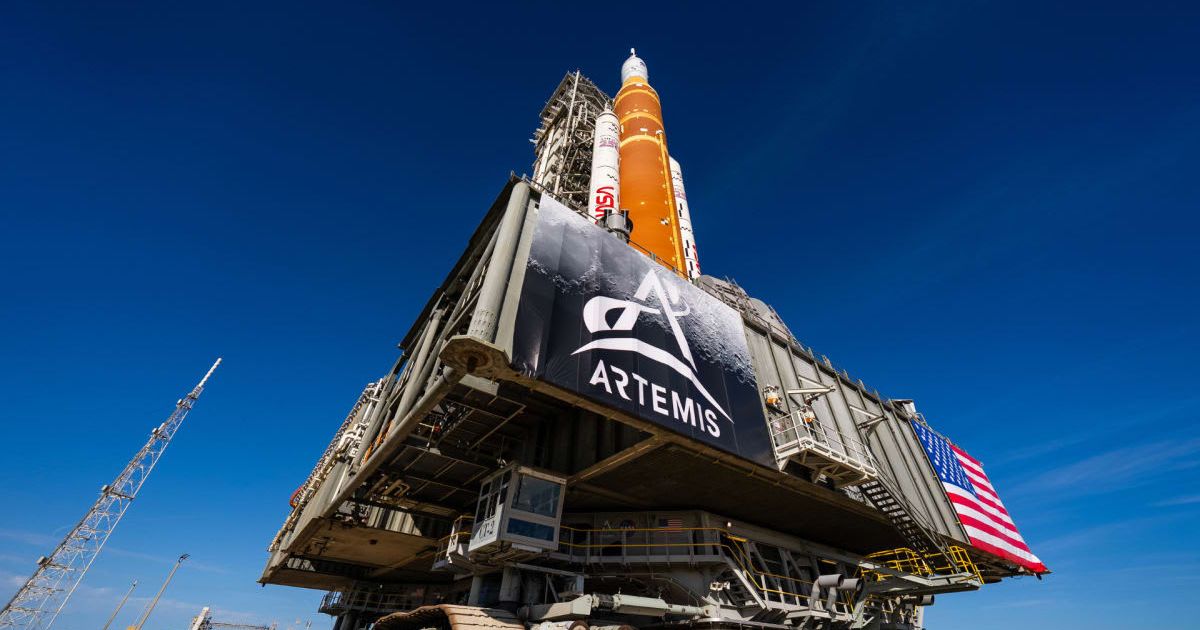
Following up on the success of the uncrewed Artemis I in 2022, the Artemis II mission will be responsible for strengthening the foundations for a long-term presence on the Moon, as per NASA. In fact, the test flight will be NASA’s first mission with a crew on board the SLS (Space Launch System) rocket and Orion spacecraft. As the rocket is being prepared for the wet dress rehearsal, which is targeted for no later than February 2, here is a visual guide to help you understand the intricacies of the mission better ahead of the historic lift-off.
The Artemis II map
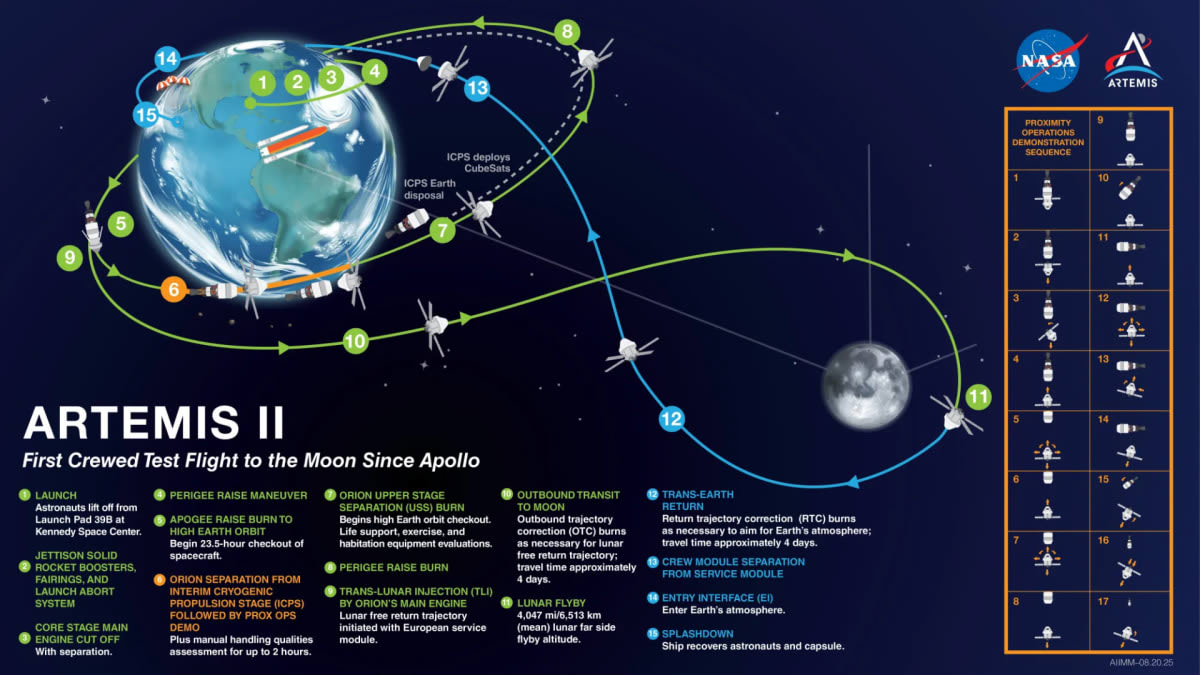
The infographic above details the path that will be taken by the Artemis II mission on its way to the lunar orbit and back. In each phase of the 10-day flight, the four-person crew on board will confirm whether all systems are operating as intended in the harsh environment of deep space, thereby paving the way for the next Americans to set foot on the Moon as part of the Artemis III mission.
Artemis II ascent graphic of various stages
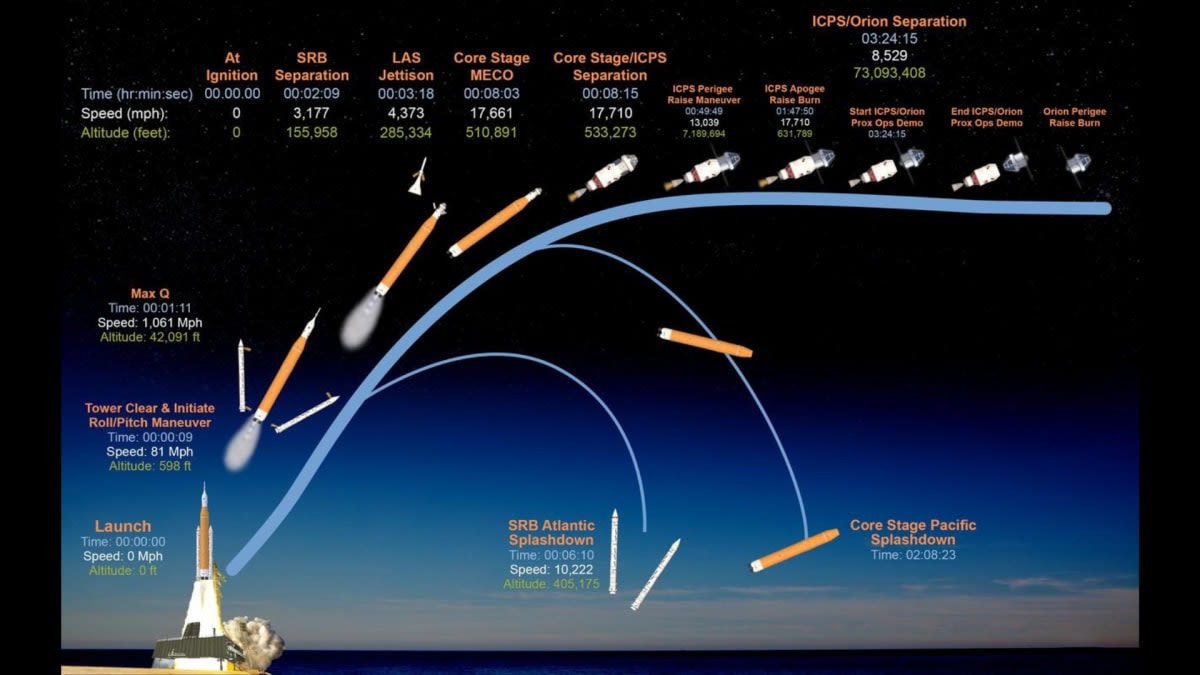
This illustration depicts the time, speed, and altitude of important events involved in the duration of the rocket’s flight. This begins with the launch of the SLS (Space Launch System) rocket and Orion spacecraft and continues with Orion's perigee raise burn during the Artemis II test flight. The map also details stage separations and splashdowns.
The rocket for NASA’s Artemis missions
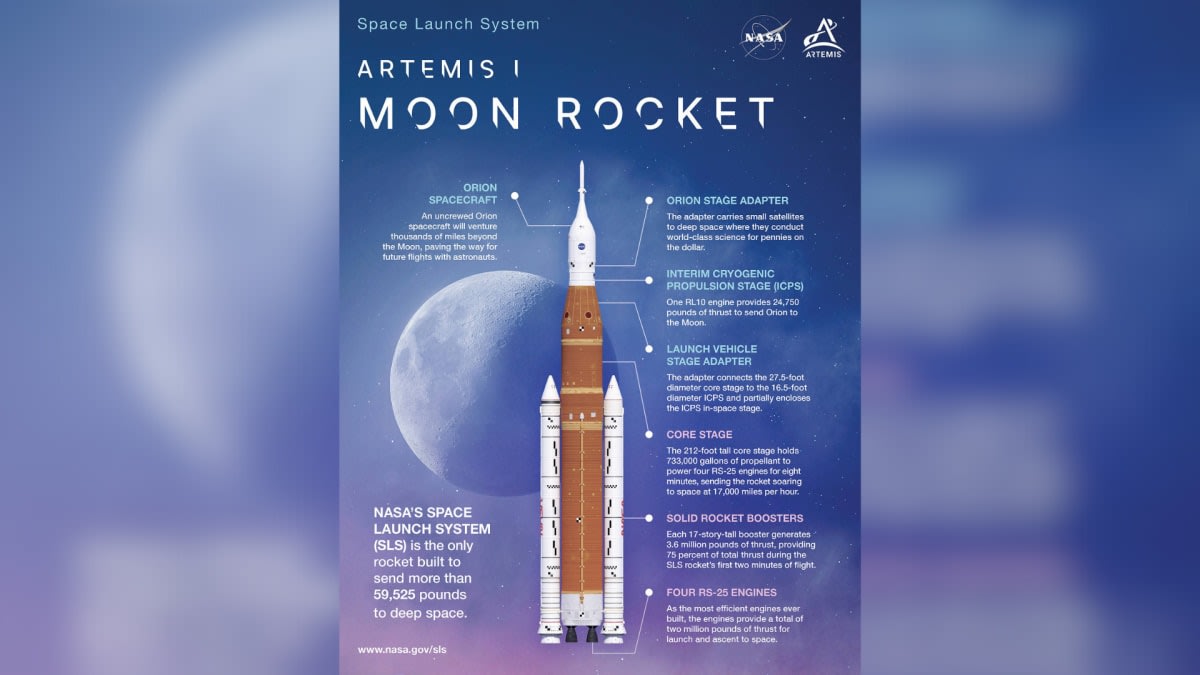
NASA’s Space Launch System (SLS) is the most powerful rocket the agency has ever built. It is the only one capable of carrying the Orion spacecraft, astronauts, and supplies to the Moon on a single mission. Each element of the SLS has a particular function, and its first mission—Artemis I—sent an uncrewed Orion spacecraft to lunar orbit.
The secondary payloads aboard the mission
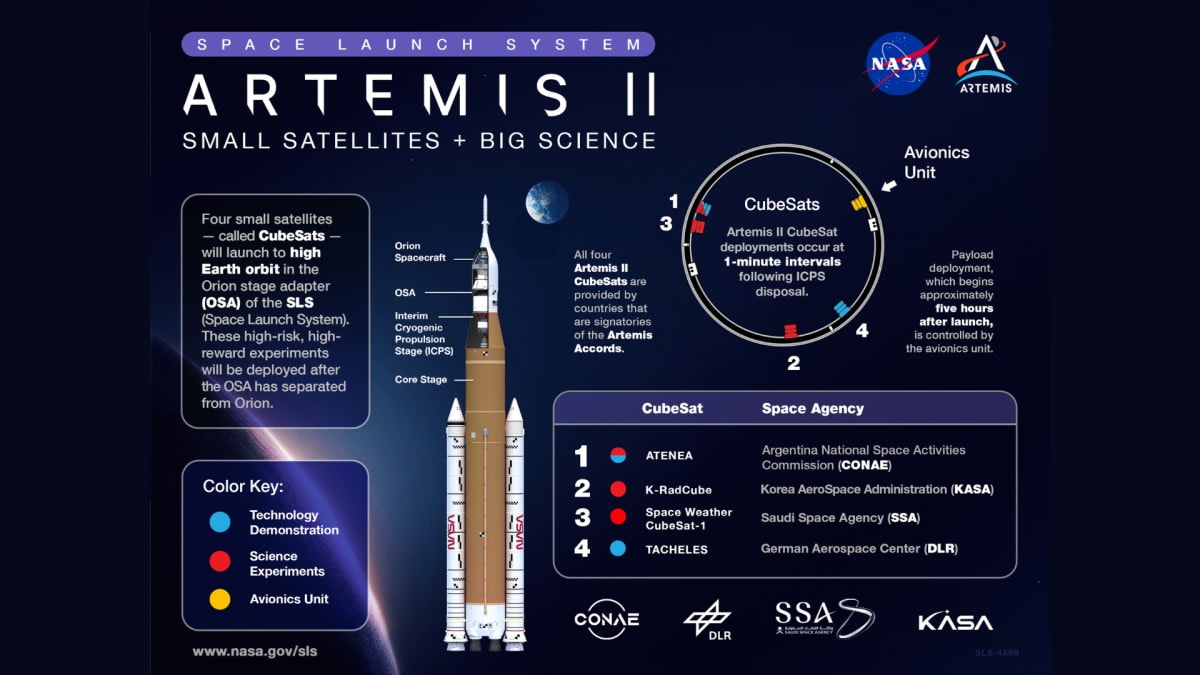
Aside from the astronauts, taking a ride aboard NASA’s SLS rocket to the Moon are four CubeSats, or small satellites, inside the rocket’s Orion stage adapter (OSA). These are provided by the countries that are signatories to the Artemis mission. The payload deployment, which is overseen by the avionics unit, will begin five hours after launch, per NASA.
Engines powering the historic flight
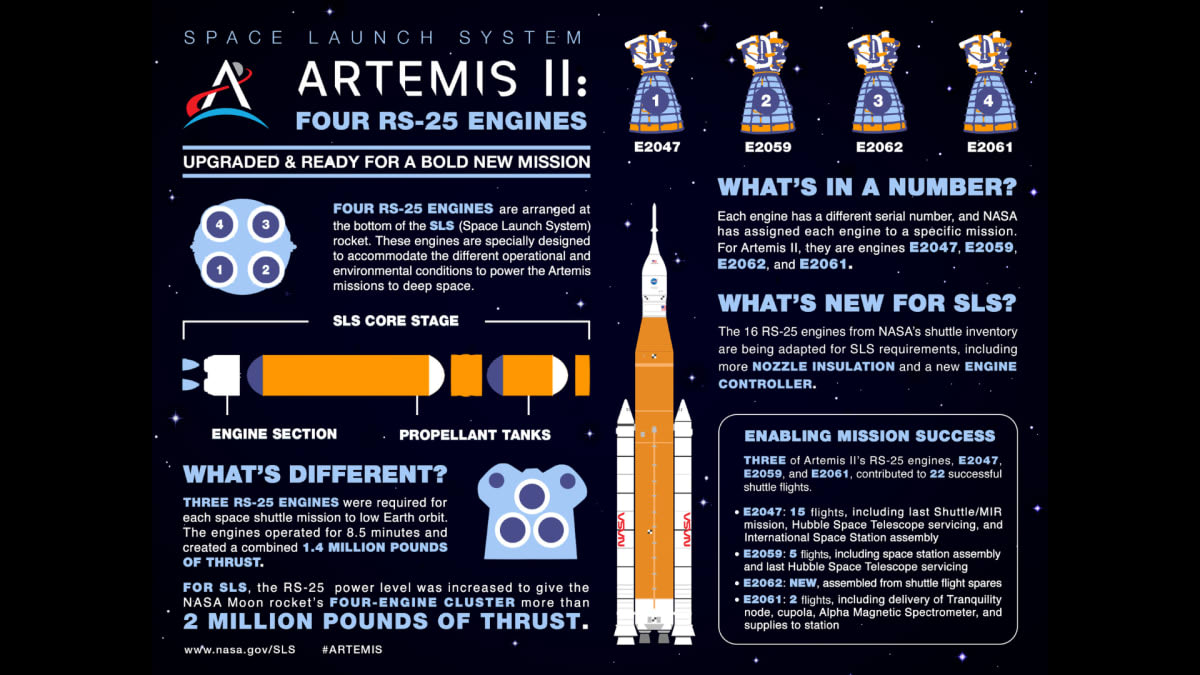
The infographic depicts the four RS-25 engines that are located on NASA’s SLS rocket for Artemis II. These engines have been designed keeping the specific operational requirements of the mission in mind.
The propulsion stage of the rocket
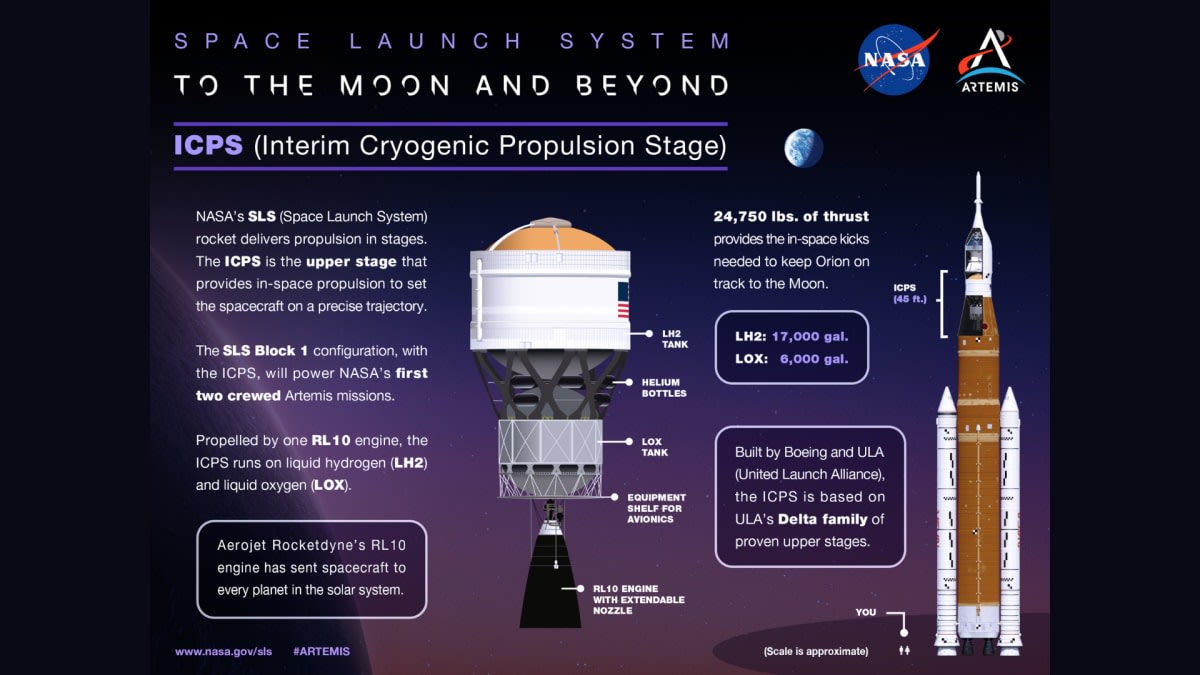
The rocket’s ICPS (interim cryogenic propulsion stage) produces 24,750 pounds of thrust for propulsion in space. The ICPS uses liquid hydrogen and liquid oxygen to power the RL10 engine for Artemis II and III missions. According to NASA, other than having the power to provide in-space propulsion, the ICPS also has avionics to fly the mission following core stage separation until the spacecraft separates to make its way to the Moon.
The rocket’s launch vehicle stage adapter
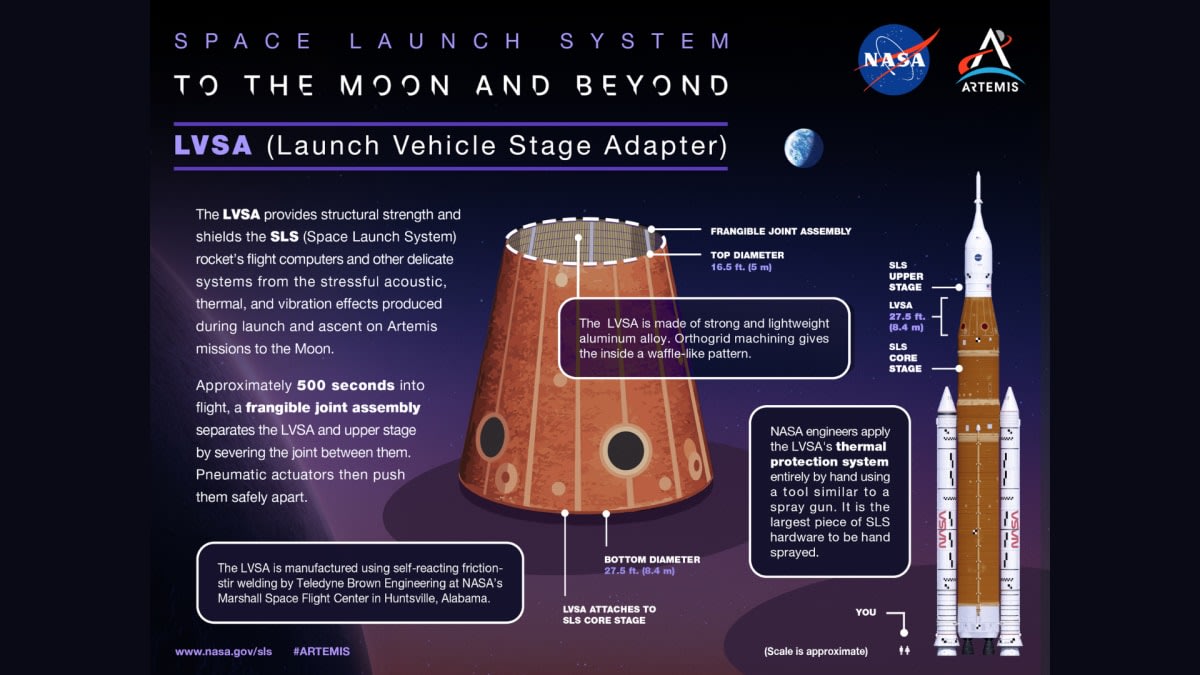
This cone-shaped feature is an important connector between the SLS core stage and the ICPS for the missions. The Launch Vehicle Stage Adapter (LVSA) has a key role during launch and ascent as it provides structural support to the stages. Sensitive avionics and electrical systems within the ICPS are also protected by it from extreme vibrations during the launch phase. The LVSA will separate from the upper stage around 500 seconds (8 minutes and 20 seconds) after the launch.
Boosters on the Moon rocket
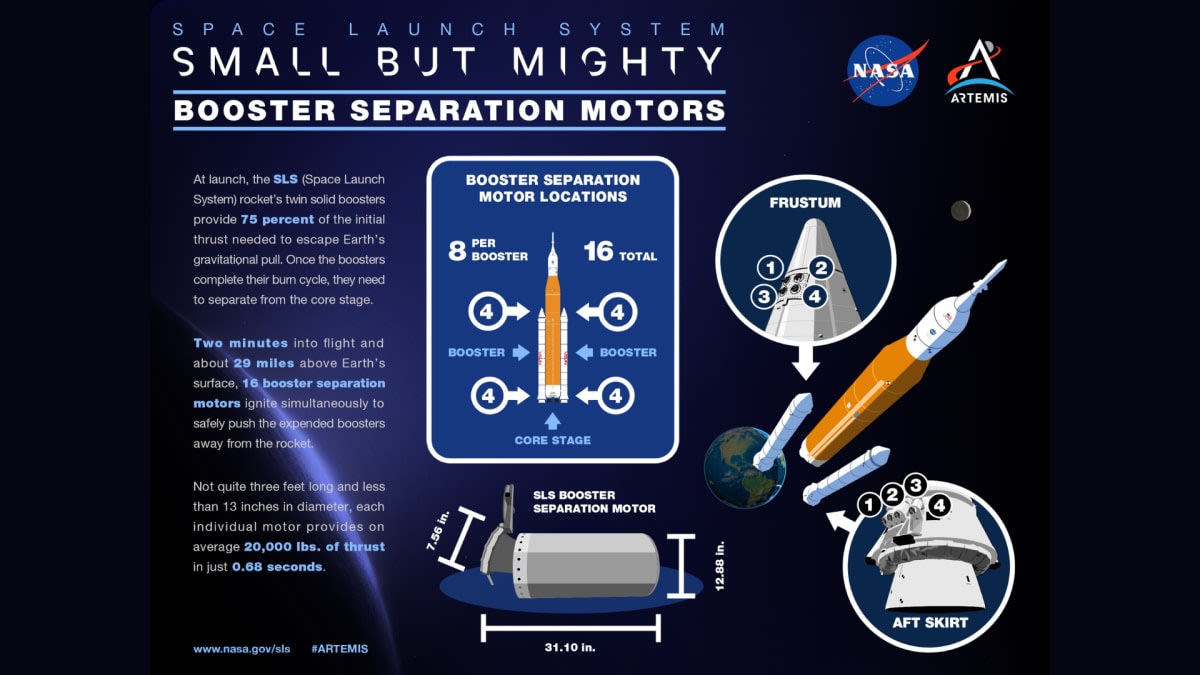
The solid rocket boosters are the biggest, most powerful solid propellant boosters ever made; they are 17 stories tall, and burn around six tons of propellant every second. Each booster generates 3.6 million pounds of thrust, amounting to 7.2 million pounds. For perspective, that's way more thrust than what a dozen four-engine jumbo commercial airliners can generate.
More on Starlust
'The best of humanity': NASA's Artemis II crew and their accomplishments so far
NASA one step closer to launching Artemis II—the first manned lunar mission in over 50 years