Total solar eclipse on August 12: Path of totality, timings and best viewing locations
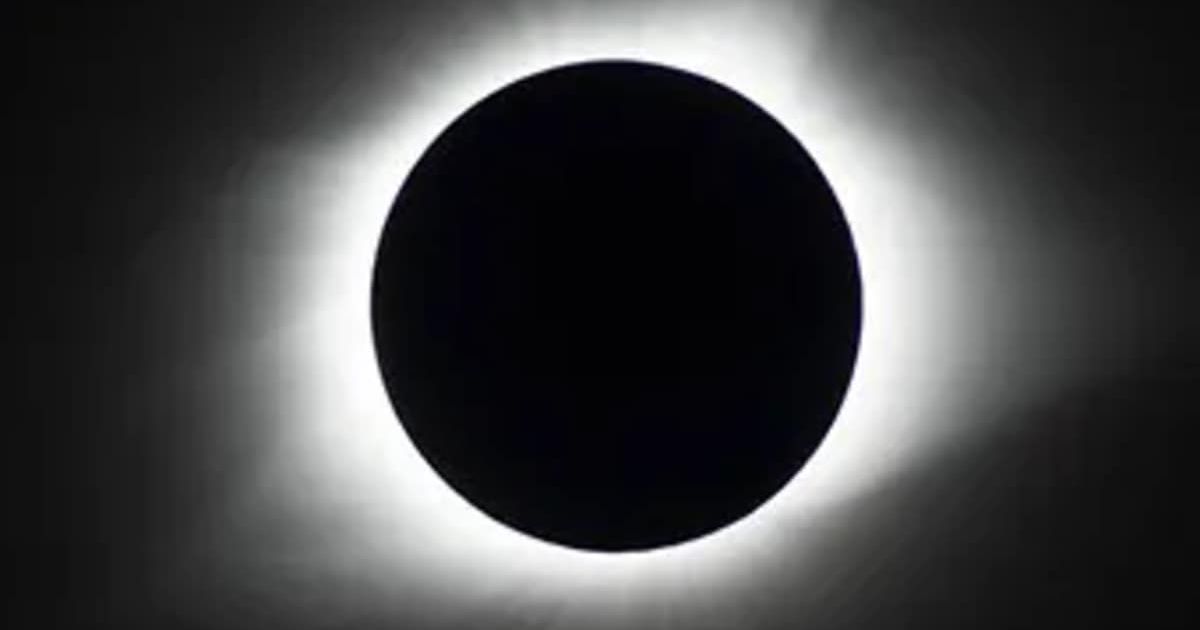
A solar eclipse will sweep across several parts of the world on August 12, briefly plunging some regions into darkness. While Greenland, Iceland, northern Russia, Spain, and a tiny portion of Portugal will witness a total solar eclipse, parts of the northern contiguous U.S., most of Canada, Europe, and northwestern Africa will experience a partial solar eclipse. Interestingly, it will be the first total solar eclipse to be visible in Europe since 1999. Here’s what you need to know about the upcoming celestial event.
Total solar eclipse, timings and where it can be viewed
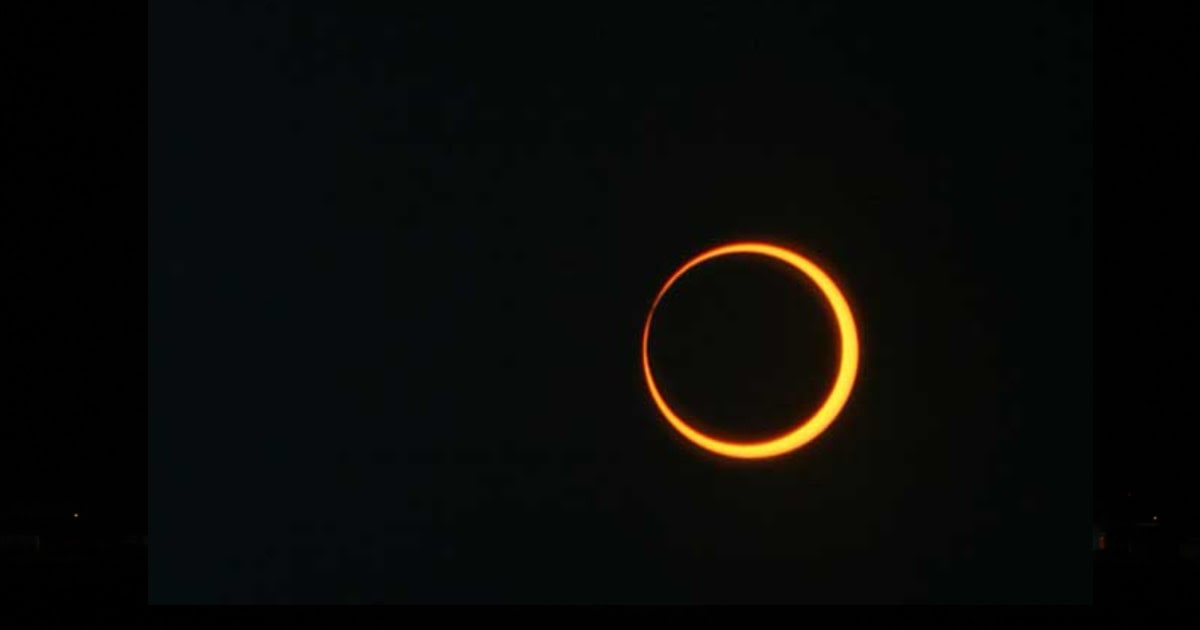
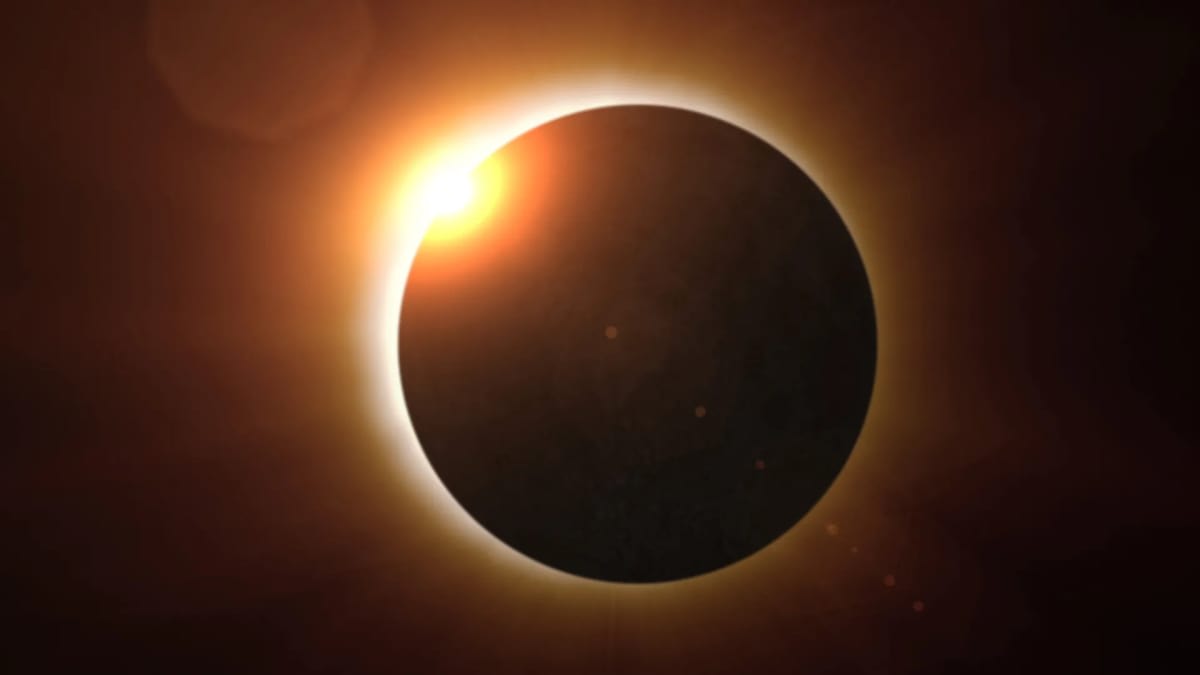
A total solar eclipse occurs when the Moon passes directly between the Sun and the Earth, casting its shadow on our planet. Because the Moon’s shadow is small, totality is visible only along a narrow path. Observers outside the path of totality will witness a partial solar eclipse – like a bite taken out of the Sun.
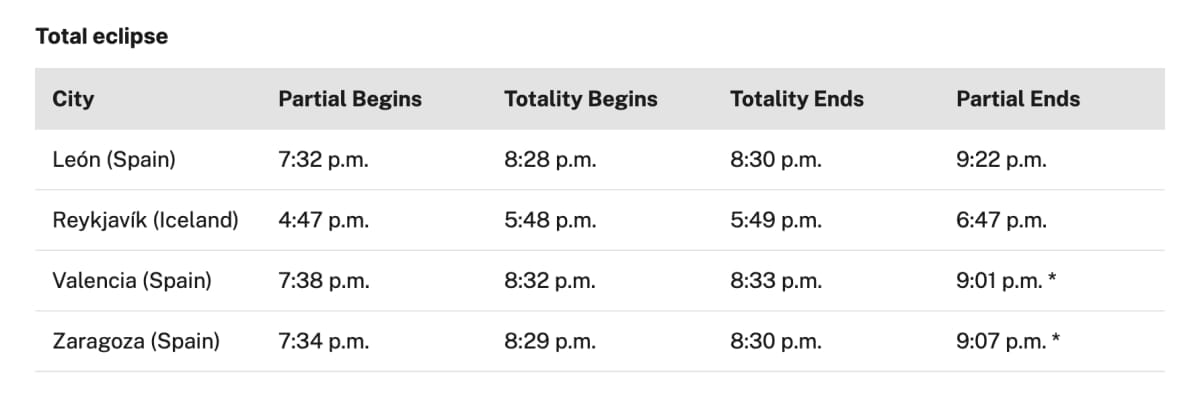
According to NASA, the path of totality runs through select cities, namely León, Valencia and Zaragoza in Spain and Reykjavík in Iceland. Following are timings of when the eclipse will begin and end (local time).
Notably, totality will start in a remote region in northern Siberia, near the North Pole, and will cross the Arctic and North Atlantic oceans before reaching Europe. As for the partial eclipse, it will start and end in the morning in Alaska and northern Canada, whereas the eastern Canadian provinces will experience the eclipse in the afternoon. Interestingly, the eclipse will reach mainland Europe and Africa in the evening, and the Sun will set while it’s still partially eclipsed.
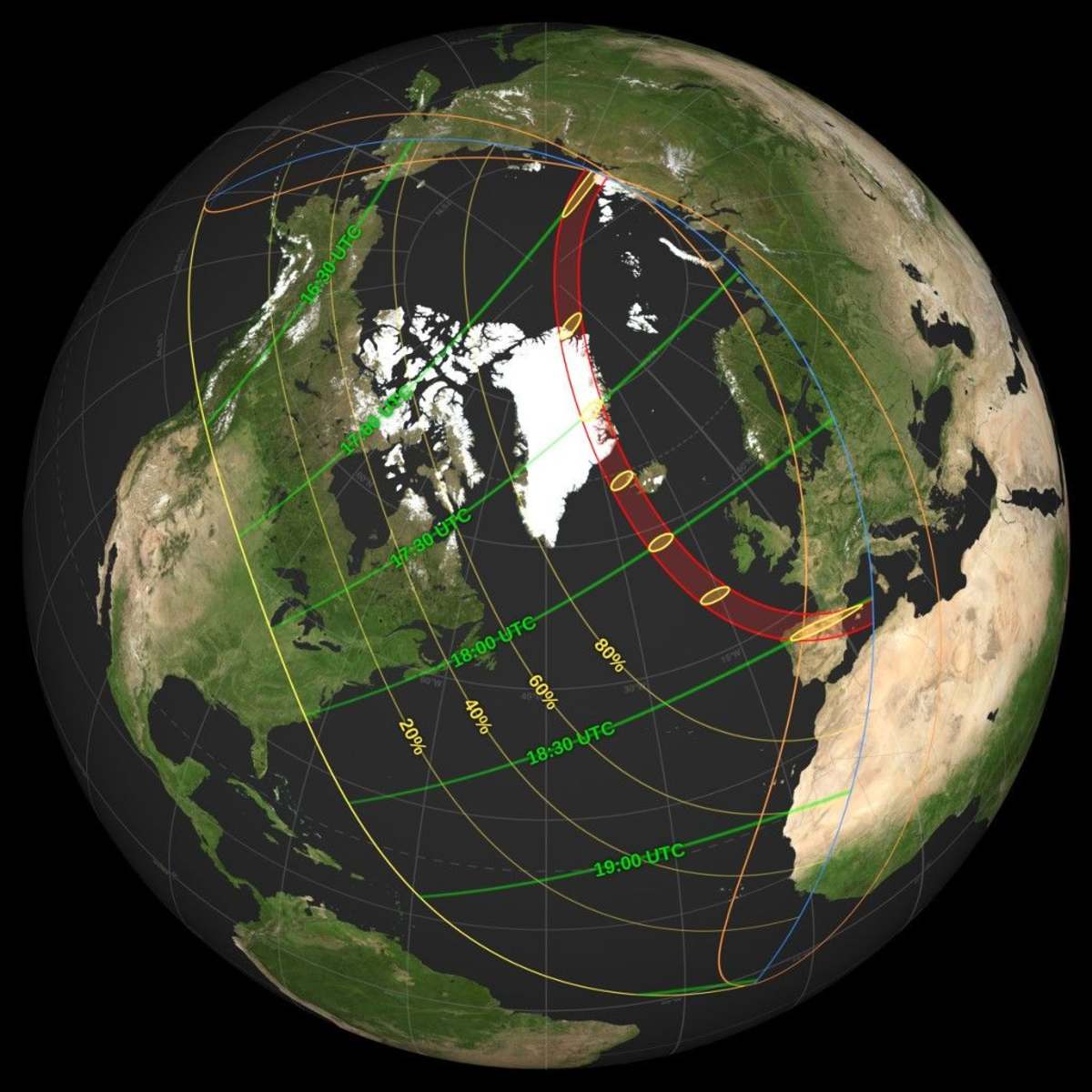
NASA says the eclipse will be visible in the following American cities: Bangor, Maine (from 12:54 pm to 2:49 pm); Boston, Mass. (from 1:01 pm to 2:46 pm); Detroit, Michigan (from 1:03 pm to 2:08 pm); New York, New York (from 1:07 pm to 2:38 pm); Philadelphia, Penn. (from 1:11 pm to 2:35 pm); Portland, Maine (from 12:57 pm to 2:27 pm); and Washington, D.C. (from 1:17 pm to 2:27 pm).
European cities such as Lisbon, London, Milan, Paris, Madrid and Oslo will also witness a partial solar eclipse. In fact, the Moon will have covered 91 per cent of the Sun in London by 7:13 pm. In Portugal’s Lisbon, the coverage will be 95 per cent; in Paris, it will be 92 per cent, whereas in Barcelona, it will be 99 per cent.
More on Starlust
Buck Moon 2026: How to photograph July's Full Moon with your smartphone
Alpha Capricornids meteor shower July 2026: Peak date, best viewing time and how to watch