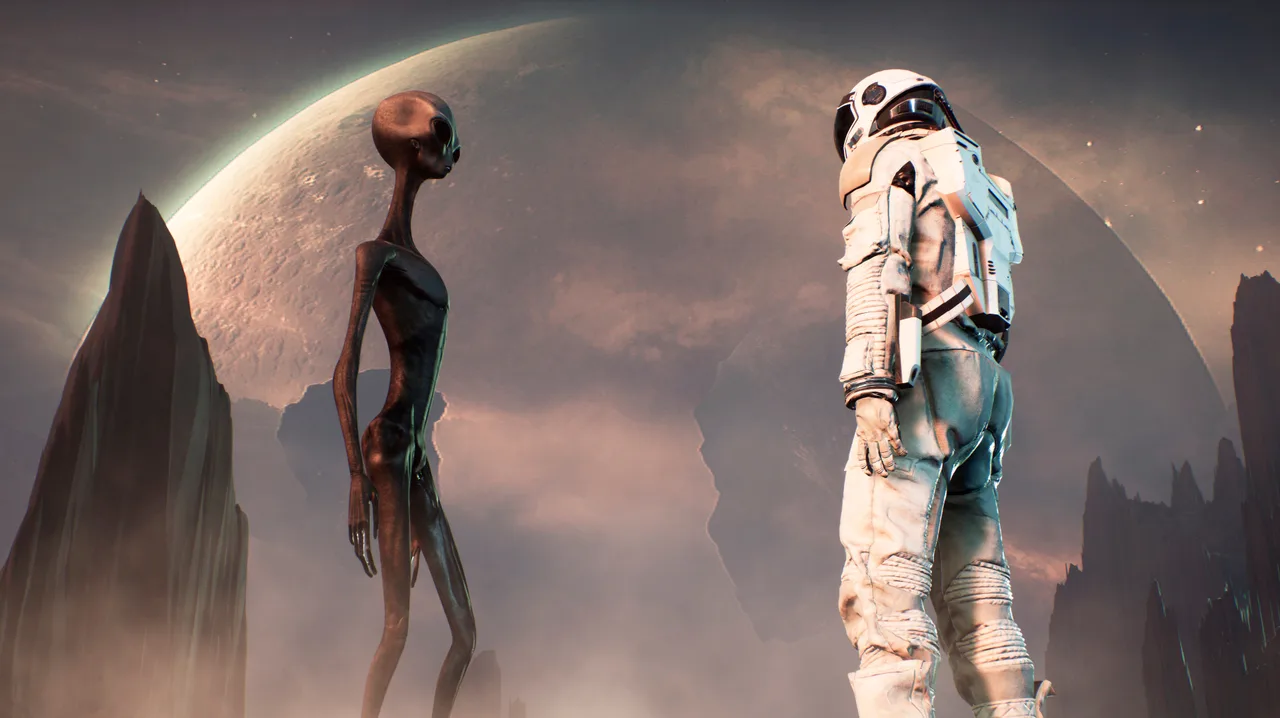
Could our ancestors actually be aliens? Scientists are taking the idea seriously
Life's origin might not be as simple as it seems
We know life existed on our planet more than 4 billion years ago, but that doesn't necessarily tell us where it began. So far, Earth remains one possible answer. But even then, some scientists argue that there could be another possibility. They believe that life, or at least the raw ingredients of it, may have arrived from somewhere in space.
And if that’s the case, it would mean that our ancestors came from beyond Earth all along. This idea is known as panspermia. Here’s what the researchers say.
The theory began with a controversial book
In the 1970s, British astronomers Fred Hoyle and Chandra Wickramasinghe published their book called “Diseases from Space”. This book argued that even illnesses like the flu might have extraterrestrial origins. But the book received backlash at that time.
Theoretical physicist Paul Davies of Arizona State University said, "It sort of pushed Hoyle off the edge of the scientific community.” He added, “He was widely regarded as having become crazy in his old age.”
Even NASA found clues that support the idea
NASA's OSIRIS-REx as well as Japan's Hayabusa2 mission have brought us back samples of asteroids from space. And when scientists examined the samples, they found some of the basic ingredients needed for life.
Jason Dworkin, a project scientist on the OSIRIS-REx mission, says it's "absolutely" plausible that life's ingredients could have come from space all along, since "early Earth had a bombardment of material." Davies added, "Now we can look back and say they contained a germ of truth. They weren't totally crazy."
In fact, a Mars rock once had the whole world talking
In 1996, researchers claimed that they found microscopic fossils of bacteria inside a meteorite called Allan Hills 84001. This rock had fallen to Antarctica from Mars thousands of years earlier. Commenting on this, President Bill Clinton noted from White House Rose Garden, "Today, rock 84001 speaks to us across all those billions of years and millions of miles.”
“It speaks of the possibility of life. If this discovery is confirmed, it will surely be one of the most stunning insights into the Universe that science has ever uncovered,” he added. But later, scientists found that the shapes were likely formed by non-biological processes, not ancient microbes.
And one star system makes the idea more likely
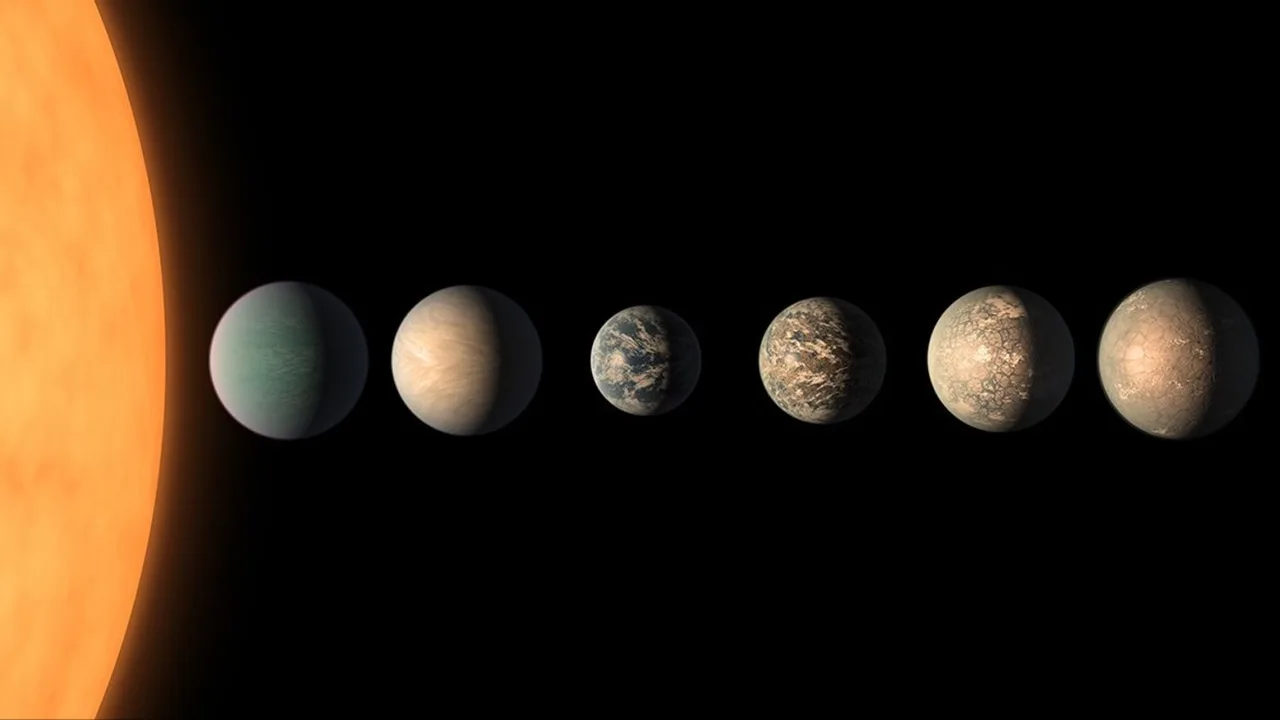
In a tightly packed solar system, it could happen that one planet might have swapped materials with another. One such example of this is TRAPPIST-1. In this system, seven Earth-sized planets circle a small, dim star called a red dwarf, all within an orbit smaller than Mercury's path around our Sun.
Astronomer Fred Ciesla of the University of Chicago explained, "It's a very compact system, so the efficiency of something being launched from one to the other is much greater." His team's research found that material ejected from one habitable planet there could reach another within just a century. So, compared with our solar system, this setup could make the transfer of life between planets thousands of times more common.