NASA's Hubble Space Telescope detects a faint galaxy that is almost entirely dark matter
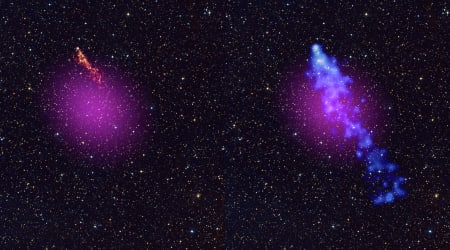
![The dark matter-dominated galaxy CDG-2 lies in the dashed circle at right. The full image from Hubble is at left. [Cover Image Source: NASA, ESA, Dayi Li (UToronto); Image Processing: Joseph DePasquale (STScI); Image Edited by Starlust Staff]](https://d3hedi16gruj5j.cloudfront.net/792109/uploads/4615a5e0-0d73-11f1-ae00-ed62bd14efb8_1200_630.jpeg)
NASA’s Hubble Space Telescope has spotted a low-surface brightness galaxy, dubbed Candidate Dark Galaxy-2 (CDG-2), which is probably one of the most heavily dark matter-dominated galaxies ever discovered. In this hunt, Hubble was supported by the European Space Agency’s Euclid Space Observatory and the ground-based Subaru Telescope in Hawaii. This discovery, made by David Li of the University of Toronto in Canada and his team, has been detailed in a paper published in the Astrophysical Journal Letters.
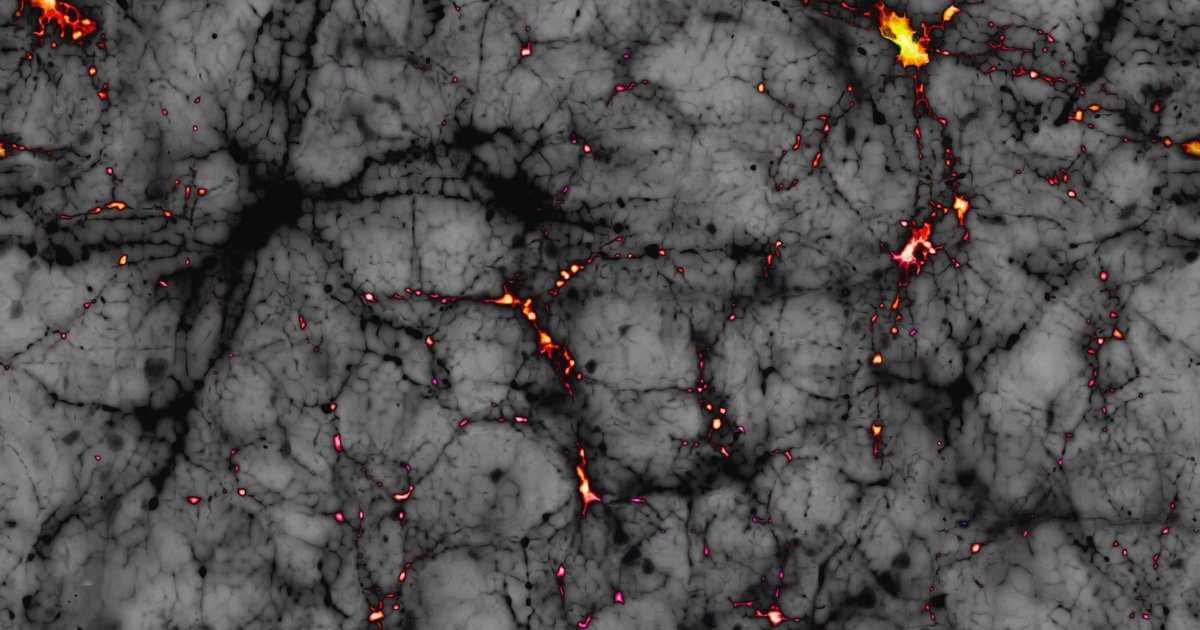
For the uninitiated, dark matter is the mysterious material that is believed to make up most of the matter in the universe. It holds mass and takes up space, much like ordinary matter, with which it interacts through gravity. However, it does not interact with the electromagnetic spectrum (which includes visible light) at all. Hence, it is difficult to detect galaxies like CDG-2, which is almost filled with dark matter, with only a sparse scattering of stars.
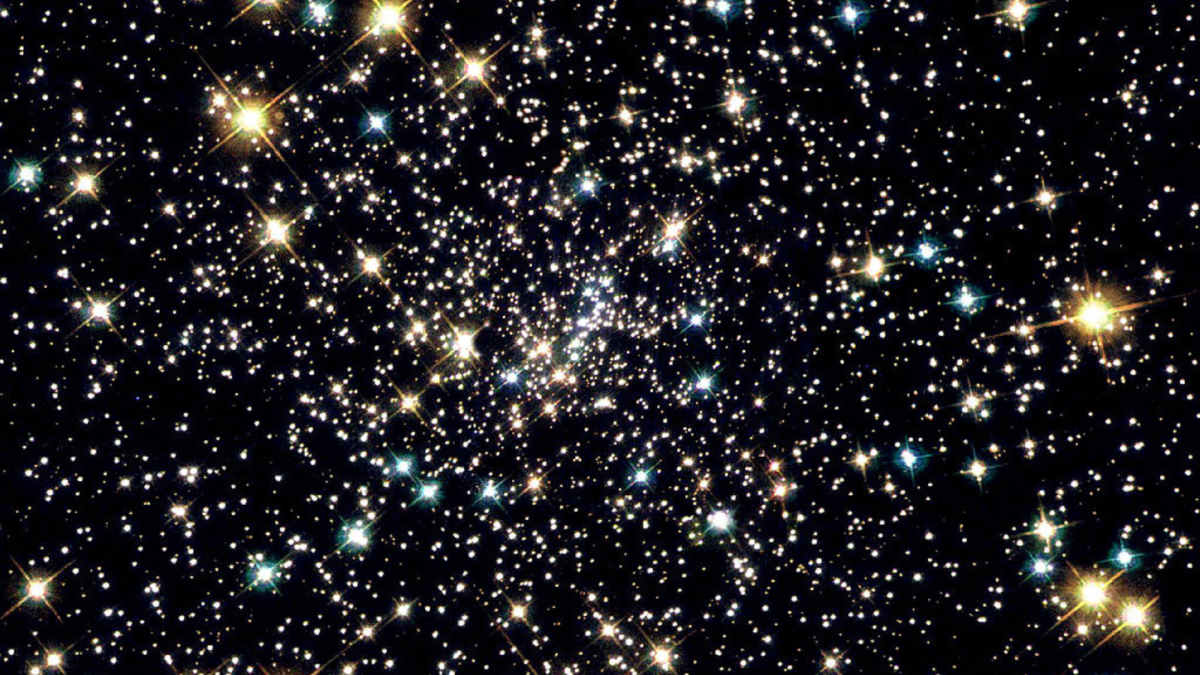
The research team, led by Li, looked for globular clusters (GCs)—tightly bound star groups that orbit typical galaxies and can indicate the presence of an imperceptible or hidden population of stars—using advanced statistical methods. This allowed them to detect 10 low-surface brightness galaxies and two dark galaxy candidates. It was to confirm the presence of one of these two dark galaxy candidates that the team used the Hubble-Euclid-Subaru trio. The imaging provided by Hubble revealed four globular clusters in the Perseus galaxy cluster located 300 million light-years away. Further observations by the trio indicated the presence of a faint glow around the clusters, which the researchers took as the smoking gun evidence for a hidden galaxy.

"This is the first galaxy detected solely through its globular cluster population," said Li in a statement released by NASA. "Under conservative assumptions, the four clusters represent the entire globular cluster population of CDG-2." Despite being faint, CDG-2’s brightness roughly equals the glow of 6 million Sun-like stars. The globular clusters in which the dark galaxy is nestled contribute to 16% of its visible stuff.
To say that CDG-2 is just a rich reservoir of dark matter would be an understatement. That's because more than 99% of its mass is believed to be constituted by dark matter. Li and his teammates speculate that much of CDG-2’s matter that fuels star formation has likely been siphoned by other galaxies through gravitational interactions inside the Perseus cluster. Because globular clusters are so tightly bound, they have a greater immunity against gravitational tidal disruption. This is what makes them such reliable markers of hidden galaxies. The researchers also noted that the other dark galaxy candidate identified in the study, labeled CDG-1, could be the more extreme of the two: "It can be the first instance of a galaxy that is made up of pure dark matter halo without any field star population aside from a few GCs."
More on Starlust
NASA's Roman Telescope to map dark matter and dark energy more precisely than ever
James Webb Telescope's new map is strong proof that there would be no life without dark matter