Northrop Grumman’s Cygnus XL spacecraft arrives at ISS for CRS-24; crew unloads supplies
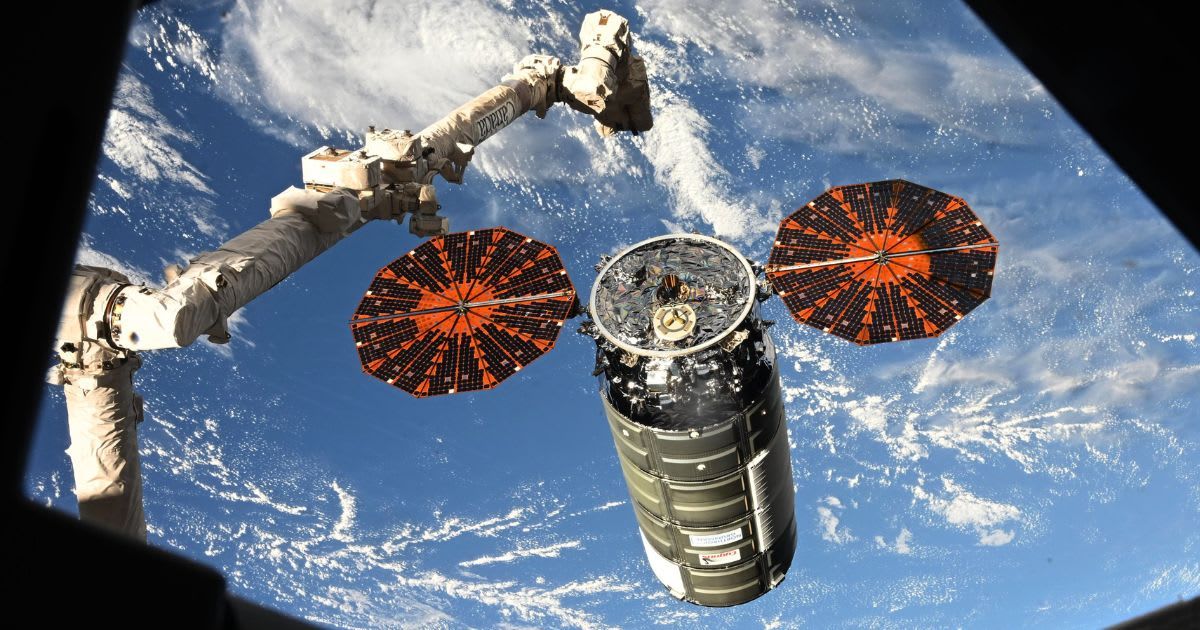
Northrop Grumman’s Cygnus XL has successfully made its way to the International Space Station as part of the CRS-24 resupply mission. The spacecraft, which launched aboard a SpaceX Falcon 9 rocket on Saturday, April 11, carrying over 11,000 lbs of cargo, has been captured, installed, and accessed by the Expedition 74 crew. The cargo craft is now attached to the station’s Unity module's Earth-facing port, where the astronauts began unloading its scientific payloads. Resupply missions like CRS-24 are key to keeping alive the space station’s cycle of scientific research and discoveries.
Cygnus XL separation confirmed. The spacecraft is expected to reach the @Space_Station for capture on Monday, April 13 at 12:50 p.m. ET pic.twitter.com/mxKpJG6v60
— SpaceX (@SpaceX) April 11, 2026
Cygnus XL was captured by NASA astronaut Chris Williams, with assistance from Jack Hathaway, also from NASA, using the station’s Canadarm2 robotic arm on April 13 at 1:20 p.m. EDT. After this, Mission Control at NASA's Johnson Space Center in Houston was able to maneuver the Northrop Grumman spacecraft and install it onto the Unity module. On April 14, NASA confirmed that hatches between Cygnus XL and the ISS had been opened after a series of pressure and leak checks. This allowed astronauts to enter the spacecraft to perform mission activities.
Day 060, Orbit 0934 – I love these moments when the whole crew comes together around an event like this. Welcoming a cargo vehicle is such a special experience: you know you’ll be receiving care packages from teams and families, along with a wealth of scientific experiments –and… pic.twitter.com/fYRyJJcyZ7
— Adenot Sophie (@Soph_astro) April 14, 2026
Williams and Hathaway were the first to enter the spacecraft, followed by Jessica Meir (NASA) and Sophie Adenot (ESA). The Expedition 74 crew members immediately began transferring time-sensitive research samples from the cargo craft's portable science freezers to the space station’s MELFI science freezers and the MERLIN incubators. Notably, Cygnus XL carried and delivered over 2,300 lbs of science hardware and experiments from Earth to the orbiting laboratory.
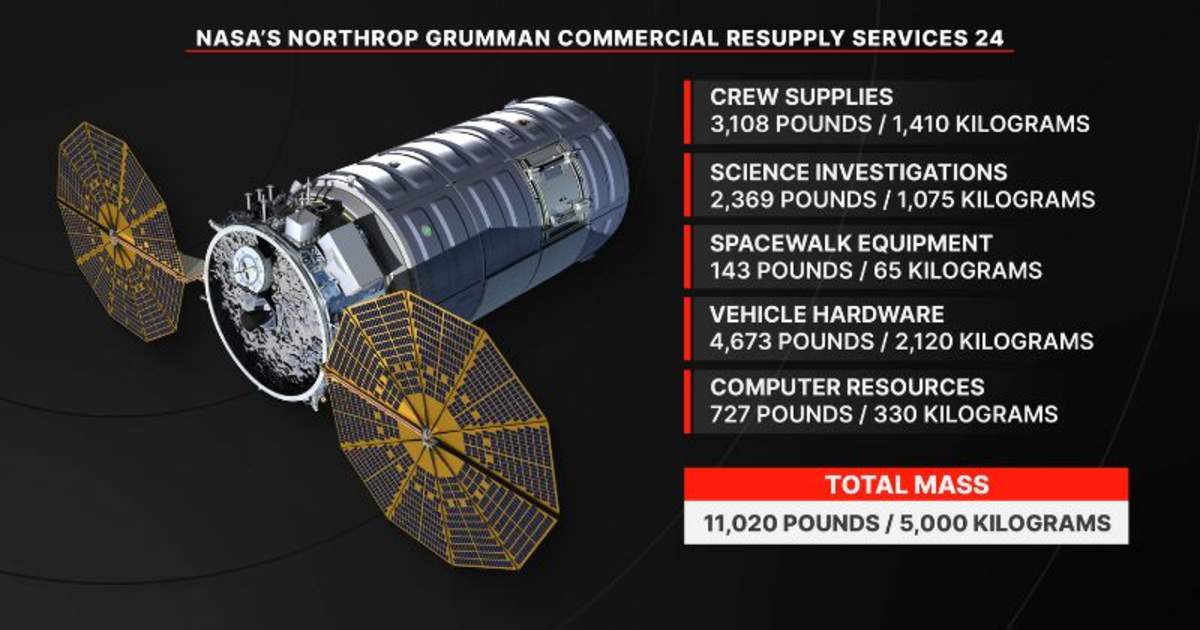
The science payloads delivered by Cygnus XL will support studies into blood stem cell research for treating cancers, gut microbiome studies for protecting astronaut health during long missions, protein research in microgravity, and the installation of a quantum physics module to improve the capabilities of the Cold Atom Lab. Apart from these, the cargo craft also carried an advanced exercise system from the ESA, new eye-imaging hardware, and oxygen and nitrogen tanks for spacesuit support.
#ICYMI: @NorthropGrumman’s Cygnus XL cargo craft, packed with quantum physics gear, a new blood stem cell study, an advanced exercise system, and more for the Exp 74 crew, was captured with the Canadarm2 robotic arm at 1:20 p.m. EDT on Monday, April 13, 2026. pic.twitter.com/TJMMZhbhrT
— International Space Station (@Space_Station) April 14, 2026
This is the second flight of the Cygnus XL variant, which offers increased cargo capacity, and it will remain attached to the ISS until October. At the end of its mission, it will be filled with thousands of pounds of trash and sent into the Earth’s atmosphere to burn up safely. The spacecraft was named the S.S. Steven R. Nagel by Northrop Grumman in honor of the astronaut who flew four space shuttle missions, commanded the deployment of the Gamma Ray Observatory, and logged 723 hours in space.
As Cygnus XL’s cargo operations went on, the Roscosmos cosmonauts continued station work elsewhere. Sergey Kud-Sverchkov and Sergei Mikaev prepared the Progress 93 resupply ship for departure after seven months in orbit. Andrey Fedyaev collected air samples inside Cygnus XL after Williams and Hathaway opened its hatch to protect the station’s environment. He then carried out maintenance work on the Roscosmos segment's orbital plumbing and ventilation systems.
More on Starlust
NASA set to roll out Artemis III SLS core stage section on April 20—here's all you need to know
Future satellites could use light as fuel in outer space: 'Propellant-free propulsion future'