Oxygen on exoplanets is not necessarily a sign of life: A new study delves deeper into the problem
![Artist's depiction of TRAPPIST-1 b which is an exoplanet. [Representative Cover Image Source: NASA, ESA, CSA, J. Olmsted (STScI), T. P. Greene (NASA Ames), T. Bell (BAERI), E. Ducrot (CEA), P. Lagage (CEA)]](https://d3hedi16gruj5j.cloudfront.net/796031/uploads/fb421b10-2416-11f1-a6e8-398e6e1f4332_1200_630.jpeg)
Contrary to popular belief, oxygen on an exoplanet is not always a sign of life. Even a lifeless planet can produce oxygen through non-biological (abiotic) means. For instance, a study published in 2015 showed how intense ultraviolet light on completely dry planets orbiting M-dwarf (red dwarf) stars can break down carbon dioxide in their atmosphere—a process called photolysis—into carbon monoxide and oxygen. Some of these planets, in fact, can have oxygen levels greater than our own planet Earth. Now, drawing on the 2015 study and others, a new study led by Margaret Turcotte Seavey, a former postbac at NASA Goddard Space Flight Center, has found what would happen to the oxygen content in a Mars-like exoplanet if it had water vapor in its atmosphere.
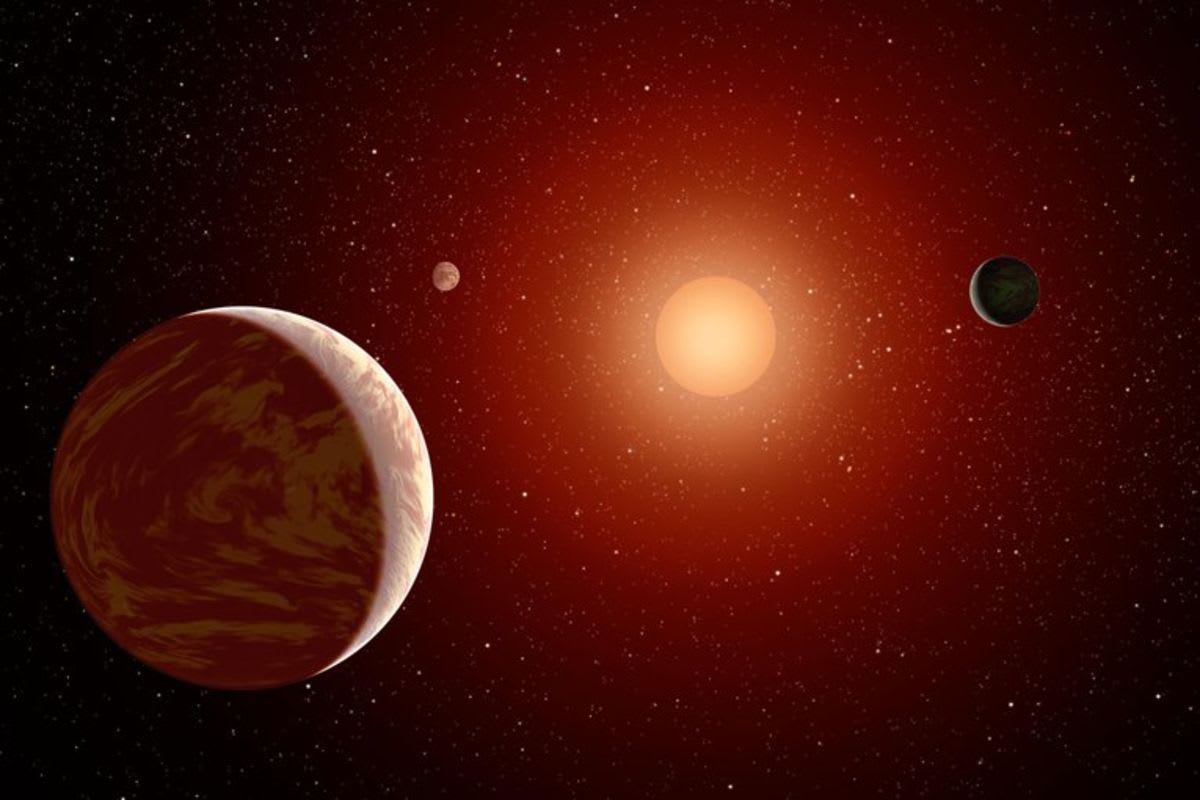
Using a complex photochemical climate model referred to as Atmos, Seavey and her team simulated a Mars-sized rocky planet and added varying levels of water vapor to it. The simulated planet had a 1-bar CO₂ atmosphere and orbited an M-dwarf star, just like the one in the 2015 study. At various water levels that they tested, the peak oxygen was only 2.7%. This is only about 10% of what was reported in the 2015 paper and ten times smaller than what we find on modern Earth. So, what dropped the levels of oxygen on the alien planet? The same ultraviolet light that breaks down carbon dioxide molecules on exoplanets split the water here.
This resulted in the formation of a free hydrogen and a hydroxyl (OH) radical. Thereafter the OH radicals reacted with atomic oxygen and carbon monoxide, creating carbon dioxide again and reducing the levels of free oxygen. This also suppressed the levels of O₃, another molecule that forms the ozone layer on Earth. Such a layer prevents harmful ultraviolet light from reaching the surface and allows complex lifeforms to evolve on land.
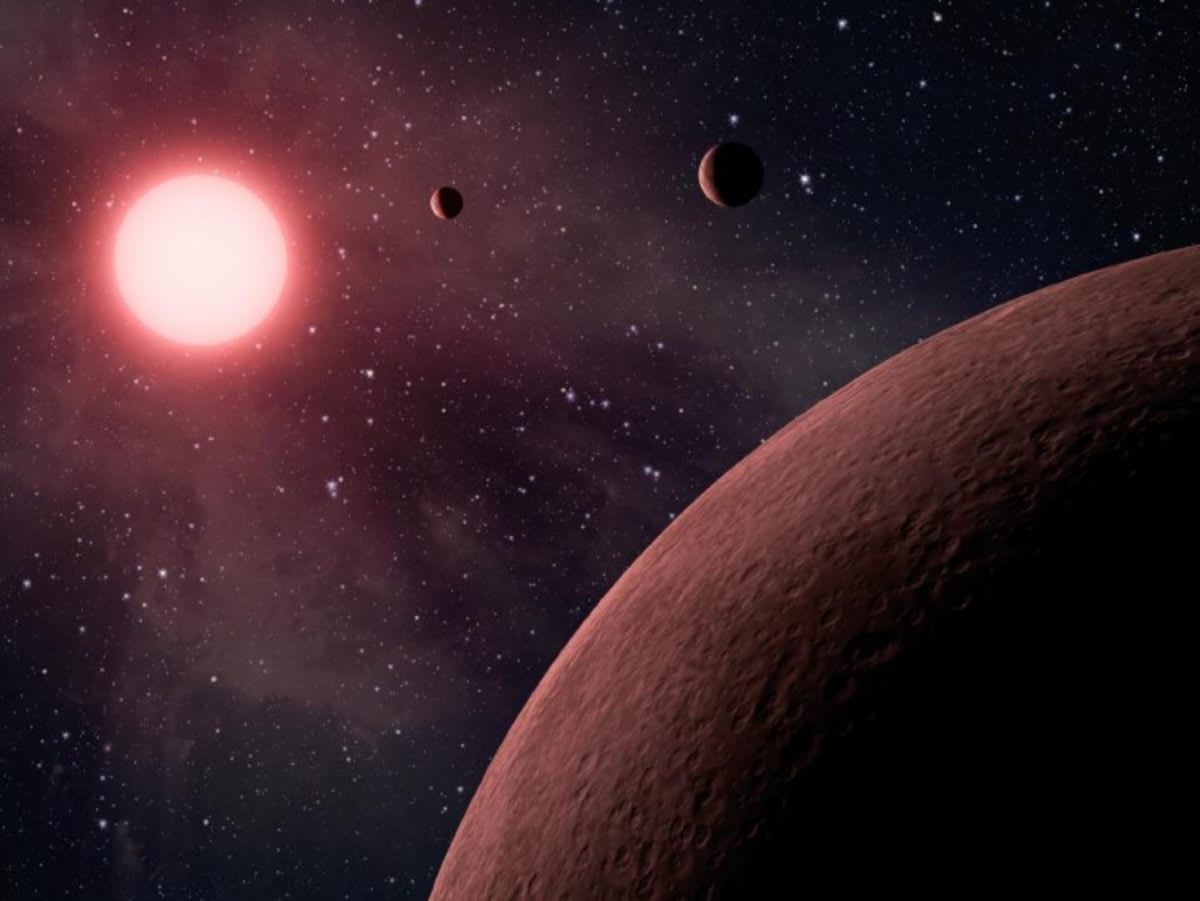
"These atmospheric conditions may be applicable to observational characterization of terrestrial exoplanets orbiting in the habitable zones of M dwarfs," the researchers wrote in the paper posted on the arXiv preprint server. "Because high O₂ and O₃ mixing ratios may be observationally detectable, understanding how an H₂O-depleted but not truly desiccated planetary environment influences these abundances can differentiate between a potentially habitable world with biologically-influenced atmospheric disequilibria from a water-depleted Mars-like world with atmospheric disequilibria stemming from photochemistry." The researchers, however, conceded that they were model-limited in their study because they did not account for the relationship between CO₂ and UV rays and that their conclusions are only applicable to rocky exoplanets with Mars-like size and gravity. Furthermore, they think that future research exploring the relationship between the stellar activity of a range of M-dwarf stars and CO₂-rich and water vapor-depleted exoplanets can yield further insights into what can be called the fake oxygen problem.
More on Starlust
An exoplanet discovered by ESA's CHEOPS is turning theories of planetary formation 'inside out'
Two exoplanets collided—and the impact was similar to the one that created Earth and the Moon