NASA's IXPE measures pulsar's magnetic fields in distant Lighthouse Nebula for the first time

NASA's Imaging X-ray Polarimetry Explorer (IXPE) observatory has made observations that, for the first time, have been used to directly measure the magnetic fields of the pulsar PSR J1101−6101 located in the Lighthouse Nebula. The results were published in The Astrophysical Journal recently, with the paper providing fresh insights into the structure of these fast-spinning neutron stars, some the most extreme objects in the universe.
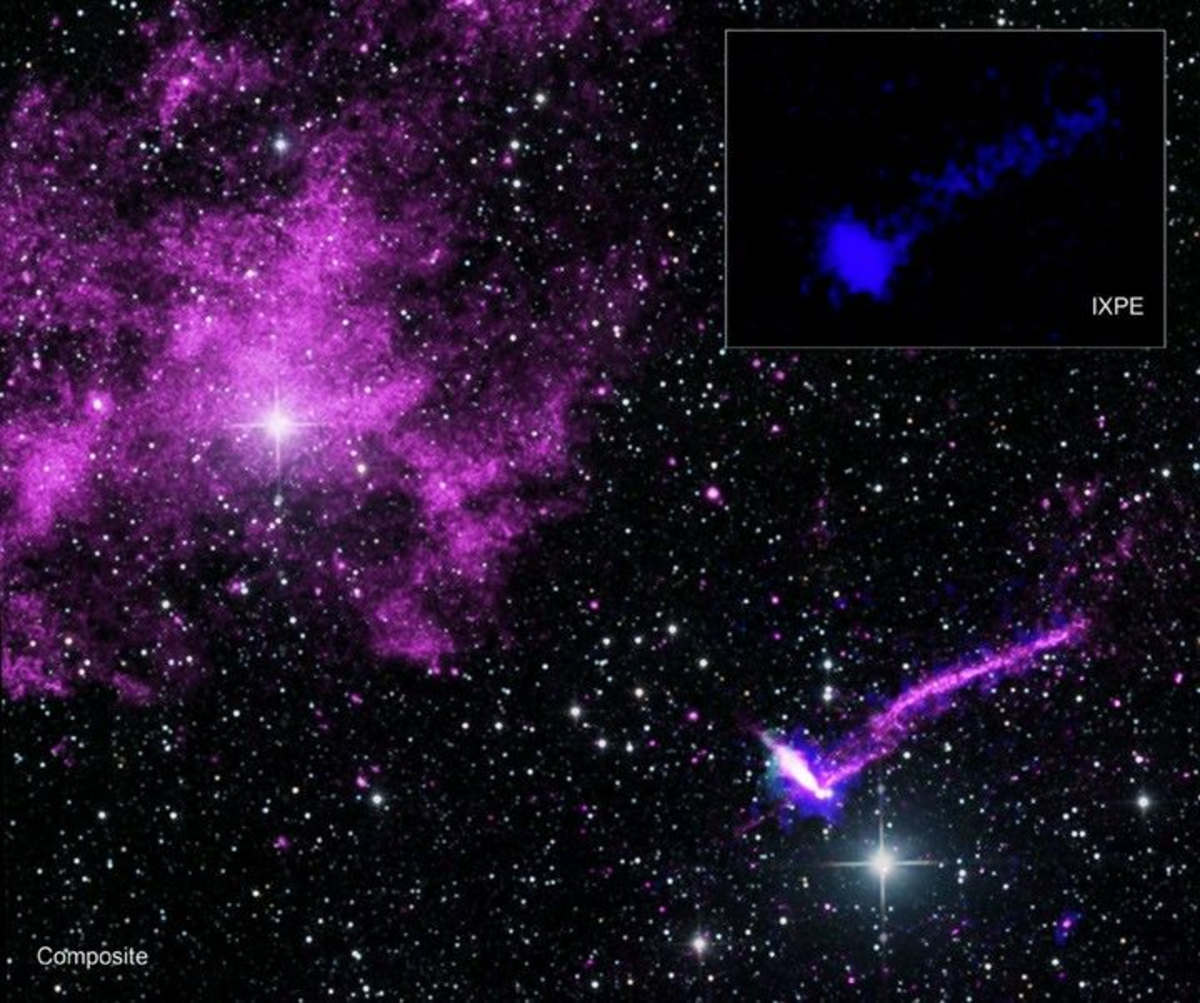
Based on data gathered over 18 days in June 2025, during which the space telescope continuously kept the Lighthouse Nebula in its sights, astronomers focused on X-ray structures extending from the pulsar. Their findings highlight two narrow offshoots: a longer structure known as the 'filament' and a shorter one called the 'trail'. The study helped scientists establish that while most energetic particles remain trapped behind what is known as a bow shock (forming the trail), the most energetic ones manage to break through this boundary and form the long, thin filament. A bow shock can perhaps be best described as being like the wave at the front of a speeding boat, and forms when the wind of high-energy particles emitted by the pulsar collides with the surrounding gas of interstellar space.
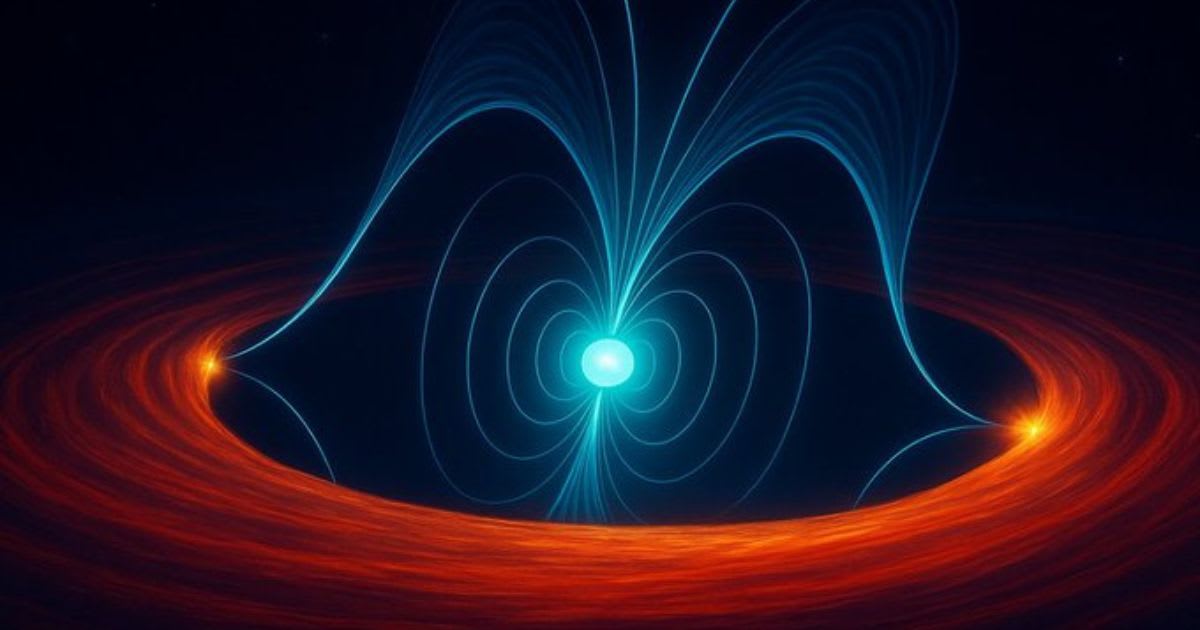
Jack Dinsmore, a Stanford University student who led the study, stated that one of the main objectives was to test this longstanding theory regarding filament formation, which has been debated since 2008. "The ‘smoking gun’ would come by measuring the polarization of the light, which indicates the magnetic field direction," Dinsmore explained. "If the magnetic field points along the filament, that confirms that the filament’s particles are flowing along the field." The result? Researchers are now more than 99 percent confident that the magnetic field does indeed align with the flow of energetic particles shooting down the filament.

While the findings of the study confirm existing models of particle movement, the degree of polarization observed was unexpectedly high. This challenges the previous assumption that the filament is a region of high magnetic turbulence. To measure this polarization, scientists employed advanced analysis techniques that maximized every bit of data collected from the distant nebula. The observations by IXPE also showed that the magnetic field responsible for X-ray emission had to be parallel to the trail, but radio frequency observations made by the researchers showed a magnetic field pointing almost exactly perpendicular. "The striking divergence in magnetic field orientations observed between radio and X-ray wavelengths provides compelling evidence for the highly structured nature of these objects," study co-author Niccolo Bucciantini said, commenting on the contrast. "This marks the first clear indication that particles of different energies occupy distinct regions within the system, hinting at the presence of multiple, and potentially very different, acceleration mechanisms at work, ” Bucciantini, a researcher at Italian National Institute for Astrophysics, added.
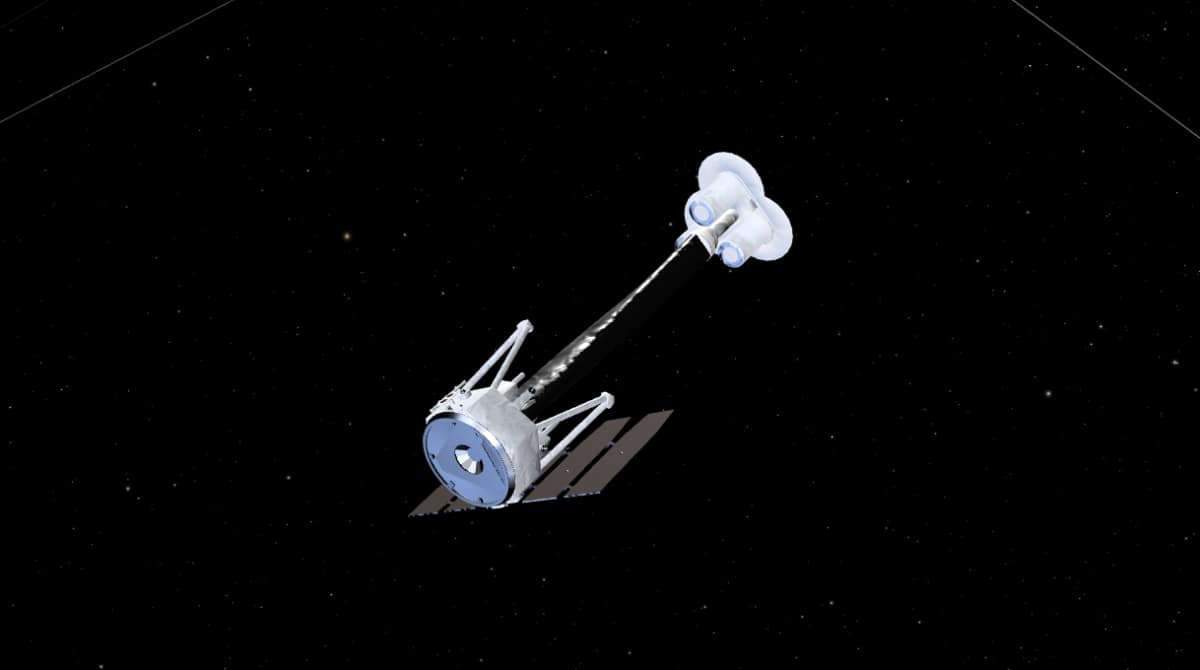
The IXPE space telescope—launched in December 2021—is the first mission by NASA to study the polarization of X-rays from many different types of celestial objects, like black holes, white dwarfs, and pulsars. Pulsars are often likened to a lighthouse beacon, and were named as such because we detect pulses of light when beams of radiation sweep across our line of sight. Since the magnetic axis of a pulsar often does not align with its rotational axis, these beams appear to wobble as a pulsar spins tens, or sometimes hundreds, of times a second.
More on Starlust:
NASA’s IXPE gives groundbreaking insight into rare pulsar's X-ray emissions, baffling scientists
NASA's IXPE reveals 'heartbeat black hole' data that challenges current scientific theories