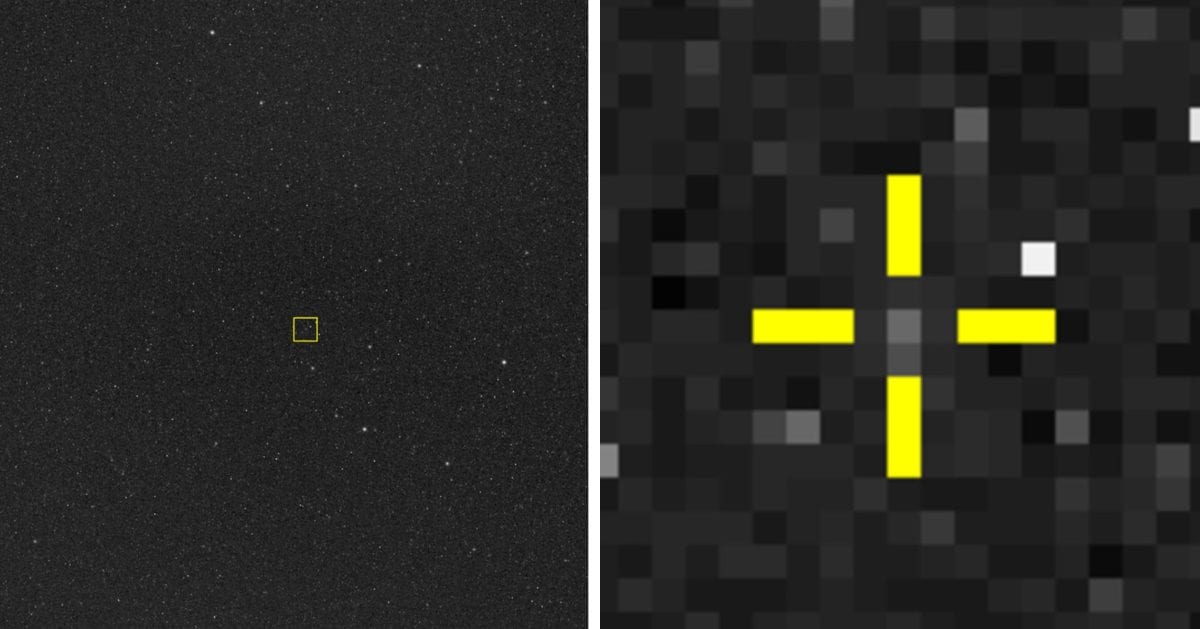
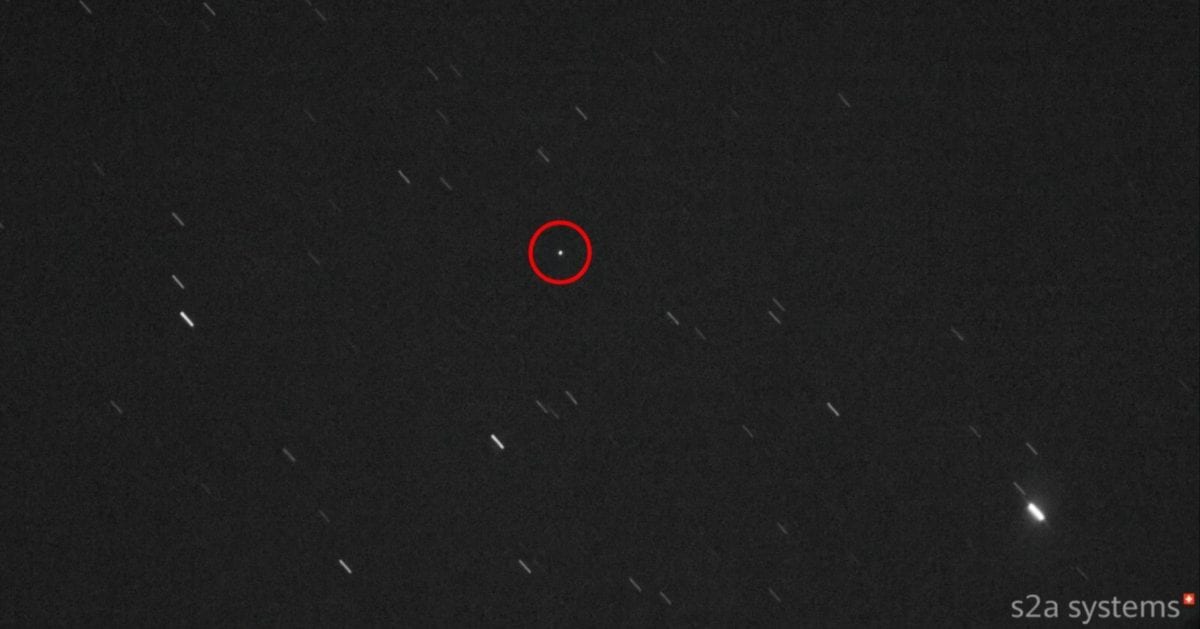
China plans advanced mission to hit an asteroid with spacecraft and alter its course

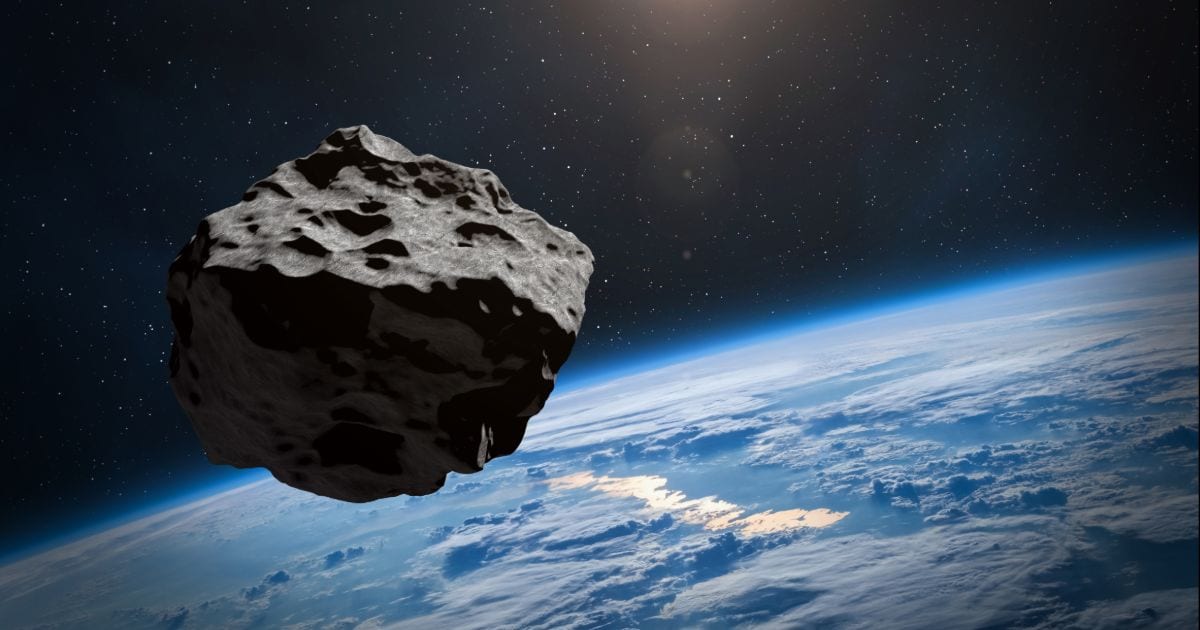
China is poised to advance its capabilities in planetary defense with a new mission designed to test the feasibility of altering an asteroid's trajectory. The ambitious project, announced by a leading Chinese space official, aims to demonstrate a kinetic impactor technique by intentionally crashing a spacecraft into a distant near-Earth object, as per Interesting Engineering.
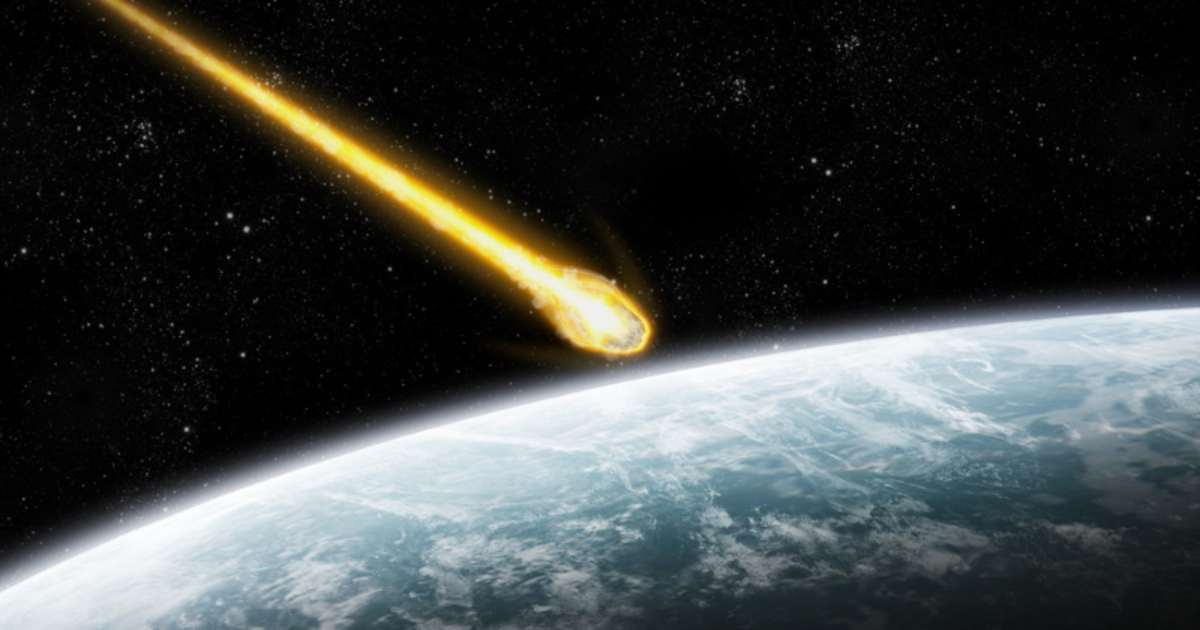
The mission will involve a two-part launch, according to Wu Weiren, a key figure in China’s deep space programs. One spacecraft will serve as an "impactor," while a second "observer" craft will document the collision. The observer will first survey the target asteroid, gathering data to ensure a precise impact. Following the high-speed collision, the observer and an array of ground- and space-based telescopes will meticulously record the outcome, including any change to the asteroid's path.

Officials project that the impact will be a small but significant nudge, pushing the asteroid's orbit by just a couple of inches. While seemingly minor, this deflection would prove the core principle of kinetic impact deflection. If successful, it would position China as only the second nation, after the United States, to achieve such a milestone in asteroid defense.
The initiative is part of a broader strategy to establish a comprehensive planetary defense system that includes early threat detection and rapid response capabilities. China has also expressed openness to international partnerships and data sharing, proposing a collaborative global framework to mitigate potential asteroid threats. This mission follows the US space agency NASA's successful DART mission in 2022, which was the first of its kind. The new Chinese effort underscores a growing global focus on cataloging and preparing for potential cosmic impacts, as the number of known near-Earth asteroids continues to rise.
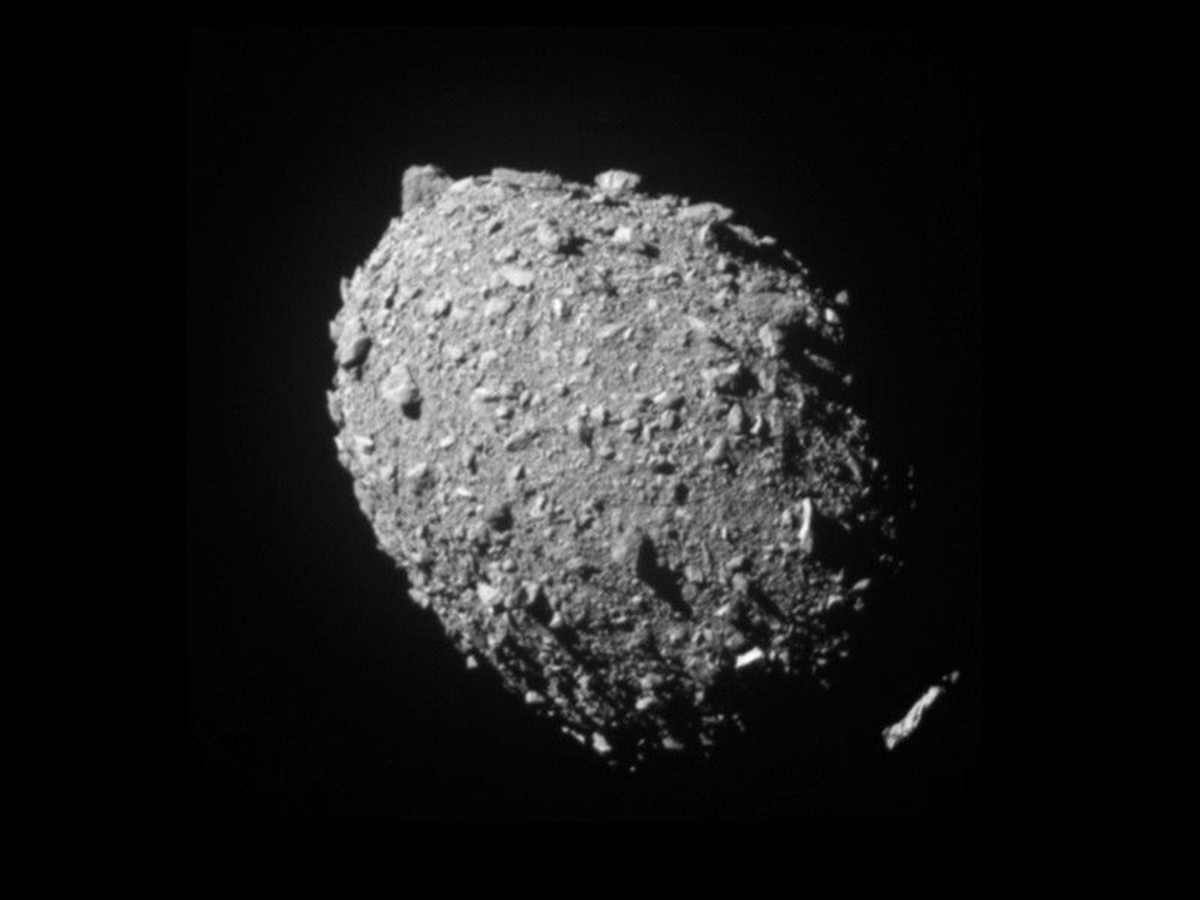
The planned Chinese mission comes as both the US and China accelerate their efforts in asteroid defense. In 2022, NASA’s Double Asteroid Redirection Test (DART) mission successfully impacted an asteroid named Dimorphos, a small moonlet orbiting a larger asteroid, as per South China Morning Post. That intentional collision altered Dimorphos's orbit by 33 minutes, demonstrating that a kinetic impactor could effectively shift an asteroid's path. The dual-asteroid system was chosen for the test because Dimorphos is similar in size to other asteroids that could pose a threat to Earth.

In April 2023, the US released a 10-year national strategy for planetary defense, emphasizing improved readiness for potential impacts. China is also advancing its own deep space exploration. Its Tianwen-2 probe, which launched in May, has a two-fold mission: to collect samples from the near-Earth asteroid 2016 HO3 and later conduct a flyby of the comet 311P. These parallel efforts highlight an increasing global awareness of and commitment to addressing the potential existential threat of near-Earth objects.
Planetary defense missions are crucial for humanity's long-term survival. The universe is full of asteroids and other near-Earth objects, and the potential for a catastrophic impact is a real and constant threat. By developing the ability to deflect or alter the orbits of these objects, humanity can proactively safeguard itself from a potential extinction-level event. Missions like the ones being conducted by China and the US are not just about scientific discovery; they're about proving a vital technology that could one day be the difference between life and a global catastrophe. These efforts represent a collaborative step towards ensuring the safety of future generations.
More on Starlust
New astonishing images from DART asteroid impact reveal shocking force of debris plume