Chang'e-6 samples reveal ancient volcanoes rocked the Moon’s far side for a billion years, surprising scientists

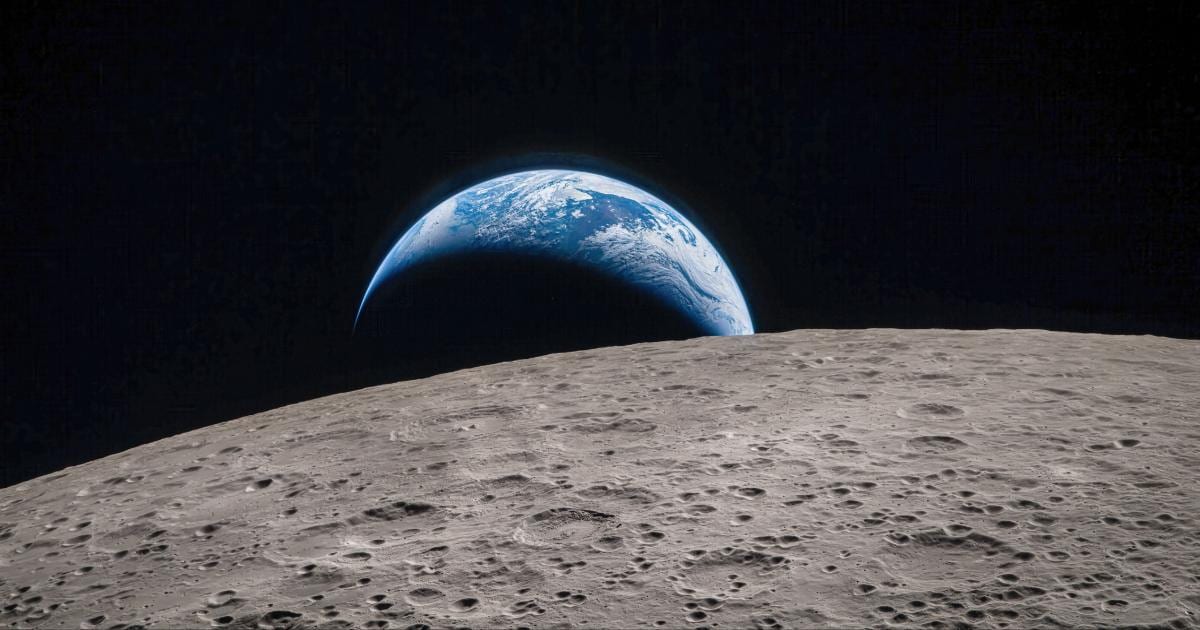
Revolutionary findings from China's Chang'e-6 lunar mission are rewriting our understanding of the Moon's enigmatic farside. This previously mysterious region, which has long been a source of scientific intrigue due to its stark geological differences from the Earth-facing nearside, is now yielding its secret thanks to the striking sample return. Crucially, analysis of these samples reveals how ancient volcanoes rocked the Moon's far side for a billion years, significantly altering prior timelines of lunar activity, according to the Chinese Academy of Sciences.

The mission, which successfully brought back nearly two kilograms of lunar material in June 2024, has provided critical new insights into the farside's complex geological and thermal history. The Chang'e-6 probe, launched on May 3, 2024, meticulously collected 4.26 pounds of samples from within the South Pole-Aitken (SPA) Basin. This monumental impact structure, the Moon's most ancient and extensive, spans an astonishing 1553.5 miles in diameter. The invaluable lunar material made its successful return to Earth on June 5, 2024. For decades, the profound geological and thermal consequences of the immense impact event that formed the SPA Basin approximately 4.25 billion years ago remained one of planetary science's most significant unresolved questions. The recent in-depth analyses of these carefully retrieved samples have now begun to shine light on these long-standing puzzles.

Leading research teams from prominent Chinese Academy of Sciences (CAS) institutions, including the Institute of Geology and Geophysics (IGG) and the National Astronomical Observatories (NAOC), in collaboration with Nanjing University and other academic partners, have reported four pivotal discoveries based on the Chang'e-6 samples. These groundbreaking findings were prominently featured as four distinct cover articles in the prestigious journal Nature, underscoring their profound scientific importance. Professor WU Fuyuan, a distinguished CAS member and IGC researcher, highlighted that these four Nature publications collectively represent the first comprehensive revelation of the extensive geological ramifications stemming from the colossal SPA impact.

Key discoveries from the Chang'e-6 samples have fundamentally altered existing lunar models. Scientists identified extended volcanic activity, revealing two distinct periods of volcanism on the lunar farside, occurring approximately 4.2 billion and 2.8 billion years ago. This pushes back the known timeline of farside volcanism, stating that it persisted for 1.4 billion years. Furthermore, measurements of paleomagnetic intensities in basalt fragments suggest a surprising ricochet in the moon's magnetic field around 2.8 billion years ago. This challenges the long-held theory of a steady decline in the lunar dynamo, instead pointing to an episodic and more dynamic magnetic history for Earth's natural satellite.
The samples also provided evidence for asymmetrical water distribution within the Moon's interior. Analysis indicated that the farside mantle contains a notably lower water content compared to the nearside mantle, highlighting an uneven distribution of volatile elements within the lunar interior and further contributing to the Moon's inherent asymmetry. Initial scientific findings, published by NAOC and its collaborators, provided comprehensive, detailed insights into the samples' physical, mineralogical, and geochemical characteristics, as mentioned by the outlet.
Subsequently, the Guangzhou Institute of Geochemistry at CAS independently confirmed the 2.8 billion-year-old farside volcanic activity, associating it directly with a highly depleted mantle source. Concurrently, the IGG precisely dated the SPA formation event to 4.25 billion years ago, establishing an indispensable chronological reference point for broader studies on early Solar System impacts. These pivotal revelations not only offer striking insights into the complex evolution of the Moon's farside but also unequivocally underscore the transformative impact of the Chang'e-6 mission, effectively opening vast new avenues for understanding the fundamental processes of planetary formation and evolution across the cosmos.