Caltech's new powerful radio telescope could find 20 million hidden cosmic objects on its first day
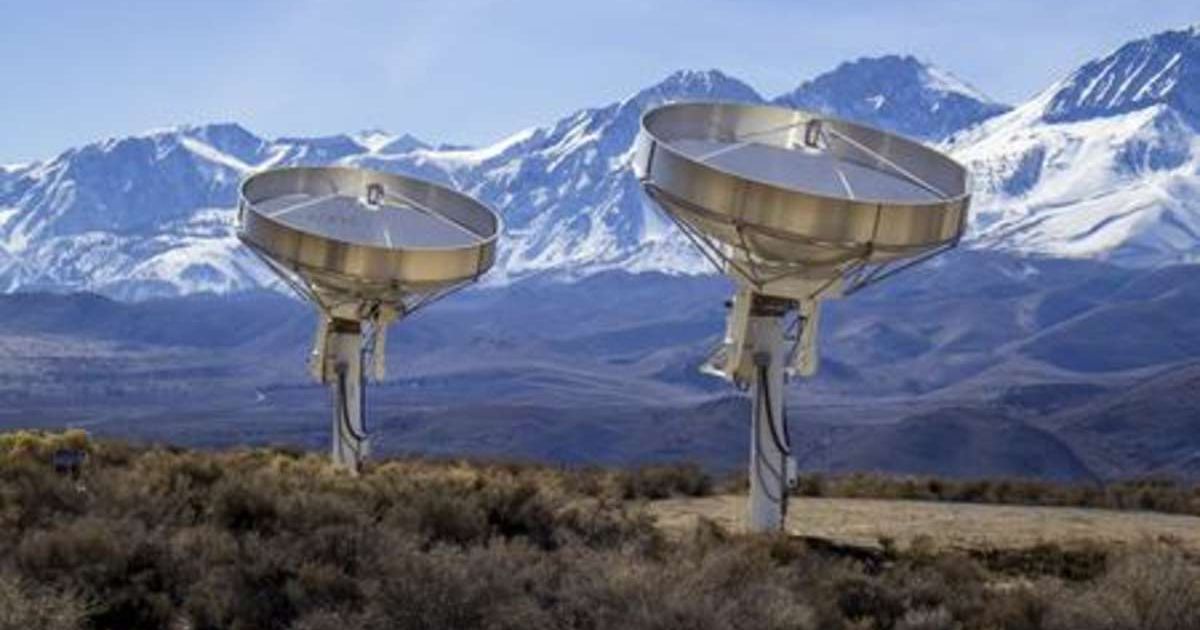
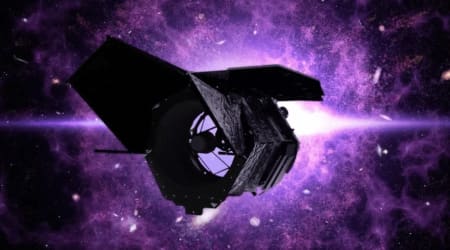
Radio waves are hundreds of thousands of times longer than the waves of visible light. Originating from distant black holes and dying stars, they travel vast distances, giving a snapshot of far-flung corners of the universe. Now, a team of Caltech engineers has finished the final design review of the Deep Synoptic Array (DSA), a powerful radio telescope project funded by Schmidt Sciences. Once it begins operations, it will be "the most sensitive radio telescope ever built," according to Caltech. It will be able to scan the sky 100 times faster than the existing radio telescopes and produce the highest-quality radio images. It will have 1,650 radio dishes, each slightly bigger than 6 meters in diameter, which will sprawl over an area of about 20×16 kilometers in a remote valley in Nevada. The Caltech team aims to complete it by 2029.
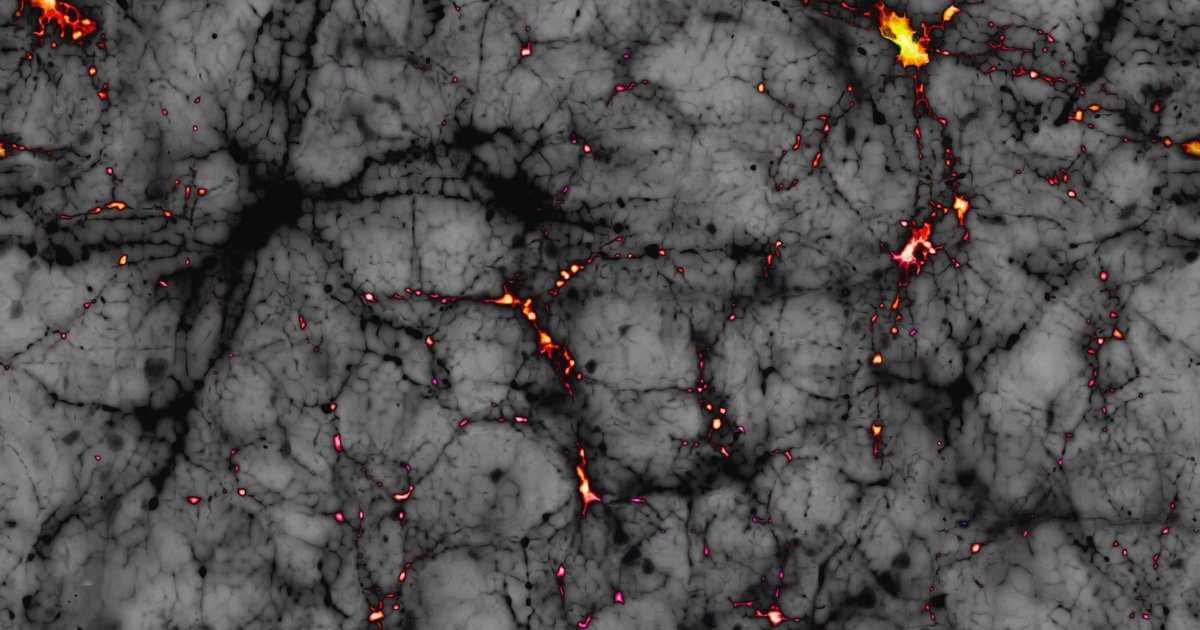
"The DSA will survey the entire visible sky several times in its first five years at unprecedented speeds," said Gregg Hallinan, principal investigator of DSA, professor of astronomy at Caltech, and director of Caltech's Owens Valley Radio Observatory (OVRO). "While all other radio telescopes combined have so far found about 20 million radio sources, the DSA will match that in the first day of operations. By the end of its initial survey, it will have discovered about 1 billion new radio sources." Caltech’s contribution to radio astronomy dates back to the 1950s, when its team helped pioneer the means to explore the radio portion of the electromagnetic spectrum. The DSA is their latest venture that is being designed to detect radio signals from millions of stars, galaxies, pulsars, and fast radio bursts (FRBs). It will also probe deep into the physics of dark matter and gravity and keep track of the expansion of the universe.
"Radio astronomy is about to go from sketch to photograph," said Vikram Ravi, the co-principal investigator of the DSA and a professor of astronomy at Caltech. "The DSA is looking at a far larger volume of the universe far more often than any other telescope. I'm excited for all the discoveries we know we will make, and the ones we don't expect." Besides being sensitive and fast, the telescope will create images in real-time. Unlike other radio telescopes, which take months to generate images, the DSA will feed radio data into a supercomputer that will yield instant images. It will be like the world's first "radio camera." With 1,650 dishes, the DSA will produce a huge amount of data equivalent to all current US internet traffic, which is practically too big to be stored. By making real-time images, the radio camera will ensure that the constant flow of data remains manageable.
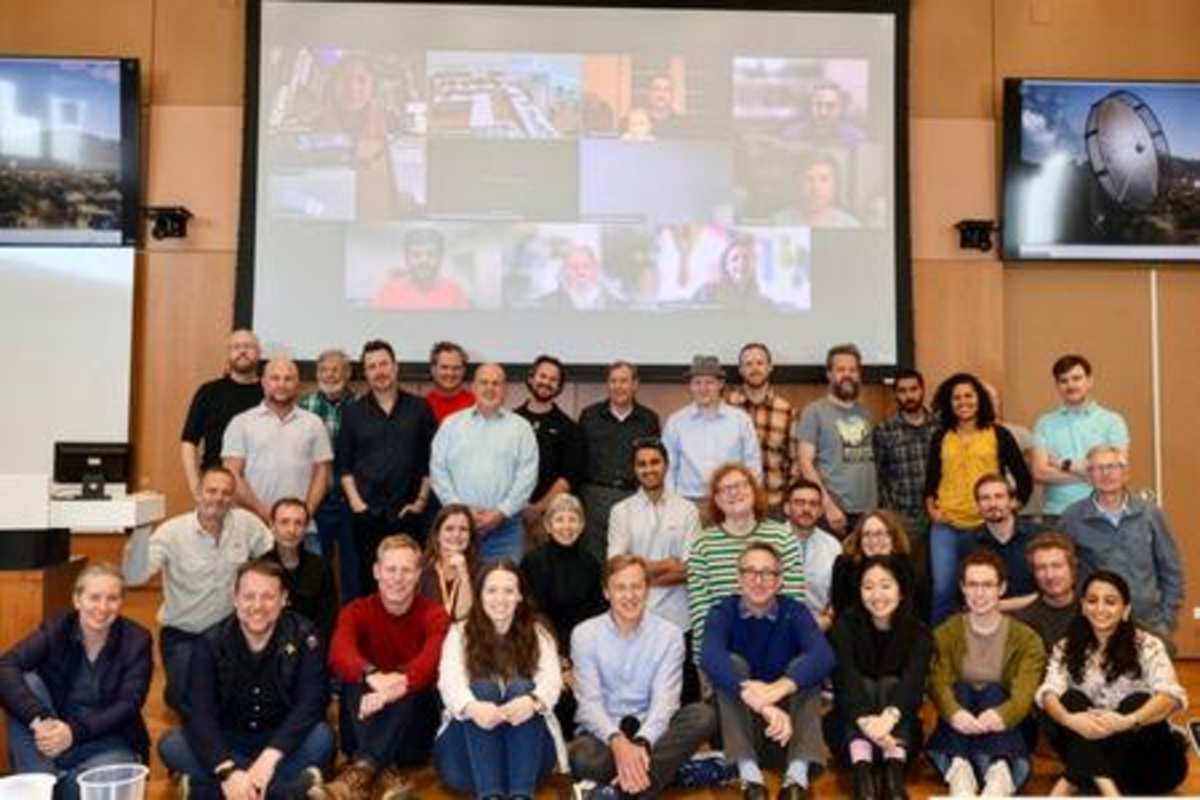
"Without the radio camera, we would have to store 100 exabytes of data [100 billion gigabytes] to complete our survey," Hallinan explained. "This would require 5 million hard drives in a multi-billion-dollar facility the size of multiple football fields. The radio camera solves this problem." What's even more interesting is that the 1,650 dishes are both the cause and the solution of the data processing problem. "With 1,650 dishes, we hit this long-sought threshold where we have enough dishes to essentially measure all the information about the sky, and this allows us to process the data more easily at the telescope site," Hallinan explained.
The DSA will convert the raw data into images using an off-site supercomputer built from cutting-edge rack-scale Graphics Processing Units (GPUs) built by Nvidia. Only tens of petabytes (a petabyte equals 1 million gigabytes) will be archived per year instead of the 100 exabytes collected. Moreover, the public will be able to use the images freely with no proprietary period. In addition to a real-time radio camera, the DSA will have the power to autonomously scan the horizons at 1,000 frames per second using a parallel system called the Chronoscope. "While the radio camera makes exquisite images of the sky, the Chronoscope is like making movies with your phone to search the sky for pulsars, FRBs, and unanticipated discoveries," said Ravi.
![This Hubble image captures the rapidly spinning pulsar at the core of the Crab Nebula. [Image Source: NASA and ESA; Acknowledgment: J. Hester (ASU) and M. Weisskopf (NASA/MSFC); black background added on Canva]](https://de40cj7fpezr7.cloudfront.net/967a156e-dab2-4fba-8a01-bc3ffb463ac1.png)
Building a radio telescope with so many dishes is really expensive. The Caltech team has resorted to some cost-cutting measures. One such measure involves the receivers that sit at the focus of the dishes and amplify faint radio signals coming from distant sources. Such receivers need to be cooled to reduce internal noise. For this, expensive cryogenic coolers are needed. But the Caltech team solved this by designing room-temperature receivers, which don’t need cooling. Another key cost-saving step involved cake pans, which they think are the perfect shape to serve as components of the feed, which converts electromagnetic waves to electrical signals. A baking pan company called Fat Daddio's made thousands of cake pans for the DSA and even made special tube structures to cut out holes at the bottom of the pans.
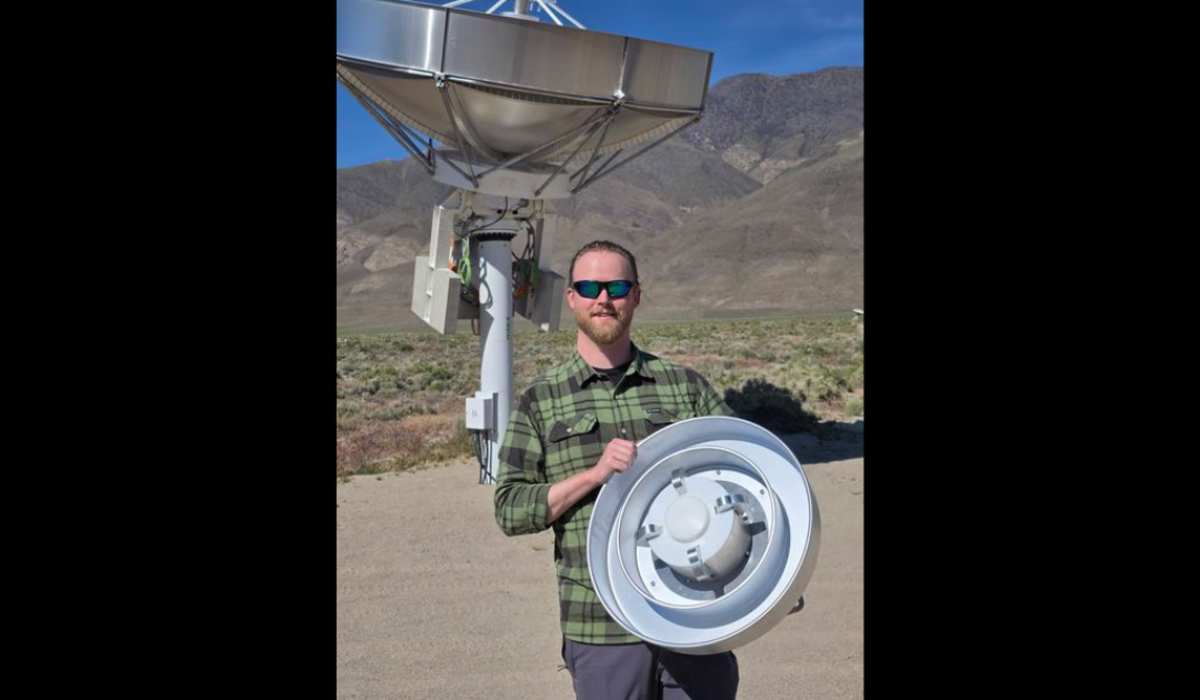
If all goes according to plans, the DSA will begin its science operations after 2029. It will be able to detect more than 100,000 intensely powerful flashes of radio light from FRBs and trace them to their home galaxies. The telescope is expected to hunt down more than 20,000 new pulsars and localize faint gravitational waves invisible to optical telescopes. As Hallinan said, "The science that can be done is endless."
More on Starlust
Astronomers finally solve the mystery of long-period radio signals from deep space