Black hole shadows could finally help detect the universe’s 'invisible' dark matter, say scientists
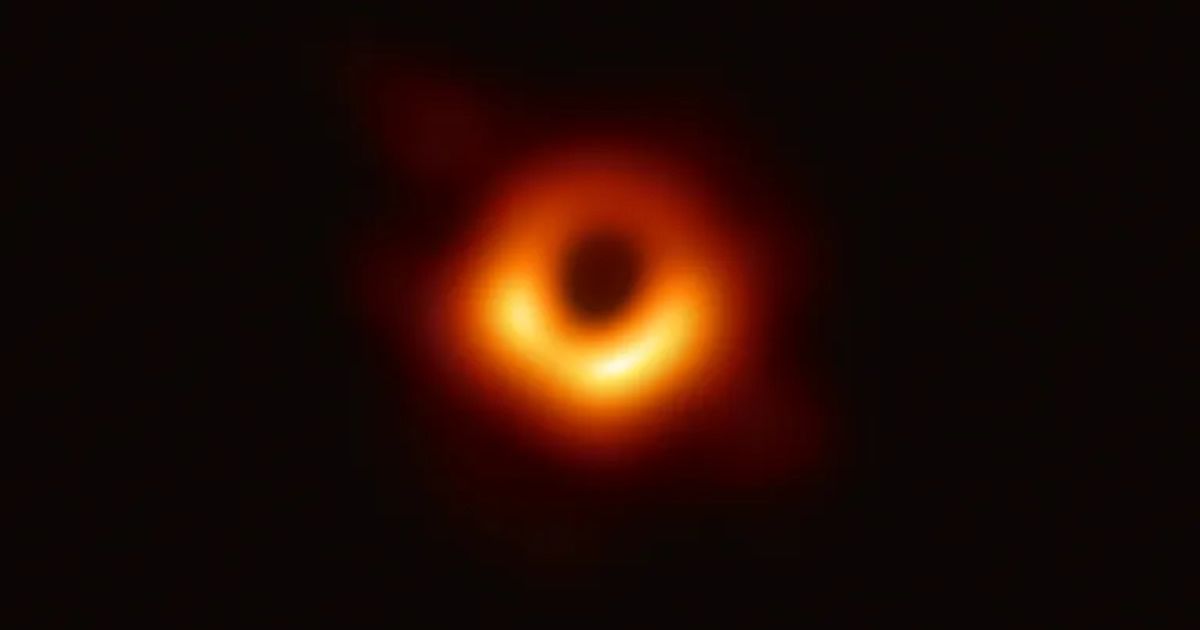
A groundbreaking study published in Physical Review Letters asserts that the stunning images captured by the Event Horizon Telescope (EHT) are not merely portraits of spacetime geometry but function as ultra-sensitive instruments for detecting the universe's elusive dark matter. The research introduces a novel methodology, leveraging the dark, shadow-like regions within black hole imagery to search for the invisible material that accounts for approximately 85% of all matter.
While scientists have proposed countless detection experiments, this new approach capitalizes on the extreme gravity near supermassive black holes like M87* and Sagittarius A*. According to Phys.org, this intense gravitational pull is known to create a dramatic concentration of dark matter, forming a "spike" with densities far exceeding typical galactic environments.

"I've been fascinated by the idea of using black holes as detectors for new particles," said co-author Yifan Chen from the Niels Bohr Institute. "Their extreme gravity makes them natural concentrators of matter, creating a unique meeting point for particle physics, gravity, and astrophysical observation." Crucially, the study focuses on the shadow region that appears dark in EHT observations. This darkness arises because powerful astrophysical jets expel most ordinary matter, leaving the region relatively particle-poor. However, if dark matter annihilates into itself, a theoretical possibility, it would continuously inject new, energetic particles into this low-background environment. The resulting radiation signal would stand out sharply against the "cosmic darkroom" of the black hole shadow.
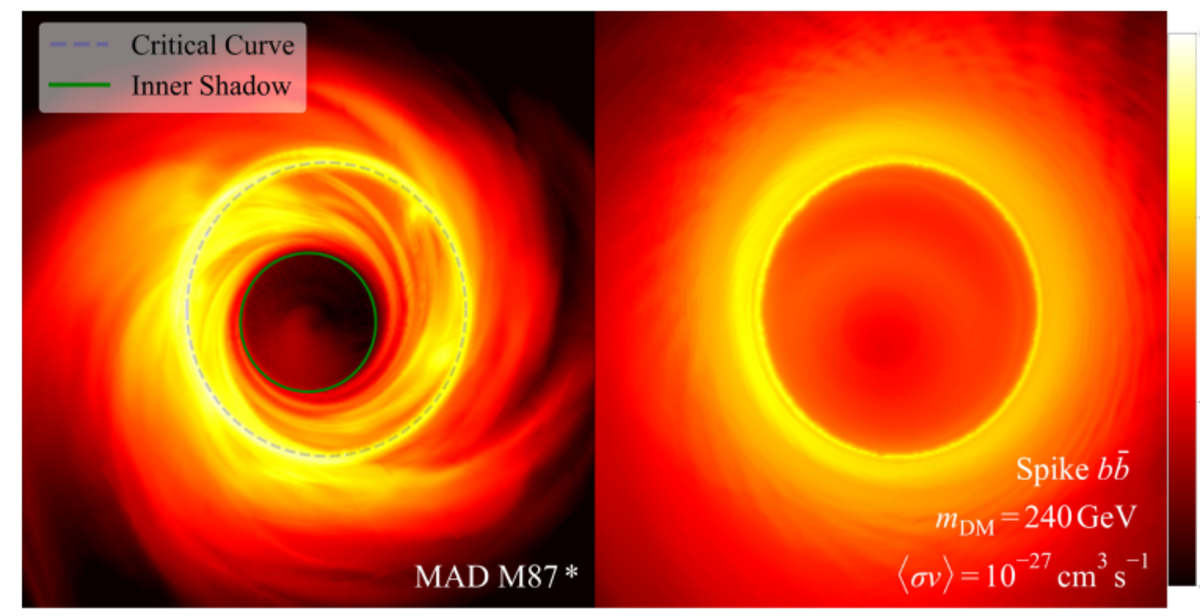
The research team, which includes co-authors Jing Shu from Peking University and Yifan Chen from the Niels Bohr Institute, developed a sophisticated framework built upon the established Magnetically Arrested Disk (MAD) model. By integrating dark matter physics into the general relativistic magnetohydrodynamic (GRMHD) simulations, they modeled how particles produced by hypothetical dark matter annihilation would behave within the black hole's realistic, asymmetric magnetic fields. A key innovation is the focus on morphology rather than just the total brightness.

In the standard MAD model, visible light-emitting particles (electrons) concentrate in the bright accretion disk. Particles from dark matter annihilation, however, would be distributed more uniformly across both the disk and the fainter jet regions. This distinct spatial signature allows researchers to search for subtle patterns that signal the presence of dark matter. This morphological analysis has already delivered powerful constraints, excluding substantial parameter space for dark matter annihilation rates, a significant step forward from previous searches based solely on total intensity.
The true potential of this technique is expected to be unlocked with anticipated EHT system upgrades. Future improvements are projected to enhance the telescope's dynamic range, its ability to detect extremely faint details adjacent to bright features, by nearly 100 times. These enhancements will enable deeper probing of the black hole shadow, potentially allowing for the detection of dark matter with annihilation properties near the theoretically well-motivated thermal relic value for masses up to 10 TeV. Furthermore, the team suggests that future research will integrate polarization data and multi-frequency observations to better distinguish dark matter signals from astrophysical noise, solidifying the black hole shadow as a vital, dynamic laboratory in the quest to solve the dark matter enigma.
More on Starlust
Simulations expose unexpected electron temperatures around M87 black hole's event horizon
NASA's James Webb captures sharpest-ever view of M87 supermassive black hole jet