Simulations expose unexpected electron temperatures around M87 black hole's event horizon
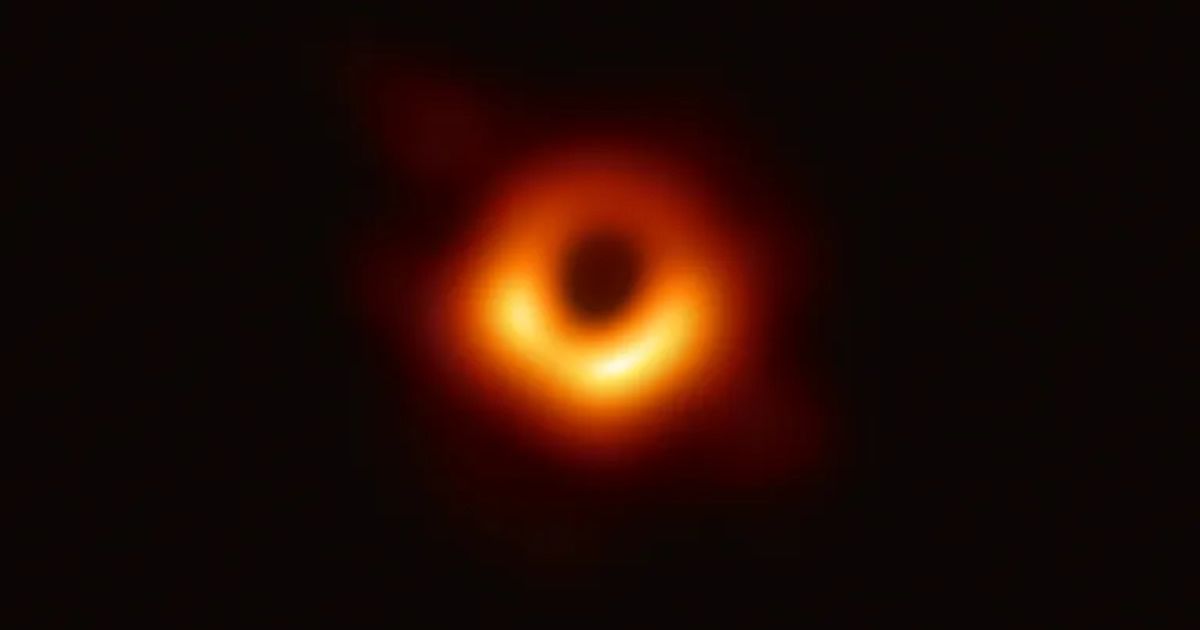
New computer simulations of the supermassive black hole at the center of the M87 galaxy have uncovered surprising details about the particles swirling just outside its event horizon. The research, which models the complex environment of plasma, magnetic fields, and gravity, challenges existing assumptions about the electron temperatures in this extreme cosmic neighborhood, as per the Texas Advanced Computing Center.
A research team, part of the Event Horizon Telescope (EHT) Collaboration, has used advanced supercomputer simulations to study the fiery matter surrounding the M87 black hole, famously imaged for the first time in 2019. The EHT, a global network of telescopes, captures radio signals from the black hole's "shadow" and the glowing ring of hot electrons around it. These electrons produce synchrotron radiation as they spiral around magnetic field lines. Princeton University's Andrew Chael, a key member of the collaboration, explained the goal of the simulations: “We want to understand the nature of the particles of this plasma that the black hole is eating, and the details of the magnetic fields commingled with the plasma that in M87 launches huge, luminous jets of subatomic particles.”
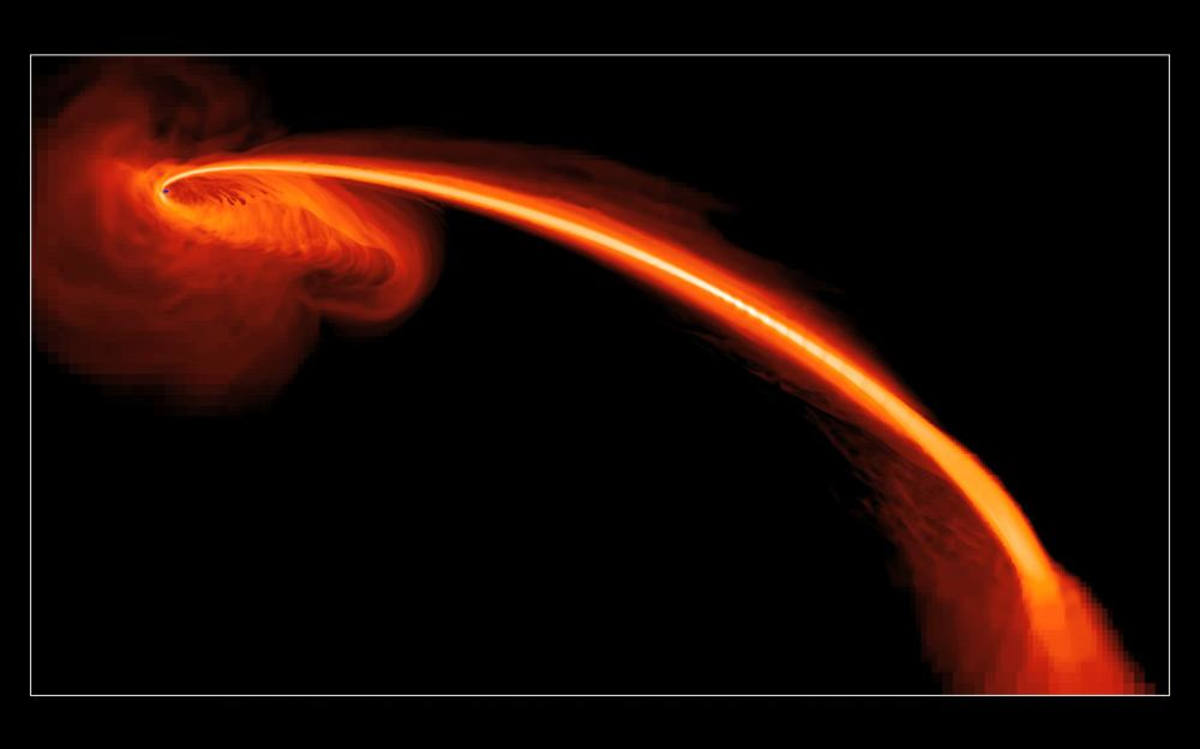
Traditionally, black hole simulations have treated the surrounding plasma, a mix of electrically charged protons and electrons, as a single fluid. Chael's new work, however, published in Monthly Notices of the Royal Astronomical Society, used a more computationally intensive method that models the protons and electrons as separate particle species. This approach allowed the team to directly investigate how these particles interact and, crucially, what their relative temperatures are.
The results were unexpected. The simulations suggested that the electrons around the M87 black hole are much hotter than previously thought, and their temperature is about theoretical models of plasma physics and the observational data collected by the EHT, specifically related to the low polarization of the light detected. “What we found through simulations is that the temperature of the electrons is much higher than is typically thought to be the case in M87," Chael said. "This is an interesting direction to proceed.”
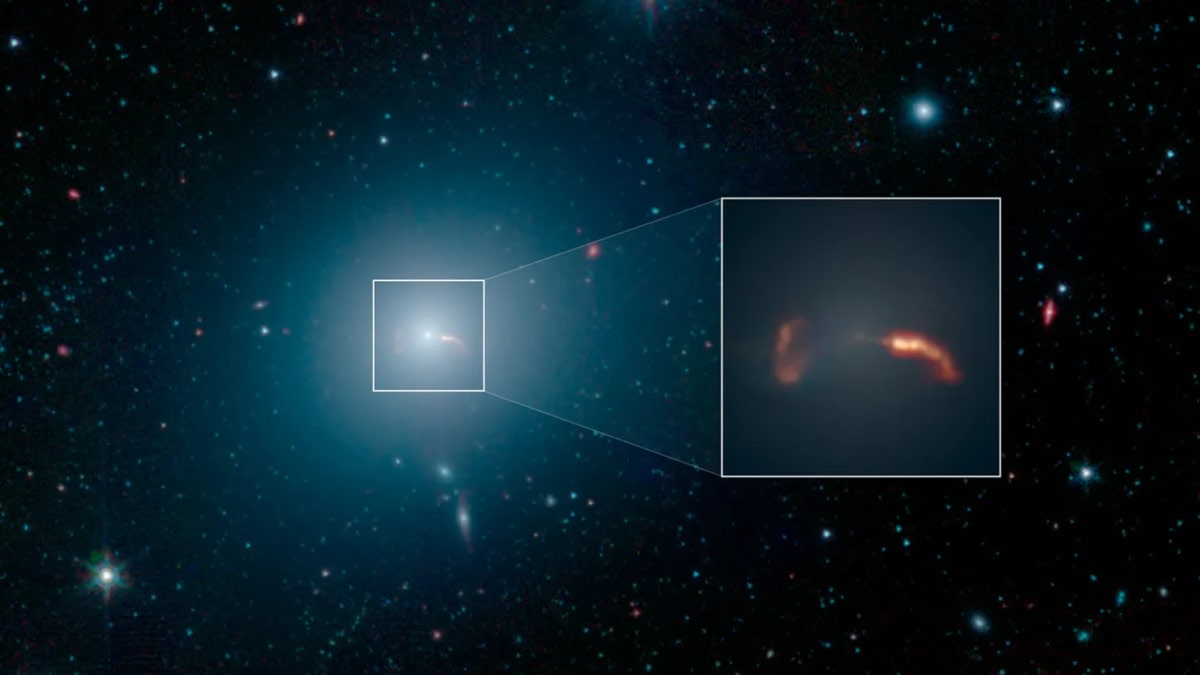
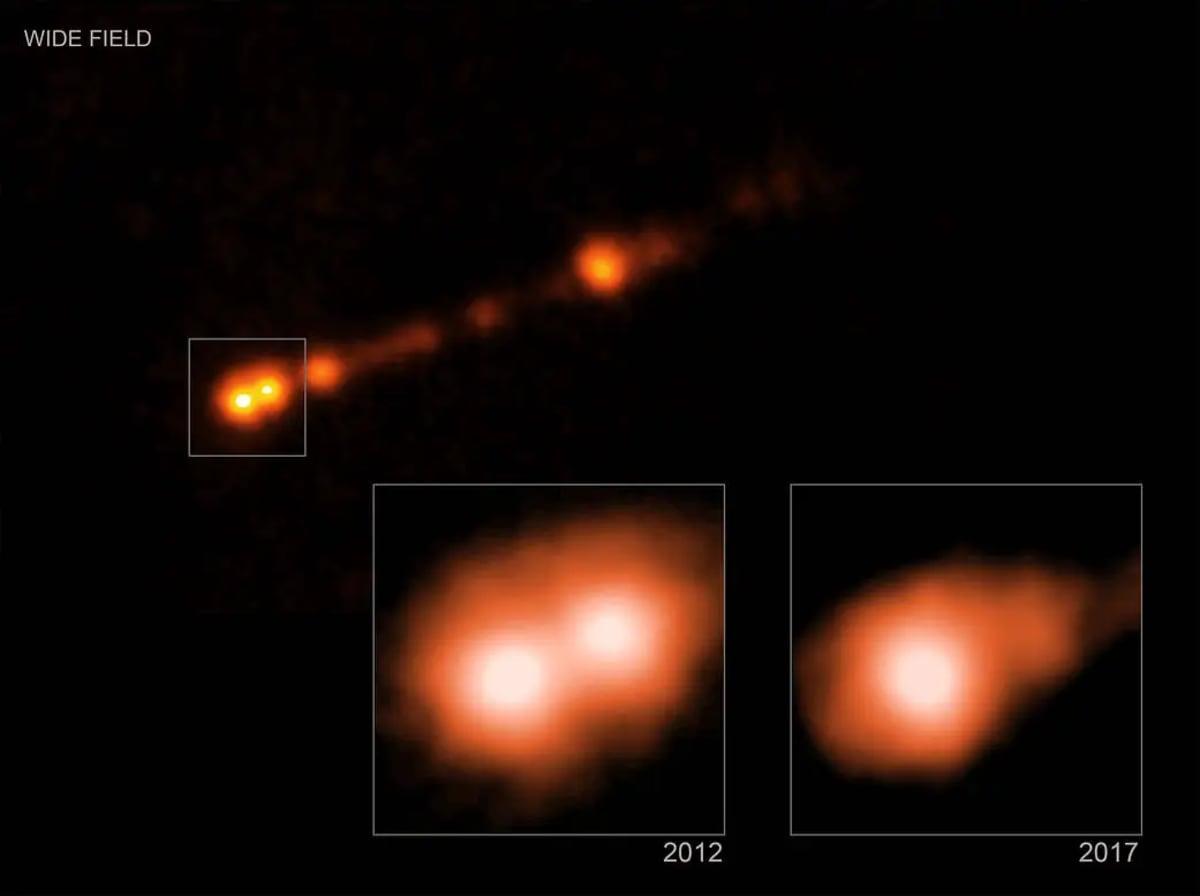
The powerful simulations were run on the Stampede2 and Stampede3 supercomputers at the Texas Advanced Computing Center. This research provides a new path for understanding the powerful, luminous jets of particles that are launched from the black hole and extend thousands of light-years into space. Further research will continue to leverage these supercomputing tools to analyze years of EHT data and create a "movie" that tracks the evolution of the black hole's dynamic environment over time.

Building on the EHT's earlier work, the collaboration published findings in 2023 that provided the first-ever evidence of circular polarization, a phenomenon where light from the edge of the M87* black hole spirals as it escapes the immense gravitational pull. The spiraling light, made up of low-frequency radio waves, offers critical clues about the environment just outside the event horizon, according to the National Radio Astronomy Observatory.
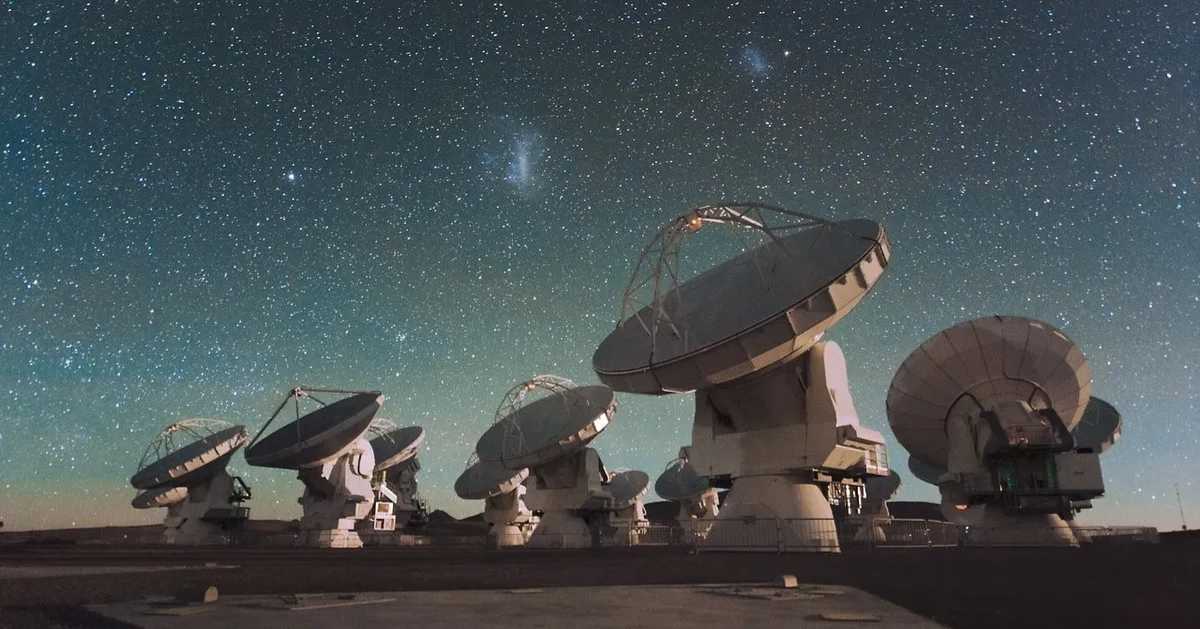
The direction the light's electric field rotates, whether clockwise or counterclockwise, carries valuable information about the surrounding magnetic field and the high-energy particles present. This discovery, made using a global network of radio telescopes including the powerful Atacama Large Millimeter/submillimeter Array (ALMA), supports earlier EHT findings. These results suggest the magnetic field near the black hole is so strong that it can sometimes prevent the black hole from consuming nearby matter, a crucial insight into how these cosmic giants feed and grow.