Physicists predict dark matter will doom the Universe to a catastrophic 'Big Crunch' soon

A groundbreaking calculation leveraging recent data from Dark Energy Survey (DES) and Dark Energy Spectroscopic Instrument (DESI) observatories suggests the universe is not destined for perpetual expansion but is instead on a collision course with a catastrophic "Big Crunch," according to Cornell University.
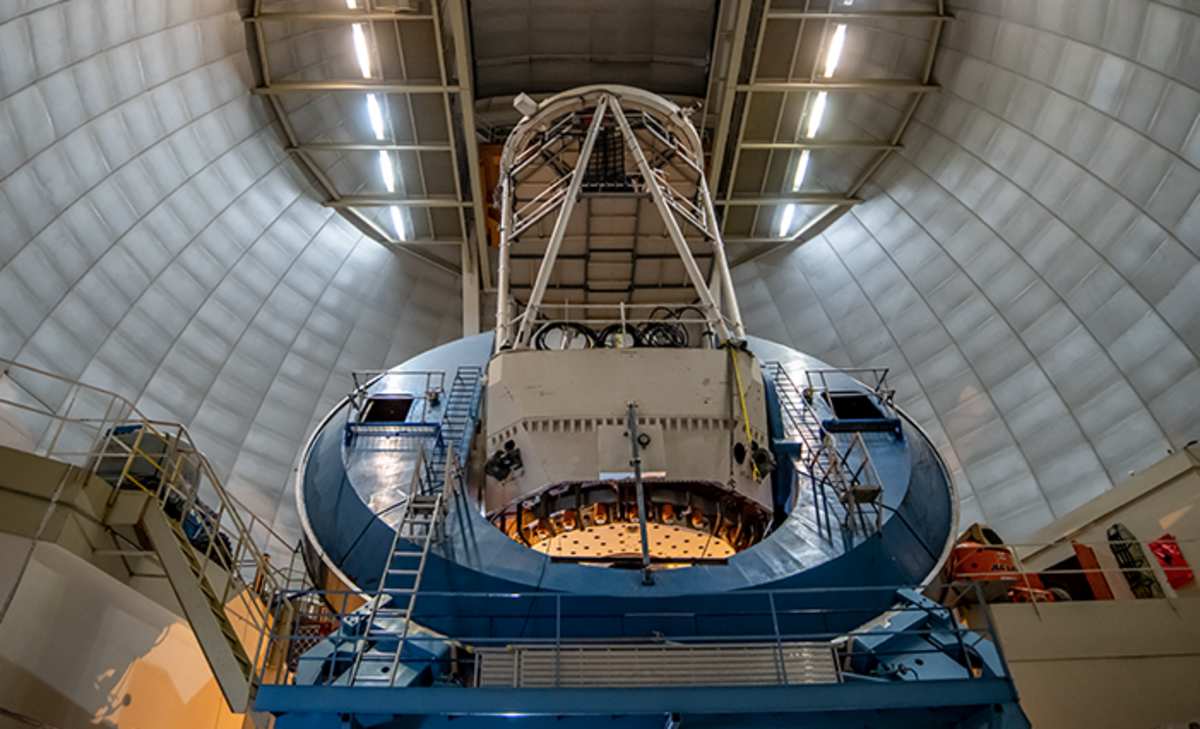
The research, led by Cornell physicist Henry Tye, posits that a recently determined negative value for the cosmological constant, a factor first introduced by Albert Einstein, will cause the universe to reach its maximum expansion size in about 11 billion years before contracting rapidly. “For the last 20 years, people believed that the cosmological constant is positive, and the universe will expand forever,” Tye stated. “The new data seem to indicate that the cosmological constant is negative, and that the universe will end in a big crunch.”
Tye’s model predicts that this collapse, which defines the universe’s endpoint, will occur in approximately 20 billion years, marking the conclusion of its roughly 33-billion-year total lifespan. The findings, published September 18 in the Journal of Cosmology and Astroparticle Physics, rely on fresh observations that indicate dark energy, the mysterious force comprising 68% of the universe’s mass and energy, is not solely defined by a pure cosmological constant. The data hints at an additional factor, which Tye and his collaborators model as a low-mass hypothetical particle that behaved like the constant early on but has since evolved.
This revised model, which neatly fits the concordant data from both the Southern and Northern Hemisphere observatories, ultimately pushes the underlying cosmological constant into the negative. While the concept of a "Big Crunch" resulting from a negative cosmological constant is not new, Tye’s work provides a concrete timeline. "The model tells you when the universe collapses and how it collapses," he explained.
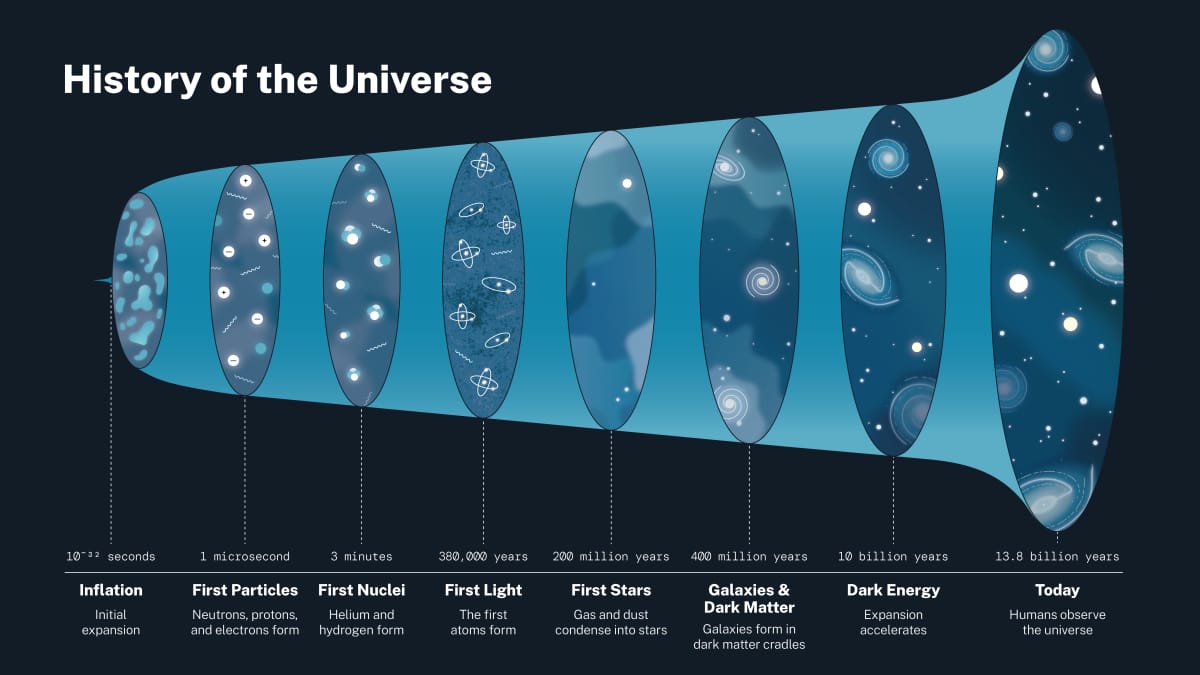
The dramatic shift in cosmic destiny hinges on a revised understanding of the cosmological constant, designated by the Greek letter λ (lambda), as per Universe Space Tech. This value quantifies the influence of dark energy. Historically, a positive λ was assumed, suggesting dark energy acts as a repulsive force, continually pushing the universe outward and accelerating its expansion.
To reconcile this negative constant with the expansion we observe today, the model introduces an ultralight axion field, a concept involving hypothetical particles. These axions are proposed to have provided an initial, powerful outward push early in the universe's life, and they currently dominate, causing space to expand at an accelerating rate. Crucially, the influence of these axions is fading. In about 11 billion years, the relentless, inward pull of the negative cosmological constant will overcome the axion field’s outward momentum. At that point, the universe will reach its maximum extent, roughly 1.7 times its current size, stop expanding, and commence its rapid descent toward the Big Crunch.

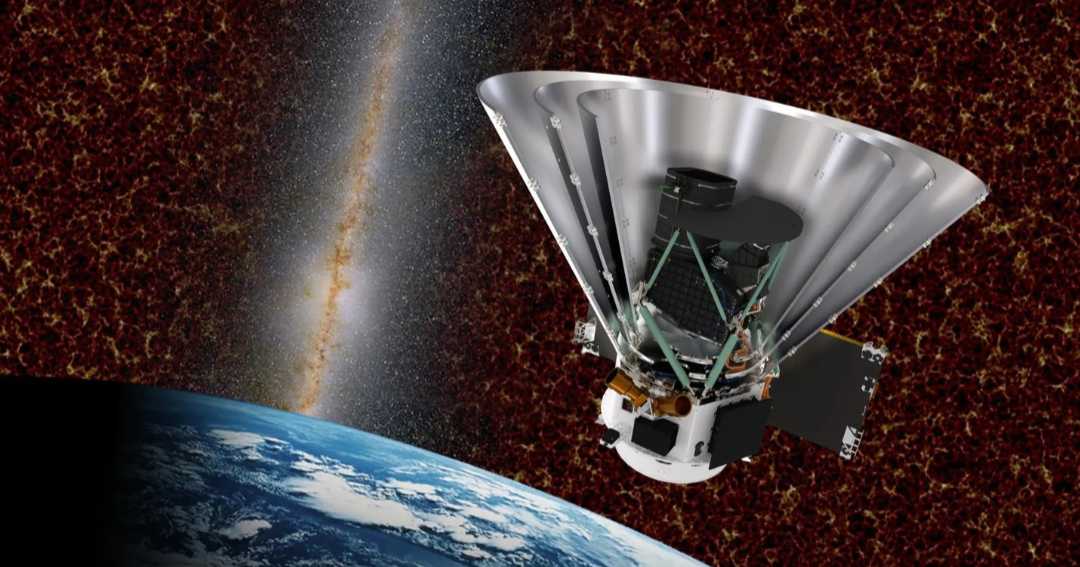
As DESI continues its observations, scientists from institutions including the European Euclid space telescope and NASA’s SPHEREx mission will gather more accurate data on galaxy distances to further refine these predictions, bringing cosmologists closer to quantifying both the beginning and the ultimate end of our universe, per Cornell University.
More on Starlust
Physicist claims universe is 26.7 billion years old — nearly double current estimates
'Baby pictures' showing the universe when it was about 380,000 years old take the internet by storm