Astronomers uncover Sombrero Galaxy’s elusive halo in unprecedented detail using Dark Energy Camera
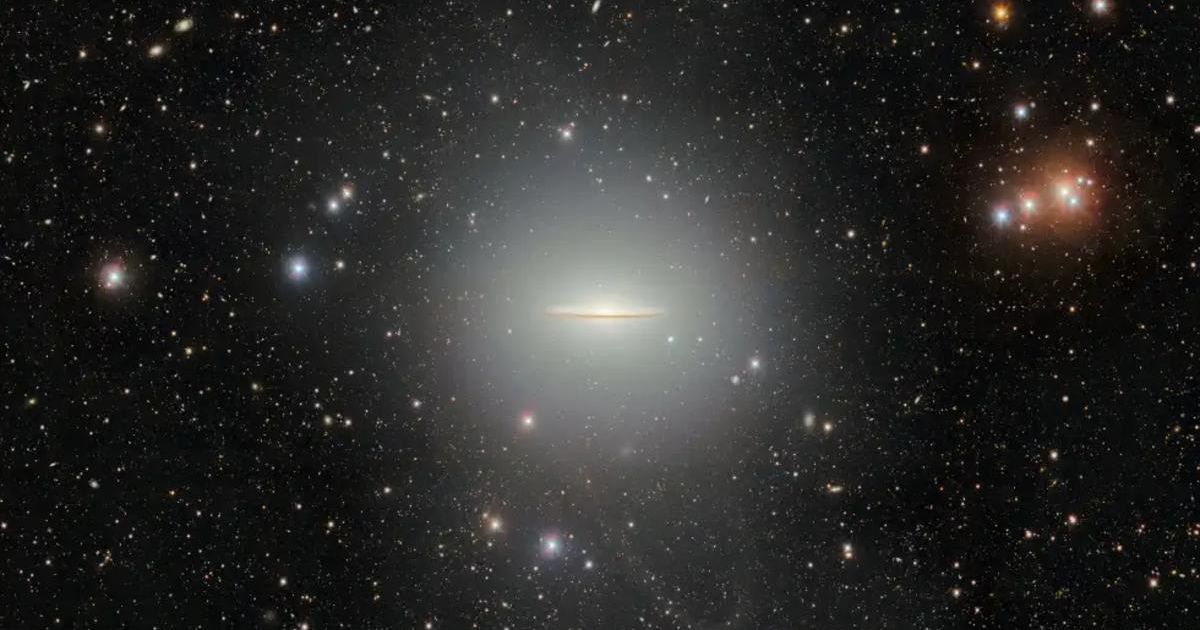
The iconic Sombrero Galaxy has been unveiled in exceptional detail, with astronomers capturing its luminous halo and hidden stellar features more clearly than ever before. The latest image released by the National Optical-Infrared Astronomy Research Laboratory (NOIRLab) through the National Science Foundation (NSF) showcases the hat-shaped galaxy some 30 million light-years away, located in the Virgo constellation. Although the image was obtained four years ago using a telescope in Chile, the final color corrections have been recently perfected, revealing the previously hidden stellar structures.
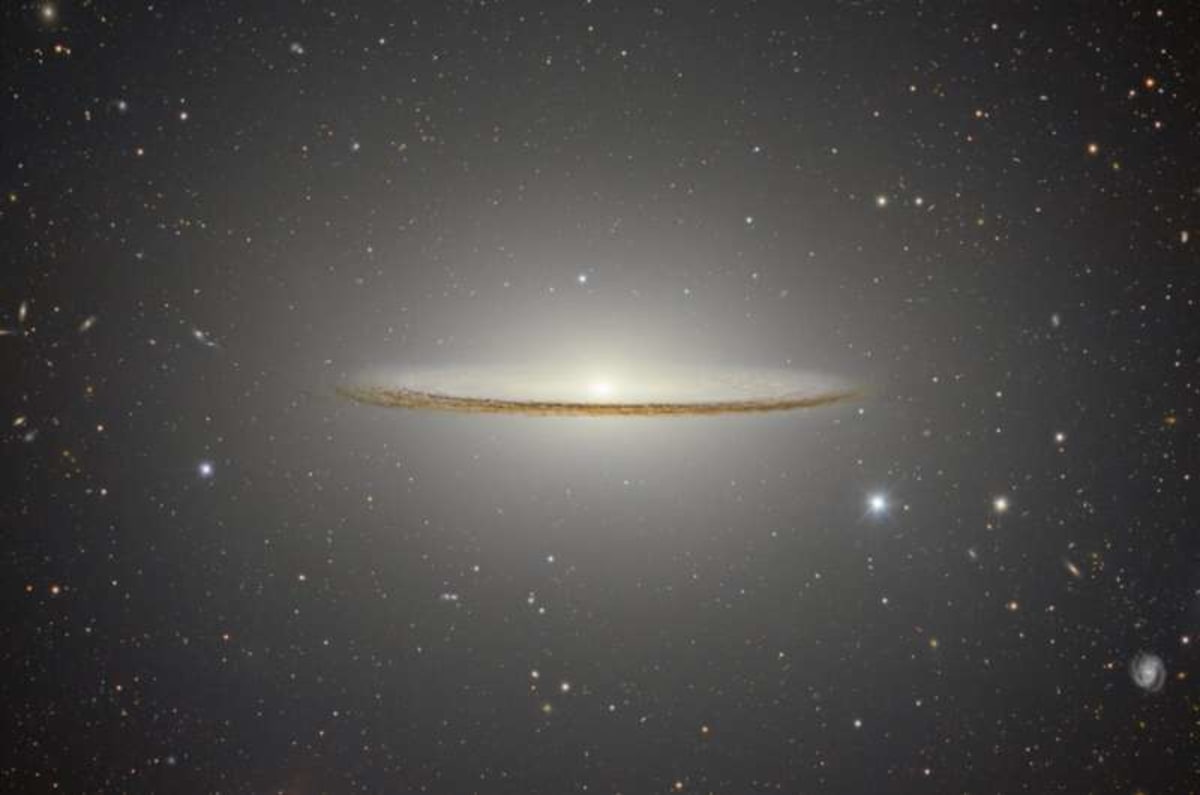
Mounted on the Victor M. Blanco 4-meter Telescope using 570-megapixel resolution, astronomers used Dark Energy Camera (DECam) to produce an incredibly detailed image of Messier 104, a galaxy that is around 50,000 light-years across. Nearly 2,000 globular star clusters are visible at the core of the galaxy. It features a bright nucleus powered by a supermassive black hole. A distinct dark band of dust and hydrogen gas is spotted outlining the disk of the galaxy, where stars are born. As these new stars help the galaxy take the form of a traditional Mexican hat (called Sombrero), the Sombrero galaxy is named after that.
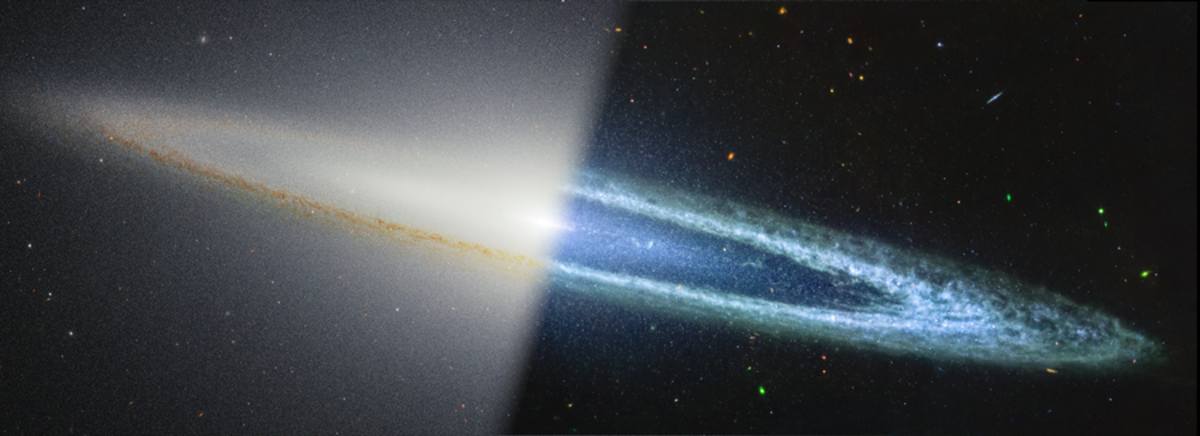
There is an unprecedented clarity of the halo in the image after color processing. The faint glowing halo stretches more than three times the width of the visible disk. Astronomers believe both the halo and the stream of stars were formed due to a galactic collision in the past, when the Sombrero Galaxy gravitationally pulled stars from a smaller neighboring galaxy. These newly observed structures help scientists in understanding how galaxies grow and change over time through such mergers.
The discovery of the Sombrero galaxy is the result of a long history of observation. It was first spotted by Pierre Mechain in 1781, while working with Charles Messier as an assistant. Later, it was independently discovered by William Herschel and was officially recognized in the Messier catalogue after confirmation by Camille Flammarion in the early 20th century. Messier 104 is another galaxy found as a byproduct of the search for comets. Today, Messier 104 remains one of the most recognizable and widely studied galaxies in the night sky. Despite its immense size, it appears relatively dim, just below the naked-eye visibility, but can be easily observed using a small telescope or binoculars. Its distinctive structure and scientific significance continue to make it a favorite among both amateur astronomers and researchers. In 2026, Messier 104 served a powerful reminder that even well-known cosmic objects can still reveal new secrets when viewed with advanced telescopes.
More on Starlust
Some of the galaxy's unusually cold 'stars' could actually be alien megastructures
Scientists find evidence our Sun may have migrated from the galaxy center with stellar 'twins'