Rare images show comet 220P/McNaught brightening by more than 600 times
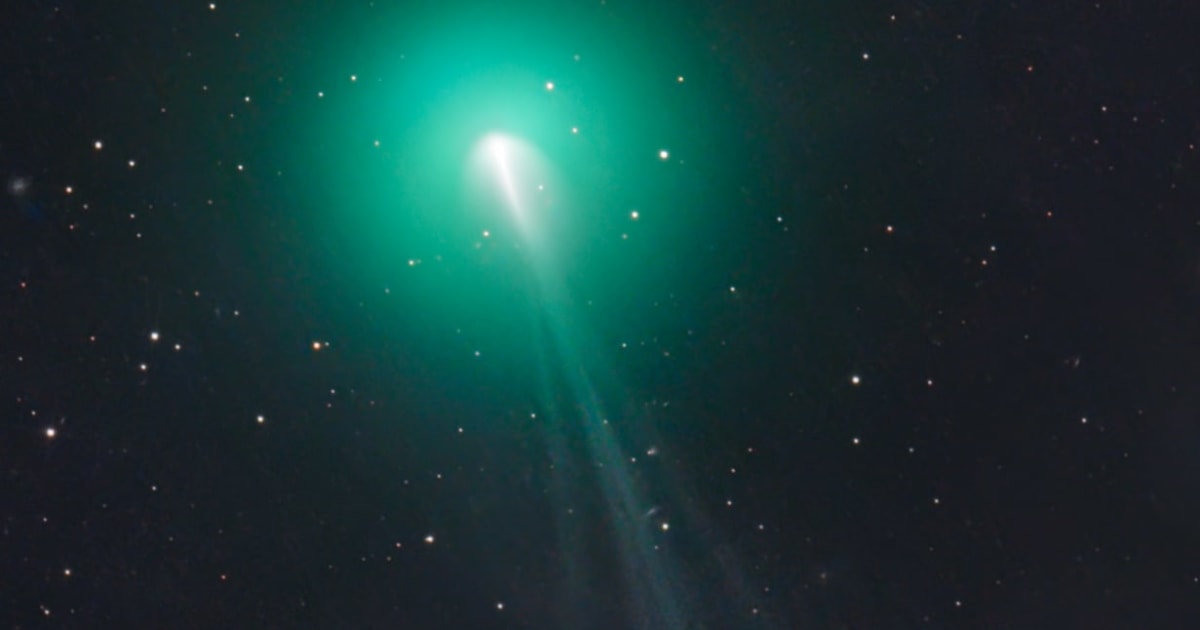
Astrophotographers imaged the comet 220P/McNaught as it traversed the skies over Namibia on August 8, 2026. During a skywatching excursion to Farm Tivoli, Gerald Rhemann and Michael Jäger used a 12-inch telescope and a ZWO ASI 6200 MM Pro camera to photograph the comet as it glowed a bright green. This brightness was unexpected since the comet 220P was known to have already reached its maximum glow around the time of its closest approach to the Sun in June.
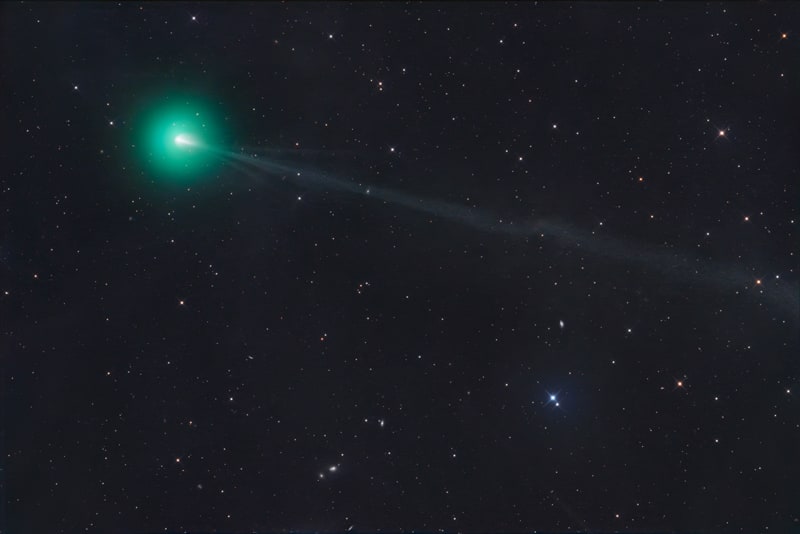
At the time of writing, comet 220P/McNaught has moved to a distance of just over 1.20 astronomical units (1 AU equals about 93 million miles, or the average distance between Earth and the Sun) in the constellation Cetus. The apparent skywatching coordinates of the comet are as follows:
Right Ascension: 02h 57m 26s; Declination: +09° 38’ 32”
The comet should not have been an easy target to capture, having spent most of the year as a faint 17th-magnitude object. The spike this month, however, saw it reach more 600 times its usual brightness, allowing Rhemann and Jäger to capture it. Astronomers at Bulgaria's Rozhen Observatory also made the most of the opportunity on August 8 by taking detailed measurements of the comet. The data, published in The Astronomer's Telegram on August 10, show the comet is dominated by reflected dust. In contrast, the previous eruption, which saw the comet brighten around 8,000 times, was characterized by molecular gas enrichment. This, according to a report in Tech Times, suggests that the two explosions exposed two chemically distinct zones inside the comet's nucleus—the solid frozen core—thus offering scientists a rare view of the comet's interior. Meanwhile, citizen scientist Tiago Ferreira, who observed the comet on August 9, claimed that its tail became "so wide that almost fit the distance from the Earth to the Moon or 2.6x the diameter of Jupiter."
Comet 220P/McNaught last night live in this channel through Excalibur, our big telescope. This object just had a strange behavior exploding and increasing its brightness exponentially. Although the nucleus should have between 1 and 2km diameter, it's tail became so wide that… pic.twitter.com/VT0hs8CVV1
— Dobsonian Power (@DobsonianPower) August 10, 2026
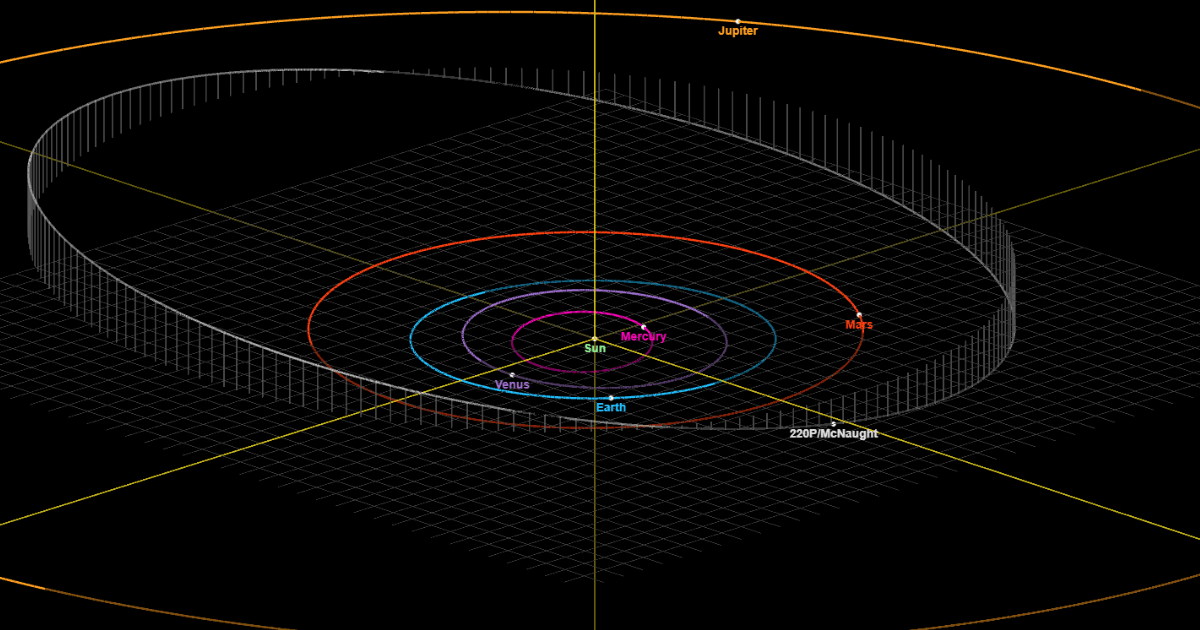
Comet 220P/McNaught is a relatively new discovery—having been first seen in the year 2004 by astronomer Robert McNaught at the Siding Spring Observatory in Australia. It belongs to the Jupiter family of comets, meaning that its orbit of 5.5 years around the Sun is primarily influenced by the gravity of the gas giant.
More on Starlust
A near-Earth asteroid has revealed itself as a comet 27 years after its discovery in a NASA study
Final moments of comet C/2026 A1 (MAPS) captured by NASA as it disintegrates near the Sun