3I/ATLAS reaches perihelion—here's when it will be visible from Earth again
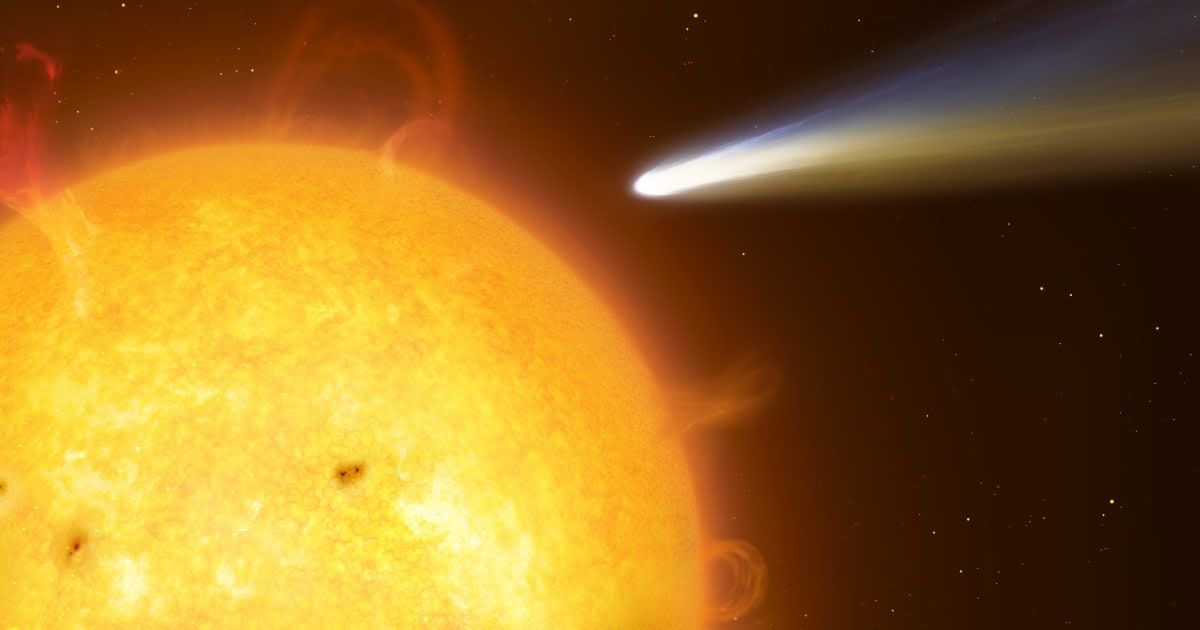
The highly anticipated interstellar comet 3I/ATLAS successfully completed its closest pass to the Sun this week. The milestone occurred on Wednesday, October 29, at approximately 7:47 a.m. ET, with the cosmic visitor positioned 1.36 Astronomical Units (AU) from our star, as per Universe Today.
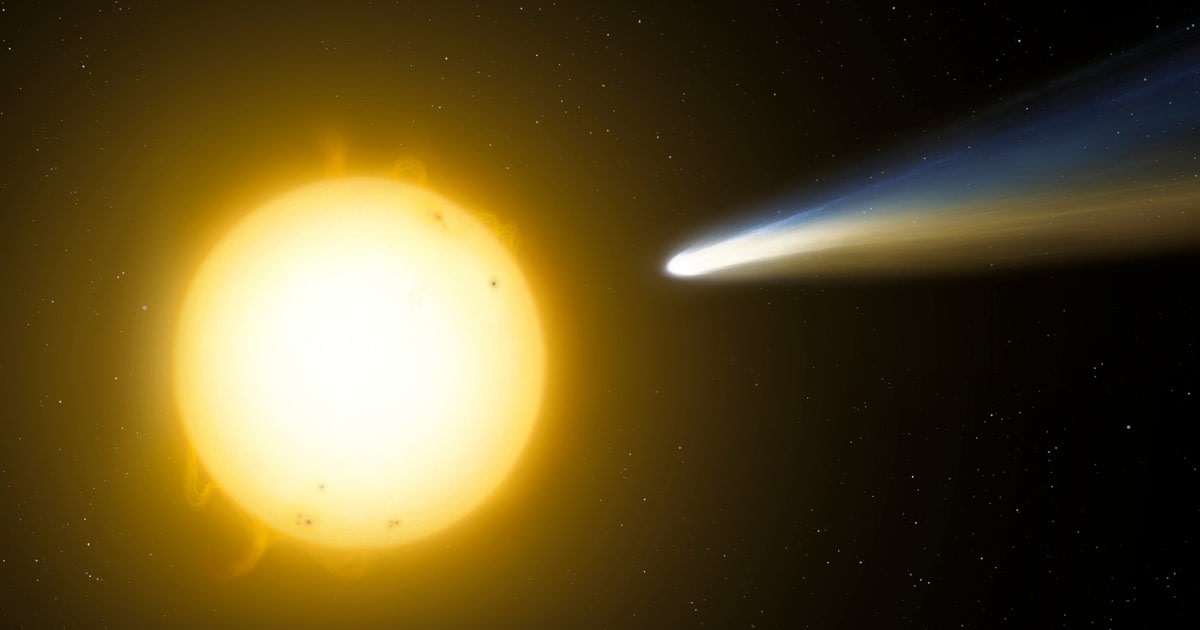
The high-velocity object, which originated from beyond our solar system, is not currently visible from Earth. Its perihelion alignment places it nearly opposite the planet, meaning it will not emerge into public view until November, when it will appear low in the pre-dawn sky. Currently, Comet 3I/ATLAS is located in the constellation Virgo, situated approximately 345 million kilometers from Earth at an apparent magnitude of 14.72. However, the comet is expected to make its closest approach to Earth on Friday, December 19, 2025, passing at a distance of about 269 million kilometers (1.797 AU), according to Sky Live.
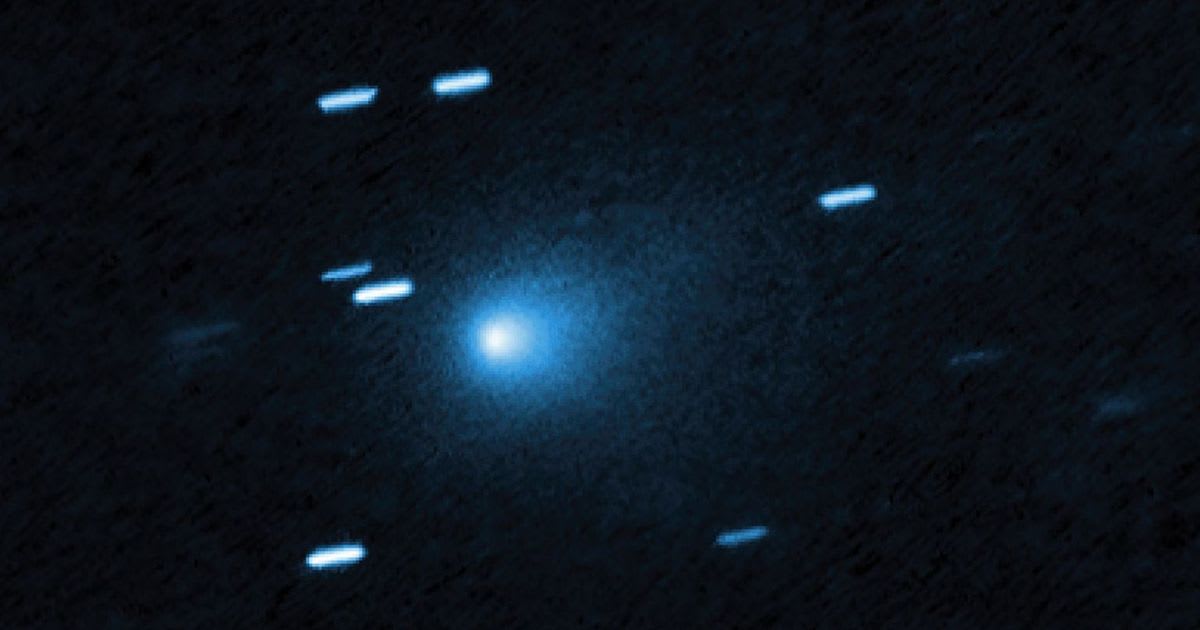
Discovered this past summer by the Asteroid Terrestrial-impact Last Alert System (ATLAS), the object immediately drew scientific attention due to its highly eccentric orbit, signaling its birth outside our solar system, as mentioned on Universe Today. However, the comet's journey has been met with a wave of online speculation and conspiracy theories. Despite the sensational claims, scientists maintain that 3I/ATLAS exhibits the typical characteristics of a standard comet. The object possesses a coma and a dust tail, and it has reportedly developed a faint green tint due to the presence of diatomic carbon (cyanogen gas), a common cometary feature confirmed by recent spectroscopy at Gemini South.

Bryce Bolin, a Research Scientist at Eureka Scientific, noted that the comet initially showed a condensed coma but later evolved an extended anti-solar tail. This feature is caused by solar radiation pressure pushing dust particles away from the Sun. Scientific data suggests the comet is an ancient object, likely predating the solar system and hailing from the thick disk of the Milky Way.
It's currently moving at a staggering 58 kilometers per second relative to the Sun. While U.S. space agencies have been silent due to the ongoing government shutdown, making amateur astronomers crucial in the tracking effort, the European Space Agency (ESA) continues its observation plans. ESA's Jupiter Icy Moons Orbiter (JUICE) is set to begin monitoring the comet from a distance of about 0.4 AU in early November
The best prospects for observation will arrive in November and December, when the faint, magnitude +11 comet will be within the grasp of large backyard telescopes as it traverses the constellations Virgo and Leo. The comet is expected to exit the solar system in 2026, resuming its vast journey toward the constellation Gemini. 3I/ATLAS is only the third interstellar object ever detected in the inner solar system, following 1I/'Oumuamua and 2I/Borisov. The successful early detection of this comet, unlike 1I/'Oumuamua, which was only spotted on its way out, suggests an improved capability for astronomers. Experts anticipate that powerful new facilities like the upcoming Vera C. Rubin telescope will soon lead to a significant increase in the discovery of smaller, fainter interstellar visitors.
More on Starlust
Giant 'jet' of material detected on interstellar object 3I/ATLAS aiming at the Sun
Astrophysicist explains how Mars Orbiters captured closest view of interstellar comet 3I/ATLAS