Scientists just found a 'mega-Earth' with 23 times Earth's mass, and it's breaking the rules

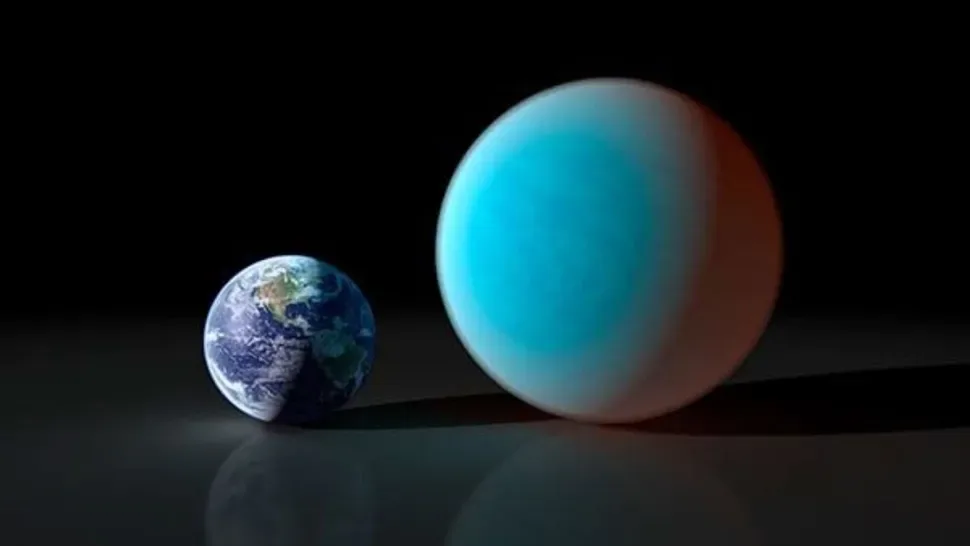
Astronomers have found a rocky exoplanet called GJ 523b that's about 23.5 times as massive as our planet Earth. But that’s not all. It’s also breaking a long-held scientific assumption. This discovery was made with the help of NASA's Transiting Exoplanet Survey Satellite (TESS) and the James Webb Space Telescope (JWST) by researchers at the University of Wisconsin. As per the official release, "It’s nearly 170 million years old. It’s more than 2.5 times the size of Earth.”
This discovery comes with a surprising result
Once a young planet's core reaches around 20 Earth masses, it's supposed to start rapidly pulling in hydrogen and helium and turning into a gas giant. This is similar to how Jupiter and Saturn formed. But when it comes to GJ 523b, scientists found that the planet remained rocky and dense instead. Commenting on this, study lead author Max Kroft noted, "The question is, why didn't this planet do that, if it's 20 times the size of Earth?"
Astronomers just found a planetary heavyweight that breaks the rules: a young “mega-Earth” packing 23 Earth masses into a body only 2.5 times wider than our own.
— Black Hole (@konstructivizm) August 18, 2026
Meet GJ 523b — a roughly 170-million-year-old world orbiting a mid-K dwarf star. At first glance it looked promising:… pic.twitter.com/vAFB1mnZSF
For this, researchers are now considering two explanations. One is that GJ 523b built up a thick atmosphere early on and lost it later through some kind of stripping process. Or two smaller worlds may have collided and shed their gaseous layers. And this might have resulted in a larger planet with rocky materials. Kroft further added, "This isn't what we expected at all. Dense planets like this aren't uncommon, but they're usually small rocky planets similar to Earth or Mercury. This planet is two and a half times bigger than the Earth."
How did scientists track this planet down?
For this discovery, researchers used NASA's JWST and TESS, which flag planets by watching for the tiny dips in starlight that happen when a planet crosses in front of its star. The team turned to the WIYN 3.5-meter Telescope at Kitt Peak National Observatory in Arizona, and a spectrograph helped them detect the effect the planet had on its host star.
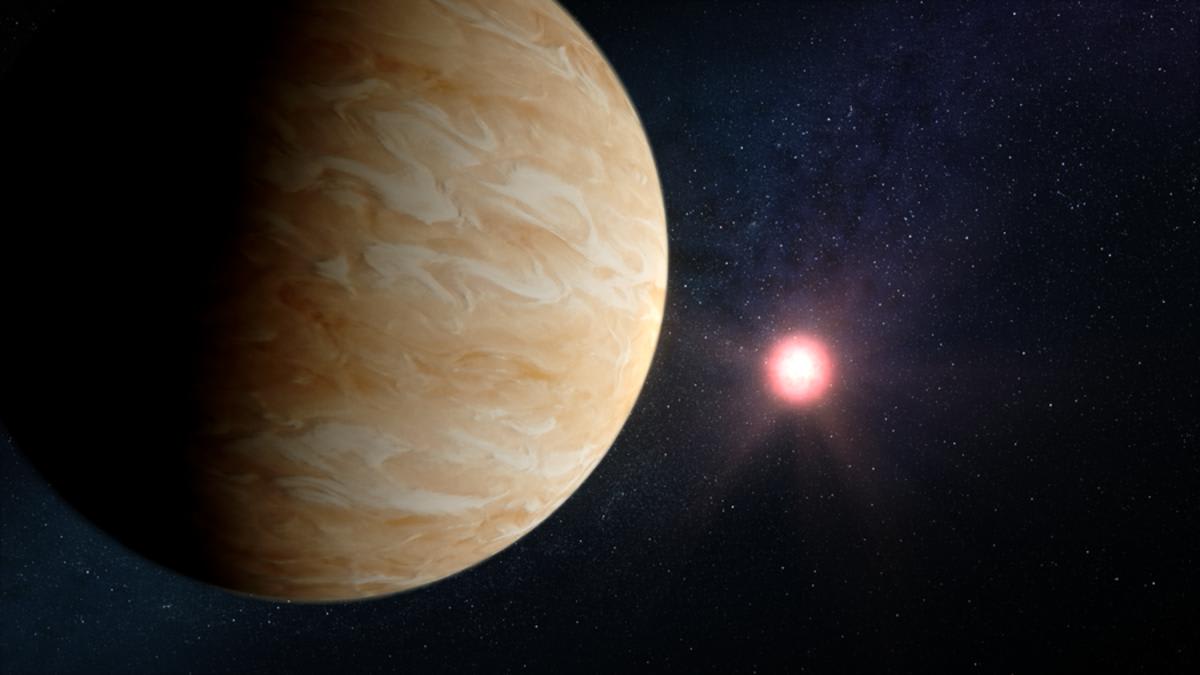
The combined measurements gave researchers its mass, radius, and a density of around 126.82 grams per cubic inch. The planet completes a full orbit around its star in just 17.75 days, and the whole system is thought to be relatively young, at roughly 170 million years old.
What comes next for this mystery planet?
Kroft noted that, as of now, there is not enough data. "It's hard to infer things about planet formation in general from a sample size of one," he said. "We're not going to get to 10,000 of these overdense planets, but if we can get to 20 or 30, maybe some trends might pop out."
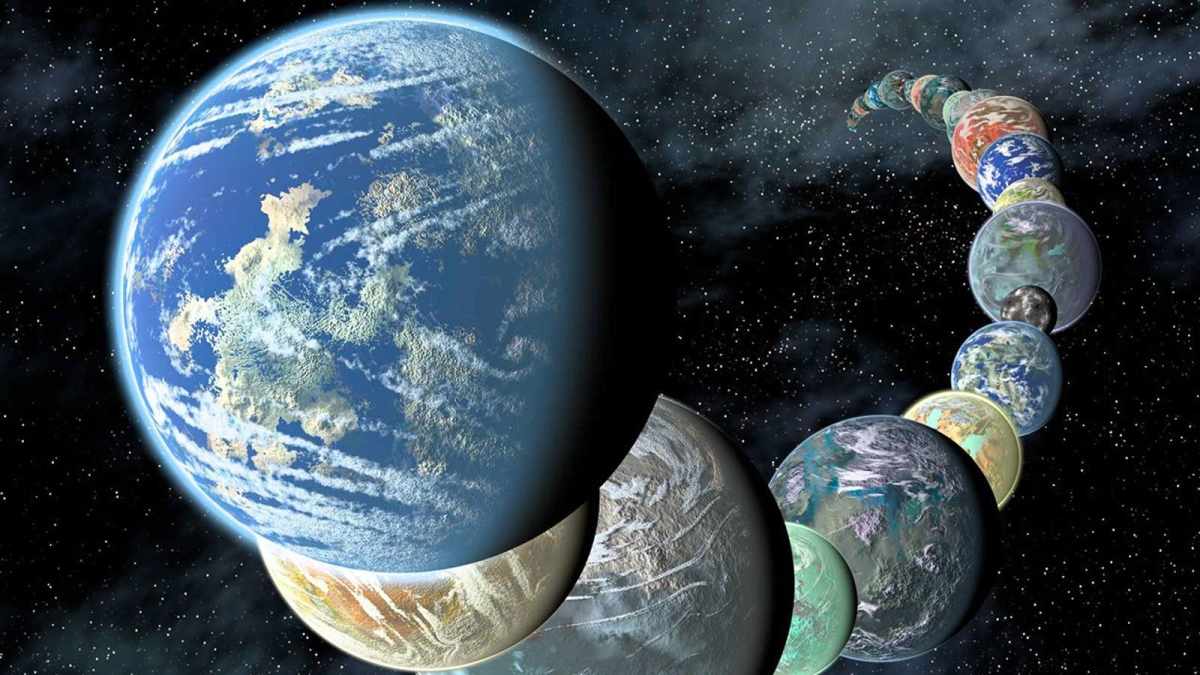
Finding more mega-Earths will help astronomers understand whether GJ 523b is a rare discovery or part of a larger group of oddball worlds. The findings have now been submitted to The Astronomical Journal and are currently available on the preprint server arXiv, though they have not yet been peer-reviewed.
More on Starlust
NASA's James Webb makes first discovery of three supermassive black holes in a single galaxy