Astrophysicist says traveling across the universe through wormholes is possible—but there's a catch

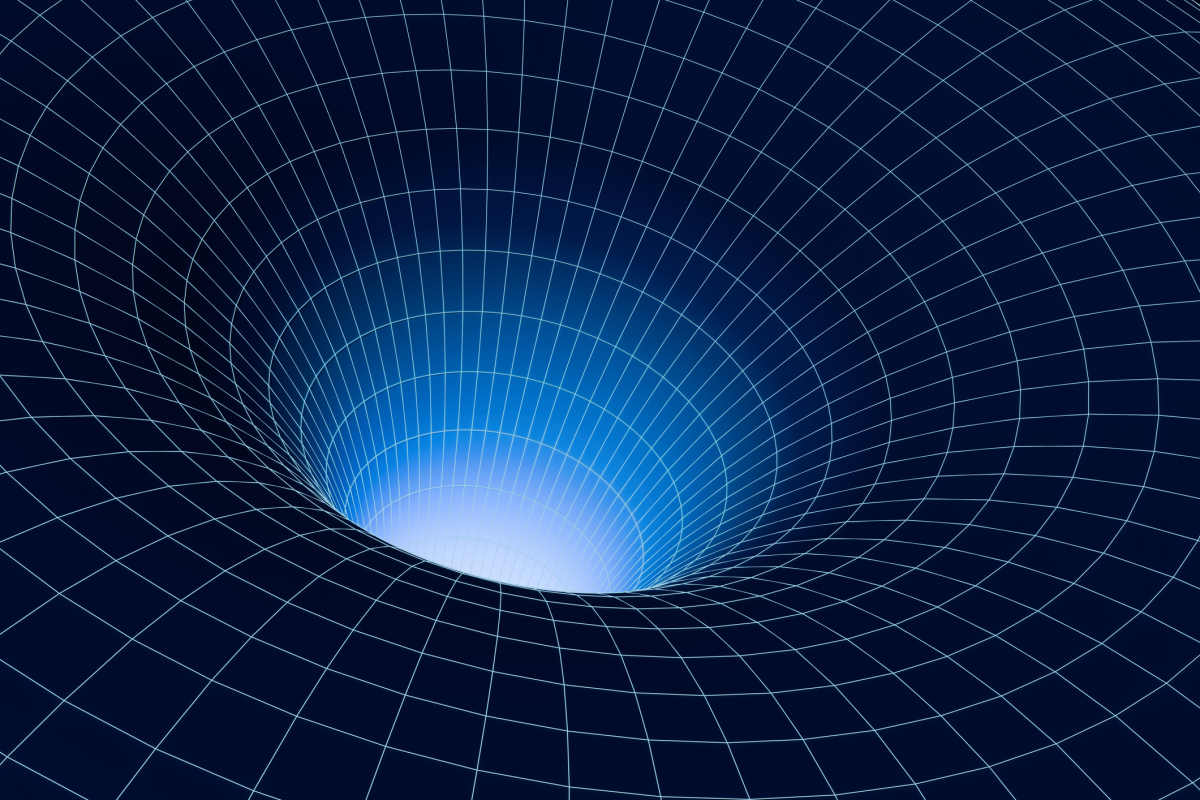
A new theoretical study suggests that wormholes, once thought to be only fleeting or requiring exotic negative energy to travel through, could potentially allow travel across the vastness of the universe, provided the traveler is microscopic. The findings, which propose a fully traversable wormhole solution, were published in Physical Review Letters under the title "Traversable wormholes in Einstein-Dirac-Maxwell theory."

Wormholes, a feature of general relativity initially theorized by Albert Einstein and Nathan Rosen, are conceptual tunnels through the fabric of spacetime, offering a shortcut between two distant points, as per Universe Today. Historically known as Einstein-Rosen Bridges, the concept faced a major roadblock: while mathematically valid solutions to Einstein's equations, these cosmic shortcuts were found to collapse too quickly for anything to traverse them. Theorists later determined that lining the wormhole with some form of negative mass or energy could stabilize it, a substance that is yet to be observed in reality.
The recent breakthrough comes from operating at the intersection of classical and quantum physics. Since Einstein's gravity theory is considered classical and must break down at quantum scales, researchers explored approximate quantum gravity models. Using the Einstein-Dirac-Maxwell theory, which incorporates Einstein's gravity, Maxwell's electromagnetism, and Dirac's quantum particle theory, a team successfully identified a stable wormhole solution. Crucially, this new solution does not require the unphysical concept of negative energy. Instead, it offers a theoretically sound path for objects in a quantum state to pass through. While this model allows for small, microscopic clumps of atoms to travel, it definitively excludes macroscopic objects like humans or traditional spacecraft.
While quantum physics explores shortcuts for the infinitesimal, engineering concepts for macroscopic interstellar travel continue to advance, representing a stark contrast in approach to conquering cosmic distances. A bold and massive generation ship concept, designed to carry up to 2,400 people on a one-way, 400-year voyage to the nearest star system, Alpha Centauri, recently captured the top prize in the Project Hyperion Design Competition. Named Chrysalis, the proposed vessel represents a multigenerational endeavor, designed to traverse the 25 trillion-mile (40 trillion-kilometer) distance using sheer scale and self-sufficiency rather than exotic spacetime manipulation.
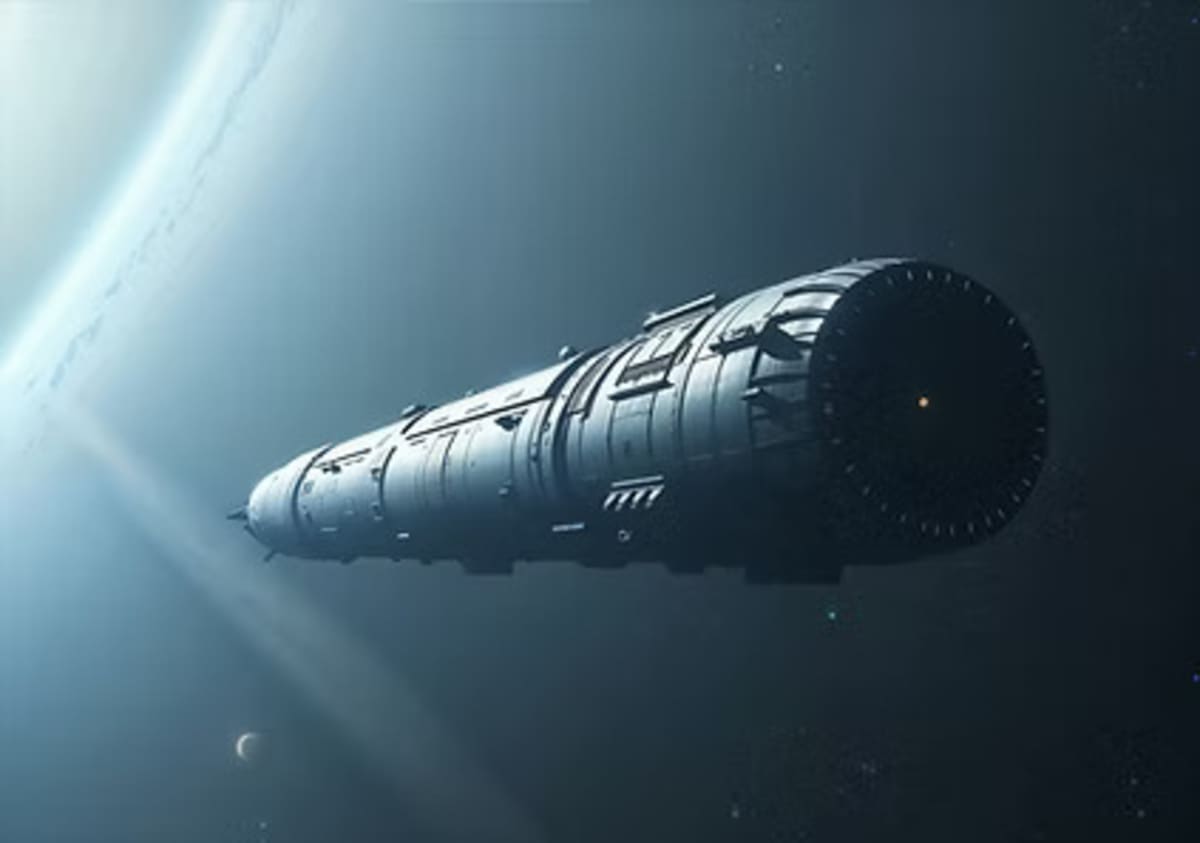
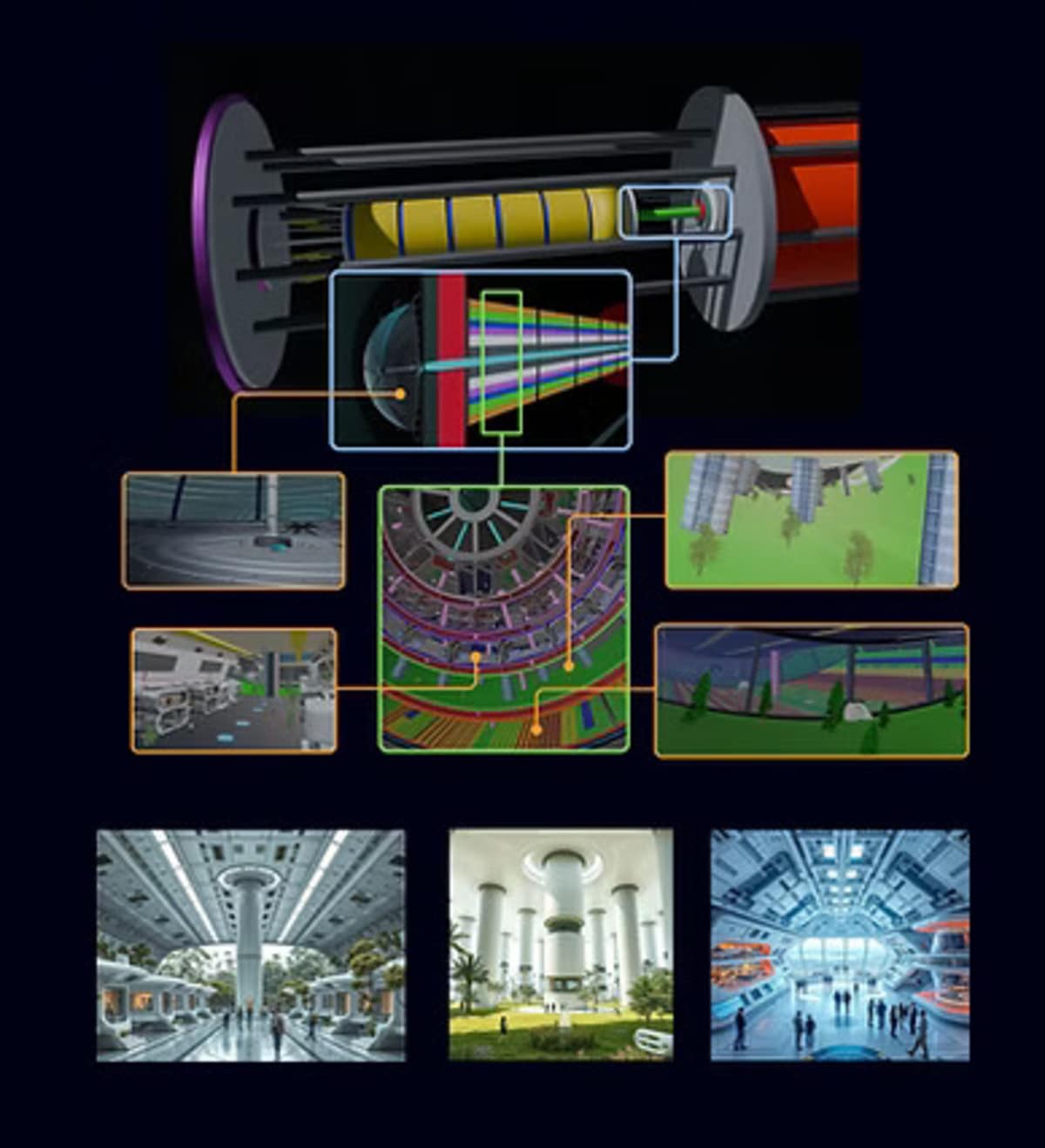
The colossal starship is outlined as an isolated, thriving civilization unto itself. It measures an astounding 36 miles (58 km) in length and is conceived with a structure akin to a Russian nesting doll: five concentric layers surrounding a central core, all powered by nuclear fusion reactors. The interior is meticulously organized, with layers dedicated to specific functions. The innermost shell would house diverse, self-sustaining ecosystems, including forests and farms, for food production. Adjacent layers would contain communal infrastructure like schools and hospitals, as well as individual family dwellings, ensuring the continuity and health of the population over four centuries.
While the team behind the quantum wormhole plans to explore the idea of traversing through wormholes, it is up to time to tell us whether their solution is genuinely possible or if the only feasible human path to the distant heavens lies in such gargantuan, slow-moving vessels.
More on Starlust
First-ever full measurement of black hole's three-dimensional recoil confirms Einstein's theory
NASA's Roman Telescope to probe dark matter using Einstein's gravitational lensing