First-ever oval orbit detected in neutron star–black hole merger
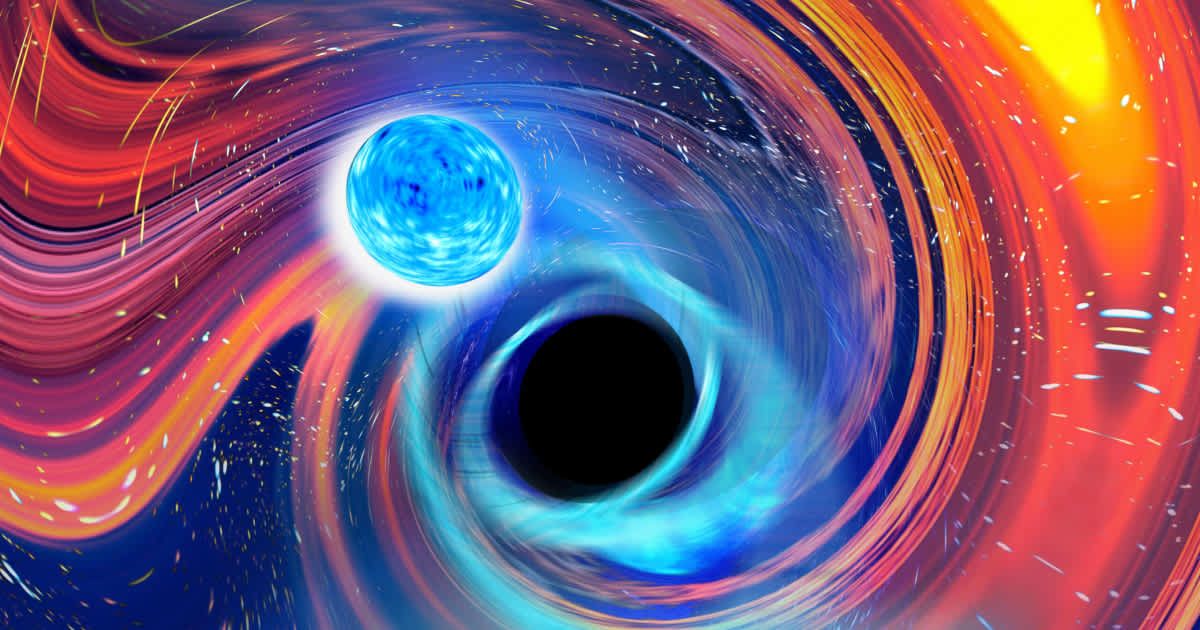
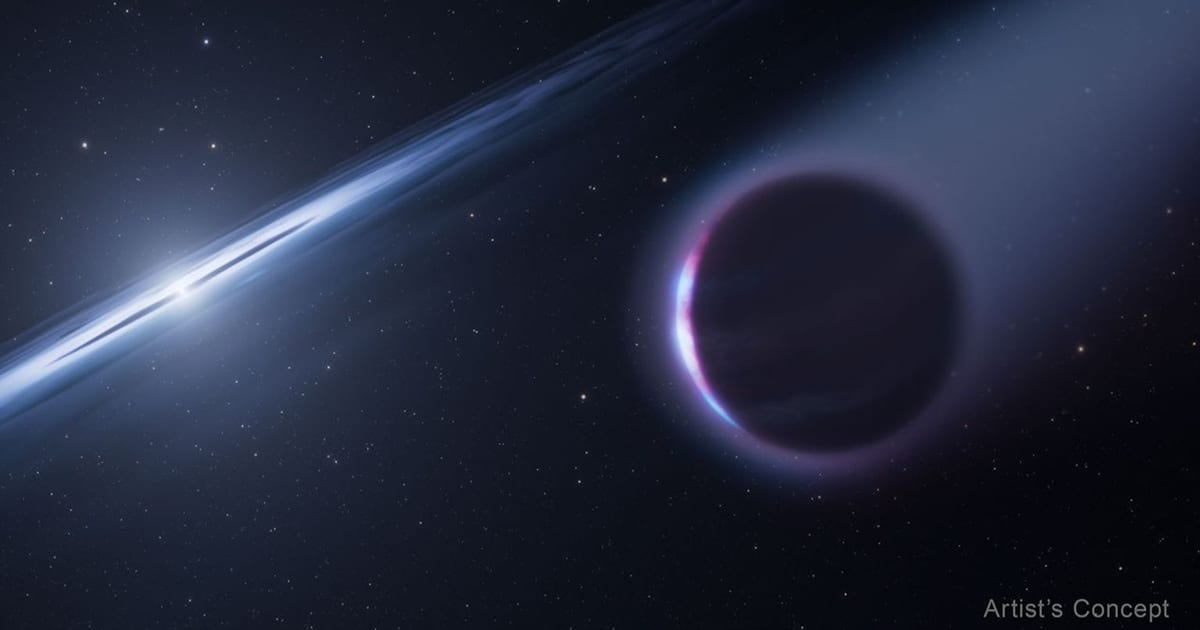
When a black hole–neutron star pair merges, it's assumed to do so while settling into a perfect circular orbit. But according to a recent study, there is now strong evidence for the first time that the cosmic merger takes place in an oval orbit instead. Researchers from the University of Birmingham, Universidad Autónoma de Madrid, and Max Planck Institute for Gravitational Physics led this study, whose findings were published in The Astrophysical Journal Letters. Specifically, they analyzed the gravitational-wave event GW200105 to reach this conclusion.
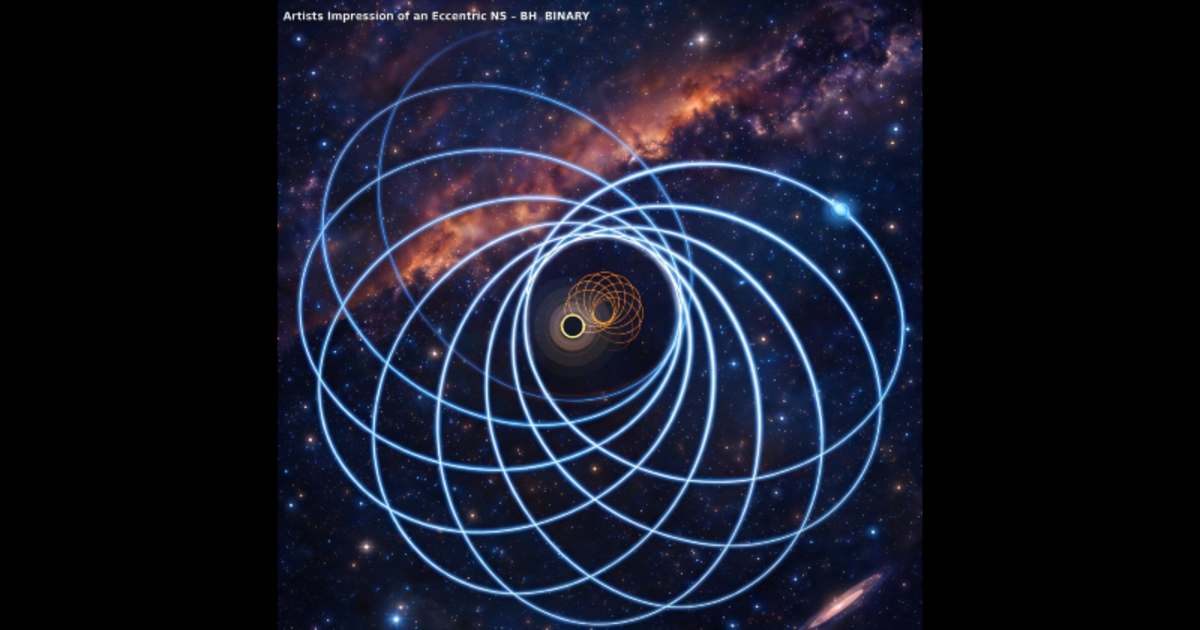
Before this study, most theoretical models suggested that when these two extreme binary systems merge, they do so only in a fully circular path. This is due to gravitational radiation, which typically removes any irregularities in the orbit. However, in the case of GW200105, scientists noticed that a first-of-its-kind elliptical orbit was retained just before the final merger. “This discovery gives us vital new clues about how these extreme objects come together,” said Dr. Patricia Schmidt from the University of Birmingham. “It tells us that our theoretical models are incomplete and raises fresh questions about where in the universe such systems are born.”

GW200105 was originally detected by the LIGO and Virgo observatories. The team analyzed data from these detectors using a new gravitational‑wave model developed at the University of Birmingham’s Institute of Gravitational Wave Astronomy. For the first time, this model allowed them to simultaneously measure two key factors in a black hole–neutron star collision. First, the orbital eccentricity or how stretched or oval the orbit is, and second, precession i.e. any spin-induced wobbling that was observed.
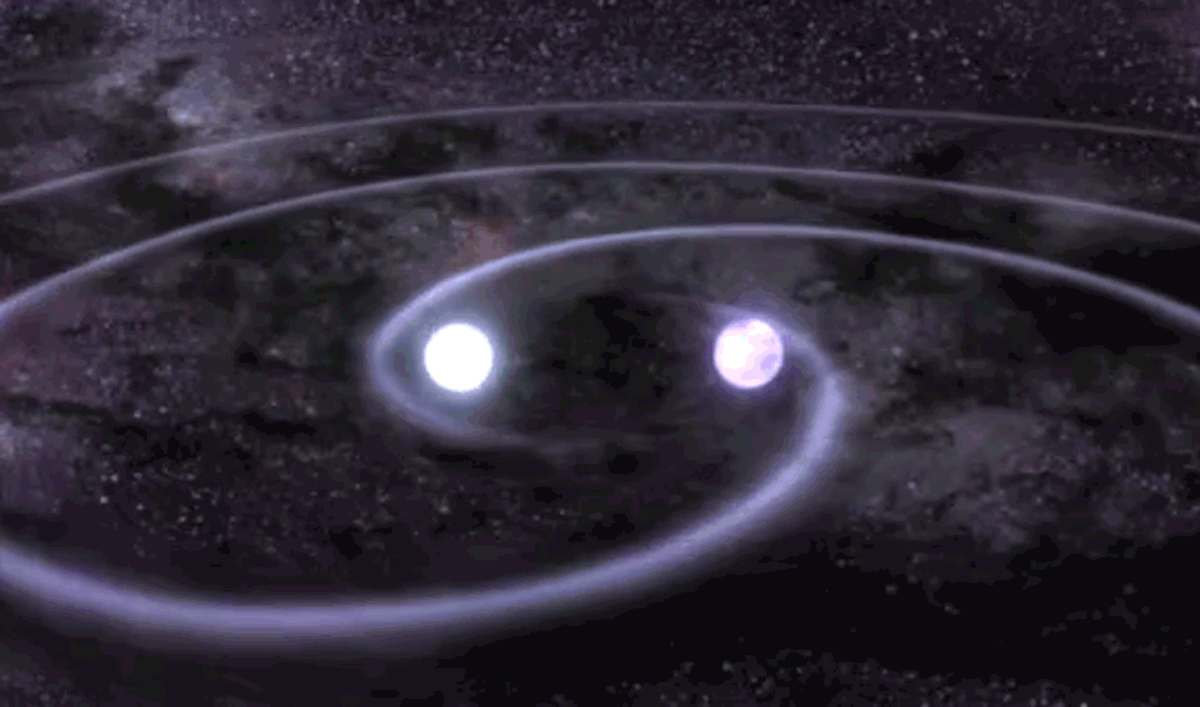
So, how does this discovery challenge existing theories on cosmic mergers? The oval orbit reveals that this binary system did not form and evolve in isolation. It was more likely to have originated in crowded stellar environments like dense star clusters. “The orbit gives the game away,” said Geraint Pratten, a Royal Society University Research Fellow from the University of Birmingham. “Its elliptical shape just before merger shows this system did not evolve quietly in isolation but was almost certainly shaped by gravitational interactions with other stars, or perhaps a third companion.”
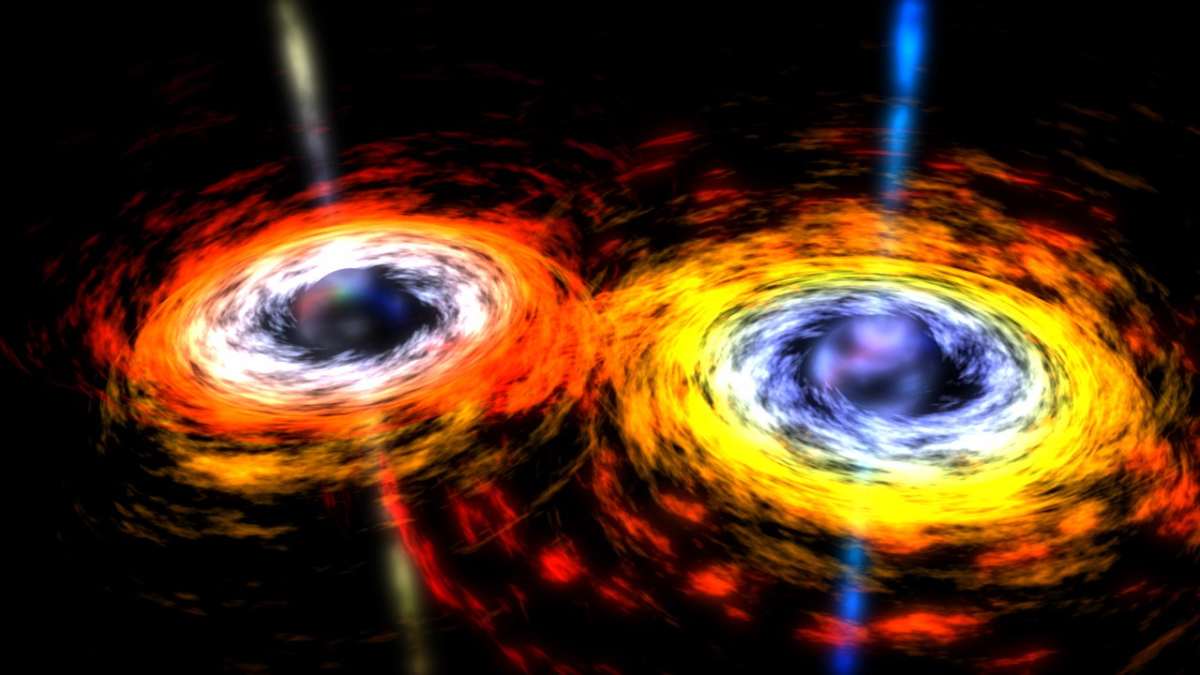
Later, the researchers compared the gravitational-wave data with thousands of theoretical predictions. In fact, all earlier analyses of GW200105 had not assumed an oval orbit. However, a Bayesian analysis showed that the orbit was not circular at all and ruled it out with 99.5% confidence. The past assumptions had underestimated the mass of the black hole and overestimated the mass of the neutron star, which the new model has now corrected. There is also no strong evidence of precession. This shows that the eccentricity (stretching) comes from the system’s formation rather than being spin-induced.
Results from the first part of our fourth LIGO @ego_virgo @KAGRA_PR observing run are out today!
— LIGO (@LIGO) August 26, 2025
We're pleased to share the largest catalog of gravitational-wave observations with more discoveries of black holes and neutron stars
📰 https://t.co/CNNFSO0AxS#O4IsHere #GWTC4 pic.twitter.com/nnuDGmEyCW
The key takeaway from this study is that there is no single dominant evolutionary pathway for this cosmic merger. “This is convincing proof that not all neutron star–black hole pairs share the same origin,” said Gonzalo Morras of the Universidad Autónoma de Madrid and the Max Planck Institute for Gravitational Physics. Eventually, the GW200105 event revealed that the system merged into a black hole about 13 times the mass of the Sun. The oval orbit discovery clearly proves the need for more advanced gravitational-wave models, as more cosmic collisions continue to be detected by the observatories. This would help researchers better understand the environments where black holes and neutron stars are born and eventually collide.
More on Starlust
Scientists have found a new method to detect elusive supermassive black hole binaries
Gravitational waves may finally reveal how fast the universe is expanding