'We are going for all humanity': NASA's Artemis II successfully launches from Kennedy Space Center
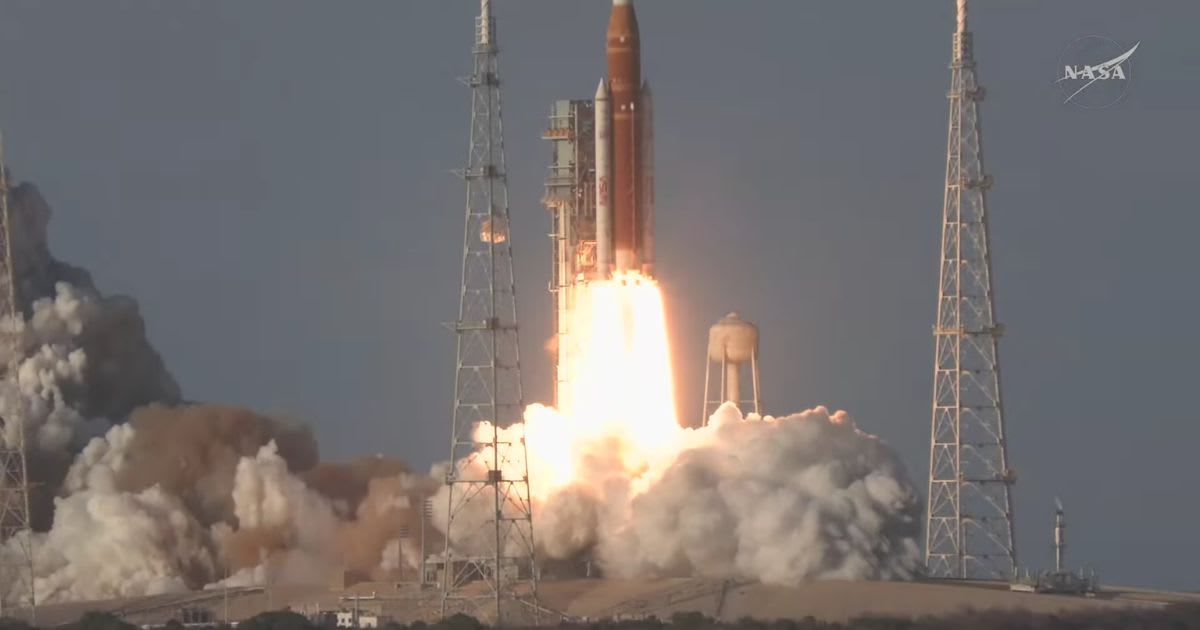
It’s a successful launch for NASA’s Artemis II as the moon rocket, carrying four astronauts, thundered away from Kennedy Space Center’s Launch Complex 39B at 6:35 p.m. EDT on April 1, 2026. The first crewed flight of the Space Launch System (SLS) rocket and the Orion spacecraft will take humans to the Moon for the first time in more than 50 years. This historic 10-day lunar flyby will see NASA’s Reid Wiseman, Victor Glover, and Christina Koch, along with the Canadian Space Agency’s Jeremy Hansen, achieve what is expected to be the farthest deep-space flight ever traveled by humans.
Liftoff.
— NASA (@NASA) April 1, 2026
The Artemis II mission launched from @NASAKennedy at 6:35pm ET (2235 UTC), propelling four astronauts on a journey around the Moon.
Artemis II will pave the way for future Moon landings, as well as the next giant leap — astronauts on Mars. pic.twitter.com/ENQA4RTqAc
At T-0, the 322-foot SLS rocket’s core stage engines ignited, followed by solid rocket booster ignition and umbilical separation. Artemis launch director Charlie-Blackwell Thompson told the crew, "On this historic mission, you take with you the heart of this Artemis team, the daring spirit of the American people and our partners across the globe, and the hopes and dreams of a new generation. Good luck, Godspeed, Artemis II. Let’s go." On completing the launch readiness check poll, each Artemis II crew member shared a message with Thompson. Pilot Victor Glover said, “We are going for our families.” Mission Specialist Christina Koch said, “We are going for our teammates.” CSA Mission Specialist Jeremy Hansen added, “We are going for all humanity.” The launch team extended the T-10 minute hold to complete final preparations for liftoff.
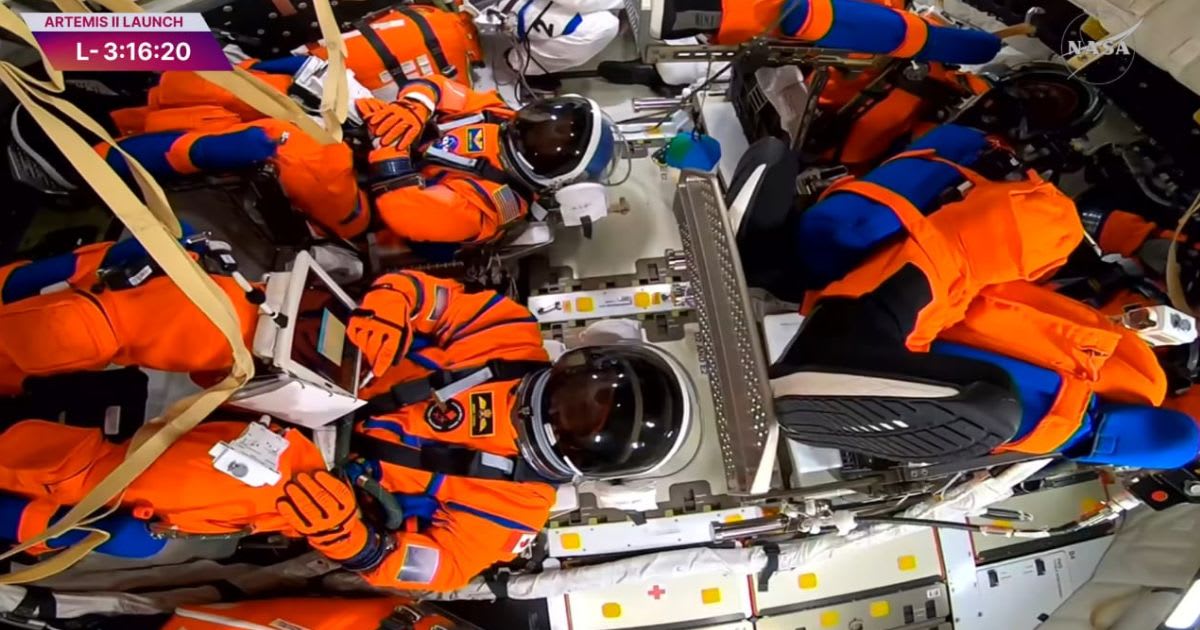
The closeout crew wrapped up work at 5:57 p.m. EDT and left LC-39B's White Room. Earlier, engineers quickly resolved an issue with the flight termination system, and also investigated a sensor on the launch abort system. The weather was also upgraded from an initial 80% forecast to a 90% go for launch. The Artemis II crew arrived at the launch pad at 2:14 p.m. EDT and boarded Orion shortly after, followed by procedures like hatch closure and final communications checks. Prior to this, the day kicked off with a “go” for fueling at 7:33 a.m. EDT from the launch director. The teams completed loading cryogenic fuel into the SLS tanks and by 12:51 p.m., all stages entered replenish mode.
The Artemis II launch is a massive step for NASA and the United States in their space race against China, as whoever gets to the Moon first will have the best chance to set up a permanent lunar base. President Donald Trump posted on TruthSocial: “We are WINNING, in Space, on Earth, and everywhere in between — Economically, Militarily, and now, BEYOND THE STARS. Nobody comes close! America doesn’t just compete, we DOMINATE, and the whole World is watching (sic).” NASA Administrator Jared Isaacman took to X (Twitter) and added, “Under POTUS, America will never give up the Moon again.” Christian singer Anne Wilson was the National Anthem performer for the opening of the Artemis II mission.
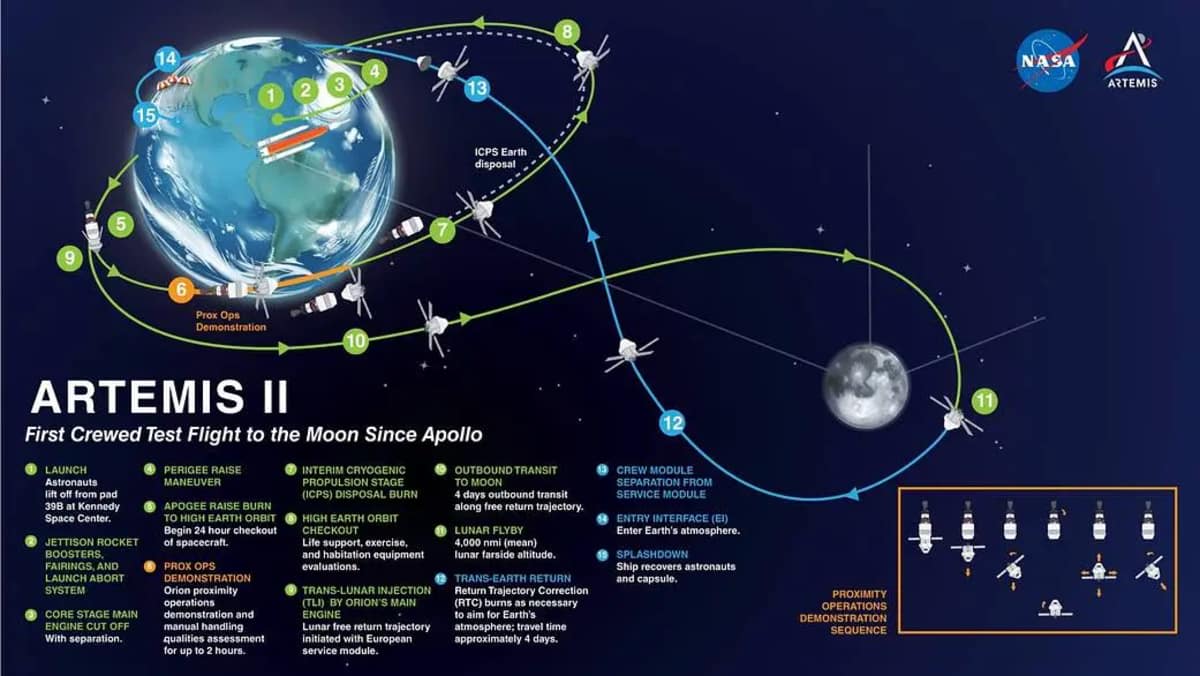
The Artemis II mission builds directly on its uncrewed predecessor, and will test out life-support systems, deep-space navigation and communications. Soon, Orion will enter Earth orbit and separate from the SLS upper stage (ICPS) and perform proximity operations. Instead of entering lunar orbit, the spacecraft will take a free-return trajectory and “slingshot” around the Moon to use its gravity to return to Earth. In the process, the astronauts are expected to break Apollo 13’s unintentional record distance of 248,655 miles away from Earth.

On day six of NASA’s 10-day mission, the Artemis II crew is expected to pass the Moon at 4,000–6,000 miles altitude. In comparison, the Apollo missions were restricted to around 70 miles from the lunar surface. This vantage point would allow the astronauts to see the entire disk of the Moon, including areas near the North and South Poles — almost like a basketball at an arm’s length. Following the completion of this trip, the Orion capsule will reenter Earth’s atmosphere at about 25,000 mph for a Pacific Ocean splashdown and retrieval near California.
More on Starlust
How is Artemis II SLS rocket different from Apollo era's Saturn V and SpaceX's Starship?