U.S. startup Reflect Orbital taps India-based Skyroot Aerospace's private rocket for two missions

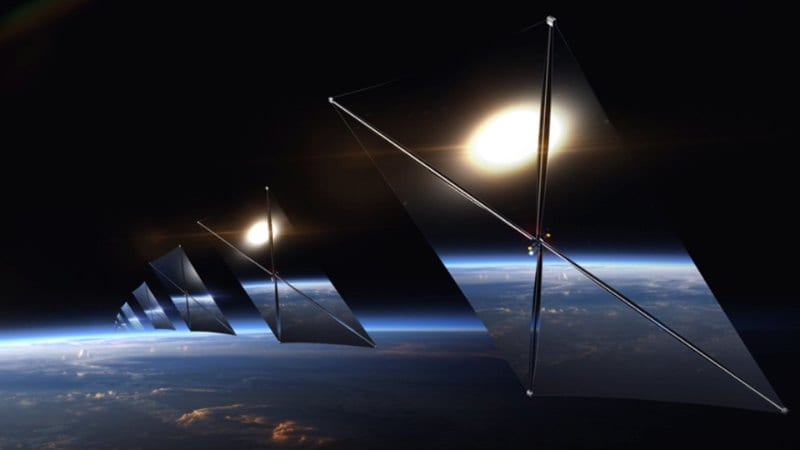
U.S. startup Reflect Orbital has contracted a private Indian company for two orbital missions. The company announced last week that the first mission will launch atop Skyroot Aerospace’s Vikram-1 rocket whereas the second on the Vikram-1U with a greater payload capacity. The timelines of the launches, however, are yet to be disclosed. Reflect Orbital is building a constellation with thousands of satellites that will reflect sunlight using mirrors directly to the ground. It says that apart from providing clean energy at a greater extent, the reflected sunlight has applications in the industrial sector, agriculture, search-and-rescue, and defense. Besides, the service can also be used for enhancing urban life by replacing streetlights and reducing light pollution and illuminate public spaces for events without the use of artificial lights.
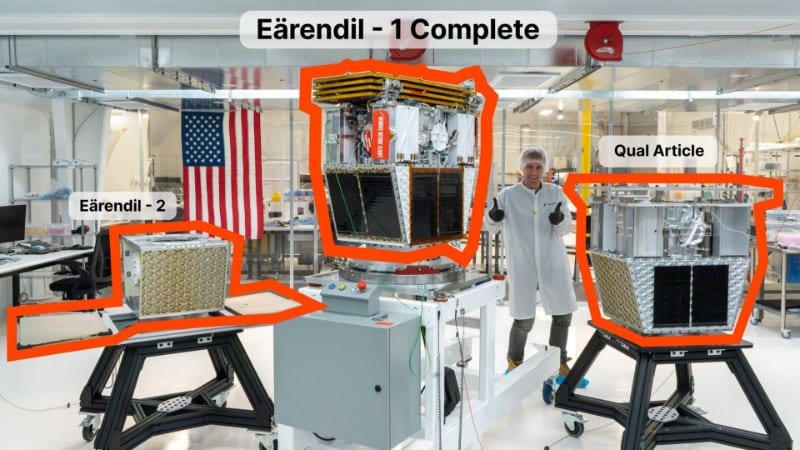
“For decades, the promise of space has been a better life here on Earth; expanding solar energy generation to reduce reliance on fossil fuels and helping save lives in emergency situations follow in that tradition,” Reflect Orbital Co-Founder and CEO, Ben Nowack said in an official statement. Interestingly, Reflect Orbital received a license to launch its first satellite from Federal Communications Commission (FCC) in July but there has reportedly been backlash from astronomers and environment activists over the idea. The company’s reliance on Skyroot comes at a time when SpaceX, that will launch Reflect’s first satellite Eärendil-1 later this year, is planning to retire the Falcon 9 rocket. “There's a real launch capacity shortage right now. We're excited to work with a new launch provider, Skyroot, to help ensure access to space,” Nowack said.
Skyroot’s journey began with the launch of its Vikram-S rocket which successfully flew to its sub-orbital destination on November 18, 2022. After nearly four years of work, the startup launched Vikram-1 on July 18 this year and became the first Indian company to successfully launch a private rocket. Vikram-1 is a four-stage vehicle with a payload capacity of up to 770 pounds (350 kg) to low-Earth orbit and 573 pounds (260 kg) to Sun-synchronous orbit. Talking about the partnership, Skyroot Co-Founder and CEO Pawan Kumar Chandana said—“Reflect Orbital represents the kind of ambitious global space mission the Vikram family is being built to serve. We are pleased to partner with Ben and the Reflect Orbital team across two dedicated launches, providing schedule certainty and mission flexibility.”
Strap in. 🚀 Ride along with Vikram-1 from the rocket’s POV. Earth slips away, stages separate, the darkness of space opens up, and our blue planet comes into view as orbit is achieved. 🎥 Onboard camera footage. #MissionAagamanInAction #Vikram1 https://t.co/fOQmqkm786
— Skyroot Aerospace (@SkyrootA) July 30, 2026
Reflect Orbital aims to deploy 36 reflector satellites by 2027 and eventually scale the number to over 35,000 by 2035. Despite the environmental concerns, the company says the reflected light is safe as it will be contained in the requested spot, avoiding sensitive areas such as research observatories and protector habitats. The light won’t be bright enough to start fires or harm the observer’s eyes, it says, even when viewed through a telescope. The said light, according to Reflect Orbital, would resemble the illumination we experience during full Moon and it could be cranked up to high noon.
More on Starlust
Rocket Lab delays next-gen Neutron rocket’s debut to 2027: Here’s what went wrong
NASA tests Voyager's lunar lander against the extreme requirements of its upcoming Moon mission