ESA’s Hera arrives at Didymos-Dimorphos asteroid system, begins survey in ‘rectangular orbits’
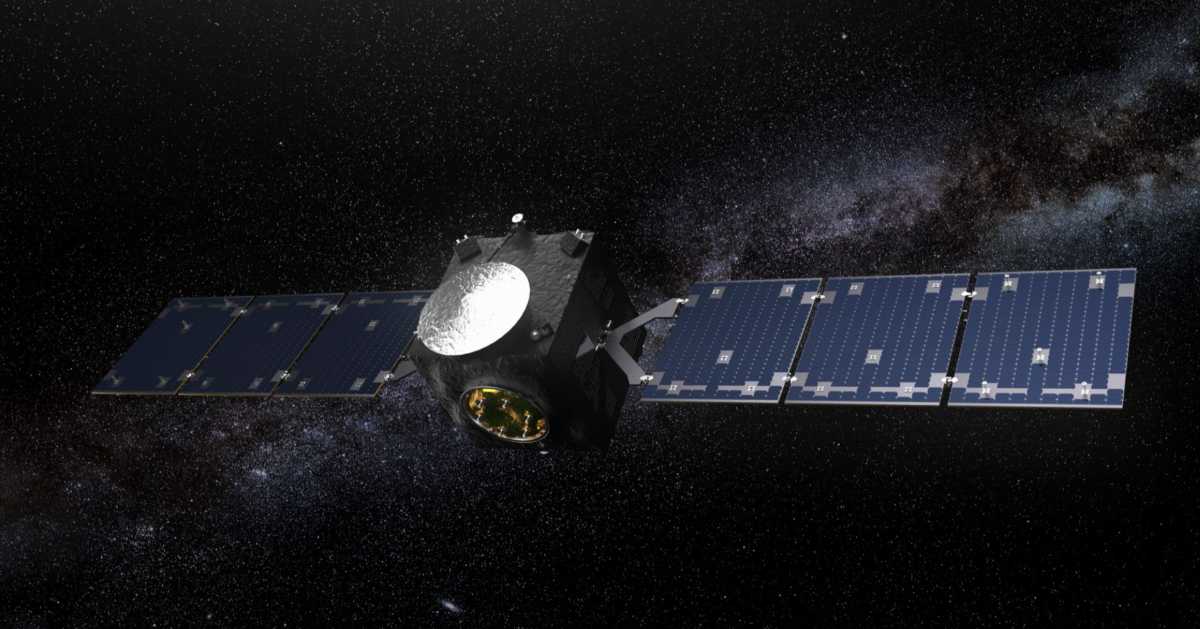
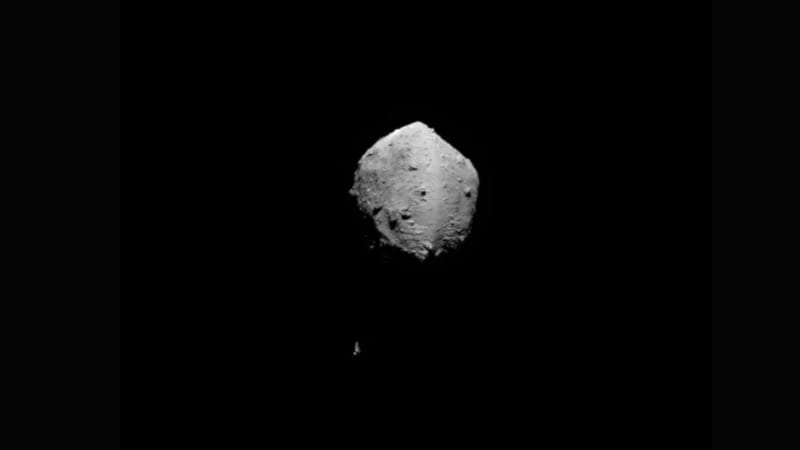
The European Space Agency (ESA) announced Wednesday that the Hera spacecraft has arrived at its target asteroids. It has entered a ‘rectangular orbit’ around the binary pair of Didymos and Dimorphos and is now observing them from a distance of 18.5-15.5 miles (30-25 km). Hera is currently in the ‘early characterization phase,' wherein it will take pictures before moving closer for a more detailed look. “Our aim right now is to gather the big-picture findings of relevance to supporting the mission’s planetary defence goals,” Hera mission scientist Michael Kueppers said in a statement. “During this phase our images will reveal for the first time what a small asteroid looks like globally, having experienced a hypervelocity impact in the context of the first asteroid deflection test, when NASA’s DART spacecraft impacted it to change its orbit in 2022."
ESA's Hera mission for planetary defence has begun surveying its target asteroids from 30-25 km away, flying in 'rectangular orbits' around the ultra-low-gravity Didymos and Dimorphos bodies 🛰️🪨🪨https://t.co/QqO5dXSbmM https://t.co/cuZC9aCtF4
— ESA's Hera mission (@ESA_Hera) November 11, 2026
DART was NASA’s mission to test a kinetic impactor technology to change an asteroid’s path by deliberately hitting it. The spacecraft crashed into the 151-meter-wide Dimorphos in September 2022 and changed its orbit around Didymos, which is 780 meters wide. Scientists say the impact models suggested different ways Dimorphos may have reacted to the crash, and Hera will find out which one, or if any of them, is more accurate.
The Hera mission team has adopted a very cautious approach to put spacecraft around the asteroids. Didymos has a gravity 40,000 times weaker than Earth's, whereas Dimorphos’s orbit is 200,000 times weaker. In such a weak gravitational environment, flying in circular orbits is impractical, and so it is tracing ‘rectangular orbits.’ In a week’s time, Hera fires its thrusters twice to change its course by 90 degrees while carefully maintaining a velocity of just 12 cm per second. ESA says that these rectangular orbits are safe in these conditions because even if the thruster firing fails, the spacecraft will simply drift away and won’t collide with the asteroids.
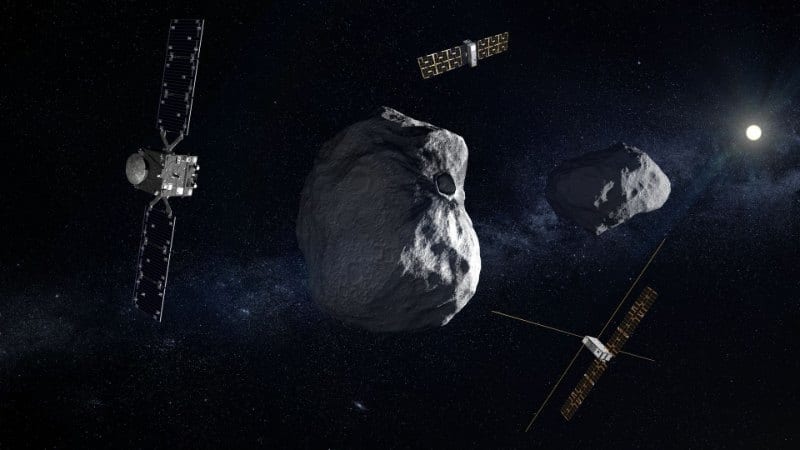
The ongoing ‘early characterization phase’ will last for at least a couple more weeks before the next one begins in December. The next phase is called the ‘detailed characterization phase’ and it will see Hera move into a bowtie-shaped hyperbolic arcs from a distance of approximately 12.5 miles (20 km).
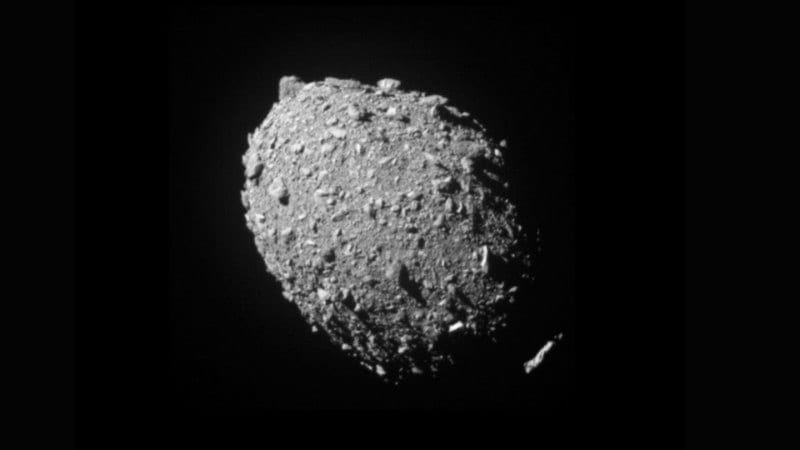
In the upcoming months, Hera will release two CubeSats named Juventas and Milani that will gather additional data on Dimorphos and test new intersatellite link technology for future missions. According to ESA, the two CubeSats will eventually land on Dimorphos once their investigation is complete. The Hera mission launched on October 7, 2024, to answer key questions like what happened to Dimorphos after the impact, what kind of crater it created, if any, if the impact reshaped the asteroid, among others. The Hera mission will find answers to these queries while determining the makeup, structure and mass of Dimorphos among other properties.
More on Starlust
'A new strategy for getting to Mars': NASA’s ESCAPADE spacecraft complete historic Earth flybys