'A new strategy for getting to Mars': NASA’s ESCAPADE spacecraft complete historic Earth flybys
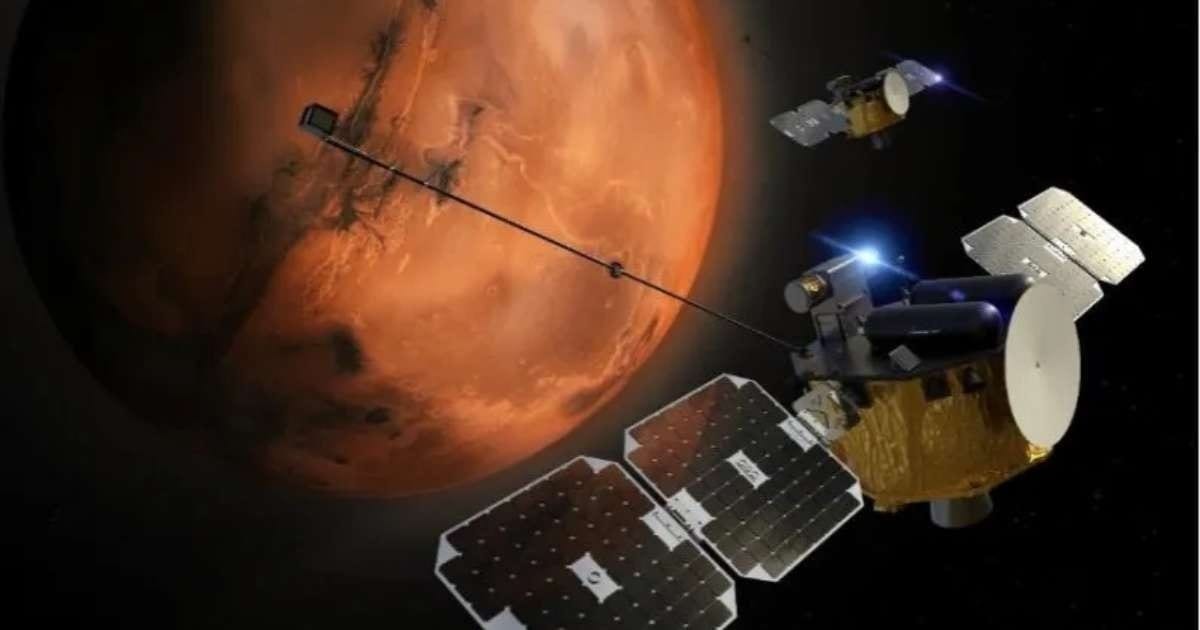
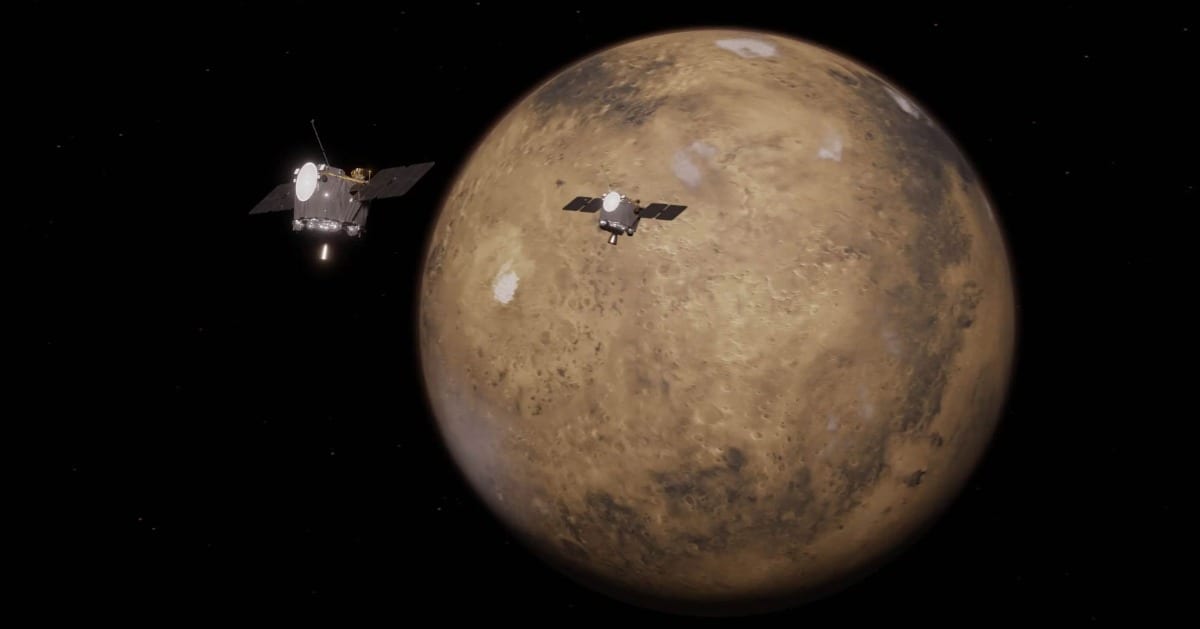
NASA, in a recent update, announced the completion of historic Earth flybys of its twin spacecraft from the ESCAPADE (Escape and Plasma Acceleration and Dynamics Explorers) mission. The twins, Blue and Gold, received a huge velocity boost from this maneuver, which propelled them on their 10-month journey to Mars. While Blue completed its Earth flyby on November 7, 2026, its counterpart, Gold, achieved a similar maneuver on November 9. Both spacecraft were stationed near Earth for nearly a year. This first-of-its-kind flyby happens to be the first powered Earth gravity assist (also known as an Oberth maneuver) that has been successfully performed by a Mars-bound deep space mission.
Flyby #2 is tonight!
— NASA Solar System (@NASASolarSystem) November 8, 2026
“This is the first time NASA has used a powered Earth flyby to propel a spacecraft toward Mars, and we’ve now executed this maneuver twice, flawlessly, in just two days,” said Asal Naseri, acting associate flight director for the Heliophysics Division at NASA Headquarters in Washington.
A mission of firsts! NASA’s ESCAPADE, led by UC Berkeley Space Sciences Laboratory (@ucbssl), has successfully completed a first-of-its-kind maneuver using a powered Earth flyby, marking a new milestone for a NASA deep-space mission. ESCAPADE is also the first planetary mission led by UC Berkeley and the first dual-spacecraft mission to another planet. Both satellites are now on course for Mars! 🛰️🛰️
— UC Berkeley (@UCBerkeley) November 9, 2026
Both Blue and Gold performed a nine-minute engine burn during the flybys. While Blue conducted its maneuver on November 7 at 5 a.m. EST, when it was located 1,000 miles from the Earth's surface, Gold achieved this at 6 a.m. EST on November 9, when it was located 650 miles above Earth's surface. After embarking on their cruise to Mars, the spacecraft pair will eventually enter Mars' orbit, an event that is scheduled for September 7 and September 9 next year.
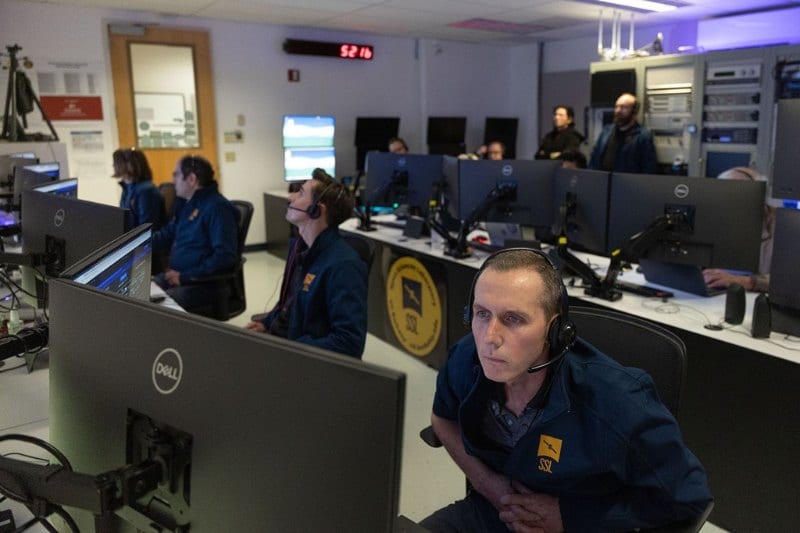
During this unique flyby, the spacecraft made use of the Earth's gravitational pull and combined it with the engine burn—a technique that increased the spacecraft's speed by more than 1,000 mph, causing it to jump from 6.3 miles per second to 6.7 miles per second and placing both on a trajectory matching the path of Mars. This unique technique is referred to as an Oberth maneuver—an approach that has never been used before by any vehicle headed to Mars. Moreover, these flybys around Earth are quite a complicated process, as the spacecraft needs to achieve precise timing after it traverses our planet's radiation belts that may cause it to shut down.
ESCAPADE is an epic interplanetary mission that may inform future spaceflight to the Red Planet. Our team has been dedicated to making the science mission a success for more than four years. Our twin spacecraft – Blue & Gold – are about to fire their engines to execute a trans-Mars Injection maneuver to propel themselves to Mars. Read more about our commitment and contribution to this science mission for @NASA & @ucbssl here: https://t.co/KFKcU5L3V7 Want to make interplanetary history with us? Our Space Systems team is hiring. See all open positions here: https://t.co/F3ZNC0C0B2
— Rocket Lab (@RocketLab) November 6, 2026
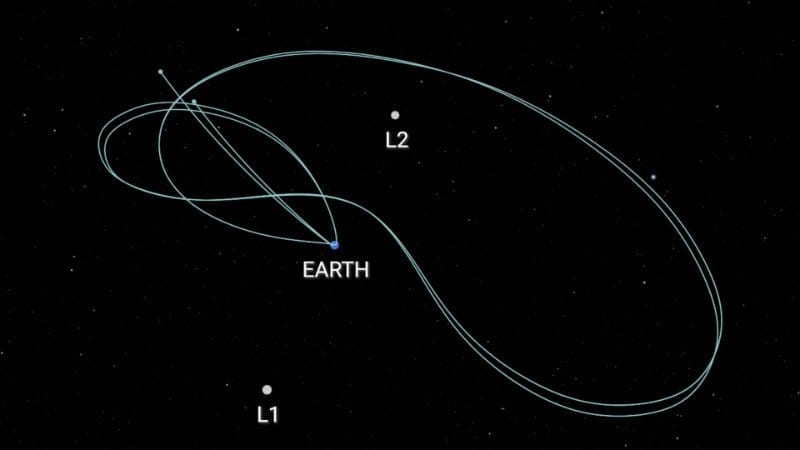
The two fridge-sized spacecraft were developed by Rocket Lab and launched atop Blue Origin's New Glenn rocket on November 13, 2025, during a time when the Red Planet and Earth were on opposite sides of the Sun. Interestingly, the ESCAPADE twins didn't take the conventional route to the Red Planet, but instead traveled in a kidney-shaped path surrounding the Earth-Sun Lagrange Point 2. Following this, both spacecraft returned to Earth this month to make use of Earth's gravity to propel their Mars journey, when both Earth and Mars are favorably aligned—which is currently the case.
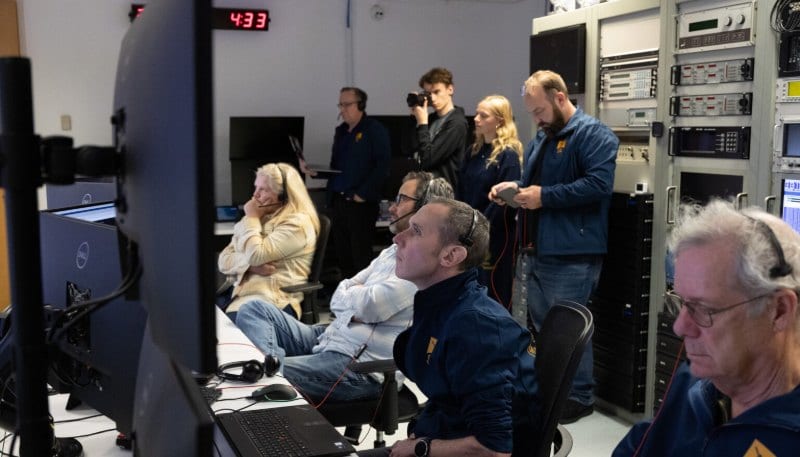
Commenting on the advantages of the flyby, Jeff Parker of Advanced Space, lead mission designer, said in a statement, “With this loiter orbit and Earth flyby, ESCAPADE is pioneering a new strategy for getting to Mars.” He added, “This method provides the flexibility to launch almost anytime and then use Earth’s gravity to get a boost to Mars, rather than waiting every two years to launch there directly when the planets are aligned.”
The ESCAPADE project, supervised by UC Berkeley’s Space Sciences Laboratory, was developed with an aim to analyze the interactions between Mars' atmosphere and the solar wind, and also examine how the solar wind leads to the erosion of Mars' atmosphere. Both Blue and Gold have already obtained data while traveling in the loiter orbit, when they journeyed several times through Earth's magnetotail. Also, the twins, during their Mars trip, will be studying the properties of the solar wind between Mars and Earth.
More on Starlust
NASA awards Impulse Space two Moon Base-related missions, slated for 2028 launch
NASA’s Mars-bound ESCAPADE mission snaps family portrait of Earth and the Moon