'Orion will clearly last beyond SLS': NASA Administrator Isaacman drops hints on Artemis future

NASA Administrator Jared Isaacman has revealed that the Orion spacecraft is set to play a central role in deep-space exploration well after the eventual retirement of the Space Launch System (SLS) rocket. Speaking to Tim Dodd, A.K.A. the Everyday Astronaut, from inside the Vehicle Assembly Building at Kennedy Space Center in Florida, Isaacman said, "Orion will clearly live beyond SLS" and that "it's going to have its place for crew deep space missions."
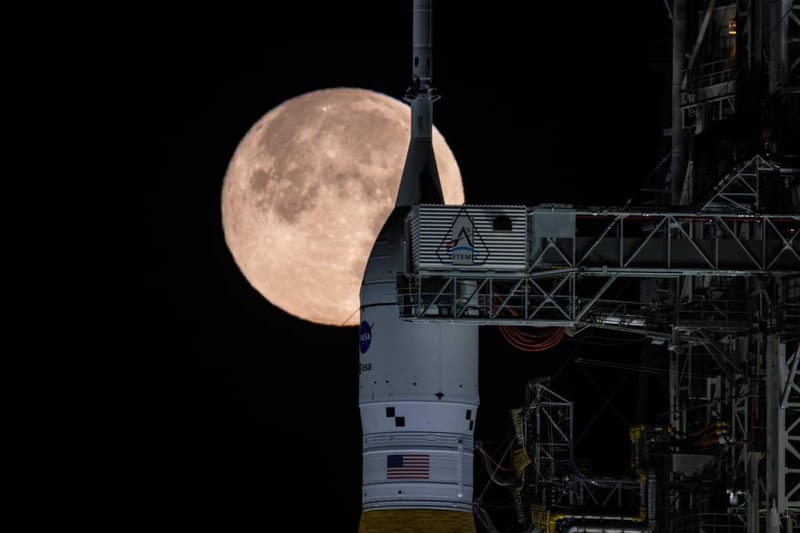
While Orion and SLS constitute the primary architecture for Artemis missions, the Administrator's remarks signal a long-term vision in which the capsule transitions onto future launch vehicles and integrates with next-generation propulsion systems. The 9x4 variant of Blue Origin's New Glenn could be one of those launch vehicles, as it has recently been reported to be able to support Orion flights to the Moon. Meanwhile, Lockheed Martin announced last Thursday that it is expanding the workforce dedicated to building the Orion spacecraft for the next three Artemis missions while streamlining manufacturing operations to accelerate production of the human-rated vehicle. The accelerated production timeline comes as the Orion capsule prepares to house the Artemis III astronaut crew for the majority of their mission's duration in 2027.
The next chapter of lunar exploration is picking up speed. 🚀 We're accelerating production of @NASA's Orion spacecraft for Artemis III, IV and V, expanding our workforce and streamlining operations to support a sustained human presence on the Moon. https://t.co/ga7TsW97bp
— Lockheed Martin Space (@LMSpace) November 5, 2026
NASA had initially planned to replace the Interim Cryogenic Propulsion Stage (ICPS)—the upper stage that flew on Artemis I and II—with Boeing's Exploration Upper Stage (EUS) starting with Artemis IV. Eventually, however, the agency decided against it, awarding United Launch Alliance (ULA) a contract to develop a stretched Centaur V upper stage for the missions instead. "Everything that touched that upper stage was a problem," said Isaacman, referring to the EUS. "I mean, the stage adapter was way behind schedule and way over budget ... like what is going on here?"
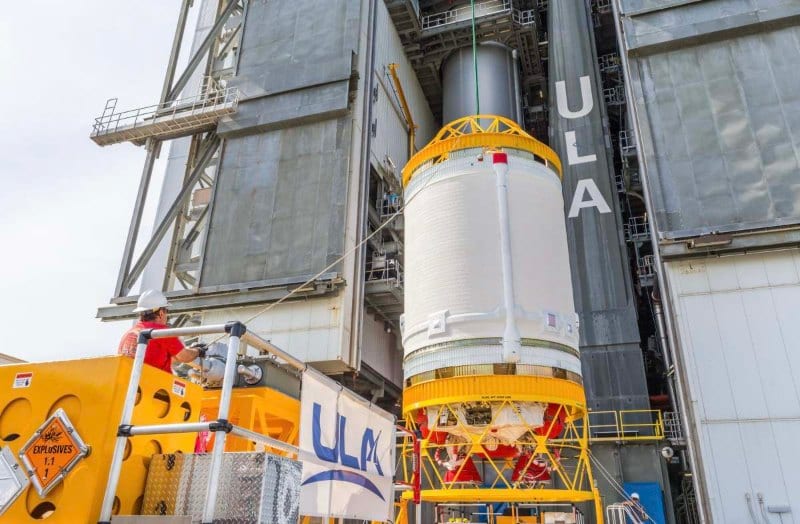
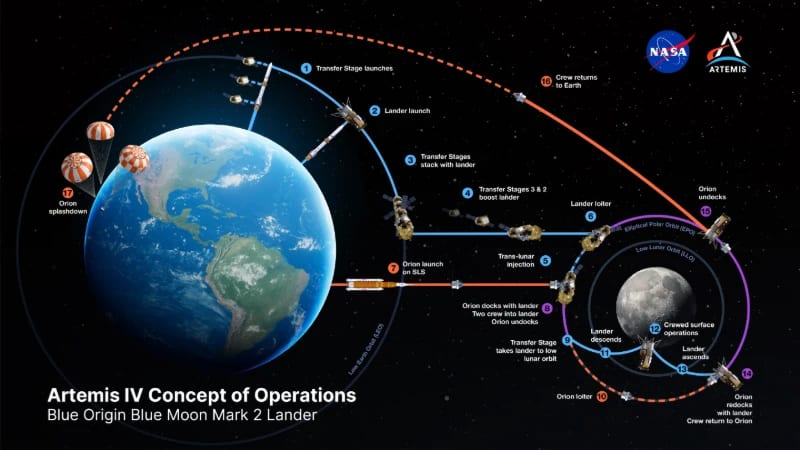
While the ICPS is still very much in the picture for Artemis IV, NASA seems to be leaning more towards the stretched Centaur for the simple reason that there is just one of the former left. "If you love the big orange rocket (SLS), which a lot of people do, then you want us to get to stretched Centaur because that means lots more launches," Isaacman said. The concept of operations involving Blue Origin's lander that NASA shared has Orion docking with it in elliptical polar orbit around the Moon, which is about 8,500 km (5,281 miles) above the surface. But the agency is also looking at ways to dock in low-lunar orbit a few hundred kilometers above the surface. The stretched Centaur could perform the trans lunar injection burn (TLI) and take Orion there, but Isaacman thinks the agency will go ahead with a separate "kick stage" for the purpose, the details of which will be revealed later. Of course, the concept of operations involving Starship has it docking with Orion in high-Earth orbit, but Isaacman says even SpaceX would welcome the option of docking in low-lunar orbit. That's because it's much more fuel efficient.
Artemis III, meanwhile, will fly without a functional upper stage because it won't be traveling to the Moon. Instead, a spacer devoid of any propulsion capabilities will sit between the SLS core stage and Orion. The 212-foot-tall core stage of the rocket has already been mated with the twin solid rocket boosters, and this configuration, called "short stack," will soon be moved to Launch Pad 39B, where it will be put through a crucial tanking test.
More on Starlust
Artemis II Pilot Victor Glover reveals tense moment when crew received 'cabin leak' warning in space