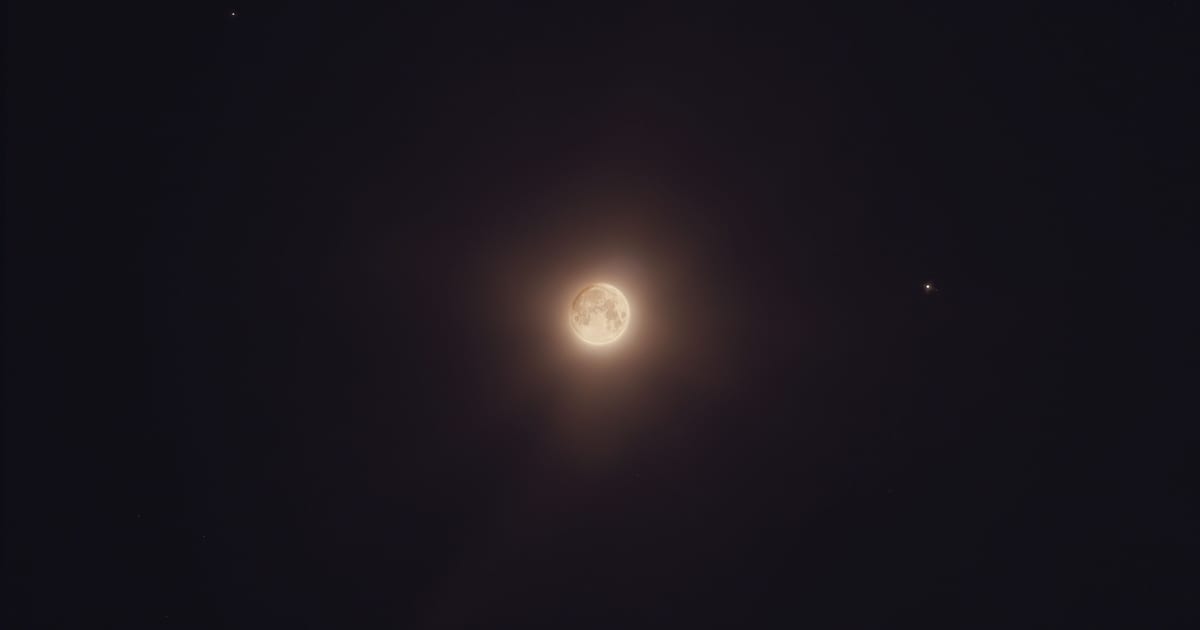
Titan darkens Saturn on August 19 in a rare spectacle visible every 15 years
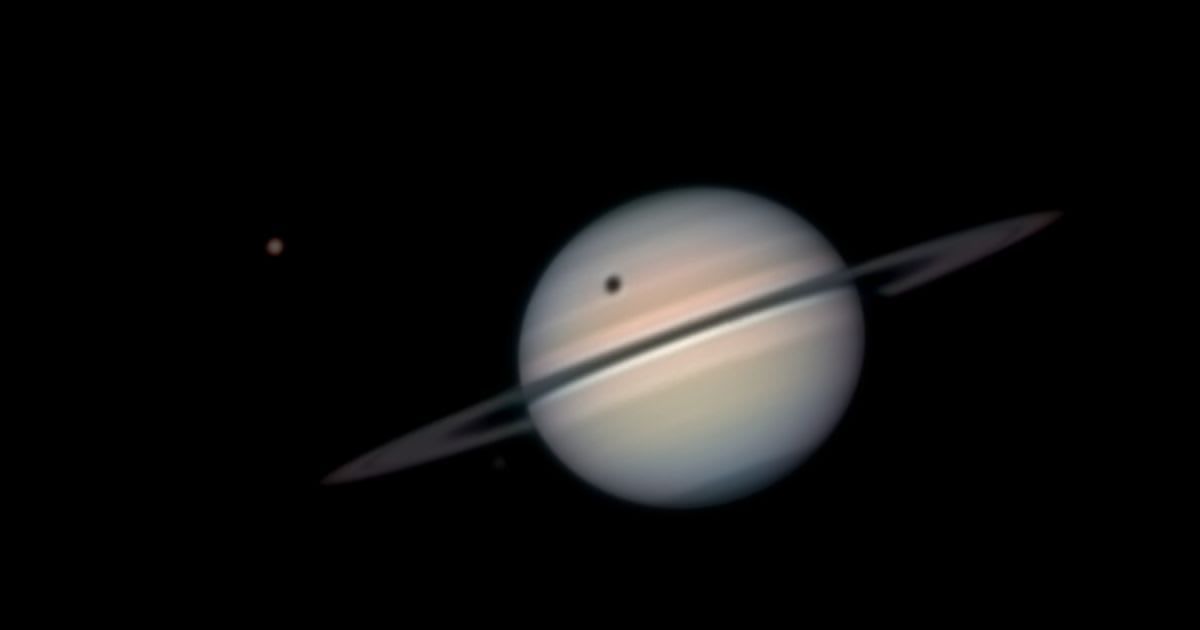
On August 19, a rare celestial event will unfold as Titan, Saturn's largest moon, casts its enormous shadow onto the gas giant's surface. This four-hour spectacle, which begins at 1:52 a.m. ET (05:52 GMT) is a must-see for stargazers and space enthusiasts, according to NASA Space News.
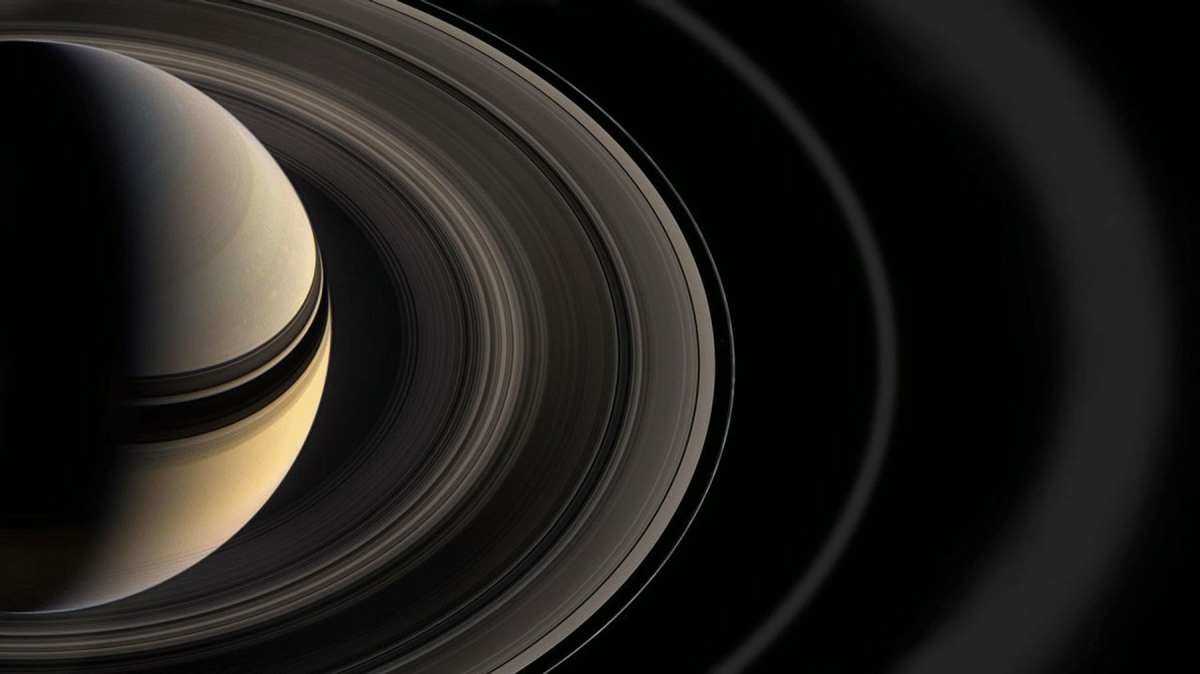
This striking alignment, where the moon's shadow appears to transit across Saturn's golden clouds, is a rare occurrence. It's only visible from Earth when Saturn's rings are positioned edge-on to our planet, a phenomenon that happens once every 15 years. This unique viewing angle allows Titan's immense shadow to become a dark, moving spot on Saturn's face.
The event marks a fleeting opportunity for observation. After this brief period ends in late 2025, the next shadow transit of this kind won't be seen again until the mid-2040s. This rarity, combined with the sheer visual impact of the shadow, makes it one of the most anticipated astronomical events of the year. Viewers in North and South America are best positioned to observe the transit, though others may catch a glimpse depending on their location and the time of day. As the dark blotch slowly moves across Saturn’s atmosphere, it will create the illusion of a cosmic eclipse, a powerful reminder of the precise mechanics of our solar system.
For those planning to watch, preparation is key. A telescope is necessary to see the event, and a clear, dark sky is essential. For those without a telescope, many observatories and astronomy clubs offer live streams and public viewing events. You can also follow the transit through digital simulations like NASA's Eyes on the Solar System for a real-time visualization of the event.

The August 19 event is part of a series of transits taking place this year. The show happens every 16 days, which is Titan's orbital period around Saturn. While this month’s transit is a highlight, viewers will have more chances to see it on September 4, September 20, and October 6. After October, the planet's alignment shifts, ending the season for these transits. Beyond its visual appeal, Titan's transit holds significance for both science and wonder. For astronomers, it provides valuable data about Saturn's system. For the rest of us, it's a profound reminder of our place in the universe, an event that can inspire new generations of scientists and connect stargazers across the world.
Lastly, to get a clear view of the transit, observers will need a telescope with at least an 8-inch aperture and around 200x magnification. From our vantage point on Earth, Saturn is a staggering 807 million miles (1.3 billion km) away, making this level of magnification essential to distinguish Titan's shadow as a tiny, moving dot against the massive planet.
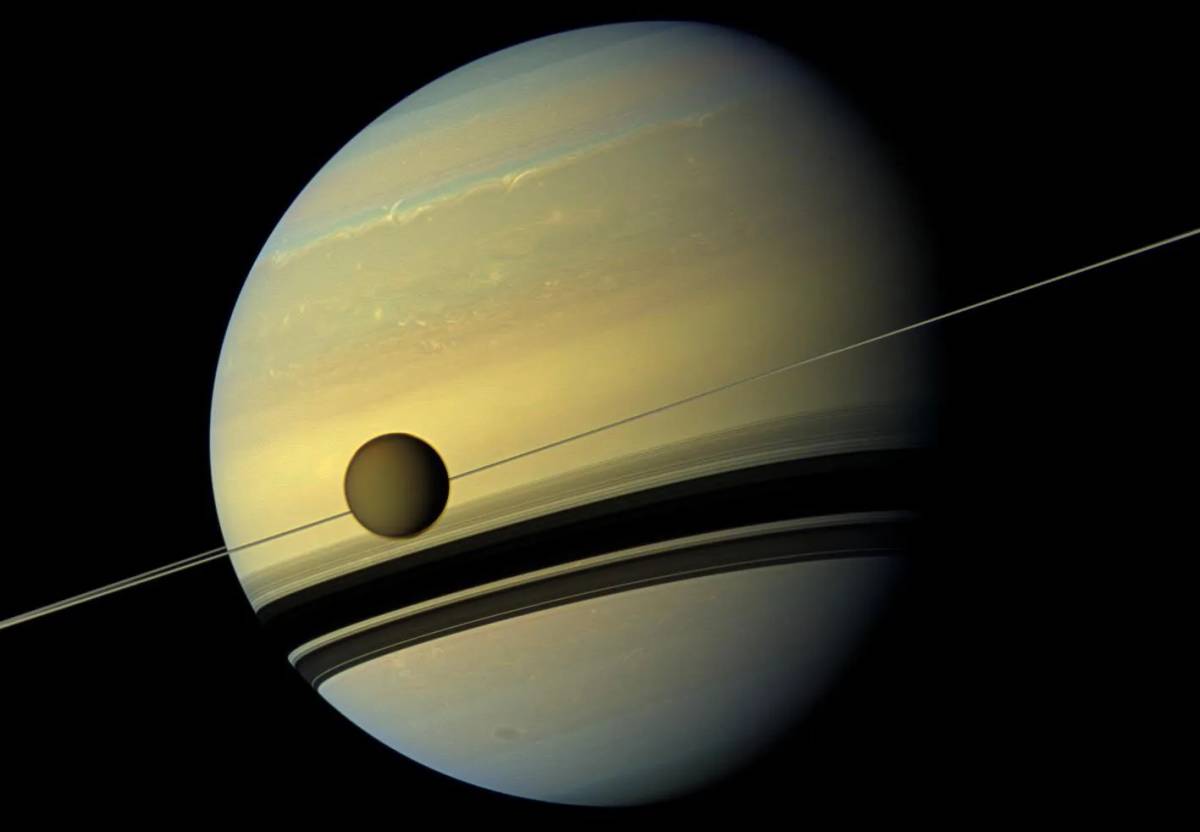
The moon casting this impressive shadow is a world of its own. Titan is the second-largest moon in our solar system, slightly smaller than Jupiter's Ganymede, but bigger than Earth's moon and even the planet Mercury, as per NASA. Its surface is shrouded by a hazy golden atmosphere, making it the only moon in our solar system with a dense atmosphere.