The Moon will pass close to a giant red star on October 14—here's how to spot it
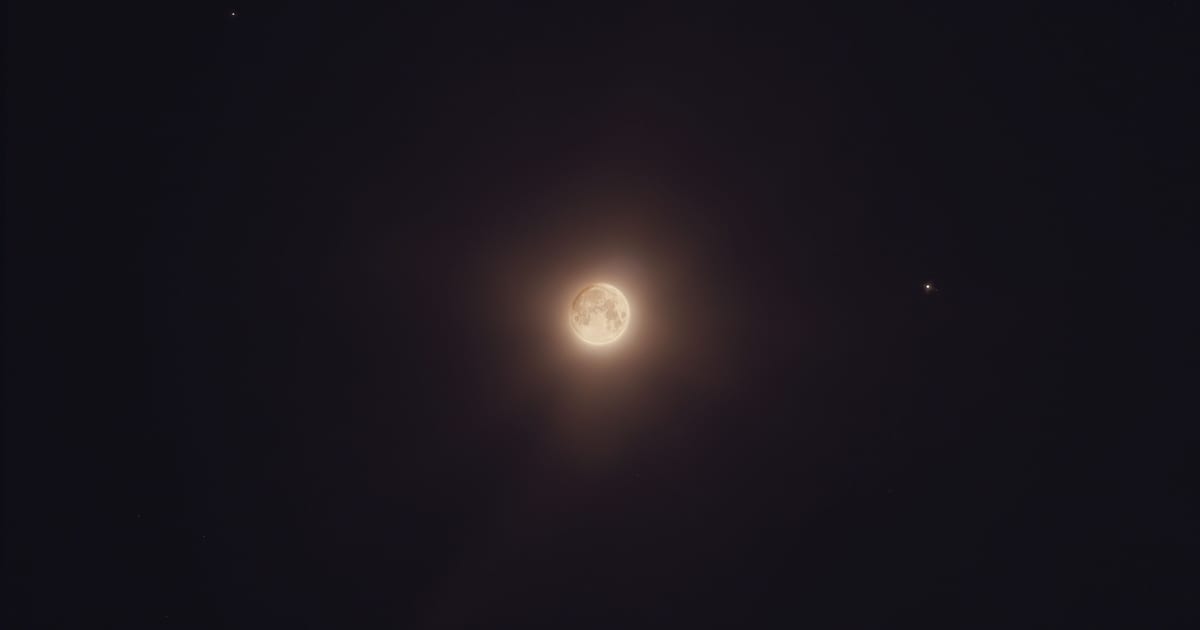
Astrophiles, get ready to observe another celestial event on Wednesday, October 14. If you enjoy watching the night sky, this is one event to look out for. On this day, the Moon will pass close to Antares, a red supergiant star in the Scorpius constellation. In some parts of the world, the Moon will pass directly in front of the star, briefly obscuring it from view. Here's what skywatchers need to know about when and where to see the event.

Antares: The red giant at Scorpius' heart
Antares is a red supergiant, which means it is a massive star in the final stages of its life. Nicknamed the 'Scorpion's Heart,' the star is about 550 light-years away from us and has a relatively low surface temperature. Despite that, the star appears remarkably bright to us, shining with its characteristic red color at magnitudes between 0.6 and 1.6, according to EarthSky.
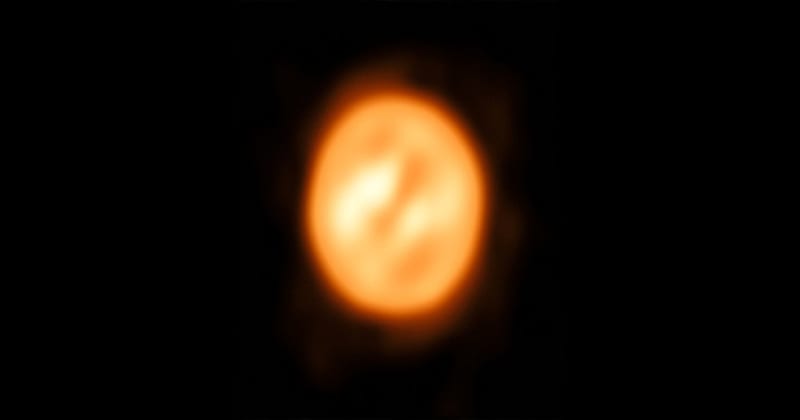
That is because the star is about 700 times our Sun's diameter and has a huge surface area that makes it 10,000 times brighter than the host star of our solar system. Antares isn't alone either. It has a blue-white main-sequence companion star called Antares B, which is also bigger than the Sun but is hard to spot with the naked eye next to its much brighter companion.
How to watch the close conjunction between the Moon and Antares
If you are a stargazer in North America, then you'll need to look southwest about 45 minutes after sunset to catch the waxing crescent Moon shine between 1 and 2 degrees to the lower left of Antares (your fist held at arm's length is roughly 10 degrees). You won't need a telescope to enjoy the view. Astronomy educator Jeffrey L. Hunt also suggests you look out and photograph Earthshine on the night. It's when the sunlight reflecting off Earth causes the unlit part of the lunar disk to glow faintly. Hunt says both the Moon and the star will fit well into the same camera field at moderate zoom settings. Over the course of the coming evenings, the Moon will travel eastward from Scorpius.

Where will the lunar occultation of Antares be visible from?
In certain parts of the world, the Moon will pass directly in front of Antares, briefly hiding the star from view. This phenomenon is known as a lunar occultation and will be visible from parts of eastern Uruguay, southern Brazil, South Georgia and the South Sandwich Islands, as well as Saint Helena, Ascension Island, and Tristan da Cunha, according to In-The-Sky. The following list shows the timings of the occultation for the places it will be visible from.
Place | Time (UTC) |
|---|---|
Uruguay | 22:09-22:46 |
Brazil | 22:16-22:45 |
South Georgia and South Sandwich Islands | 21:40-22:42 |
Saint Helena | 22:05-22:57 |
More on Starlust
NASA's top skywatching events for 2026: Total lunar eclipse, Perseid meteor shower and more
NASA astronaut shares stunning auroras views from ISS amid geomagnetic storm warning in U.S.