The Lyrid meteor shower will peak later this month: Here's all you need to know
The shower is best seen in the Northern Hemisphere with low moonlight and bright fireballs.
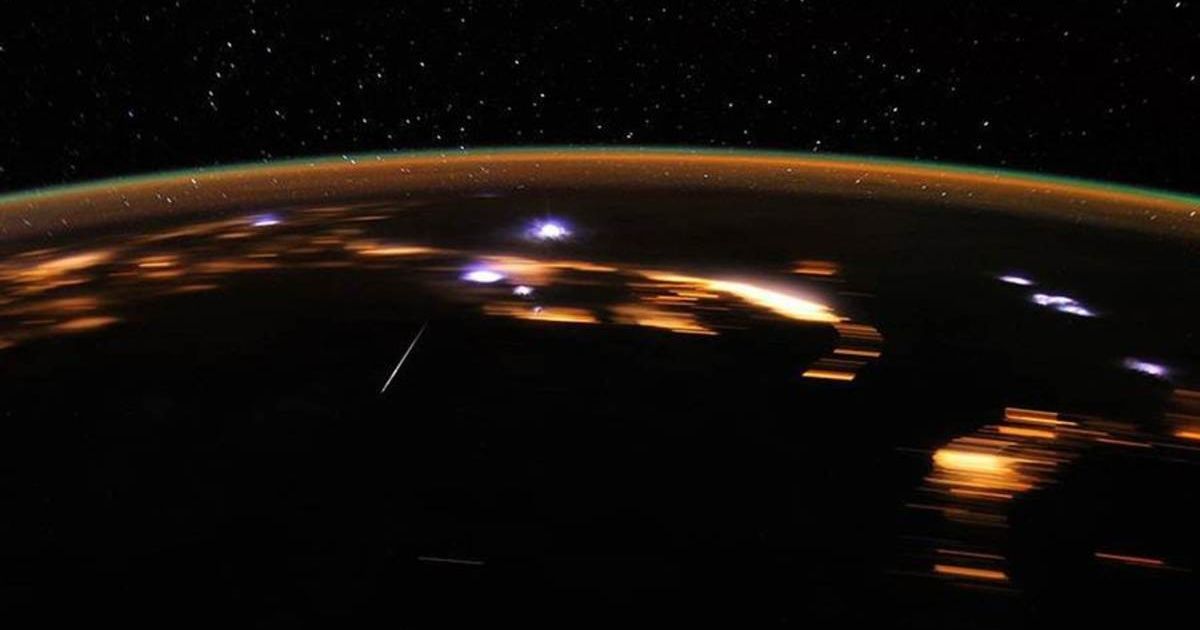
 Footage of 2012 when peak of the Lyrid meteor shower was revealing breathtaking images of Earth with meteors burning up in the atmosphere. (Cover Image Source: NASA/JSC/Don Pettit)
Footage of 2012 when peak of the Lyrid meteor shower was revealing breathtaking images of Earth with meteors burning up in the atmosphere. (Cover Image Source: NASA/JSC/Don Pettit)

The Lyrid meteor shower is now active and will peak on the night of April 21, 2026, continuing into the early morning of April 22, 2026. During the peak, the Moon will be 27% illuminated, and observers can expect around five to six meteors per hour under dark skies. The maximum activity is predicted to occur near 20:00 UTC (15:00 EST). The shower is best visible from the Northern Hemisphere owing to the high radiant in the sky at dawn. The shower is visible in the Southern Hemisphere as well, but at a lower rate. 
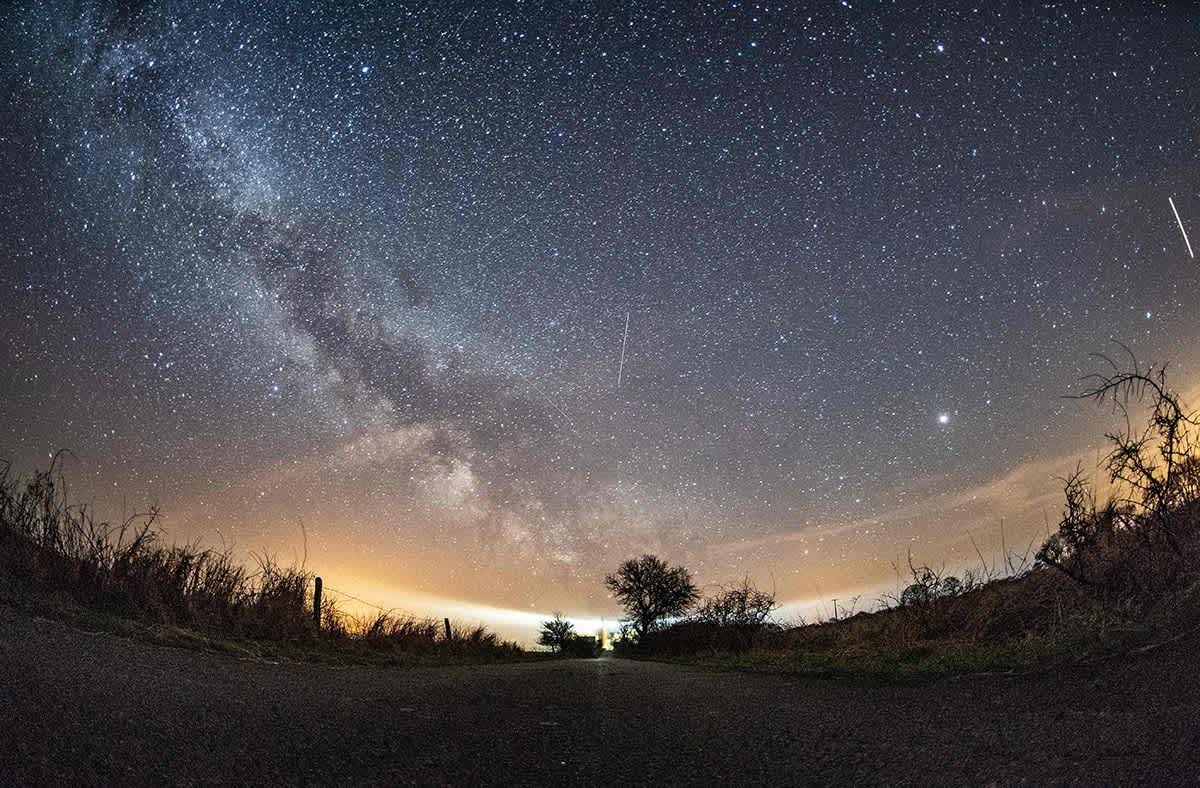
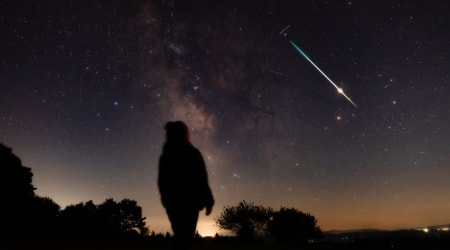
The Milky Way and meteors of the Lyrids annual meteor shower are seen in the night sky. (Representative Image Source: AFP/Getty Images)

The Lyrid shower is produced by debris from Comet Thatcher (C/1861 G1), according to NASA. The Lyrids have been observed for 2,700 years, with their first recorded sighting dating back to 687 BC, when the Chinese spotted it. Though not as fast or as plentiful as the famous Perseids in August, Lyrids can surprise watchers with as many as 100 meteors seen per hour. This year, the meteor velocity will be hovering around 29 miles (47 kilometers) per second. 
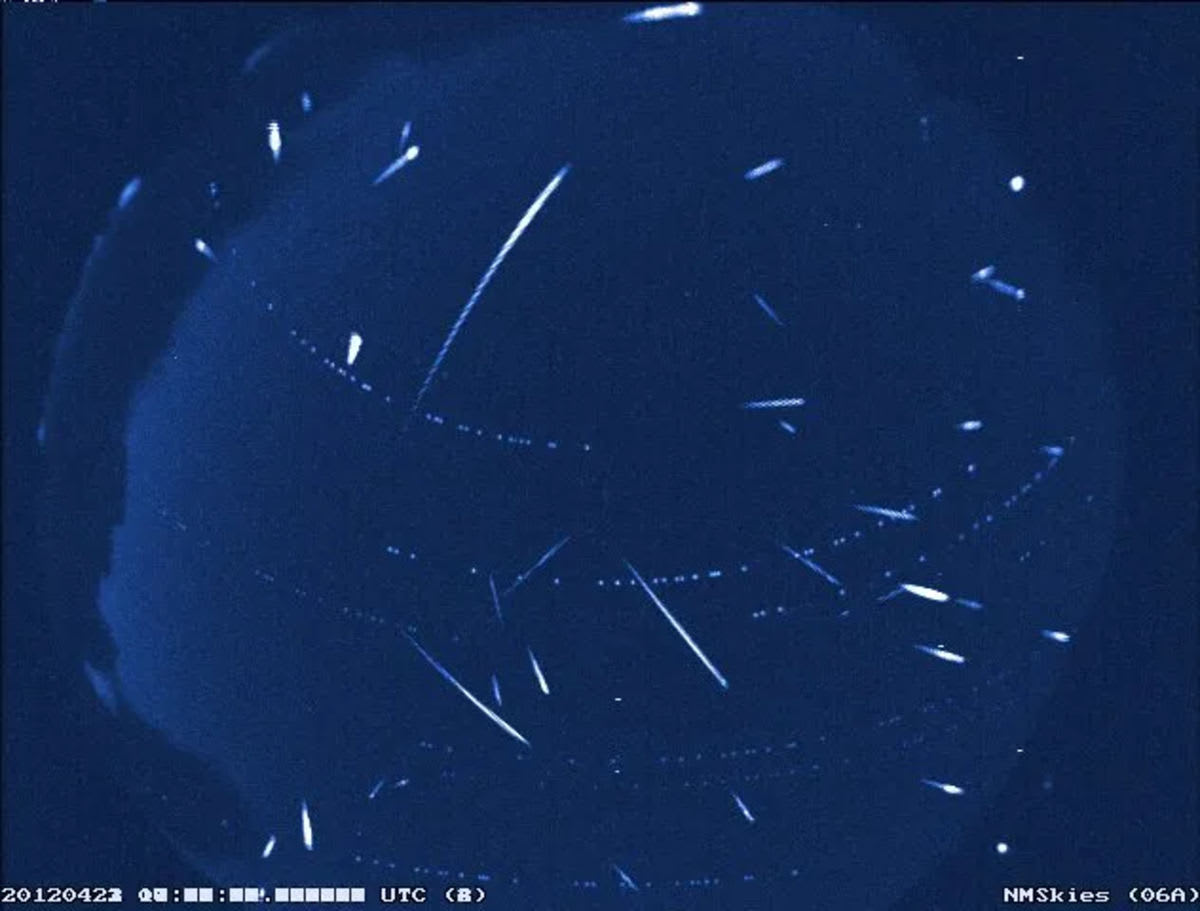
Composite image of Lyrid and not-Lyrid meteors over New Mexico from April, 2012. (Representative Image Source: NASA/ MSFC/ Danielle Moser)
Composite image of Lyrid and not-Lyrid meteors over New Mexico from April, 2012. (Image Source: NASA/ MSFC/ Danielle Moser)

Lyrids don’t tend to leave long, glowing dust trains behind them as they streak through the Earth's atmosphere, but they can produce the occasional bright flash called a fireball. So observers can keep an eye out for such highlights as the Moon won't be too bright at the time of the shower's peak.
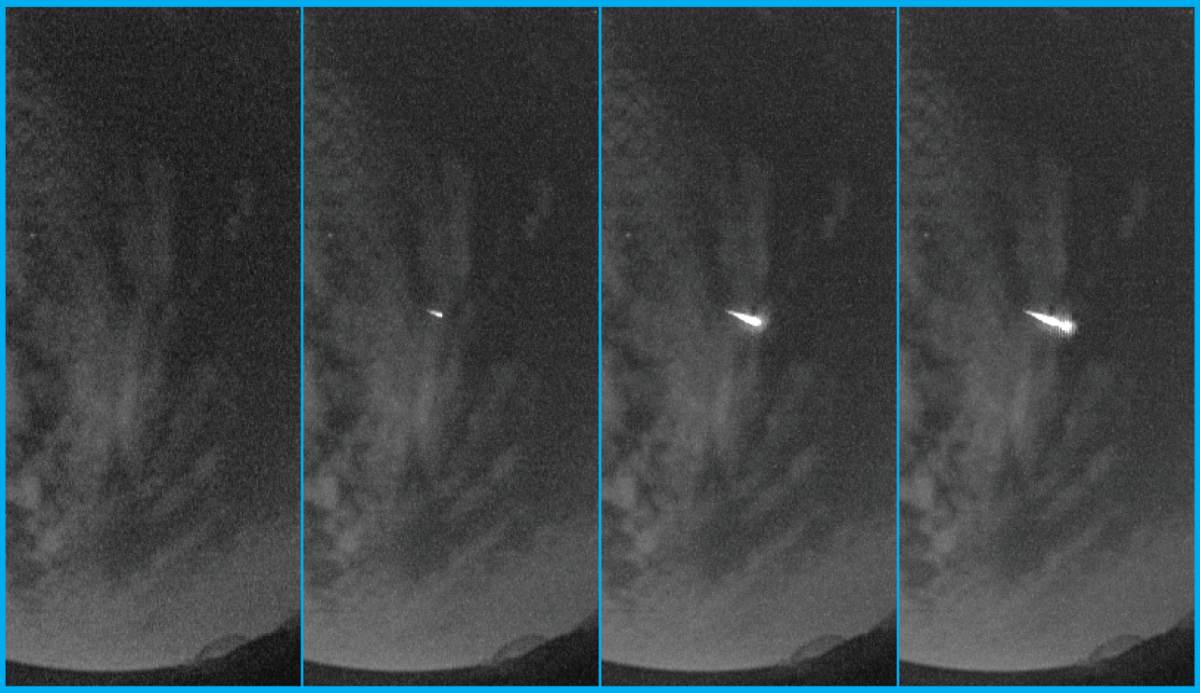
A series of images from the 2014 Lyrid meteor shower. (Representative Image Source: NASA)
A series of images from the 2014 Lyrid meteor shower. (Image Source: NASA)

The Lyrids’ long history, as shared by NASA, includes several notable outbursts, with particularly intense displays recorded in places like Virginia (1803), Greece (1922), Japan (1945), and the United States (1982). These rare events have helped cement the Lyrids’ reputation as a shower capable of surprising even seasoned observers. The next major meteor shower scheduled for 2026, following the Lyrids, is the Eta Aquariids (peaking on May 5, 2026, to May 6, 2026). 

More on Starlust

NASA's top skywatching events for 2026: Total lunar eclipse, Perseid meteor shower and more

Caught on CCTV: Fireball meteorite that lit up northern Europe
MORE STORIES

July's Full Moon is called the 'Buck Moon' after the male deer, or bucks, that regrow their antlers during this time of the year.
3 hours ago
Deriving its name from the Stonehenge, the event sees the Sun aligned with Manhattan's street grid.
1 day ago
A geomagnetic storm watch has been issued in the wake of a CME. Here's what to know about it.
4 days ago
The Perseids will be visible from July 12 to August 24. All about peak dates, viewing tips and more.
4 days ago
According to the Storm Station, the object looked like "a large, vibrant green ball with fire trailing behind it followed by a bright flash."
5 days ago
This July, several planets are waiting to put on a show for both evening stargazers and early risers.
5 days ago
The Alpha Capricornids meteor shower will peak in July. From viewing dates to tips, here's a complete guide.
5 days ago
July 2026 begins with a few stunning displays. Here's what stargazers can expect.
7 days ago
A 'Strawberry Moon' will grace the night sky in June, offering stunning views. Here's what to know.
Jun 26, 2026
While 1997 NC1 isn't a threat, scientists are still keeping an eye. Here's what you need to know.
Jun 26, 2026