Where do gas clouds feeding the Milky Way's black hole come from? Scientists may have solved the mystery
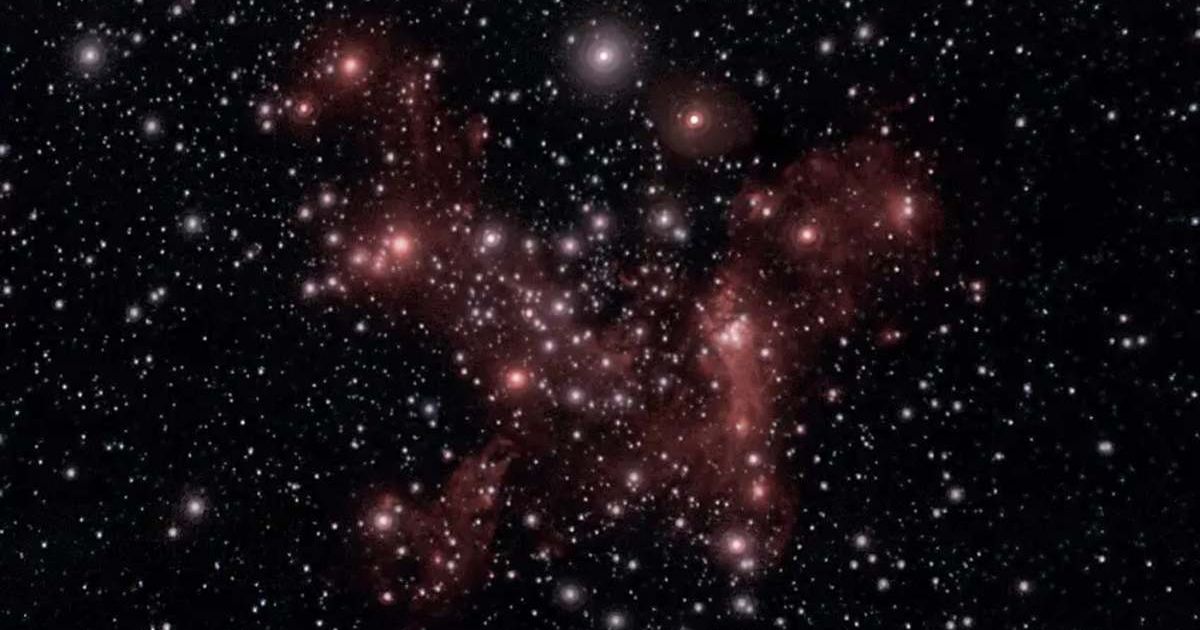
New observations, supported by simulations, have revealed that a massive binary star is the creator of a series of mysterious gas clouds that feed the supermassive black hole—Sagittarius A* (Sgr A*)—lying near the center of the Milky Way. The study, led by Dr. Stefan Gillessen at the Max Planck Institute for Extraterrestrial Physics, has been published in Astronomy & Astrophysics.

The Milky Way’s center is dense and dynamic. There, stars, gas, and dust move under tremendous gravitational forces exerted by the supermassive black hole. Such a restless environment provides a natural laboratory to better understand how matter behaves when it wanders too close to a black hole. In addition, it reveals how new material flows into such massive objects.
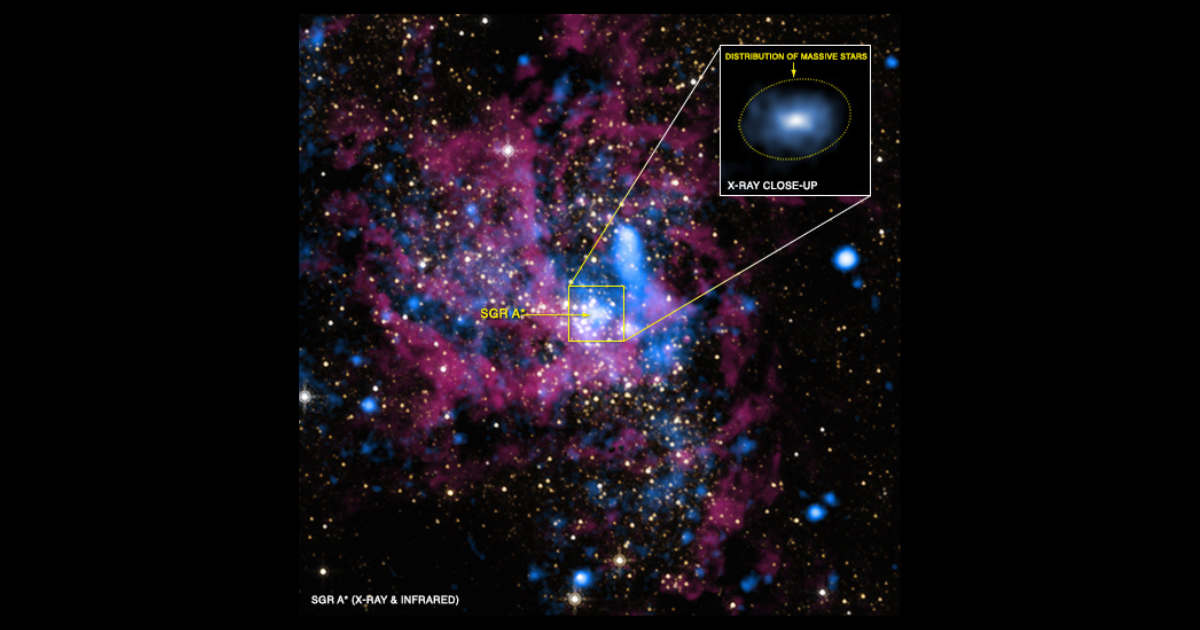
The infrared vision of sophisticated telescopes has allowed astronomers to discover some compact gas clouds near the black hole. The clouds consist of "clumps," which are important clues to understanding how gas may eventually fall into the black hole. But scientists did not know how these clouds formed. In 2012, astronomers detected the first gas cloud and named it G2. It has a mass of a few Earths, and it consists of hydrogen and helium. It also emits light, typical of hot, dusty gas. Moreover, G2 is not static. It orbits around the black hole, displaying a faint trailing structure called G2t. A similar object was revealed shortly after as older observations were revisited. This was named G1.
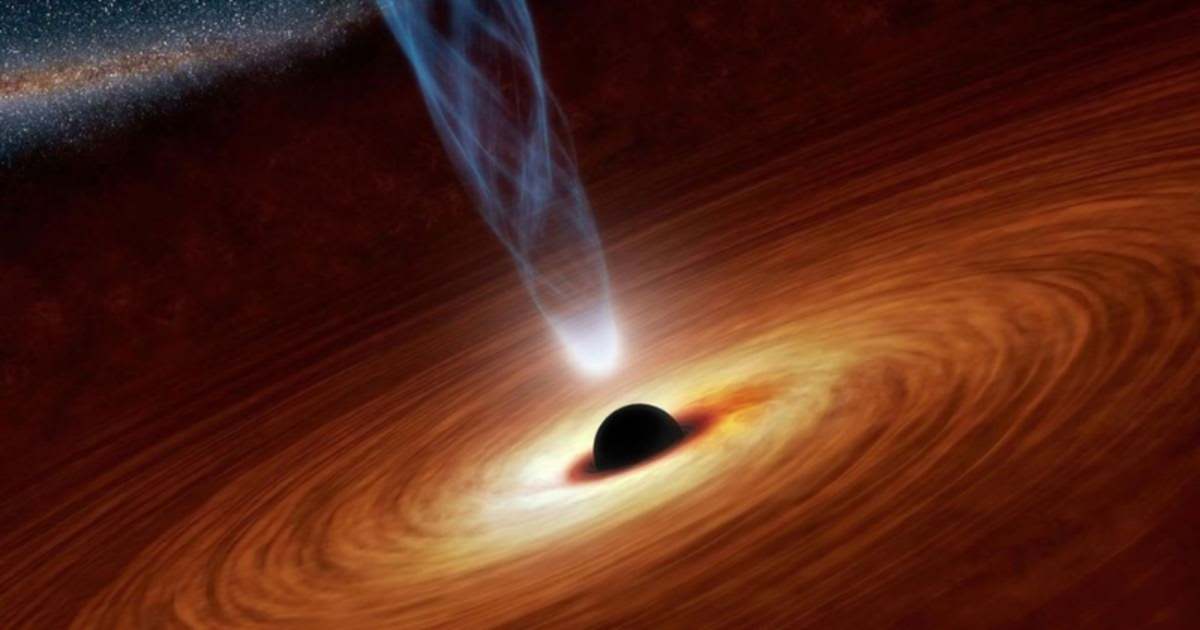
G1, G2, and G2t have been described as denser clumps within a common stream of gas. Recent observations, however, revealed that G2’s tail has morphed into a third compact clump (G3) following a similar path. Collectively, these clouds make a coherent structure drifting toward the galactic center, feeding Sgr A*. One such clump, roughly one Earth mass every decade, provides enough materials for the black hole to thrive. Decoding the process that makes such clumps may unravel how the black hole is fueled. One theory was that the clumps can form from stellar winds from massive stars, while other theories attributed their origin to novae or tidal stripping by Sgr A*. To test these ideas, the international team led by MPE used adaptive-optics-assisted spectrographs SINFONI and ERIS, which enable sharp infrared spectroscopy. They reconstructed the orbits of the three clouds from their positions and velocities.
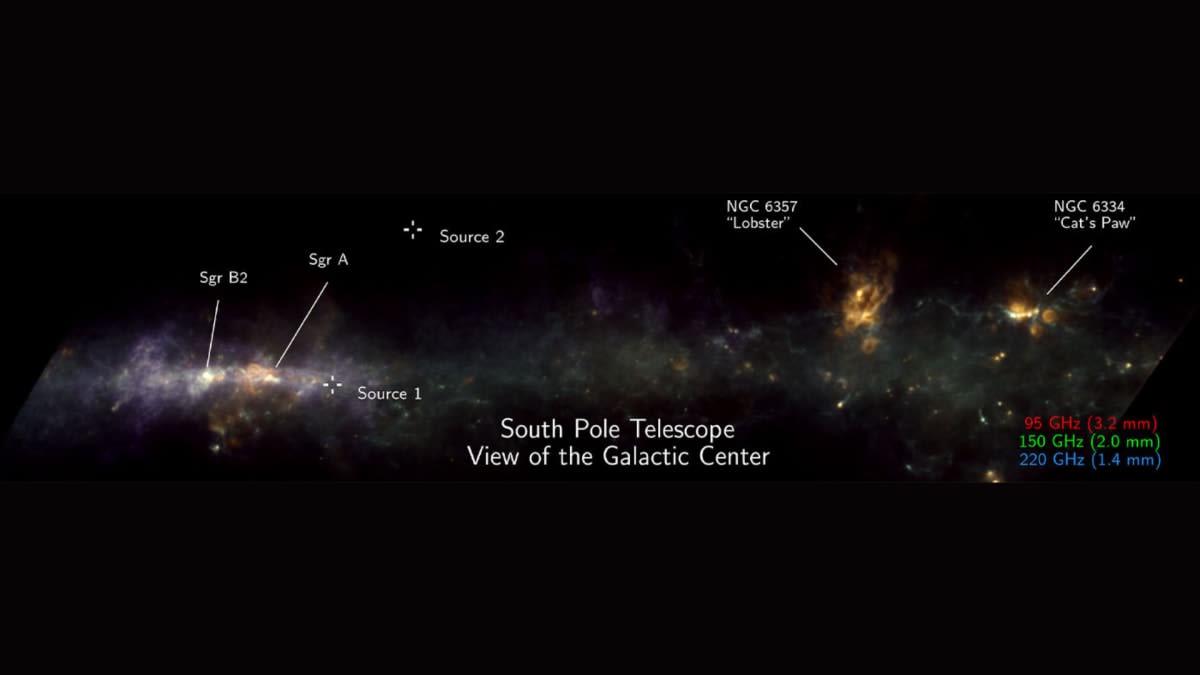
The analysis, according to a press release published by the Max Planck Institute, revealed that G1, G2, and G2t travel following the same orbits with almost identical orientation and shape. Three unrelated objects cannot share such specific orbital parameters, suggesting a common origin for all three clumps. So the team traced the motions of the gas streamer backward in space and radial velocity to a viable source: a massive contact binary star IRS 16SW. The binary star remains in the clockwise disk of young stars that revolve around the black hole. Hydrodynamical simulations also support this conclusion, showing that gas clumps can form where dusty wind from the star collides with the surrounding medium. This produces a shock between the two stars locked in a binary. Dusty, gaseous wind gradually settles down, forming individual clumps that travel inward. The results show how events such as stellar evolution, gas flow, and black-hole feeding are linked even in our galaxy.
More on Starlust
Scientists may have finally found where stars stop forming in the Milky Way's disc