Mercury may have accumulated all its water ice deposits in just 'one day'
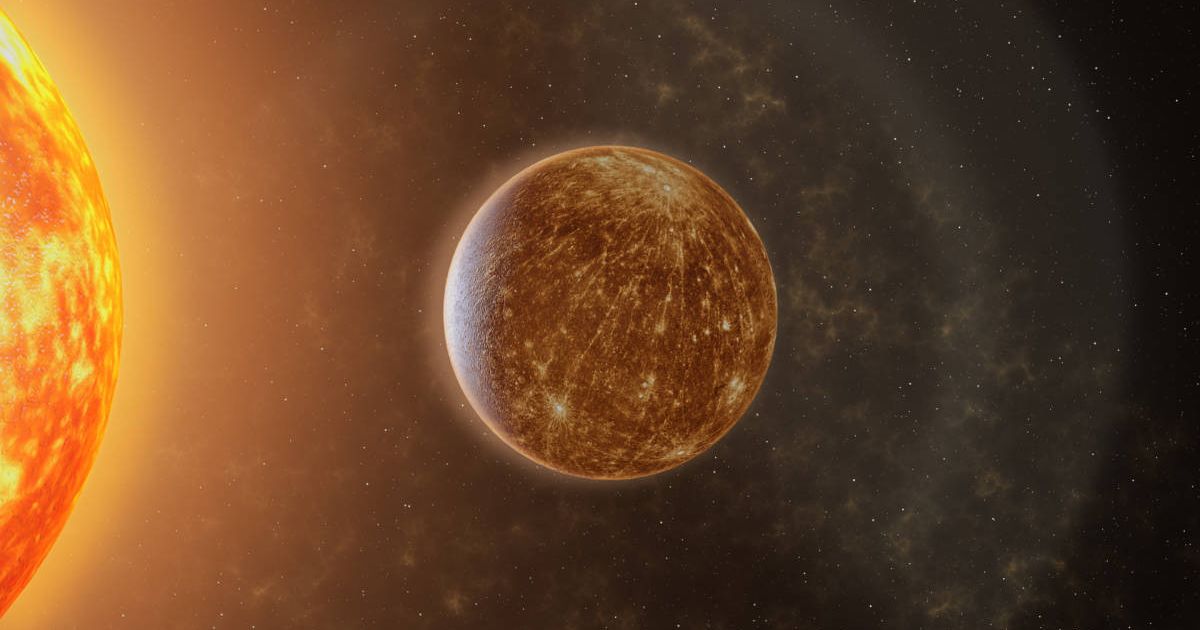
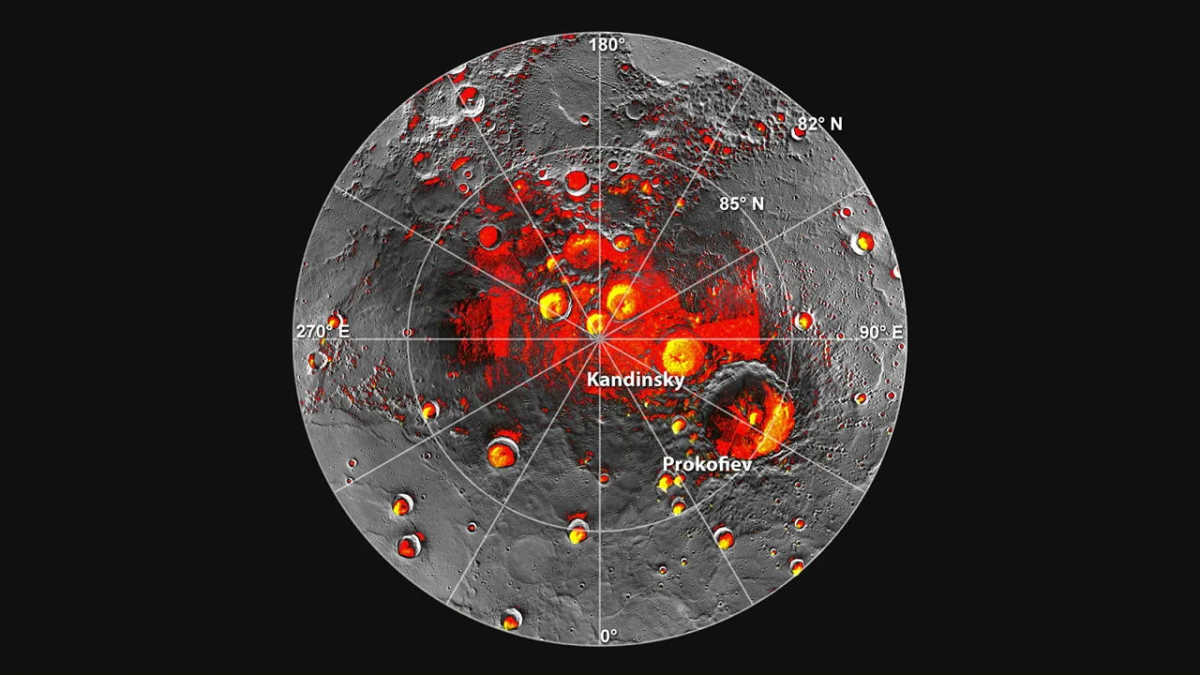
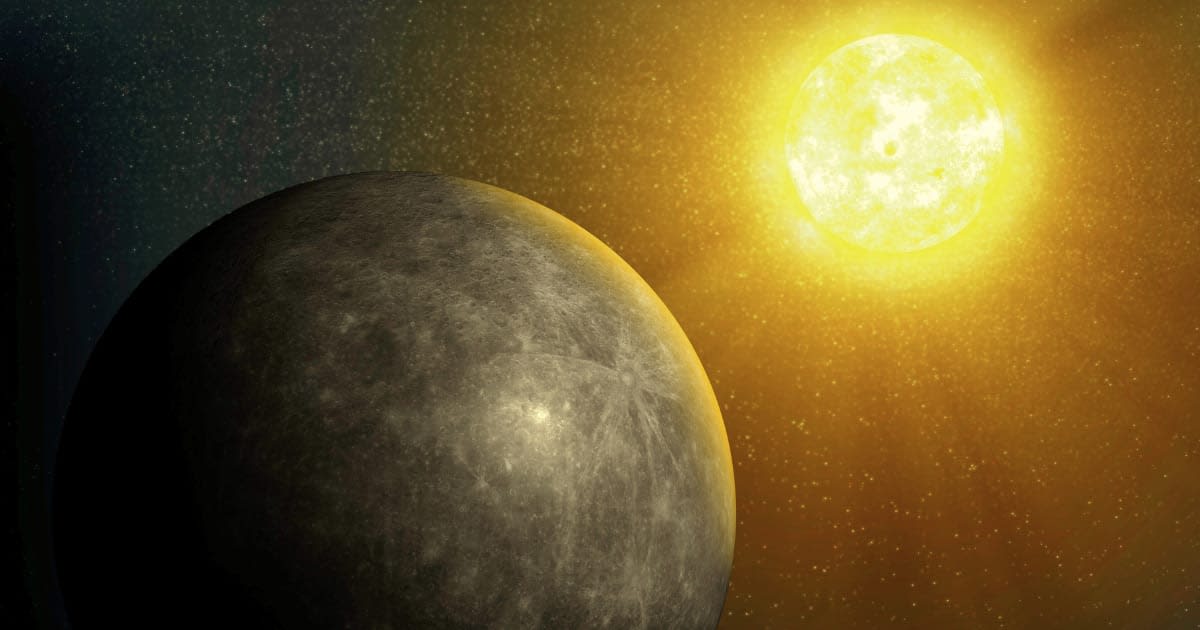
With Mercury being the closest to the Sun, the temperatures on the planet during the day can go up to 430°C (806°F). Additionally, the planet exhibits an ultra-thin and tenuous layer of gas commonly known as the exosphere. As a result, gases get blown up into space while the solar wind replenishes them. Such circumstances should make it almost impossible for mercury to retain water. However, both Earth-based and space-based observations point to the presence of water ice in the permanently shadowed regions (PSRs) in the planet's north and south poles. Now, a recent study published in the ‘Journal of Geographical Research: Planets’ claims that all of Mercury’s water was accumulated in a single Mercurian day, which is equivalent to 176 Earth days. And it all happened because of an impactor that may have been larger and slower than previously thought.
The indication of the presence of water ice has given rise to several theories over the years. Some suggest that steady delivery by solar winds, micrometeoroids, etc., might be the source of the Mercurian water ice. However, when studies found out that the ice appears to be only 100 million years old, the theories changed, with scientists starting to presume that the delivery could have been a rapid amassing instead of a slow process.
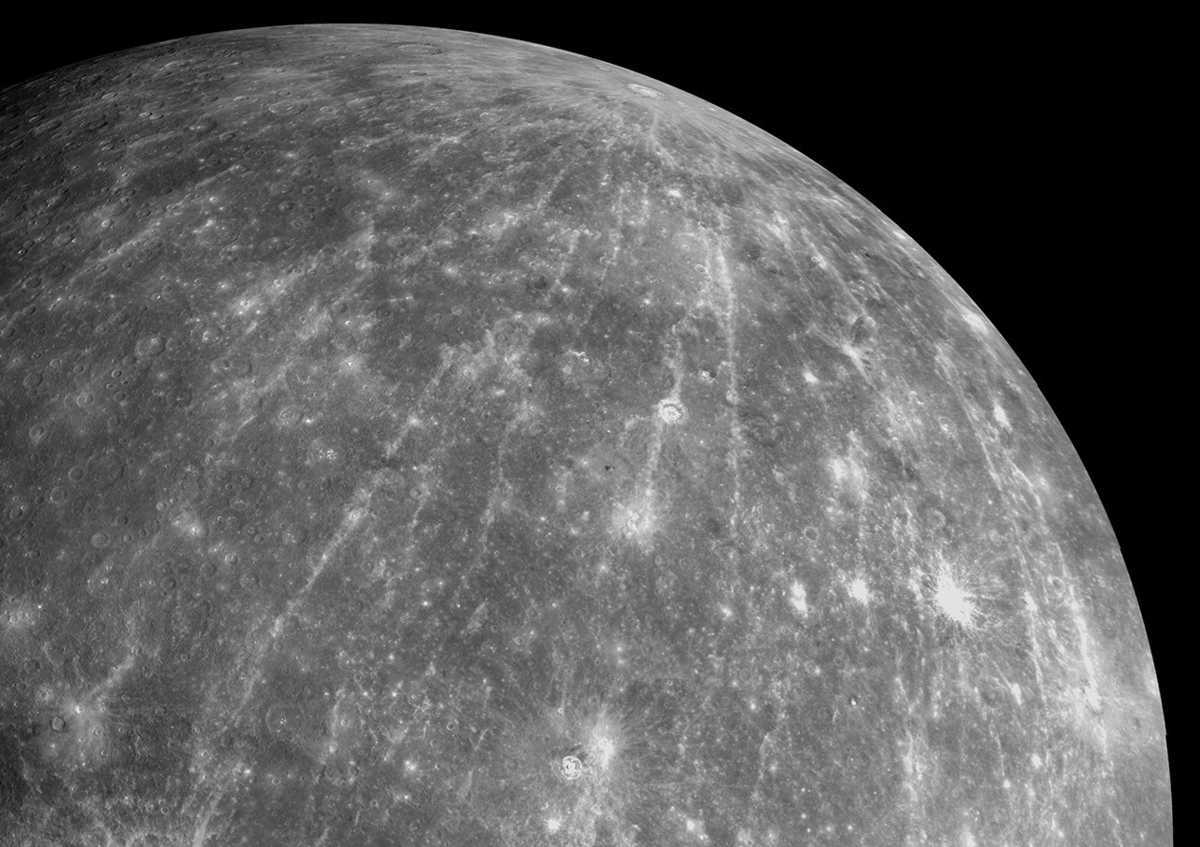
The 97km diameter Hokusai crater is assumed to be the source of all the water ice in the PSRs. Taking this assumption forward, the team of researchers decided to delve deep into how the Hokusai-sized impact played a part in distributing the water to the PSRs of the planet. The researchers developed models mimicking the surface temperature and incorporating the updated PSR maps. During the study, the team took into account two different scenarios. In the first one, they assumed that water gets released into the thin exosphere. Next, they considered a scenario in which water is released into an impact-generated, dense atmosphere. For the first scenario, the scientists wanted to refine the previous estimates of water transportation efficiency. In the second instance, they modeled the Hokusai-forming impact across several impact conditions.
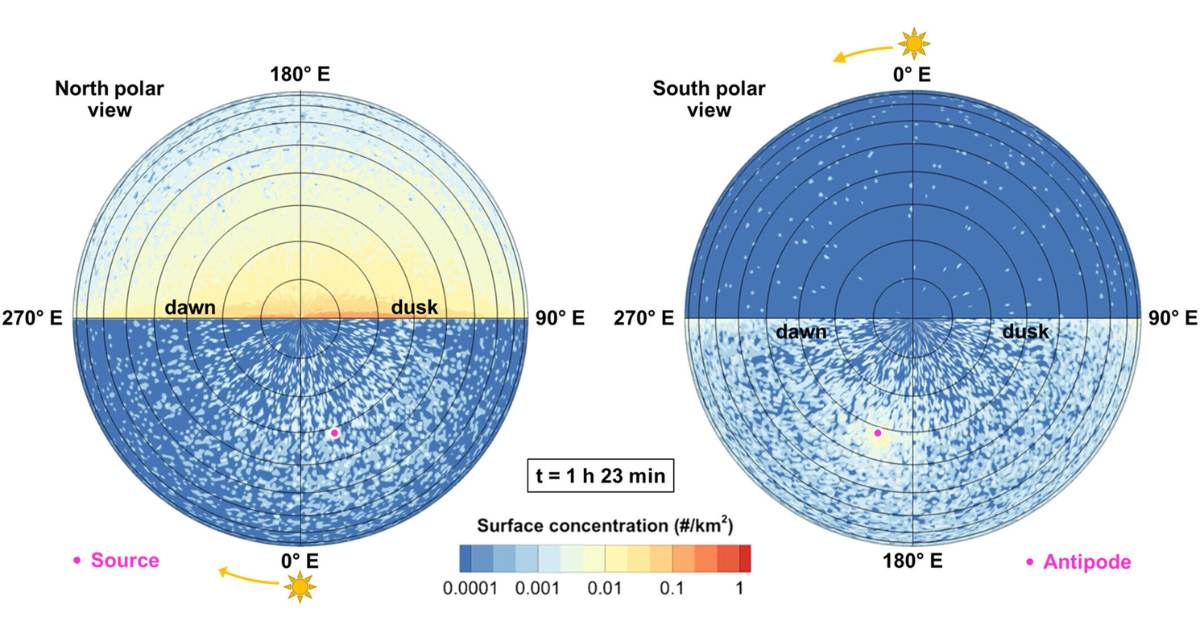
Interestingly, the results pointed out that an impact matching the scale of Hokusai can deliver 2.3x10 kilograms of water ice to the Mercurian polar cold traps. Such an estimate did match the lower ceiling of the amount of water ice present on the planet. Following the impact, the water vapor that was generated by the impact is thought to have surrounded the planet in less than an hour, thus creating a temporary water-rich atmosphere. A large chunk of this atmosphere would be broken down instantly via photolysis. However, during the simulation, some part of the water did manage to trickle down to the poles and settle into the PSRs. The research also revealed that in the case of a large enough impact, owing to a phenomenon called atmospheric self-shielding, the amount of water making it to the cold traps also increases greatly, while that lost in photolysis becomes significantly lower.
Meanwhile, despite coming across some interesting findings, the team did have some doubts about their study. According to the existing data, the Mercurian ice is several meters thick. But during the simulation, the ice had a thickness of only tens of centimeters. Reflecting on the same, the team wrote, “While the total mass of water found to be delivered to the poles in this work is consistent with previous estimates, we also find that the resulting deposits may be too thin (37 cm at most, compared to the several meters required to be radar-bright). This suggests that if a single impact did indeed deliver the bulk of Mercury's polar water, a slower impactor larger than that modeled here may be required." Lastly, the researchers also brought attention to the fact that they only modeled water but missed out on other significant volatiles that might come from the impact. Thus, more experiments and modeling are needed to study different impact parameters. The team also hopes that the upcoming BepiColombo mission might provide more clarity on the thickness of the Mercurian ice and its distribution.
More on Starlust
Century-old meteorite from Azerbaijan reveals new clues about Mercury
New rover concept would traverse Mercury by following its terminator line