Stunning new image of Butterfly Nebula captured by Gemini South telescope in Chile
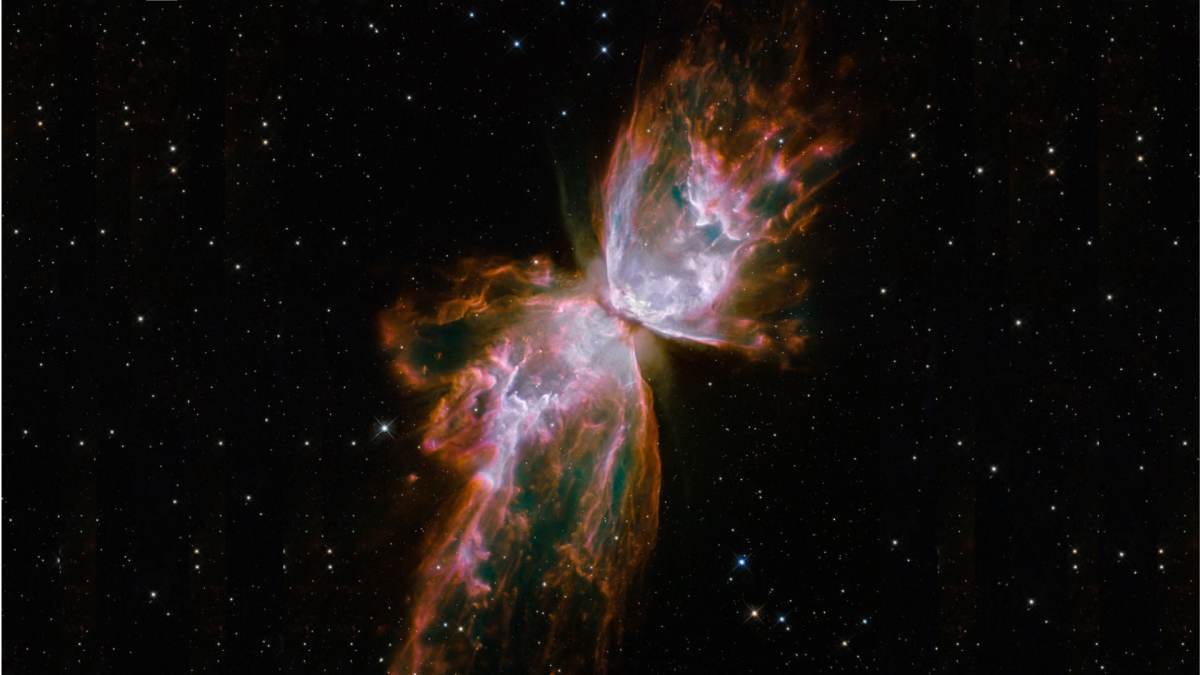
A dramatic new image of an interstellar 'butterfly' was taken by the Gemini South telescope high atop Cerro Pachón in Chile. The image reveals with striking detail the glowing, wing-like shape of the Butterfly Nebula (NGC 6302) as if it is exploding into space, according to NOIRLab.
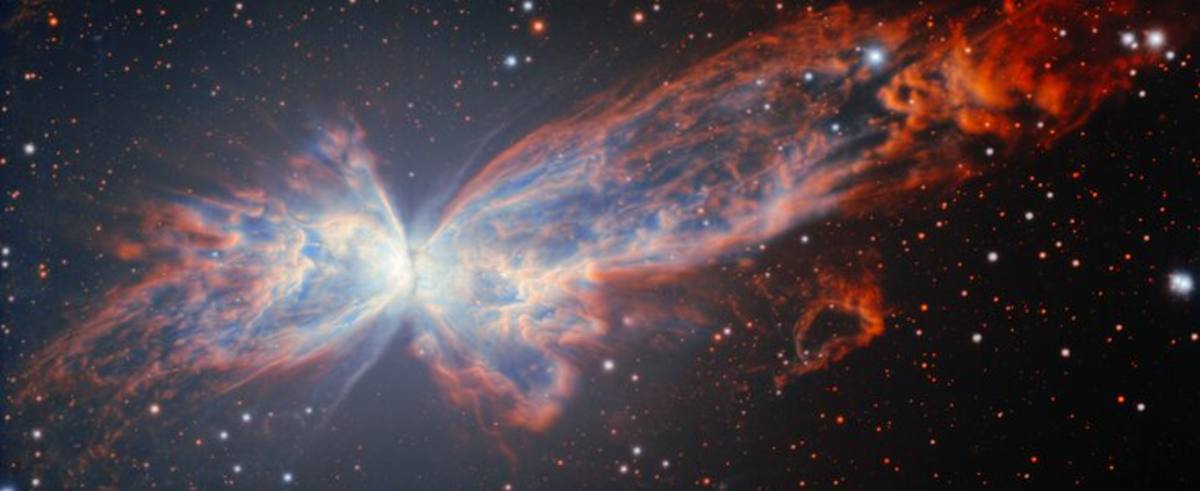
This spectacular target was chosen by students in Chile as part of a recent competition celebrating the legacy of the International Gemini Observatory that started operating in 2000. The Butterfly Nebula is a planetary nebula. While typically they do have a planet-like shape, this nebula is distinctly bipolar, shaped like a bug or butterfly. Located between 2,500 and 3,800 light-years away in the constellation Scorpius, the nebula’s unusual shape results from the star at its heart that is emitting layers of gas and dust as it nears the end of its life.
The central star is now a white dwarf, a tiny, dense remnant of what was once a massive and one of the hottest stars known, with a surface temperature over 250,000 degrees Celsius. In its prior life, the star was a red giant about 1,000 times the size of our Sun. The star first cast off a slow-moving, donut-shaped band of gas. It later ejected material perpendicular to this band, which channeled the outflows to form the two distinct wings. A subsequent burst of stellar wind, blowing at over 1.8 miles per hour, then carved and sculpted the 'wings' into their intricate, cloud-like structures.
The intense radiation now coming from the hot white dwarf heats the surrounding gas to a temperature of well over 20,000 degrees Celsius so that it glows brightly. While the red areas in the image highlight energized hydrogen gas, the blue regions trace energized oxygen gas. Ultimately, it will disperse into space, along with elements such as nitrogen, sulfur, and iron that it contains, and contribute to the formation of future stars and planets.
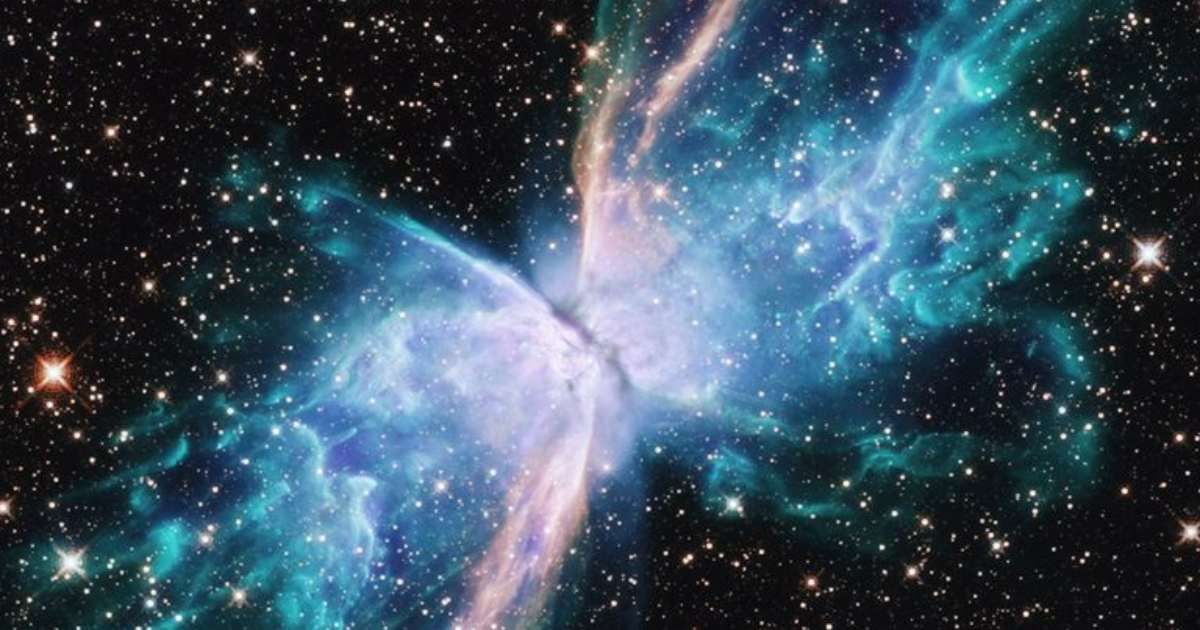
While the recent picture was taken by a ground-based Gemini telescope, the Butterfly Nebula was also imaged by the Hubble Space Telescope (HST) back in 2009, as mentioned on NASA Science. This detailed picture was photographed with Hubble's Wide Field Camera 3, installed during the final Space Shuttle servicing mission. The close-up shows several intricate structures within the dying star's expelled gas cloud.
The instrument in charge of the latest breathtaking photo, the Gemini South telescope, is one half of the International Gemini Observatory. Its twin is Gemini North, which, according to Space.com, is located on Mauna Kea in Hawaii. Taken together, the two observatories allow for near-continuous coverage of the entire night sky from both the Northern and Southern hemispheres. They are operated by NOIRLab of the National Science Foundation with financial support from Brazil, Canada, Chile, and the United Kingdom. The conception of these identical, high-tech telescopes, which employ advanced optics to gather wide-field images, was the brainchild of astronomer Fred Gillett.
More on Starlust
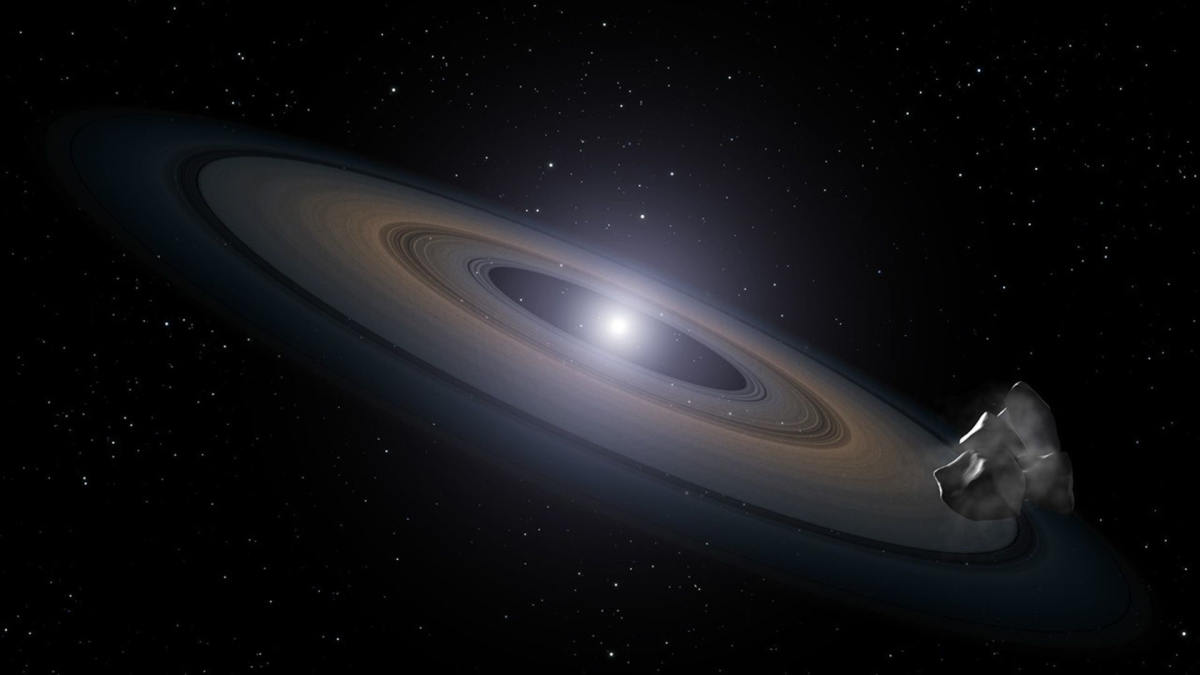
NASA's James Webb Telescope captures stunning image of warped 'Butterfly Star' 525 light-years away
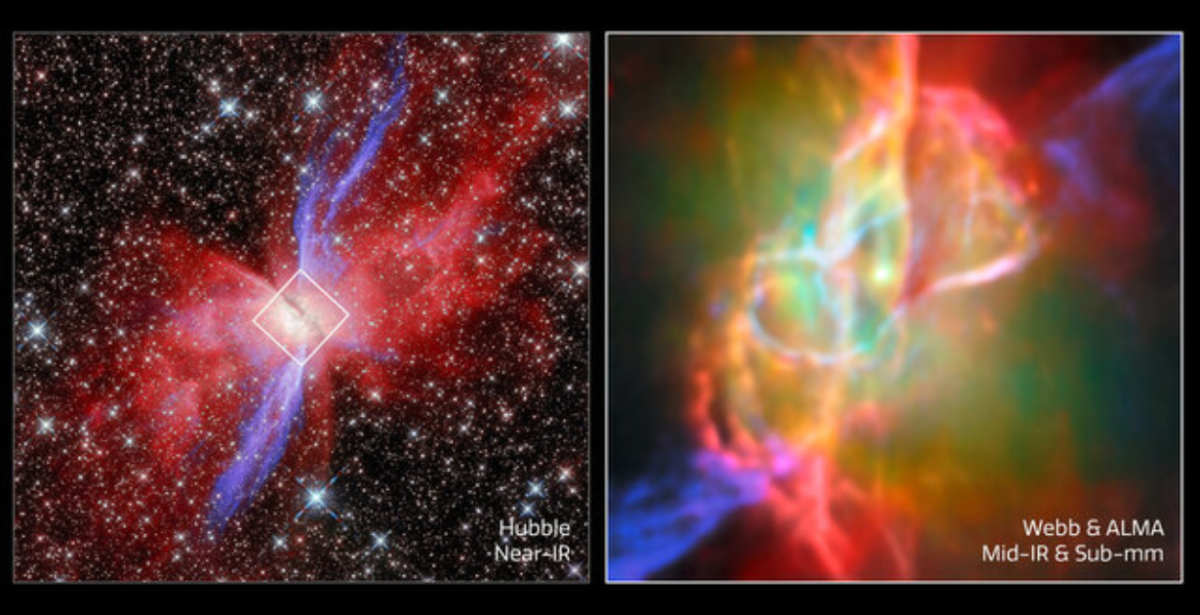
Heart of Butterfly Nebula in the constellation Scorpius reveals clues to Earth's creation