Starship could get us to Uranus in half the time — here's how

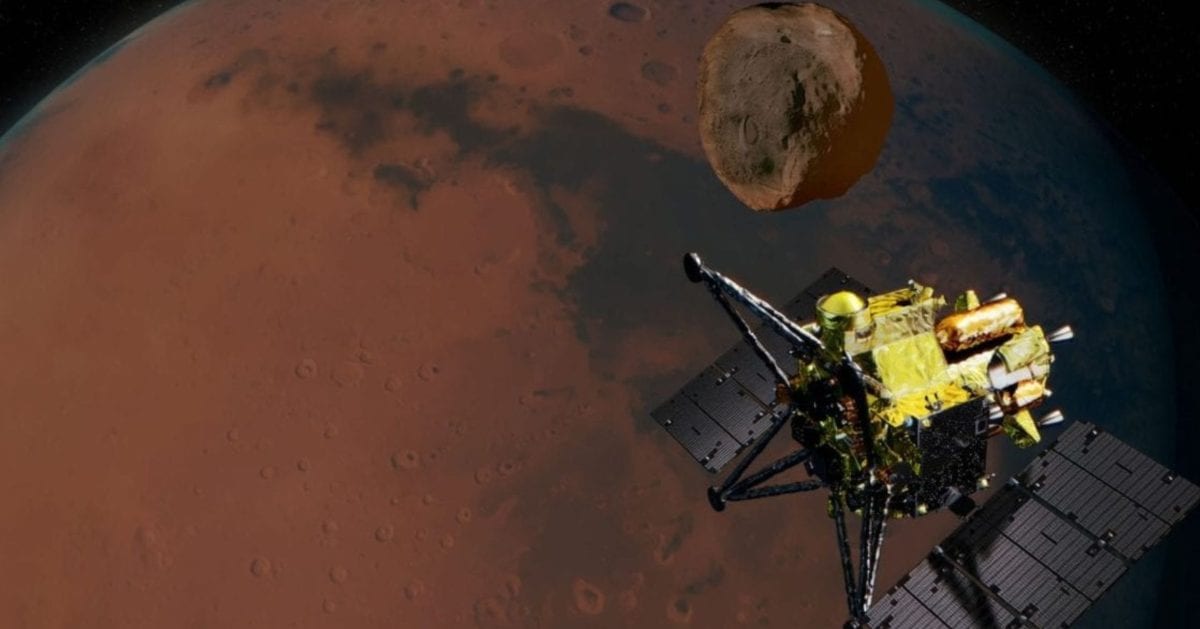
A study suggests that SpaceX's colossal Starship launch vehicle has the potential to cut the travel time for a highly anticipated mission to Uranus by more than half, dramatically accelerating the timeline for exploring the mysterious ice giant, according to the Massachusetts Institute of Technology.

The National Academy of Sciences previously outlined a dedicated mission to Uranus as its highest-priority flagship initiative for the 2030s. The originally proposed concept, the Uranus Orbiter and Probe (UOP), anticipated a minimum 13-year cruise time using a Falcon Heavy rocket, which would rely on complex detours for gravity assists from other planets to gain speed.
New research, detailed in a paper published earlier this summer by researchers from MIT’s Engineering Systems Lab, indicates that by utilizing a refueled Starship in Earth orbit, the UOP spacecraft could be launched on a direct, high-energy trajectory to the distant planet, bypassing the need for planetary assists. This capability could see the spacecraft arrive at Uranus in as little as six years, a stark contrast to the existing estimates. Chloe Gentgen, researcher and co-author of the study, noted the significant reduction in transit time: "The proposed spacecraft could then arrive at Uranus in just over six years, less than half the time currently envisioned."
This faster trajectory would solve critical challenges posed by lengthy missions, such as the potential loss of team expertise and higher operational budgets. The sheer mass-to-orbit capability of the 400-foot-tall Starship, designed to carry up to 150 tons, also presents an opportunity to launch a larger, more capable probe, allowing for enhanced scientific instrumentation.

Uranus, one of the least-explored planets, holds significant scientific interest. “Uranus is one of the most intriguing and least-explored planets in our solar system,” explained a co-author on the recent study. The planet is unique for its extreme tilt, highly complex magnetic field, and dynamic atmosphere. Furthermore, some of its moons are thought to be ocean worlds, making them candidates in the search for extraterrestrial life. Crucially, the ice giants Uranus and Neptune are considered the closest analogs to the majority of exoplanets discovered outside our solar system.

A mission to Uranus would be the first dedicated orbital study of the planet since the brief flyby of Voyager 2 nearly 40 years ago. The long transit time has historically been a major obstacle, given Uranus is approximately 19 times farther from the Sun than Earth. The Starship architecture is still undergoing development, and the essential element of on-orbit refueling has yet to be demonstrated. However, researchers note that the vehicle still has a few years to prove this capability before a final launch vehicle decision is made for the UOP mission. The prospect of using Starship is painting a promising future for large-scale scientific missions across the outer solar system.

The bold proposal signals a new era for scientific exploration, where advanced technology could soon make the distant reaches of the solar system significantly more accessible. The success of these ongoing development efforts will be critical in determining the trajectory of future planetary science.
More on Starlust
Study by NASA and Oxford reveals Uranus possesses more internal heat than previously thought