Scientists design giant spacecraft that could carry up to 2,400 people on a one-way journey to Alpha Centauri
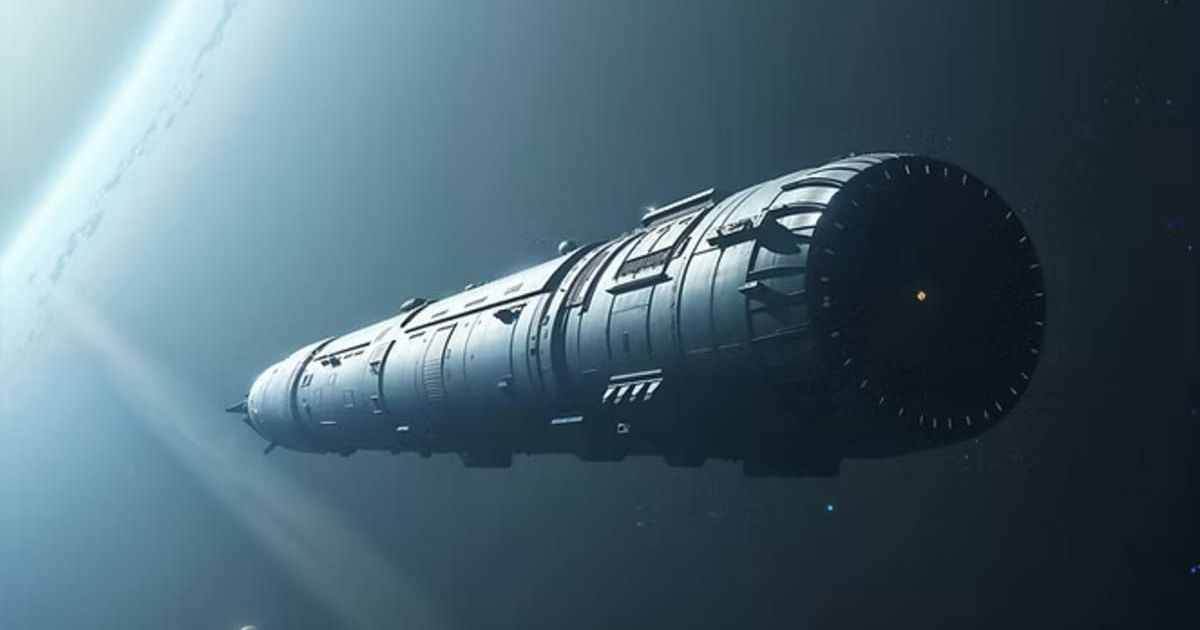
A bold concept for a massive, self-sustaining starship has emerged from a design competition, proposing a one-way journey for up to 2,400 people to the nearest star system, Alpha Centauri. The vessel, named Chrysalis, is envisioned to undertake a 25 trillion-mile (40 trillion-kilometer) voyage spanning approximately 400 years, making it a truly multigenerational endeavor, as per Live Science.
NEWS🚨: Scientists have designed an interstellar ship that can transport up to 2,400 people one-way to Alpha Centauri. The project’s goal is to reach the potentially habitable planet Proxima Centauri b. pic.twitter.com/9uEyxWI2PD
— Curiosity (@MAstronomers) August 13, 2025
The plan, which secured first place in the Project Hyperion Design Competition, outlines a colossal vessel measuring 36 miles (58 km) in length. Its design is reminiscent of a Russian nesting doll, with five concentric layers surrounding a central core. This innovative structure is intended to accommodate everything, from living quarters to industrial facilities and farms, powered by nuclear fusion reactors.
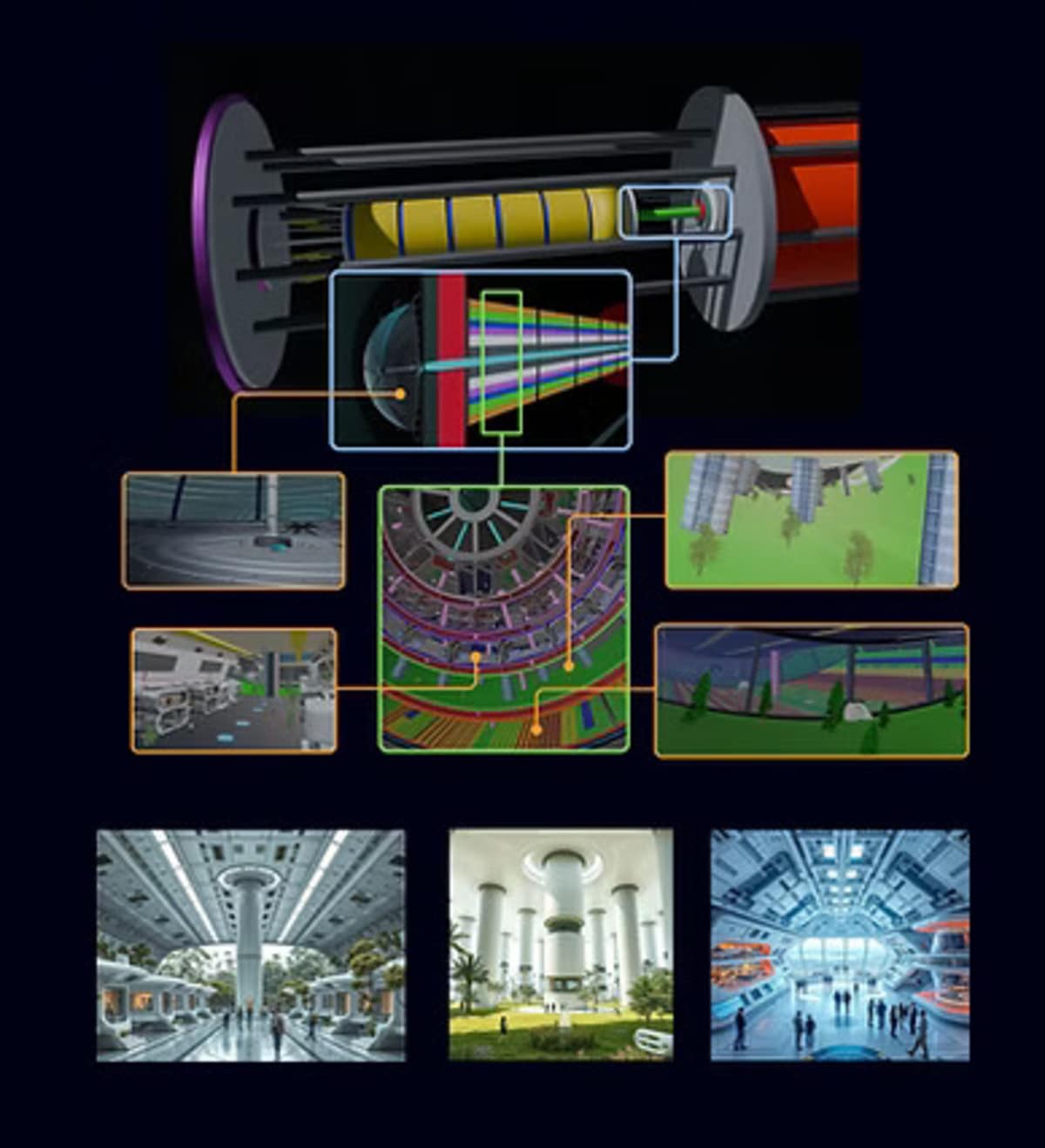
The ship's interior is meticulously organized to support a thriving, isolated civilization. The inner layer is dedicated to food production, where diverse ecosystems, including tropical and boreal forests, would be maintained to support a variety of life, from plants and fungi to livestock. The next layer houses communal spaces like schools, hospitals, and parks, while the subsequent shell contains individual family dwellings.
Outer layers are designated for manufacturing and resource management. One level would feature facilities for industries ranging from pharmaceuticals to structural manufacturing, while the outermost shell would serve as a vast warehouse for materials and equipment, with designers suggesting robots could handle its operation. The core of the vessel would not only contain shuttles for landing on Proxima Centauri b, a potentially habitable exoplanet, but also the ship's communication equipment. To ensure a sustainable population, the design proposes a population cap of 1,500 people, with births carefully managed. The ship's governance would be a collaboration between its inhabitants and artificial intelligence, which would aid in knowledge transfer and social stability across generations.

Before embarking on the interstellar journey, the Chrysalis project mandates a unique and demanding training period. The initial generations of travelers would spend 70 to 80 years living in an isolated environment in Antarctica. This extreme trial is intended to ensure the psychological readiness and adaptability of the inhabitants to their future lives aboard the Chrysalis.
The project's engineers emphasized that the most difficult, but also interesting and stimulating part, was thinking about how the humans aboard the starship would live and conceive their existence over multiple generations. The design goes beyond a simple physical environment, envisioning a "cognitive space" that addresses the "psychological meaning of being a creature of the Cosmos."
The designers acknowledge the "psychologically very intensive" challenges of a confined, multigenerational journey. The Chrysalis is therefore conceptualized as a dual space, offering both a physical environment for survival and a "cyberspace and metaverse to free the inhabitant's minds from the confinement inside a spaceship in the void of space," according to the statement shared by the team Chrysalis.

The target of this ambitious mission, Alpha Centauri, is a fascinating destination. It's a triple-star system located just over four light-years from Earth, making it our closest stellar neighbor, per NASA. The system contains a pair of stars, Alpha Centauri A and Alpha Centauri B, which orbit each other closely. Alpha Centauri A is a near-twin of our Sun, while B is slightly smaller and dimmer.