Six planets to be visible in rare ‘planetary parade’ this week: Here’s all you need to know
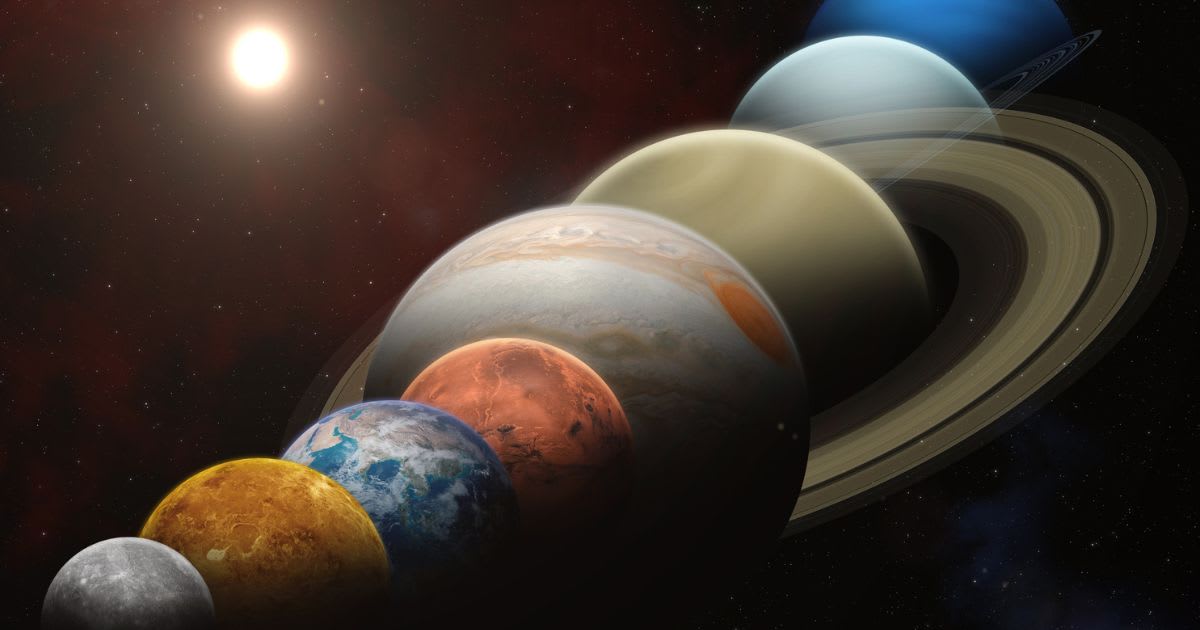
This week, stargazers have a lot to look forward to as the universe is bringing not just one but three major cosmic events. If your calendars are marked for a meteor shower and a total solar eclipse on August 12, be sure to include a rare ‘planetary parade’ that is slowly taking shape in the night sky. According to The Planetary Society, as many as six planets could be visible during the parade, and most of them can be spotted with the naked eye.
What is a planetary parade?
A planetary parade is not a technical term in astronomy but is commonly used to refer to the appearance of multiple planets at the same time. Another popular term is planetary alignment, which occurs when planets appear in the sky along a line because they follow the ecliptic—the Sun's apparent path across our sky.
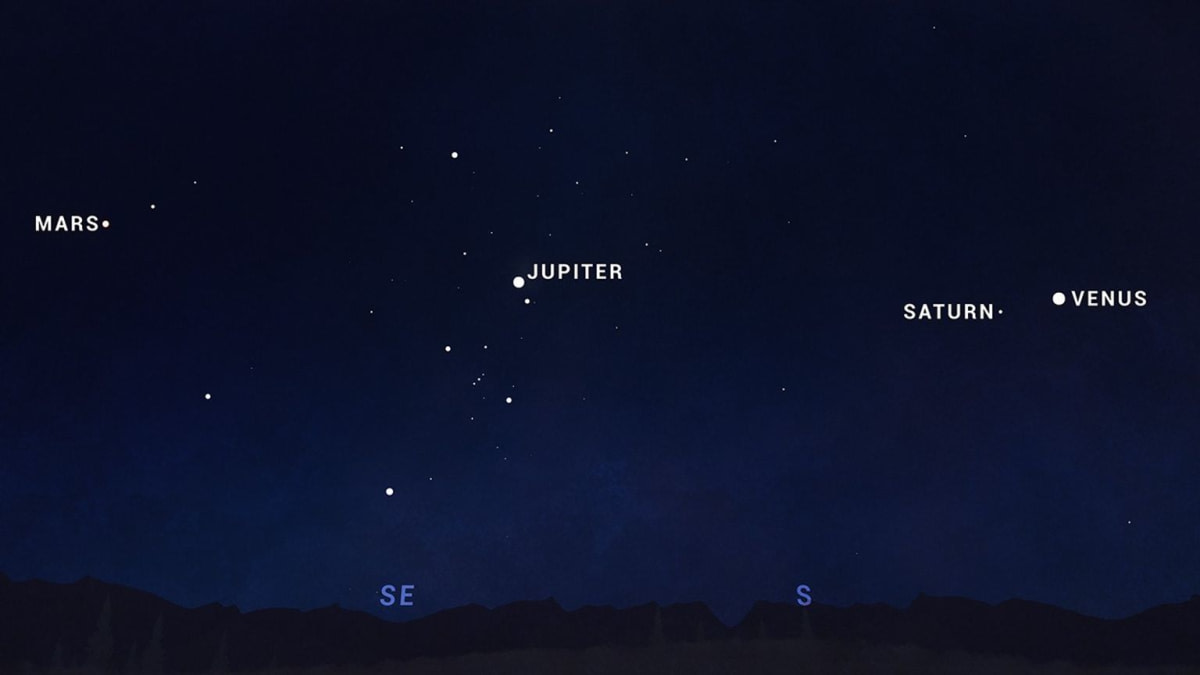
NASA explains that a planetary lineup occurs because the planets orbit the Sun in a relatively flat, disc-shaped plane called the ecliptic plane. When this orbital plane is viewed edge-on from Earth's perspective, the planets appear to fall in a line as a result.
What planets will be visible this time?
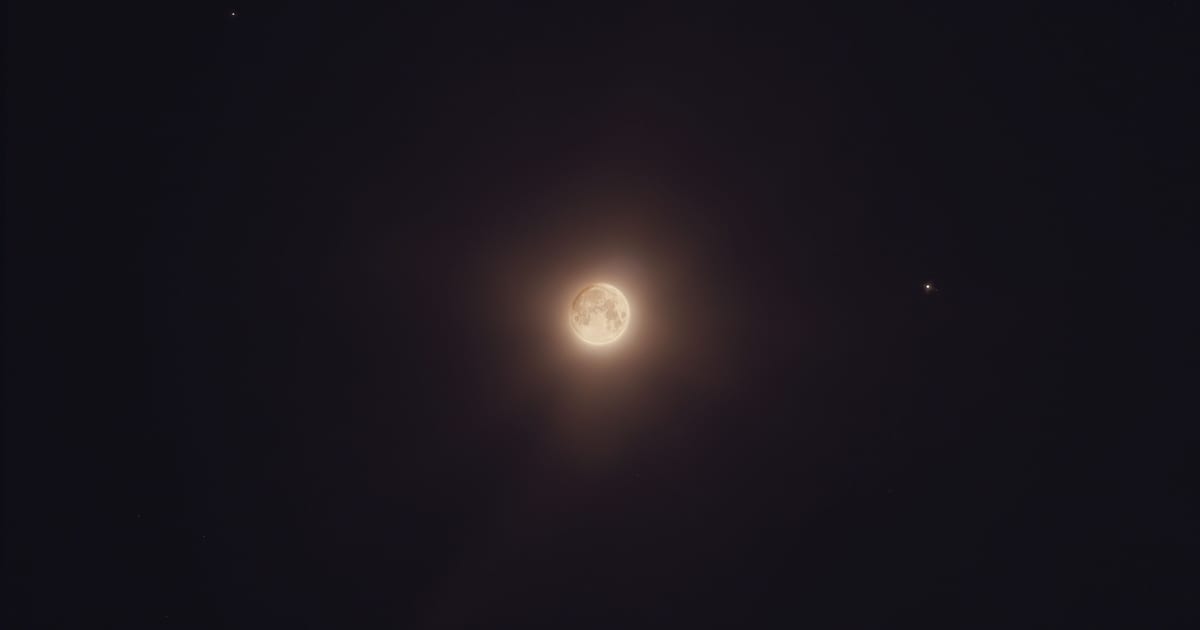
The upcoming parade will take place on the night of August 11 through the pre-dawn hours of August 12. A total of six planets, namely Mercury, Jupiter, Mars, Saturn, Uranus, and Neptune, will be visible together under perfect sky conditions. While the first four will be bright enough to be seen without any optical aid, Uranus will likely require binoculars and Neptune a telescope. Mercury and Jupiter will be easy to identify as they will shine the brightest, whereas Mars and Saturn will appear reddish and yellow, respectively. The Moon will be exactly at its New Moon phase, so the dark sky will make it much easier to spot the planets.
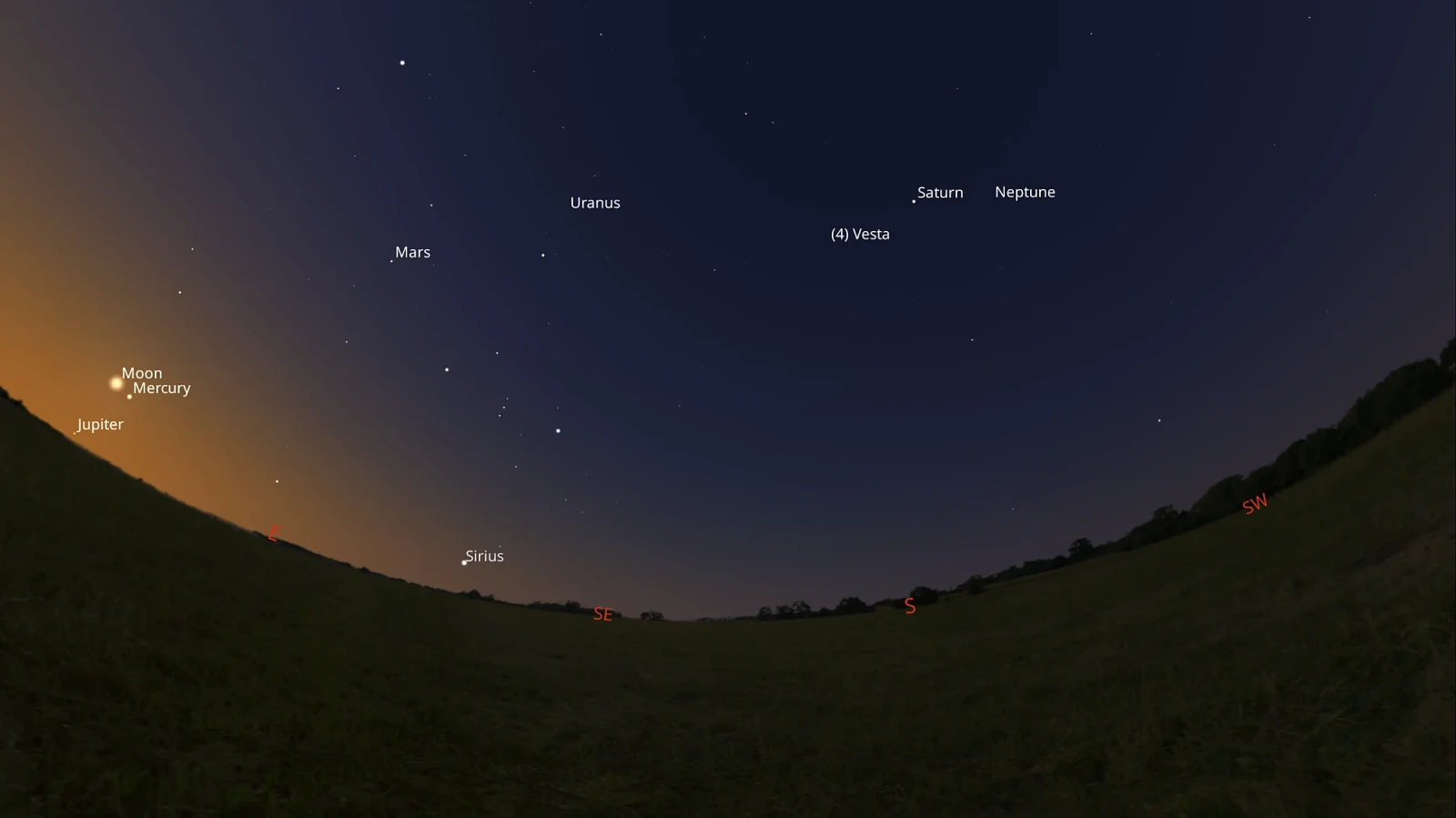
At the peak of the parade, the planets will be considerably higher in the sky, which would also make viewing them easier. According to NASA, a planet needs to be at 10 degrees or higher above the horizon for the best experience. If a planet is too close to the horizon, its light gets scattered as it travels through Earth's atmosphere toward the observer; buildings, trees, and other obstructions also block the view. Make sure to catch the event before sunrise, as sunlight can also drown out the light from the planets. However, the opportunity is likely to last for several nights as the planets will move out of Earth’s view very slowly.
What else is August 12 bringing?
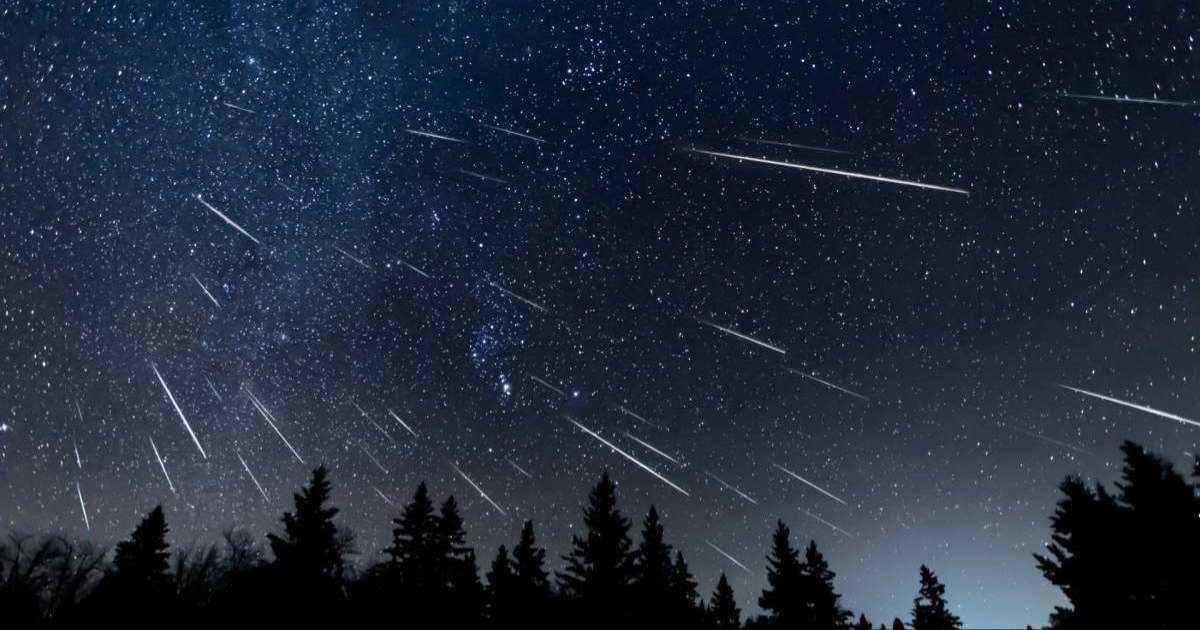
On the night of August 12-13, you can also spot dozens of Perseid meteors as they peak in the pre-dawn hours. The Perseid meteor shower is considered the best meteor shower of the year, and NASA will host a watch party at midnight for viewers around the world to see the fireballs live. There’s also the total solar eclipse—the first in mainland Europe since 1999. Residents in the US, Canada, and northwestern Africa, along with several European countries, will witness a partial solar eclipse that will last several hours.
More on Starlust:
Total Solar Eclipse 2026 is just days away—here’s how to safely watch the event on August 12