Scientists successfully simulate extreme conditions of icy moons in deep space—stunned by unexpected results
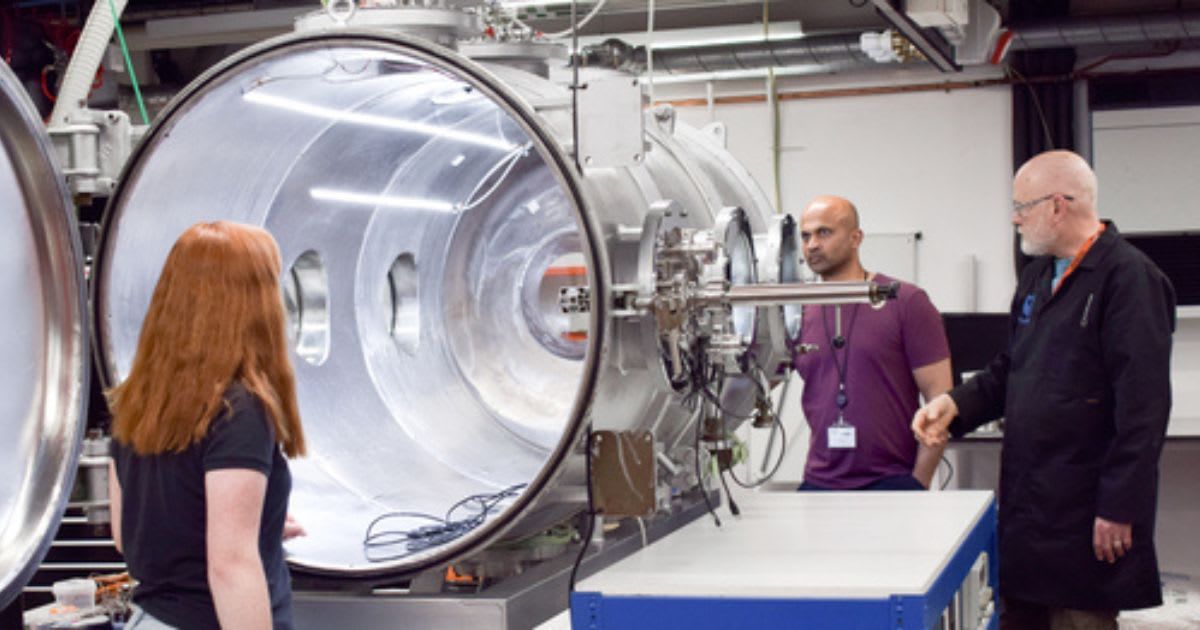
A team of international researchers has successfully simulated the extreme environments of deep space, revealing the unstable and complex behaviour of water on distant, icy moons. Their groundbreaking lab experiments, detailed in the journal Earth and Planetary Sciences Letters, replicate the low-pressure conditions found on celestial bodies like Europa and Enceladus, shedding new light on a phenomenon known as cryovolcanism, per the University of Sheffield.

On Earth, water's predictable behavior is a cornerstone of physics: it freezes at 0°C and boils at 100°C. However, in the near-vacuum of space, scientists found that water simultaneously boils and freezes, a discovery that could redefine our understanding of geological activity on icy worlds. Using a custom-built low-pressure chamber dubbed "George" at the Open University, scientists filmed the behaviour of relatively large volumes of water as the surrounding pressure was lowered. The water began to bubble and boil, even as it grew colder. This boiling process drew heat away, causing ice to form and rapidly cover the surface.
A team of international scientists, including researchers from the OU Atmospheric Research and Space Exploration group, have recreated the extreme conditions found on icy moons in deep space and revealed the unstable behaviour of water!
— The Open University (@OpenUniversity) July 25, 2025
The researchers hope their investigation… pic.twitter.com/LMadSWYcgz
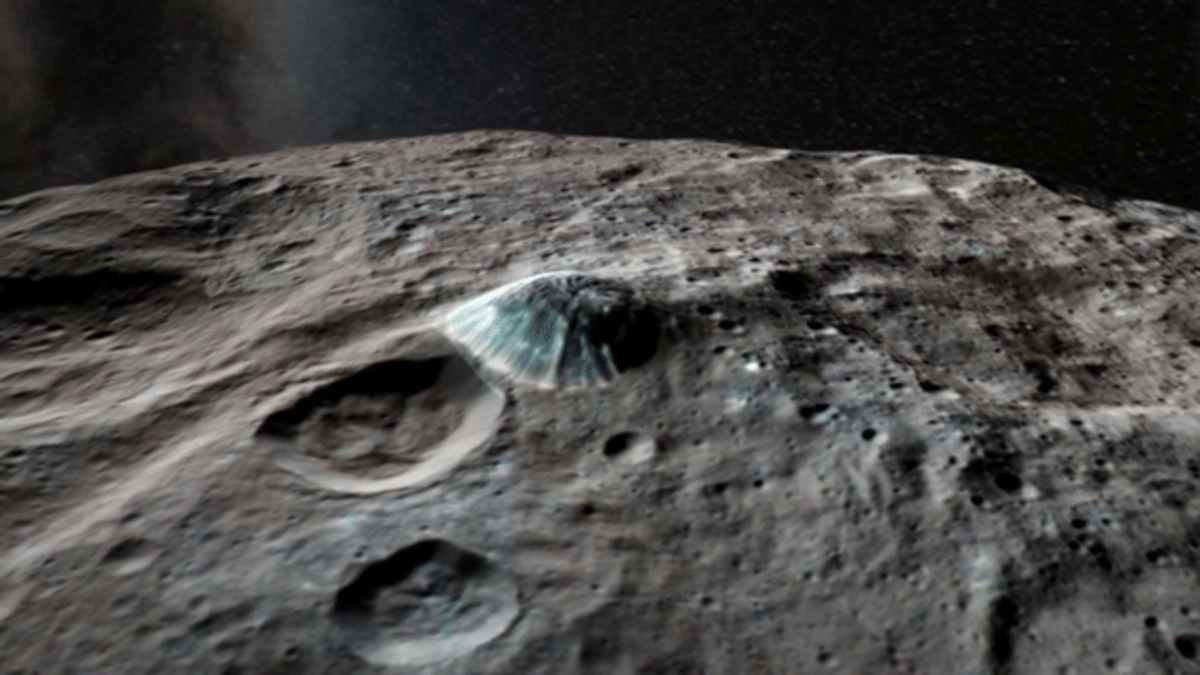
Beneath this fragile, porous ice crust, the water continued to boil, generating vapor that built up pressure. This pressure would eventually cause this to crack, allowing both gas and liquid water to erupt onto the surface. This cycle of boiling, cracking, and erupting, a process that researchers say repeats itself endlessly, is a form of effusive cryovolcanism, akin to a lava flow on Earth. The research challenges earlier theories that suggested a thick ice layer would form and quickly seal off any water below. Instead, the study reveals a dynamic process where a fragile ice crust is repeatedly deformed and fractured by trapped vapor bubbles.
According to Dr. Frances Butcher of the University of Sheffield, “The ice layer that forms is weak and full of holes and bubbles." She explained that the gas released during boiling gets trapped, creating pressure that cracks the ice and allows liquid water to escape. Dr. Petr Broz, lead author of the study from the Czech Academy of Sciences, added, “We found that the freezing process of water under very low pressure is much more complex than previously thought." He noted that in such conditions, water rapidly boils even at low temperatures, and the resulting ice crust is repeatedly disrupted by vapor bubbles, "significantly slowing down, complicating, and prolonging the freezing process.”
The findings could provide a new way for scientists to identify ancient cryovolcanic activity on moons throughout the Solar System. Professor Manish Patel of the Open University noted that the uneven terrain created by this process, with bumps and depressions, could leave distinct signatures detectable by spacecraft. Such discoveries would be crucial for planning future missions to these remote worlds and could deepen our understanding of cryovolcanism.
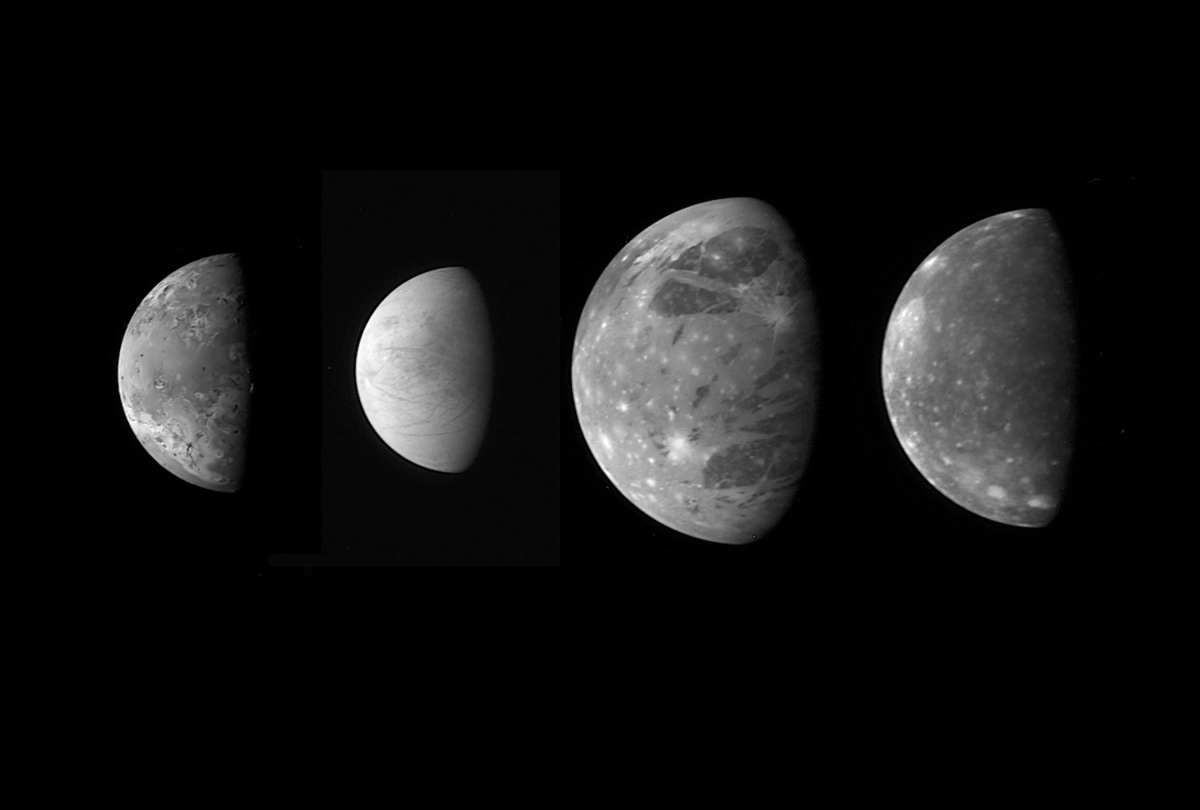
The concept of a "frozen volcano" was once considered impossible, an idea that only gained traction after the Voyager missions of 1979. As the spacecraft flew past the moons of Jupiter and Saturn, they sent back images that revealed familiar volcanic features, including smooth plains, mountains, and craters, according to the BBC. These moons, however, were too low in density to be made of molten rock. As NASA planetary geologist Rosaly Lopes put it, “It looked volcanic, only we knew it wouldn’t be molten rock because the density of these moons was too low to be rock.” The definitive proof of this new phenomenon came in 1989 when Voyager 2 observed a spectacular plume of water rising eight kilometers above the surface of Neptune's moon Triton. This was an icy eruption erupting from a liquid water mantle beneath the surface, leading astronomers to coin the term cryovolcanism.