Europa Clipper en route to Jupiter captures stunning image of Mars with moons Phobos and Deimos
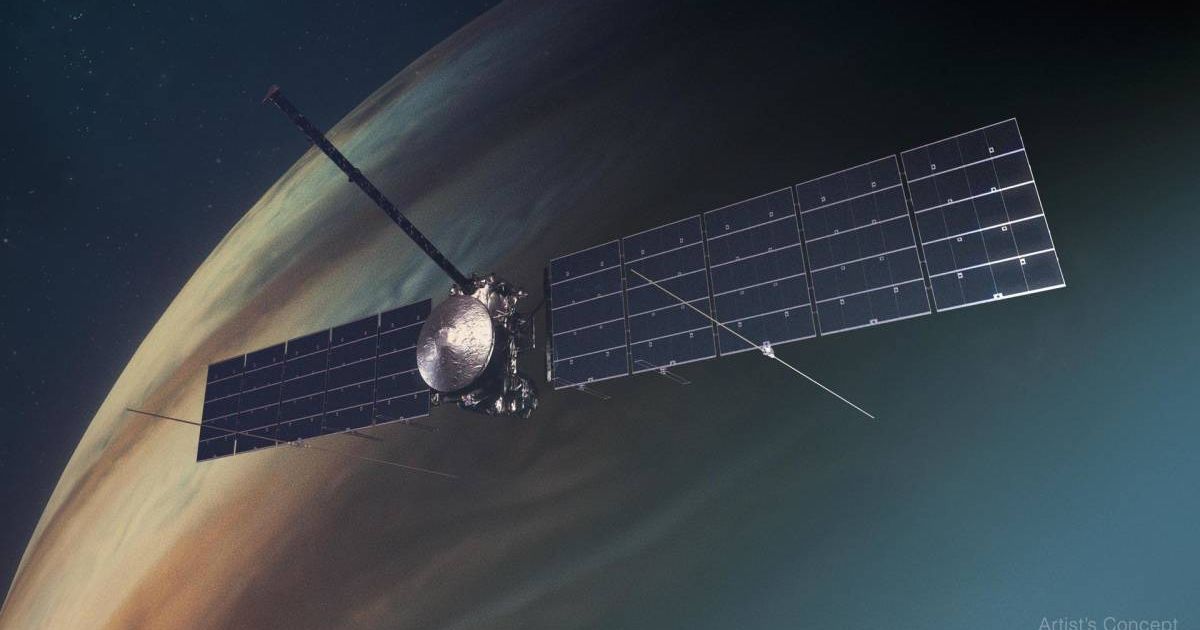
NASA's Europa Clipper spacecraft, currently on its six-year voyage to Jupiter's icy moon Europa, recently delivered a striking infrared image of Mars, complete with its two small moons, Phobos and Deimos. The image, captured on February 28, 2025, showcases the Red Planet's heat signature as the Clipper executed a crucial gravity-assist maneuver, as per NASA.
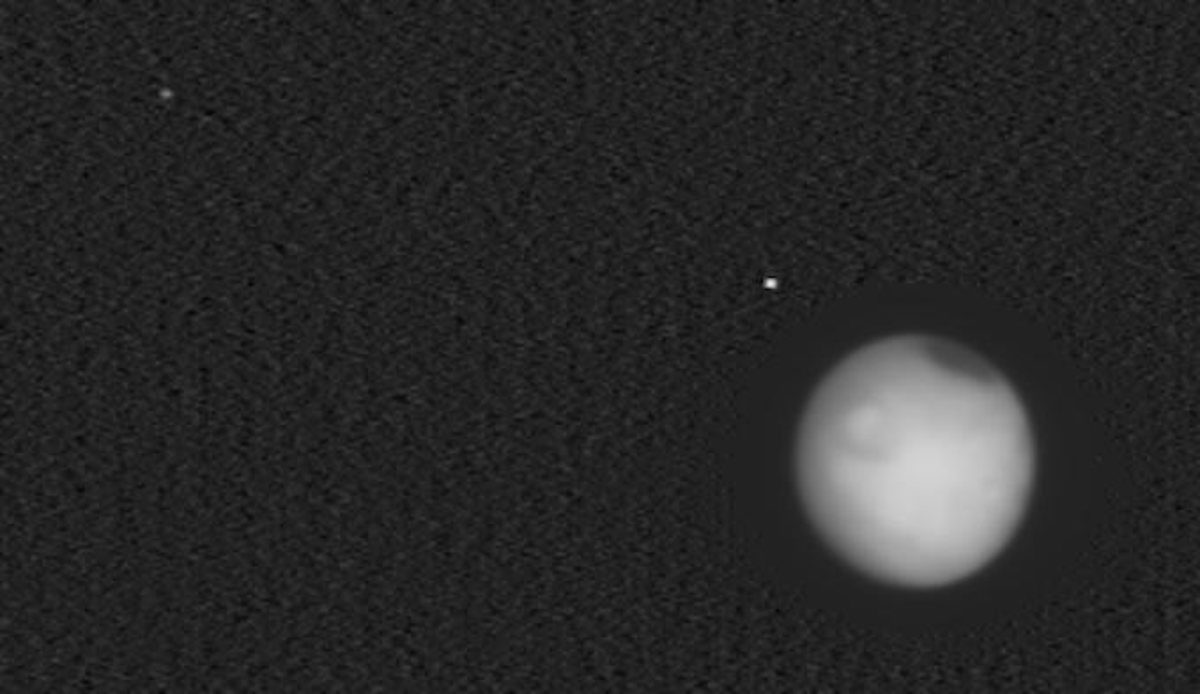
The spacecraft's Europa Thermal Emission System (E-THEMIS) instrument acquired the detailed view from approximately 560,000 miles (900,000 kilometers) away. Composed of 200 individual frames from a 20-minute scanning sequence, the image provides valuable data for calibrating the camera's focus, using the faint, point-like representations of Phobos (closest to Mars) and Deimos (Visible in the upper left). Scientists utilized E-THEMIS's middle long-wave infrared band for this observation, which detects wavelengths between 14 and 28 micrometers. A previous E-THEMIS capture of Mars, using shorter wavelengths, offered higher contrast.
Are there places on Jupiter's moon Europa where water is near the surface? Our Europa Clipper spacecraft will use its E-THEMIS instrument to find out. In March, the instrument went through a test run at Mars: https://t.co/ClqMo6JqwU pic.twitter.com/OEUM5JzBcL
— NASA Solar System (@NASASolarSystem) July 24, 2025
Noble features in the image include Mars' frigid northern polar cap, registering a temperature of roughly minus 190 degrees Fahrenheit (minus 125 degrees Celsius), and the Elysium Mons region. The subtle halo encircling Mars is a result of image processing, necessary to enhance the visibility of the moons, which are about 250 times fainter than the planet itself. This area immediately surrounding Mars appears darker due to this selective brightening.
Launched on October 14, 2024, from NASA's Kennedy Space Center, Europa Clipper is slated to reach the Jupiter system in 2030. Its primary mission involves approximately 50 flybys of Europa, aiming to ascertain the moon's potential to harbor life beneath its frozen surface. Key objectives include mapping the icy shell's thickness and its interaction with the subsurface ocean, analyzing the moon's composition, and characterizing its geological features, all contributing to our understanding of habitable environments beyond Earth.
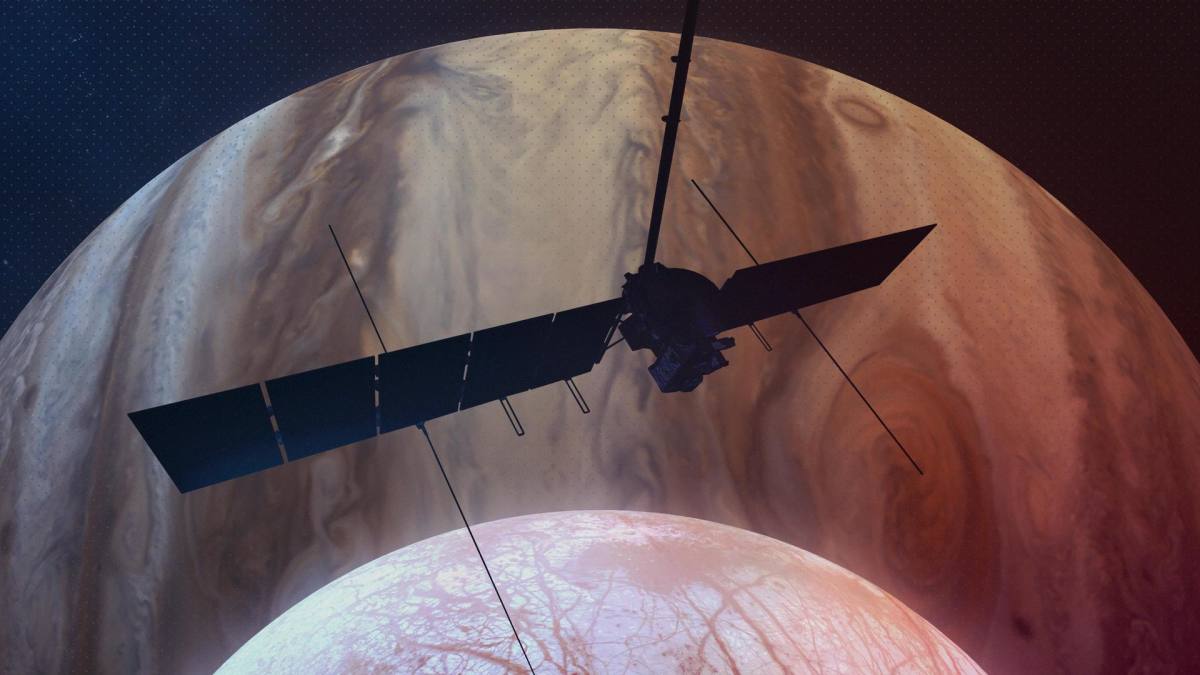
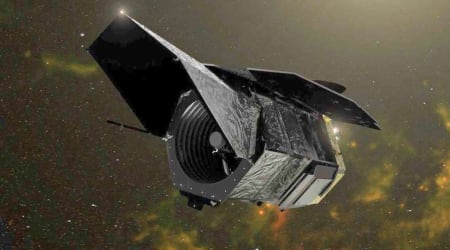
With its massive solar arrays and advanced radar antennas, Europa Clipper stands as the largest spacecraft NASA has ever developed for a planetary mission. Designed to operate in the Jupiter system, which is more than five times farther from the Sun than Earth, the spacecraft requires immense solar arrays to gather sufficient light for its power needs. According to NASA, standing approximately 16 feet (5 meters) tall, the Europa Clipper, with its array fully deployed, spans over 100 feet (30.5 meters). Its dry mass, excluding propellants, is 7,145 pounds (3,242 kg).
Recent findings from the James Webb Space Telescope (JWST), bolstered by groundbreaking laboratory experiments, are painting a new picture of Europa, revealing a far more dynamic and evolving icy surface than previously understood. This fresh perspective further strengthens the evidence for a vast liquid ocean hidden beneath its shell. Dr. Ujjwal Raut of the Southwest Research Institute (SWRI) led the research, which involved analyzing spectral data from JWST. The data indicate that Europa's surface ice undergoes varying rates of crystallization, suggesting a complex interplay between external forces and internal geological processes shaping the moon's exterior. Unlike Earth's uniformly crystalline ice, Europa's surface is constantly bombarded by charged particles, which transform some of its crystalline ice into an amorphous, non-crystalline state.

To better understand this phenomenon, Dr. Raut's team conducted extensive laboratory experiments, meticulously detailing the timescales of both amorphization (the conversion to an amorphous state) and subsequent recrystallization (the return to a crystalline state). These experiments proved particularly vital in deciphering the mysteries of Europa's "chaos terrains," regions characterized by a jumbled mix of ridges, cracks, and plains, hinting at significant subsurface activity.