Astronomers confirm long-held suspicion, find star-forming fuel in early universe
![This image shows the galaxy REBELS-25 as seen by ALMA, overlaid on an infrared image of other stars and galaxies. [Cover Image Source: ALMA (ESO/NAOJ/NRAO)/L. Rowland et al./ESO/J. Dunlop et al. Ack.: CASU, CALET]](https://d3hedi16gruj5j.cloudfront.net/808336/uploads/db1f6930-712a-11f1-aee9-63905a34cc8a_1200_630.jpeg)
Peering back in time, a team of astronomers has discovered a huge store of cold molecular gas in a distant galaxy. The galaxy, named REBELS-25, was seen as it was when the universe was just 700 million years old. Scientists have always suspected that early bright galaxies have huge reservoirs of cold molecular gas, which is the primary fuel for star formation, but no one had detected these reservoirs at such vast distances until now. The findings of the study have been published in the Monthly Notices of the Royal Astronomical Society.
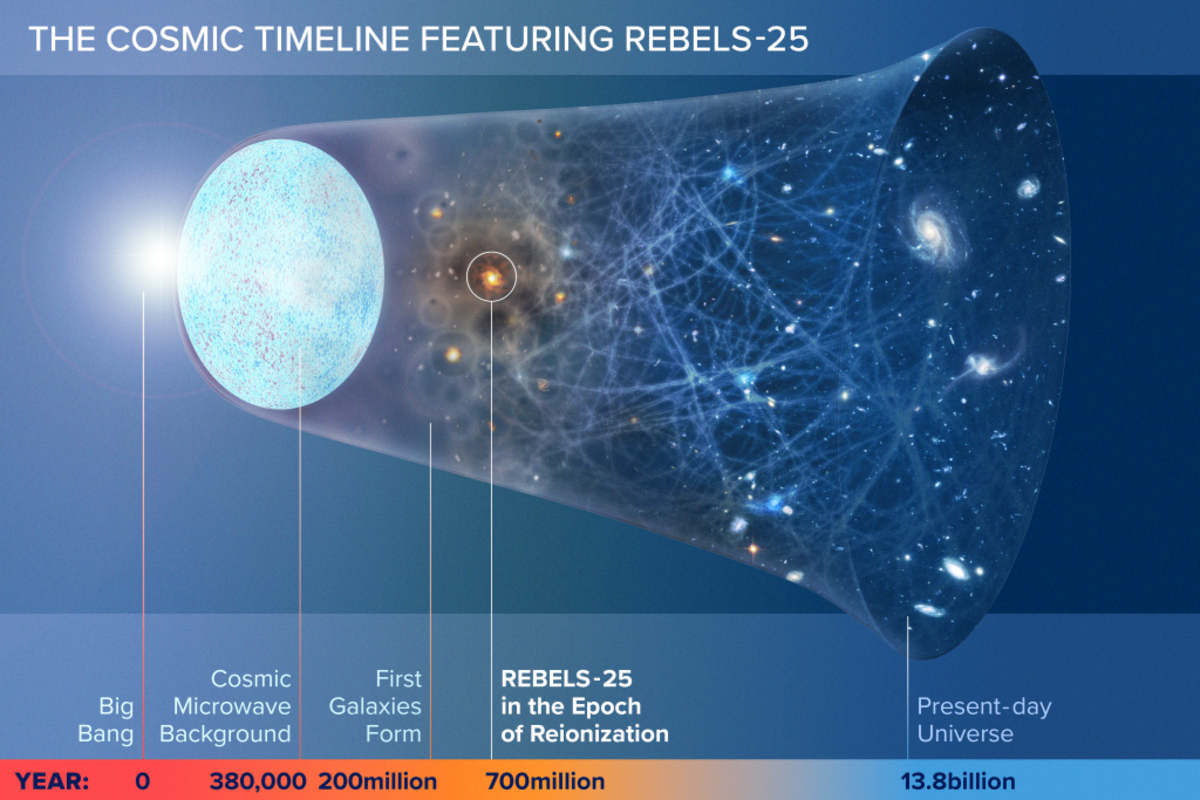
The team used two telescopes for the study: the U.S. National Science Foundation Very Large Array (NSF VLA) in New Mexico and the Atacama Large Millimeter/submillimeter Array (ALMA) in Chile. With the help of NSF VLA, the researchers detected faint radio emission from cool carbon monoxide (CO) molecules, which indicated the presence of cold molecular gas. The brightness of the signal hinted that REBELS-25 already had a large quantity of the fuel forming in the initial days of the universe. However, the detection of low-energy CO emission from so far back in time isn't something that is achieved easily, as the emission must be detected against the cosmic microwave background (CMB).
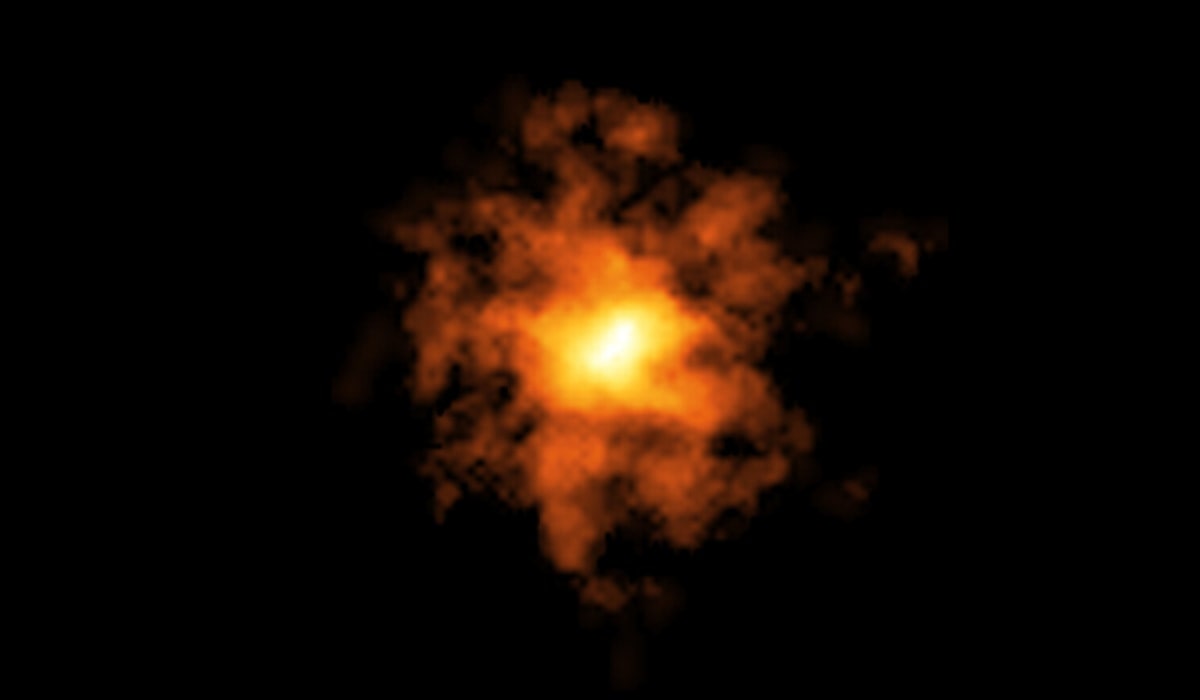
This radiation is present across all cosmic epochs but is especially bright when coming from the early days of the universe. This reduces the contrast of cold gas emission, thus making such observations challenging. The VLA, however, helped the astronomers overcome this hurdle, giving them low-energy CO data that was combined with the high-energy one from ALMA to calculate the density of the gas and its temperature under the conditions of the early universe. “Our results show galaxies just 700 million years after the Big Bang already contained large reservoirs of cold gas available for star formation,” said Karin Cescon, PhD student at Leiden University and lead author, in a statement. “With these deep NSF VLA observations, we were able to overcome the observational challenges posed by the CMB.”
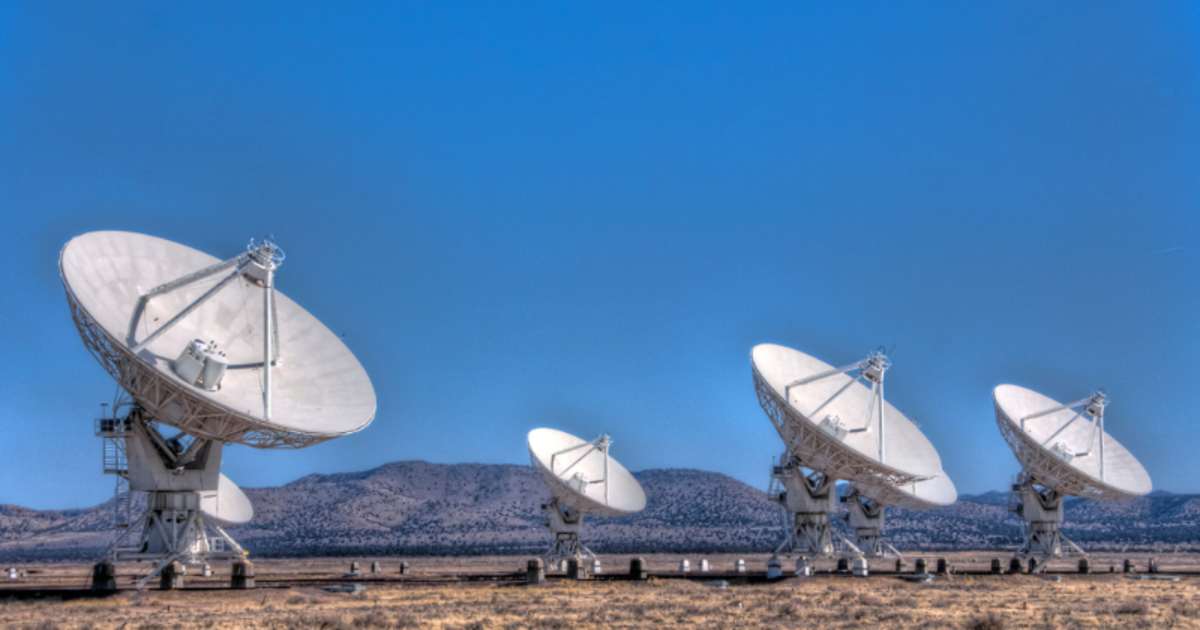
The discovery provides important insight into how the first galaxies in the early universe grew so massive. Moreover, now that cold molecular gas has been detected, astronomers can measure it directly rather than infer it via indirect means. The research will be speedier with the completion of the Next-Generation Very Large Array (ngVLA), a planned radio telescope that will include antennas across New Mexico, west Texas, eastern Arizona, northern Mexico, and other parts of North America. The ngVLA is expected to make similar observations about 10 times faster, allowing astronomers to detect molecular gas in many more distant galaxies rather than only the brightest examples. If REBELS-25 represents only the "tip of the iceberg," the ngVLA will be able to study much fainter and more distant galaxies.
More on Starlust
JWST spots the edge of cosmic dawn and the universe's first stars may lie just beyond