Rock and Roll with NASA Challenge: Public innovators put their lunar rover wheel designs to the test at Rock Yard
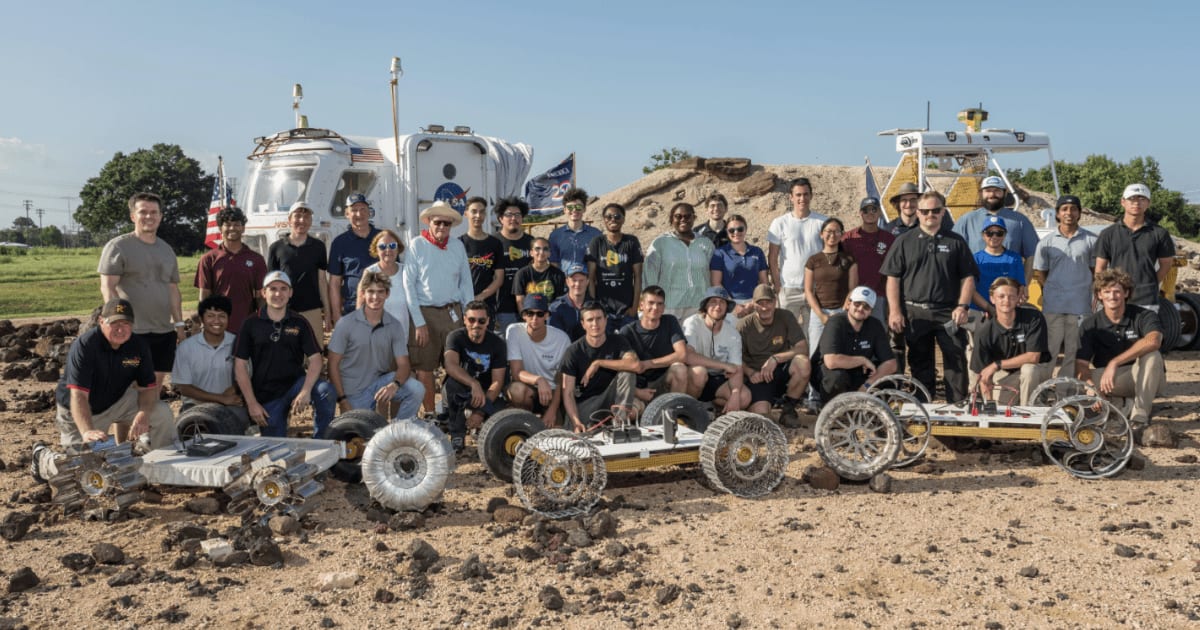
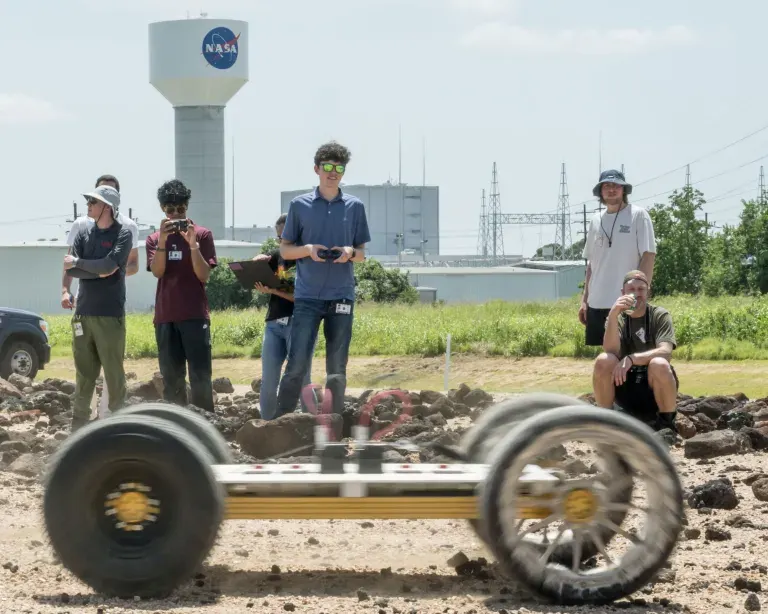
NASA recently tested five new types of lunar rover wheels conceived and designed by public innovators. This was part of a competition titled the 'Rock and Roll with NASA Challenge,' which received 128 submissions from 49 countries. Five of these prototypes made it to the final phase, where they were tested at NASA's Johnson Space Center Rock Yard in Houston on July 31, 2026.
As NASA prepares to establish the @NASAMoonBase, surface mobility will be key to move crew around the lunar surface.
— NASA Artemis (@NASAArtemis) August 17, 2026
Recently, the top five teams from the Rock and Roll with NASA challenge tested out their wheel designs at @NASAJohnson’s rock yard. https://t.co/PVfeTu6Yv0 pic.twitter.com/O056zweydb
To participate in the challenge, the designs needed to be lightweight, durable, and scalable enough to support long-duration operations and survive the harsh lunar environment. Not to mention they were also required to be shock-absorbent and have the ability to maintain traction even at higher speeds. During the challenge, each set of wheels was attached to an almost 100-pound test lunar rover called MicroChariot and was put through a series of courses at Rock Yard to test its performance across multiple terrains.
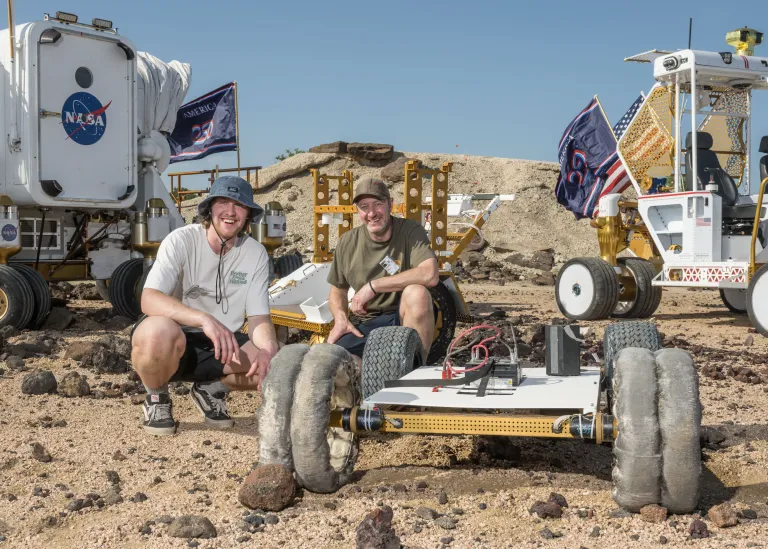
Daniel Bloomfield, a mechanical engineer from Australia, and his son Isaac were declared the winners of the competition for their Scotch Pad Tyres concept. The prototype had a Nomex-based tire structure supported around an aluminum hub. Because of the material, the tire could deform according to the terrain, while the internal support allowed it to maintain its shape. The father-son duo also integrated a surface of epoxy and corundum grit onto the wheels to improve traction.
The Huff Helo Flexible Titanium Wheel made by Huff Helo Inc., however, did not have a good time maintaining traction. Because of its titanium plate construction, the wheel was too rigid to adjust to the rough terrain. Meanwhile, the Payne Aviation Wheel, conceived by Deborah and Craige Payne, took inspiration from early car tire designs and combined it with a pneumatic approach. Another design, the Hiper Wheel created by Hyperbola, featured tensioned cables and a corigated structure that acted like a spring.
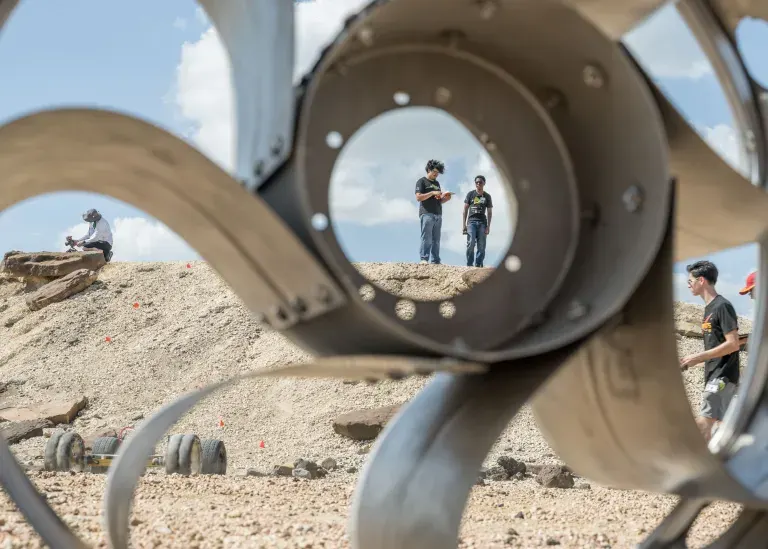
The fifth design came from Hellenic Technology of Robotics SA, whose HTR Variable Flex Lunar Wheel was a culmination of a decade's work that went into developing terrestrial wheels. It included an internal system to regulate the wheel stiffness so as to adjust to a variety of terrain features. The variety of designs submitted could prove to be a boon for NASA, as the agency would require mobility solutions for places on the Moon with terrain ranging from loose gravel to large rock fields—each needing a different approach.
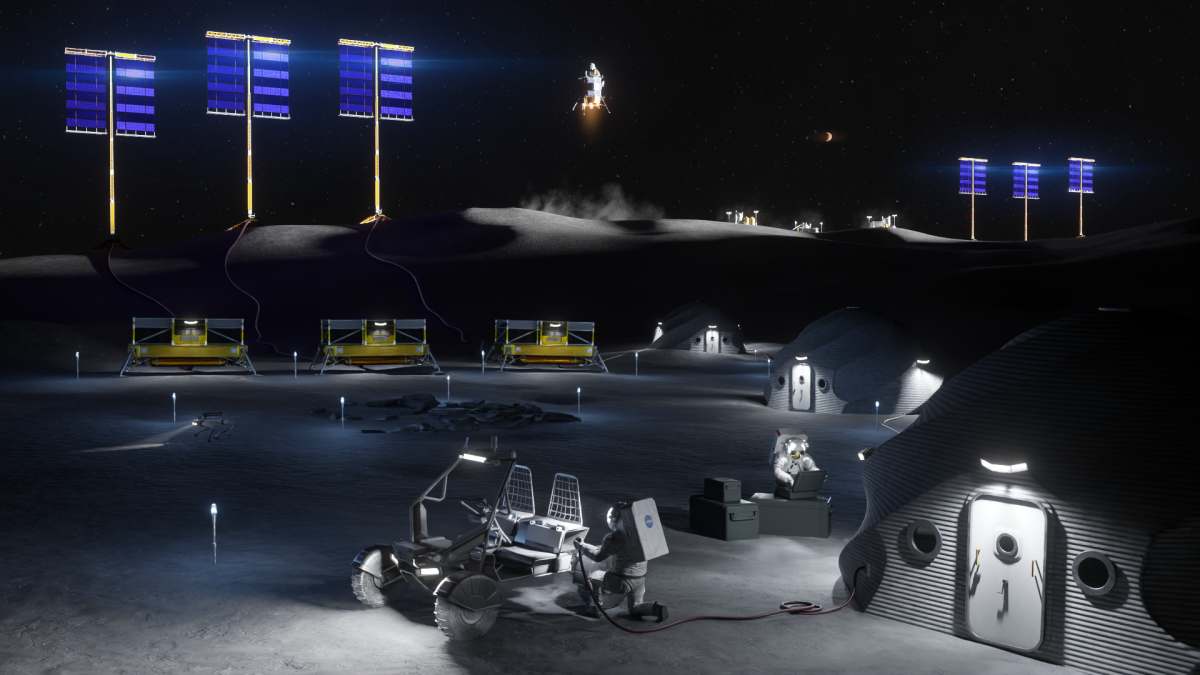
Ed Herrera, robotics engineer at Johnson and co-leader of the challenge project, said, "Crowdsourcing gives us an opportunity to look beyond traditional approaches for lunar wheel design." With NASA planning to send a whole host of lunar terrain vehicles to the lunar south pole through Commercial Lunar Payload Services landers to build and support its Moon Base, the room for innovation is bigger than ever. "The more wheel technologies we can develop and understand, the more options we have to meet the needs of different vehicles, terrains, and missions on the Moon and Mars," added Herrera.
More on Starlust
The next era of lunar exploration: Upcoming Moon missions to watch in 2026 and beyond
NASA Moon Base Update: Major progress revealed on Blue Origin, Firefly, and other landers