MeerKAT uncovers record-setting cosmic laser in a galaxy 8 billion light-years away
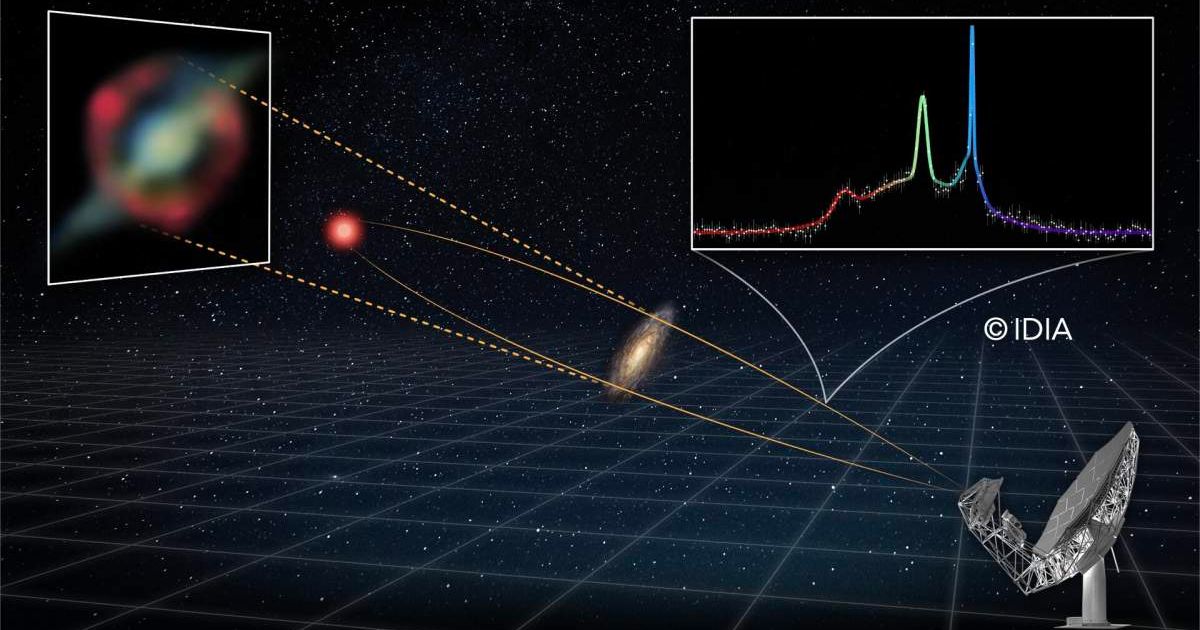
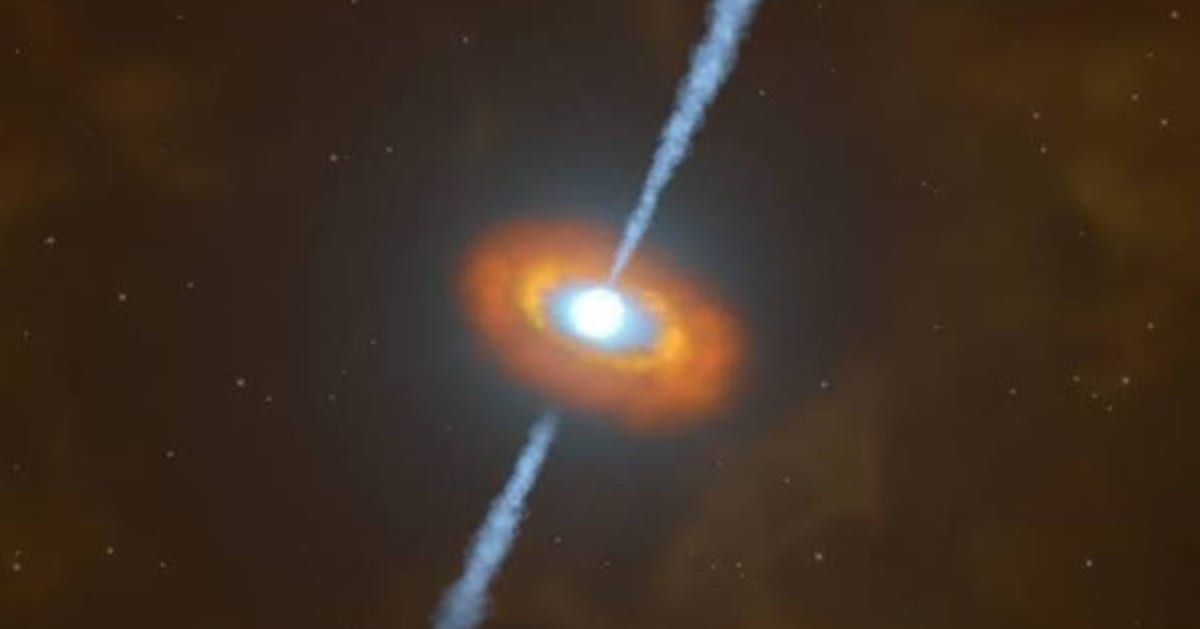
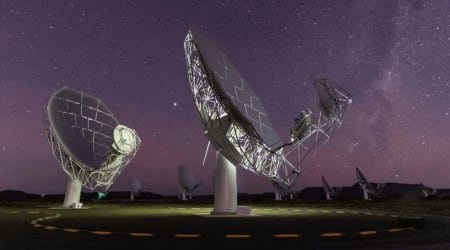
An international research team, led by Dr. Thato Manamela at the University of Pretoria, has discovered powerful radio signals that come from a merging galaxy billions of years away. Buried in the gas and dust of this galaxy, hydroxyl molecules emitted radio signals that have now been captured by MeerKat telescope on Earth. These radio signals, named as masers, are produced via the same process that is used to create lasers. The signals travelled more than 8 billion light-years before they were detected by the MeerKAT radio telescope in South Africa’s Karoo. This means that these signals provide a snapshot of the early universe when it was less than half of its current age, according to the study published in the pre-print on arXiv.
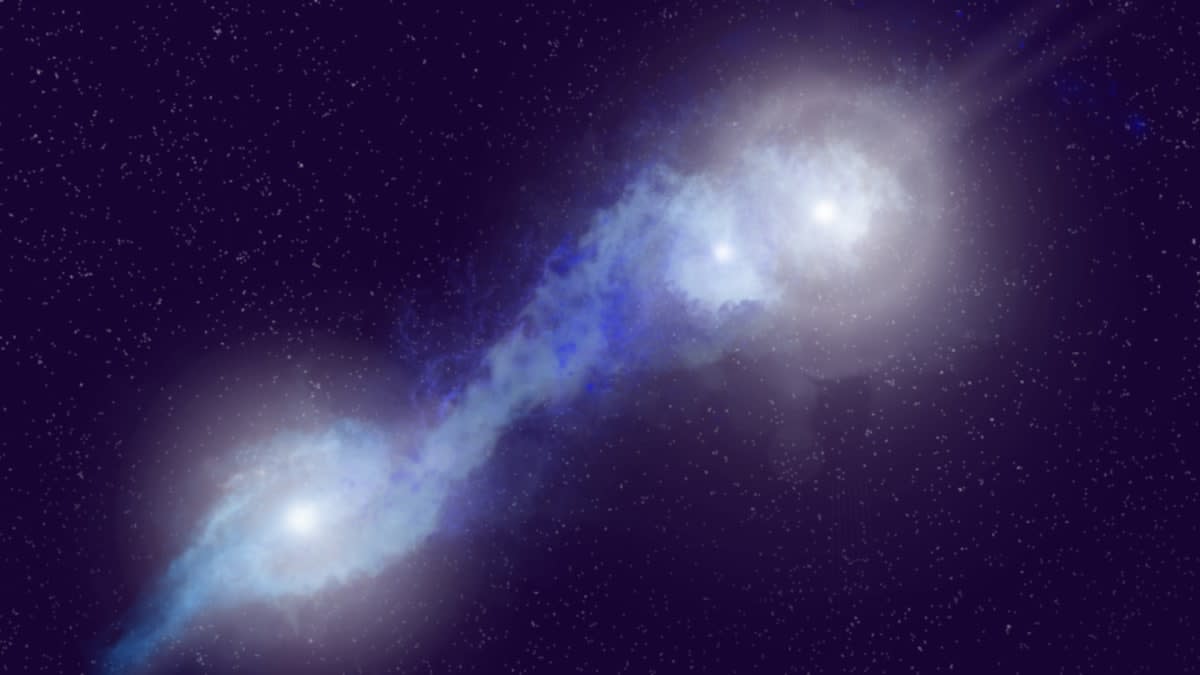
Galaxy mergers provide the right environment to stimulate hydroxyl molecules to higher energies, causing them to produce photons. These energetic photons then further excite other hydroxyl molecules, amplifying their energies and making them emit strong radio waves. These emissions are so powerful that they can even shine through the mess of dust and cloud of a merging galaxy. The newly identified system is designated as HATLAS J142935.3–002836. “This system is truly extraordinary,” said Manamela, a postdoctoral researcher at the University of Pretoria and lead author of the new study, in a statement. “We are seeing the radio equivalent of a laser halfway across the universe. Not only that, during its journey to Earth, the radio waves are further amplified by a perfectly aligned, yet unrelated foreground galaxy.”
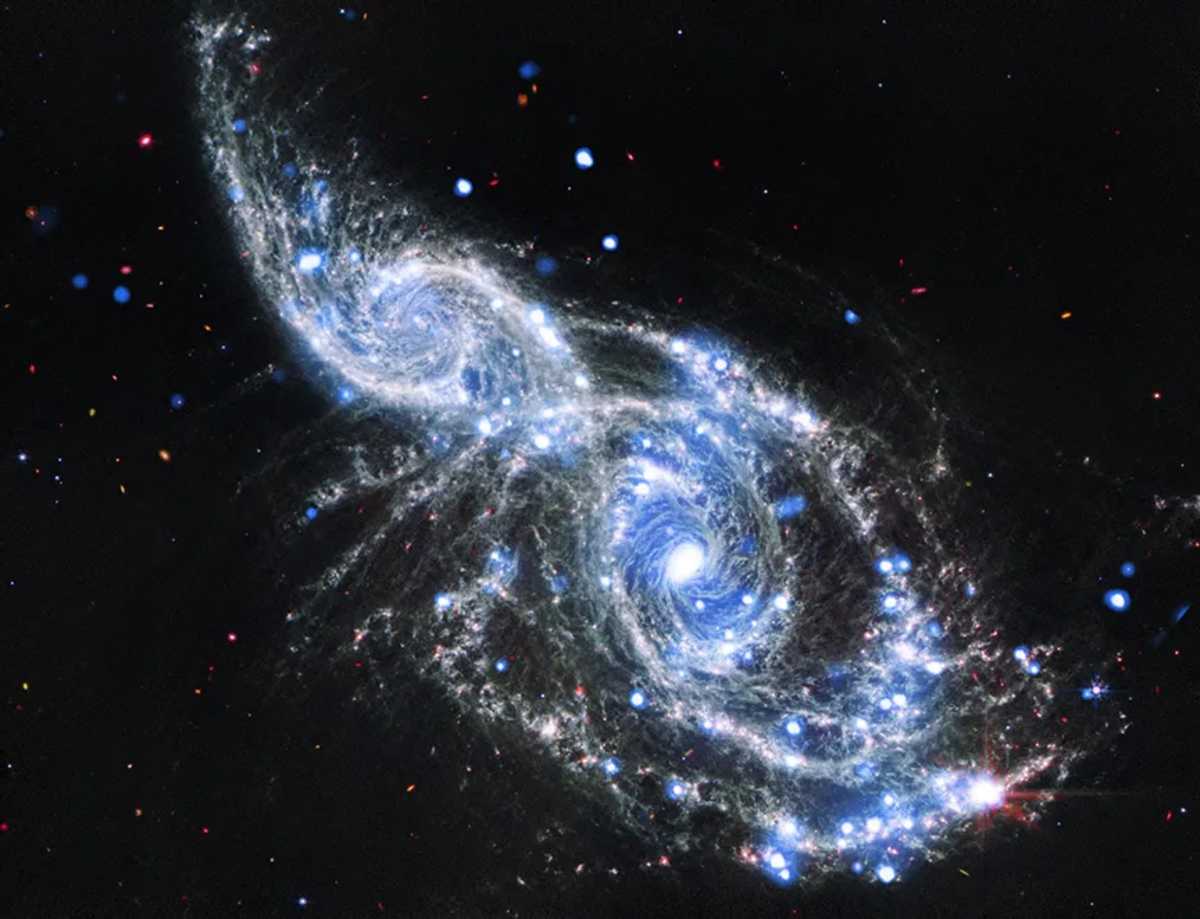
The radio waves from the hydroxyl molecules are actually bent by a galaxy. “This galaxy acts as a lens, the way a water droplet on a window pane would, because its mass curves the local space-time,” Manamela added. Bending of the radio waves or visible light is known as gravitational lensing, in which the immense gravity of a galaxy or a black hole warps the space-time around it, eventually diverting passing light waves or radio waves. “So, we have a radio laser passing through a cosmic telescope before being detected by the powerful MeerKAT radio telescope – all together enabling a wonderfully serendipitous discovery,” Manamela pointed out.
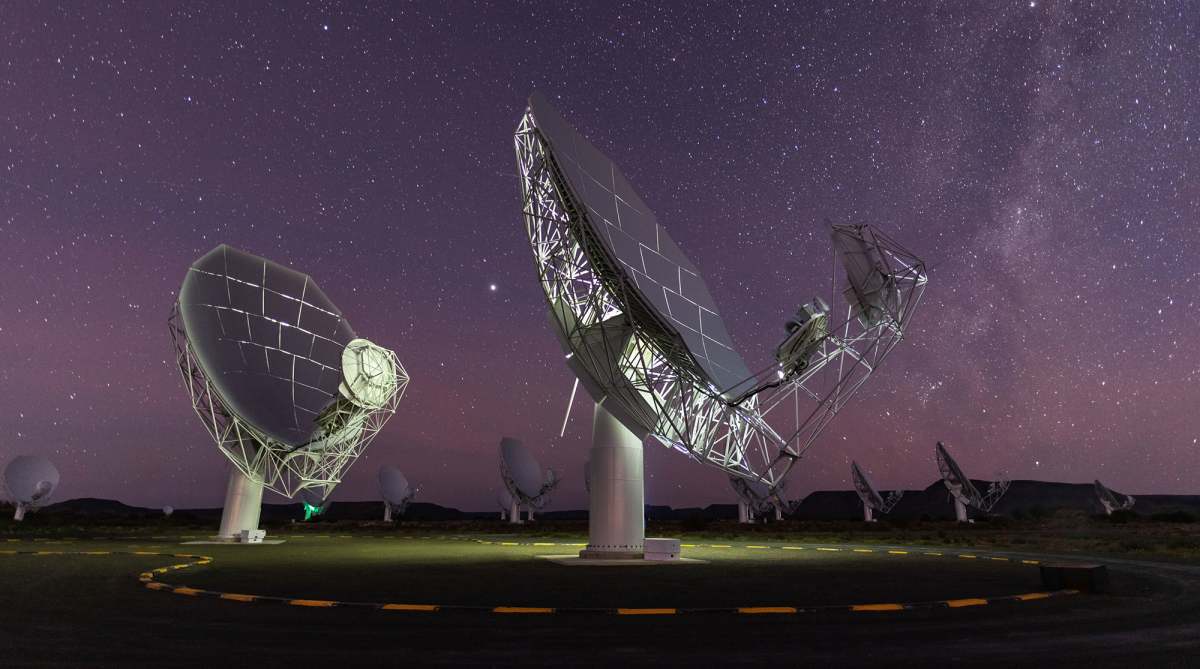
Hydroxy molecules actually consist of a hydrogen atom and an oxygen atom. An unpaired electron in each molecule makes it highly reactive. When not stimulated, they operate at wavelengths of about 18 centimeters, much longer than visible light that we can see. In gas-rich, merging galaxies, they crash into each other and then absorb and amplify their energy significantly, morphing into a ‘megamaser’ – a cosmic beacon that can be observed across vast distances of space. MeerKat is specially designed to pick up such radio signals, even fainter versions of them. "This result is a powerful demonstration of what MeerKAT can do when paired with advanced computational infrastructure, fit-for-purpose data processing pipelines, and highly trained software support personnel," said Roger Deane, a co-author of the study, the director of the Inter-University Institute for Data Intensive Astronomy (IDIA), and a professor at the Universities of Cape Town and Pretoria, in the statement.
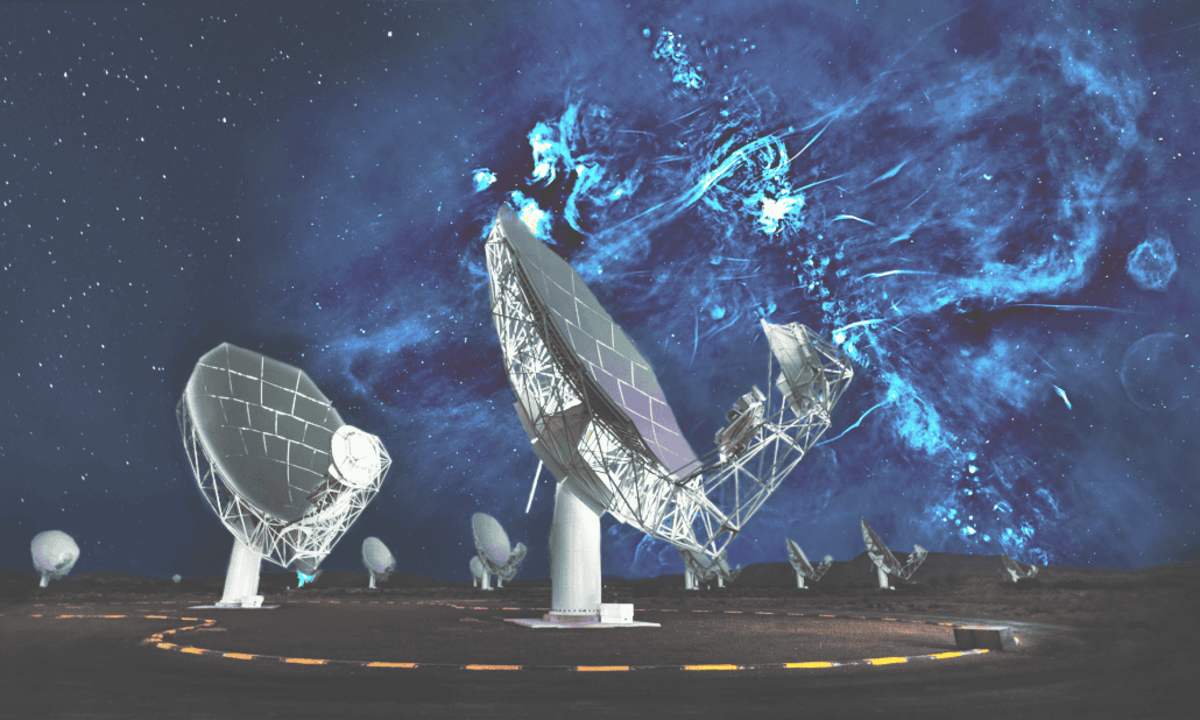
The journey to hunt down megamasers has just begun. "We don't want to find just one system—we want to find hundreds to thousands. Here at the University of Pretoria, we are carrying out systematic surveys of the universe, building the required computational pipelines and algorithms to open this observational frontier ahead of, and ultimately with, the Square Kilometer Array." In fact, hydroxyl megamasers have opened doors to a new frontier of radio astronomy. Although rare, they can emerge as powerful cosmic probes, allowing astronomers to chronicle cosmic evolution.
More on Starlust
NASA's James Webb Space Telescope captures a rare jellyfish galaxy from 8.5 billion years ago
Largest-ever ALMA image shows Milky Way's chaotic center in unprecedented detail