Scientists pointed radio telescopes at exoplanet K2-18b to scan for alien signals—here's what they found

Astronomers conducted a search for signs of alien life, specifically in the form of signals, coming from K2-18b. The exoplanet needs little to no introduction to space enthusiasts and those invested in looking for life, or planets with livable conditions, beyond Earth. Here, the goal was to check if the Hycean world’s system was sending out any radio signals, something that only a technologically advanced civilization might be able to produce. To do this, two of Earth’s most powerful radio telescopes were pointed toward K2-18b, listening for narrowband signals that don’t occur naturally.

The findings of this study come from a new preprint posted on arXiv by a research team. The researchers used telescopes to detect millions of possible radio hits, but none seemed to be coming from potential extraterrestrial life systems. Any Earth-based interference and natural noise were filtered out carefully from the observed signals. However, there was nothing significant enough to be confirmed as supposed alien technosignatures. Essentially, K2-18b shows no signs of alien life for now, or at least, comparable radio levels can be ruled out as a factor here.
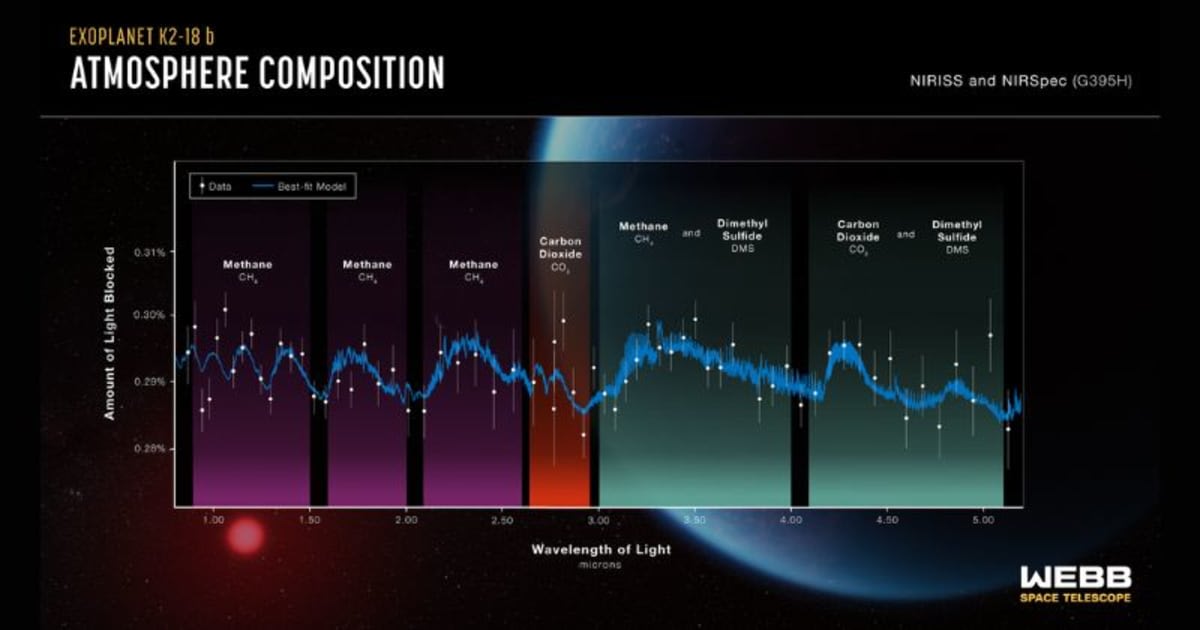
Located in the constellation Leo and about 124 light-years from Earth, K2-18b is one of the most promising nearby habitable planets. It safely orbits a small red dwarf star, has temperatures that can sustain liquid water, and has an atmosphere that’s rich in hydrogen, carbon dioxide, and methane—all of which hint at biological or geological activity. For these reasons and more, the exoplanet has been a SETI researcher’s favorite.

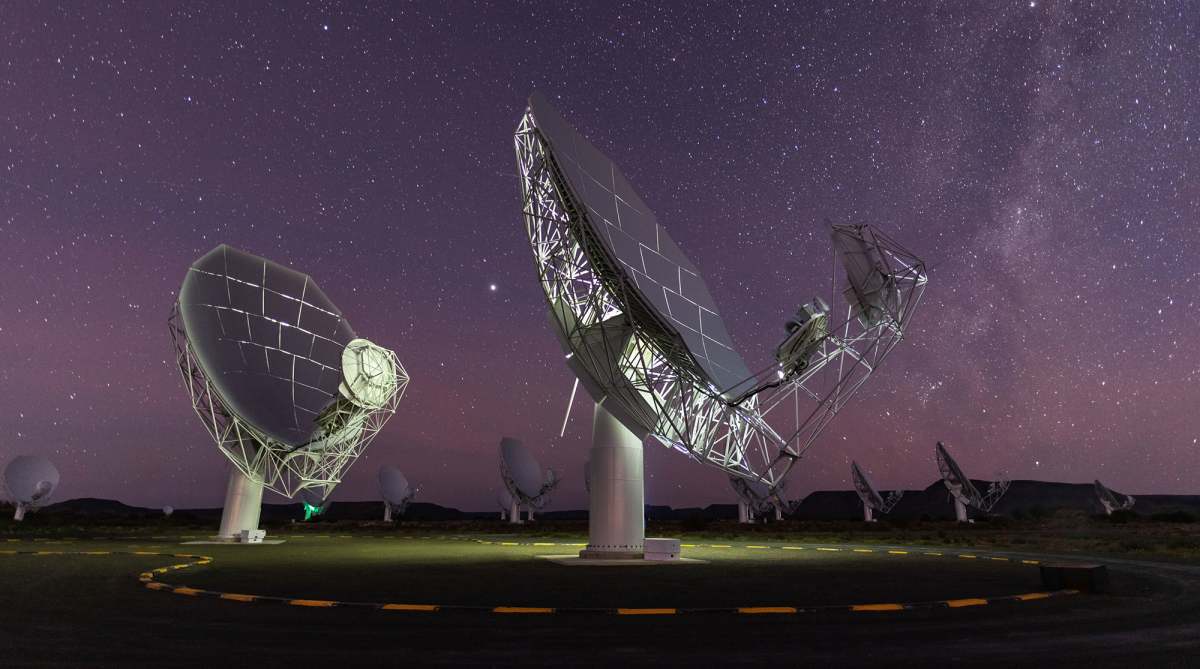
To monitor narrowband radio signals coming from K2-18b, astronomers used two of the most powerful radio observatories on Earth: the Karl G. Jansky Very Large Array in New Mexico and the MeerKAT radio telescope in South Africa. It’s not common practice to have two such telescopes observe the same target simultaneously. However, doing so resulted in a stronger, more reliable dataset.
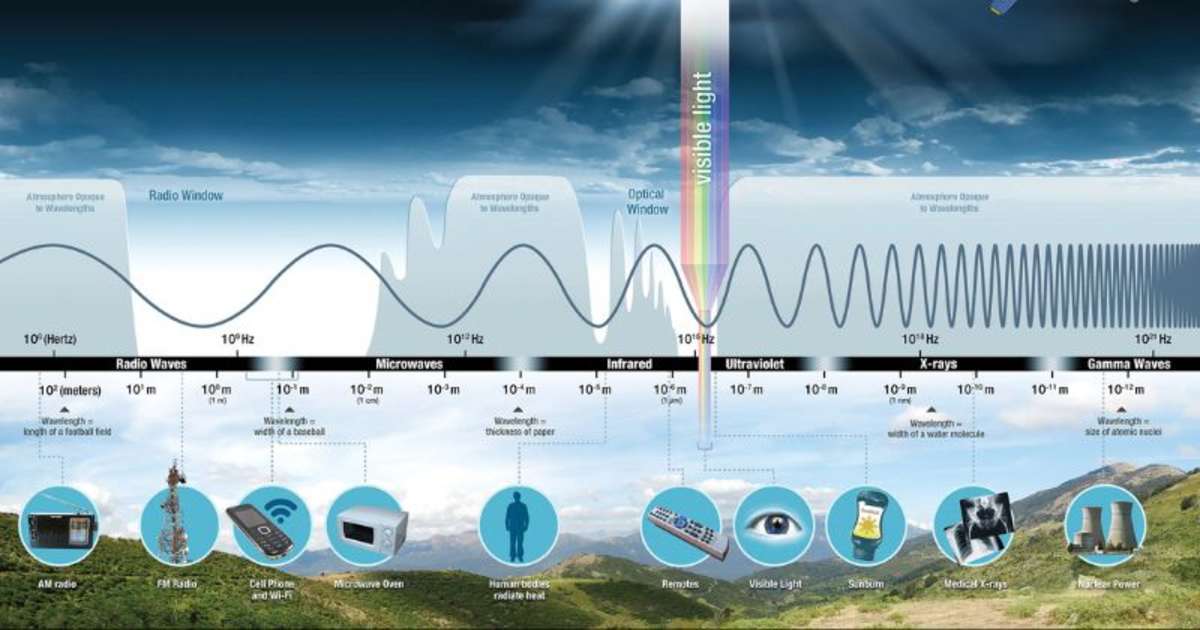
The researchers had to filter out the detected signals on multiple levels, since most of them are just large amounts of human-made interference. Radio frequency bands that are clearly known to be contaminated by terrestrial signals were eliminated first, using RFI masking. Then, signals with no Doppler shift were removed, since actual alien signals would have some change due to motion between planets. Signals with a signal-to-noise ratio below 10 or above 100 were removed. This removed weak false positives along with instrumental data artifacts but could have also removed weak actual signals.
The team also used a multibeam method as a filter. They compared signals from a beam pointed directly at K2-18b with those from beams pointed elsewhere. Theoretically, any real signal from the distant planet should appear only in the beam aimed at it. On the other hand, Earth interference would show up in multiple beams. Beyond the hardware, advanced data pipelines such as the Commensal Open-Source Multi-Mode Interferometer Cluster system (Very Large Array) and the Breakthrough Listen User Supplied Equipment (MeerKAT) made things a little easier. After all these extensive filters, none of the millions of detected signals qualified as potential technosignatures from K2-18b.
Our @NASAWebb telescope detected carbon dioxide and methane in the atmosphere of a planet orbiting a faraway sun. The planet might have an ocean, but more observations are needed to determine whether it could support life: https://t.co/J8ub8PqwMG pic.twitter.com/SbgHjOO9Hv
— NASA (@NASA) September 11, 2023
So, does this study imply there is no life on the Hycean world K2-18b? Not at all. It simply means that the planet’s system isn’t sending out any artificial narrowband radio transmissions. In fact, it just indicates that if a civilization did exist and was sending out signals, it just isn’t broadcasting something that’s capable of being detected by our radio observatories. The final takeaway is that the automated filtering systems used in this search have proved they can efficiently handle large SETI datasets, especially as next-generation instruments like the Square Kilometre Array will continue to expand the search for extraterrestrial life and technology.
More on Starlust
Alien life on planet K2-18b? Scientists say otherwise after reassessing new James Webb data
Earth’s expanding radio bubble reveals how far human signals have spread into space