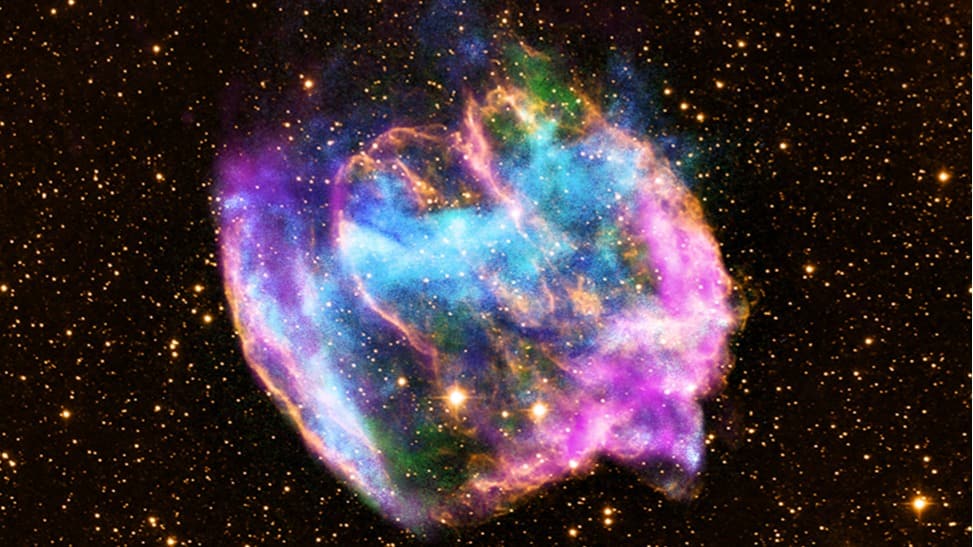
Simply put, a supernova is "the largest explosion that takes place in space," per NASA. It is what happens when a star at the end of its life goes out with a massive burst of light that can even outshine entire galaxies and emit more energy than our Sun ever will. They are also the primary source of heavy elements in the universe.
China’s StarWhisper AI is helping telescopes hunt for the first light from exploding stars
Observing supernovae at their earliest stages can help us understand how the explosion develops.
Published: Sep 24, 2026 | By Purva Muley
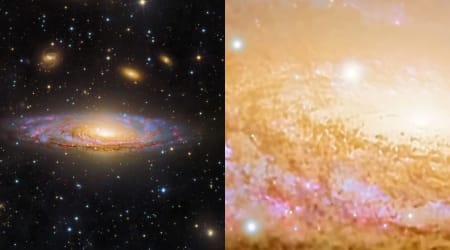
Astrophotographer shares incredible ‘deep field’ image featuring a supernova discovered two weeks ago
The supernova was found by NASA-funded ATLAS and had a magnitude of 17.3 at the time of discovery.
Updated: Sep 18, 2026 | By Harsh Vardhan
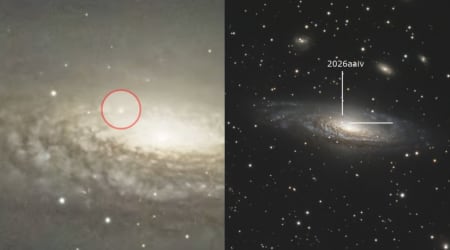
Rare supernova lights up spiral galaxy 45 million light-years away; check out these pictures
The supernova is unfolding before our eyes in a spiral galaxy and astrophotographers are busy documenting its changes.
Published: Sep 13, 2026 | By Harsh Vardhan
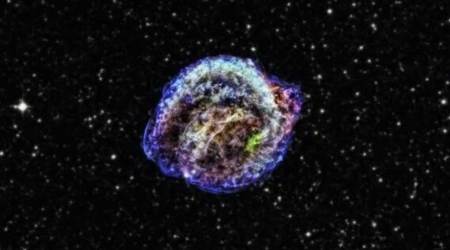
Astronomers saw the first light of a massive star dying in a galaxy located 500 million light-years away
The progenitor of the supernova explosion is believed to be a violent Wolf-Rayet star.
Published: Aug 6, 2026 | By Biplab Das
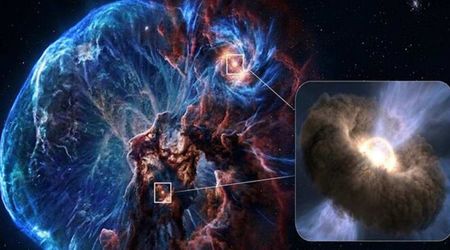
Scientists discover organic molecules in the ruins of a massive supernova explosion
The organic molecules were found within dense cocoons of gas surrounding newborn stars.
Published: Jul 10, 2026 | By Biplab Das
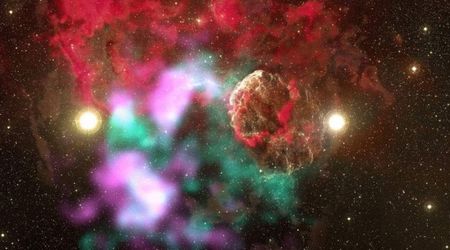
Cosmic connections: NASA's Fermi spots first-ever evidence of a sibling supernova
Two stars that once lived together in the Jellyfish Nebula may have also died together.
Published: Jun 19, 2026 | By Ankita Garkoti
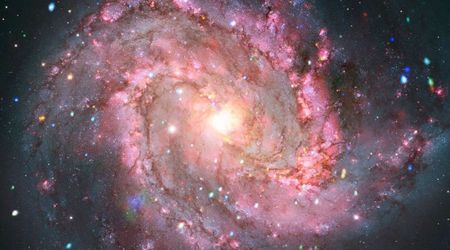
Scientists stunned by fireworks in nearby galaxy: 'Something unusual is going on in these objects'
NASA's Chandra telescope caught sources previously identified as supernova remnants displaying dramatic, completely unexpected variations in brightness.
Published: Jun 16, 2026 | By Pranjal Nath
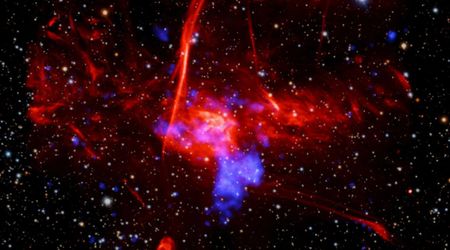
A supernova remnant may have been found near the Milky Way's central supermassive black hole
Located around 26,000 light-years from Earth, the remnant is one of the closest to Sagittarius A*.
Published: Jun 15, 2026 | By Pranjal Nath
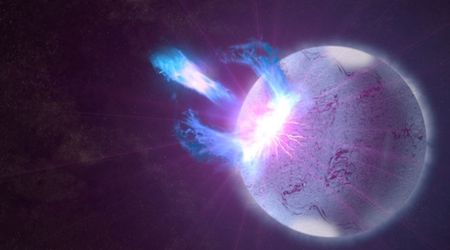
Astronomers spot rare cosmic blast that may have completely erased a giant star
Astronomers initially thought the explosion was a Type II supernova, but some things just didn't add up.
Published: Jun 2, 2026 | By Disita Sikdar
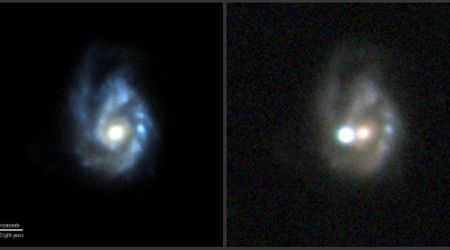
NASA’s Fermi Telescope detects gamma rays from a rare, unusually luminous supernova
Scientists believe that the extreme luminosity of the supernova stems from a magnetar at its center.
Published: May 22, 2026 | By Pranjal Nath
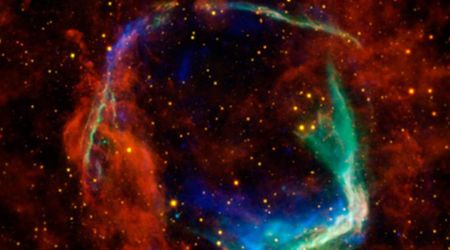
NASA's IXPE provides new insight into a 2,000-year-old supernova
It was first recorded in 185 AD by Chinese astronomers as a bright ‘guest star’ that remained in the sky for eight months, marking the birth of RCW 86.
Published: Mar 26, 2026 | By Juhi Varma
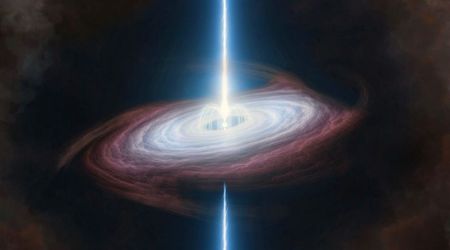
Astronomers witness the birth of a magnetar for the first time, confirming a 16-year-old theory
The newborn magnetar, a specific kind of neutron star, actually enhances the brightness of a supernova.
Published: Mar 12, 2026 | By Biplab Das
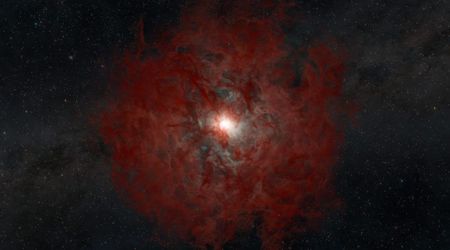
Failing to go supernova, an Andromeda supergiant star quietly collapsed into a black hole
The star used to be one of the brightest star in the neighboring Andromeda galaxy.
Published: Feb 16, 2026 | By Biplab Das
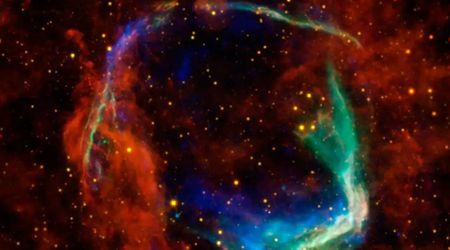
Astronomers using JWST discover an ancient supernova from the first billion years of the universe
This newly discovered explosion from the dawn of time is helping scientists map the chemical evolution of the first galaxies.
Published: Jan 16, 2026 | By Raj Naik

Contrary to popular belief, the birth of a black hole can be a bright, noisy affair
Researchers tracking the SN 2022esa found that a brilliant supernova can signal a black hole's birth.
Published: Jan 16, 2026 | By Raj Naik

NASA’s Chandra stitches decades of data on supernova remnant into its longest video yet
NASA’s Chandra video reveals 25 years of change in Kepler’s supernova remnant.
Updated: Jan 7, 2026 | By Pratham Gurung

Astronomers just solved mystery behind bright blue flashes and traced it back to black holes
These events, known as Luminous Fast Blue Optical Transients (LFBOTs), were originally thought to be a rare type of supernova.
Published: Dec 22, 2025 | By Raj Naik

Astronomers spot possible 'first-of-its-kind superkilonova' from two separate stellar explosions
The new candidate, AT2025ulz, initially acted like a kilonova, only to later mystify scientists by morphing into what appeared to be a common supernova.
Published: Dec 17, 2025 | By Raj Naik

The universe may be filled with Earth-like planets, new supernova model suggests
The actual count can be far more than once expected.
Published: Dec 16, 2025 | By Pratham Gurung

NASA's James Webb Telescope witnesses stellar explosion from just 730 million years after the Big Bang
Previously, the most ancient supernova ever confirmed dated back to when the universe was 1.8 billion years old.
Updated: Dec 10, 2025 | By Raj Naik